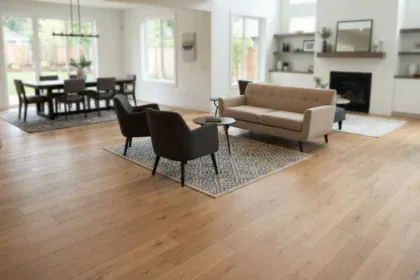


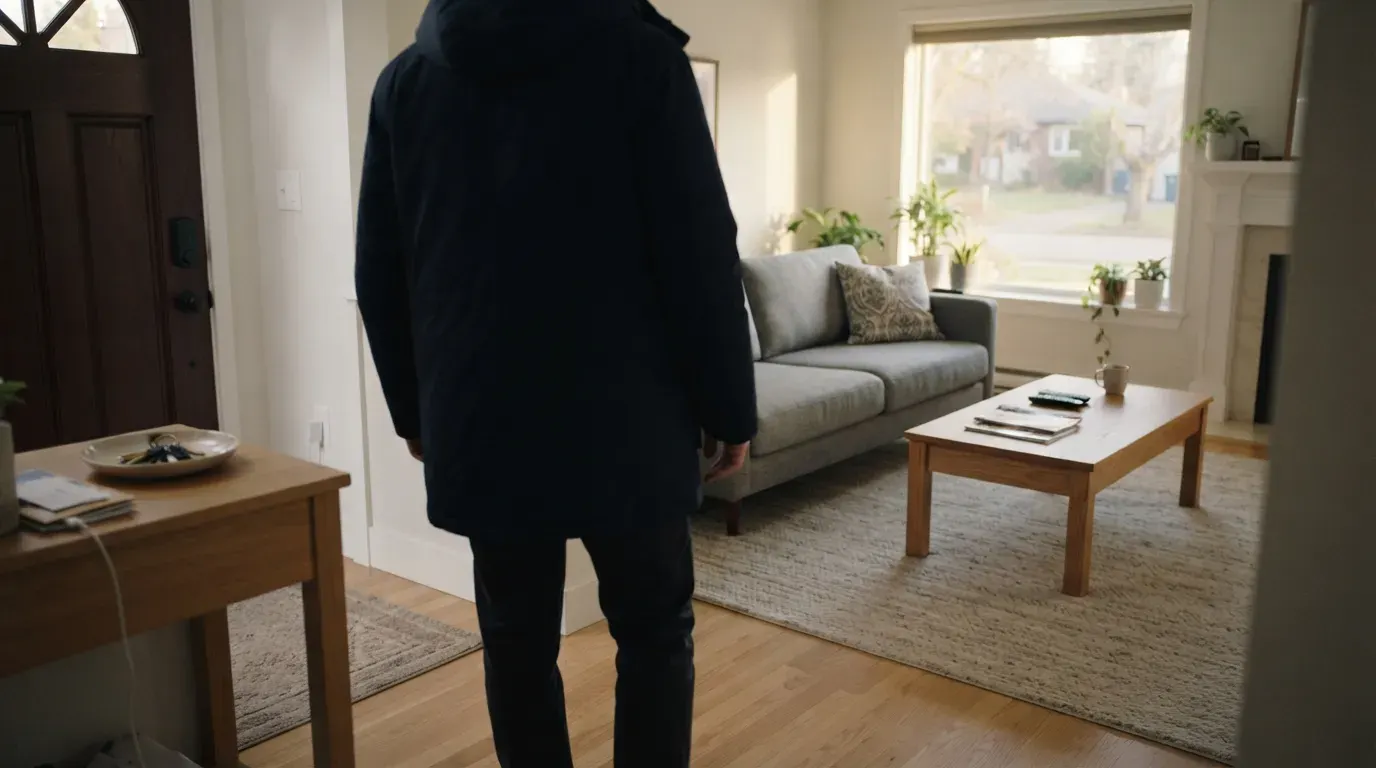
A house can be spotless and still look cluttered from the front door. Crooked blinds, a cord trailing down the wall and a heap of shoes by the entry register faster than a dusty baseboard ever will, because guests read lines and piles long before they notice dirt.
That’s why you can scrub for hours and still feel the room looks busy. The fixes below are mostly small and cheap, and the payoffs get bigger as you count down. Stay for the final item: it’s a single rule that changes how the other thirteen look, and it needs no cleaning supplies at all. First, the windows, which guests judge before they ever knock.
#14 – Blinds Stopped at Five Different Heights
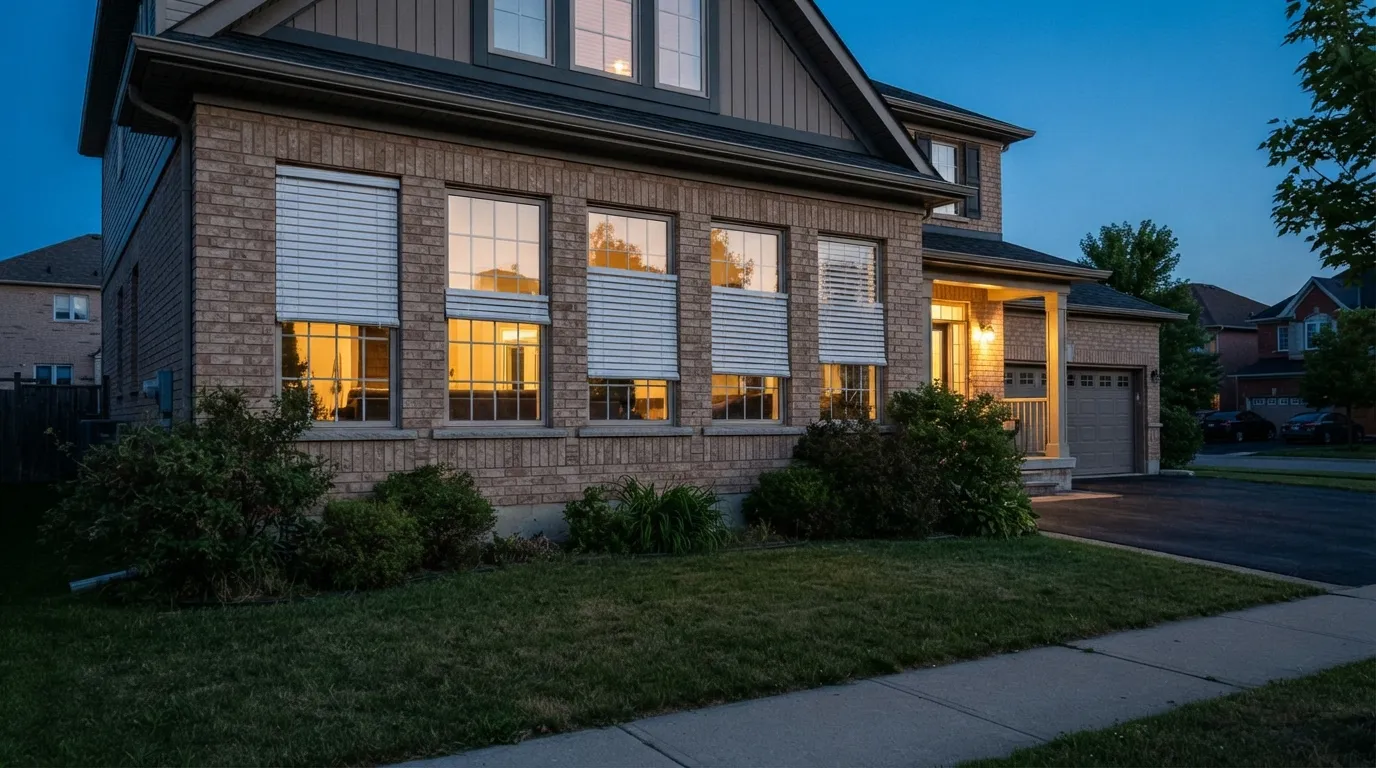
Your windows are the first thing a guest sees, often from the driveway, and a row of shades at mismatched heights makes a house look as if someone left in the middle of a task.
The habit builds one window at a time. You raise a blind for light, tilt another against glare, and never bring the set back together. From inside it passes unnoticed, but from the curb the lines of the facade look uneven.
The fix takes two minutes. Set every blind or shade in a room to the same height, and tilt slats the same way. Fully raised, or lowered to the same point on each window, both read as deliberate.
Try This: Walk to the sidewalk at dusk with the lamps on and look at your front windows the way a visitor will. Whatever bothers you from there is worth fixing before company comes.
The kitchen has its own version of mismatch, and it sits within arm’s reach of the faucet, right where guests tend to stand.
#13 – The Sink Lineup of Sponge, Soap and Rack
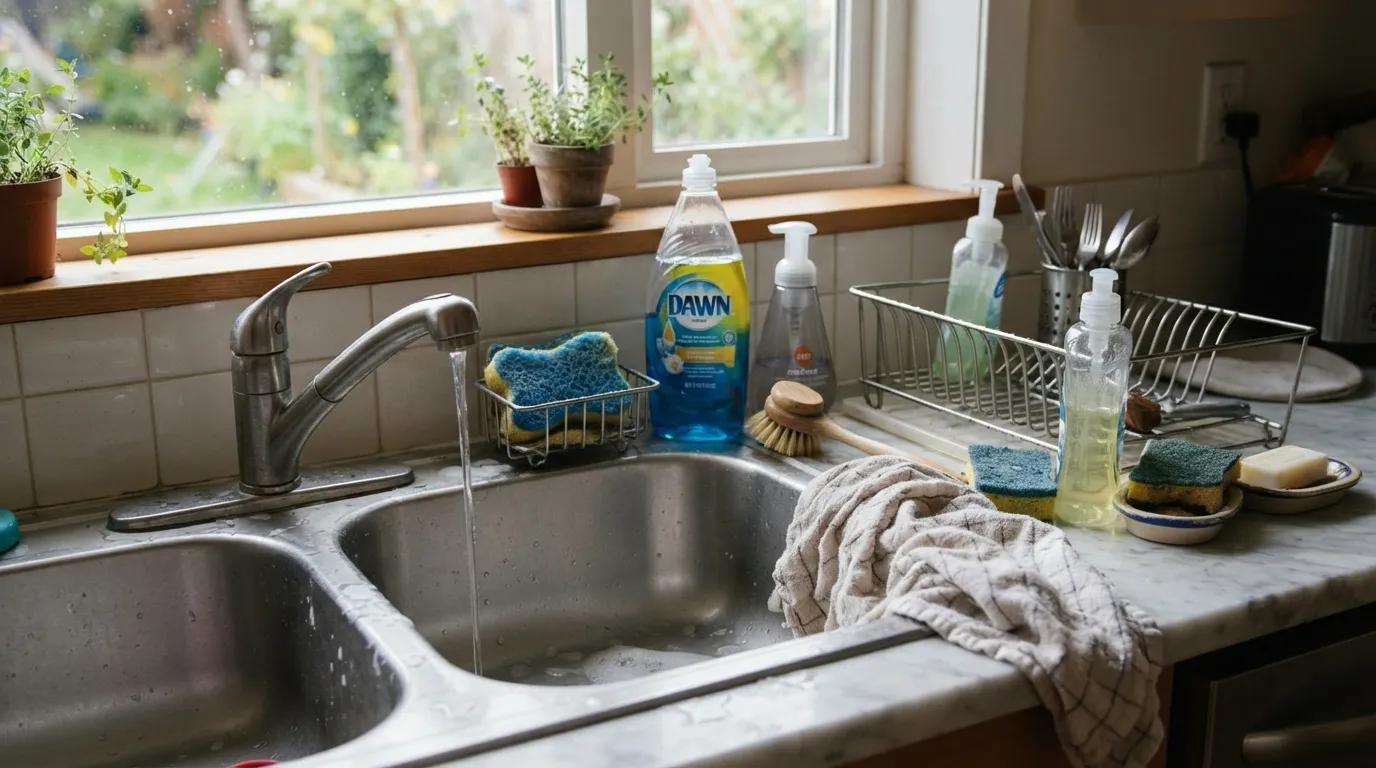
Count what’s within reach of your faucet. Dish soap, hand soap, a sponge caddy, a scrub brush, a rack and a towel are six separate shapes, usually in six unrelated colors, and guests take in all of them while you pour their water.
The rack earns its place. The extras mostly don’t. Two or three pump bottles in different brands look like a shelf in a drugstore aisle, while one matching pump for dish soap and one for hand soap looks like a decision.
Group what’s left on a single small tray, whether it’s ceramic, wood or stone, so the eye reads one object instead of four. Keep the sponge in a low dish rather than a tall caddy. Limit the sink zone to one tray, one rack and one towel.
At a Glance
- Two matching pumps: one for dish soap, one for hand soap.
- One tray in a single material, such as ceramic, wood or stone.
- A low sponge dish instead of a tall caddy.
- Spare brushes and scrubbers under the sink, out of view.
Move to the living room and the same effect comes from something thinner and longer: the cords running from lamp, TV and charger down the wall.
#12 – Cords Draped Down the Wall
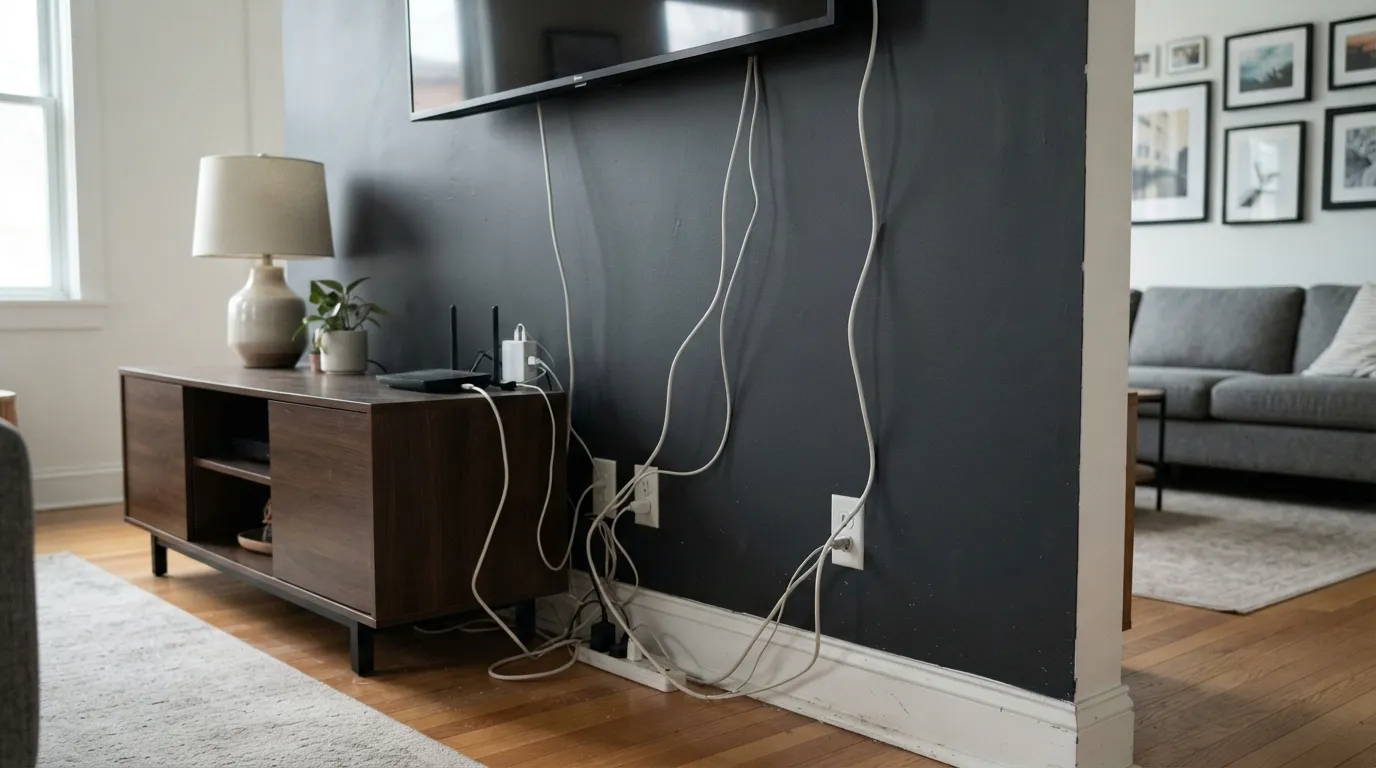
A white cord on a dark wall is a line drawn in marker. Even a tidy room looks unfinished when three or four of them run from the outlet to the lamp, the TV and the router in loose curves.
Cords also collect dust and crowd the baseboard, which is why they look dirty even after you’ve vacuumed. You have a few options, depending on how permanent you want the fix to be:
- Paintable cord covers that stick to the wall and can be painted to match it.
- An in-wall cable kit for a wall-mounted TV, as long as it’s rated for in-wall use.
- Adhesive clips that route cords behind a sofa or console leg.
Never run an ordinary extension cord inside a wall. It’s a fire hazard, and the kits sold for this job are built for it. Route every cord along an edge, a baseboard or a furniture leg, never across open wall.
Insider Tip: Paint a cord cover with the same flat paint as the wall, and the cord disappears. A glossy trim color would make it stand out instead.
A tidy wall can still look off at night, when bulbs you bought over several years all switch on together.
#11 – Light Bulbs That Glow in Different Colors
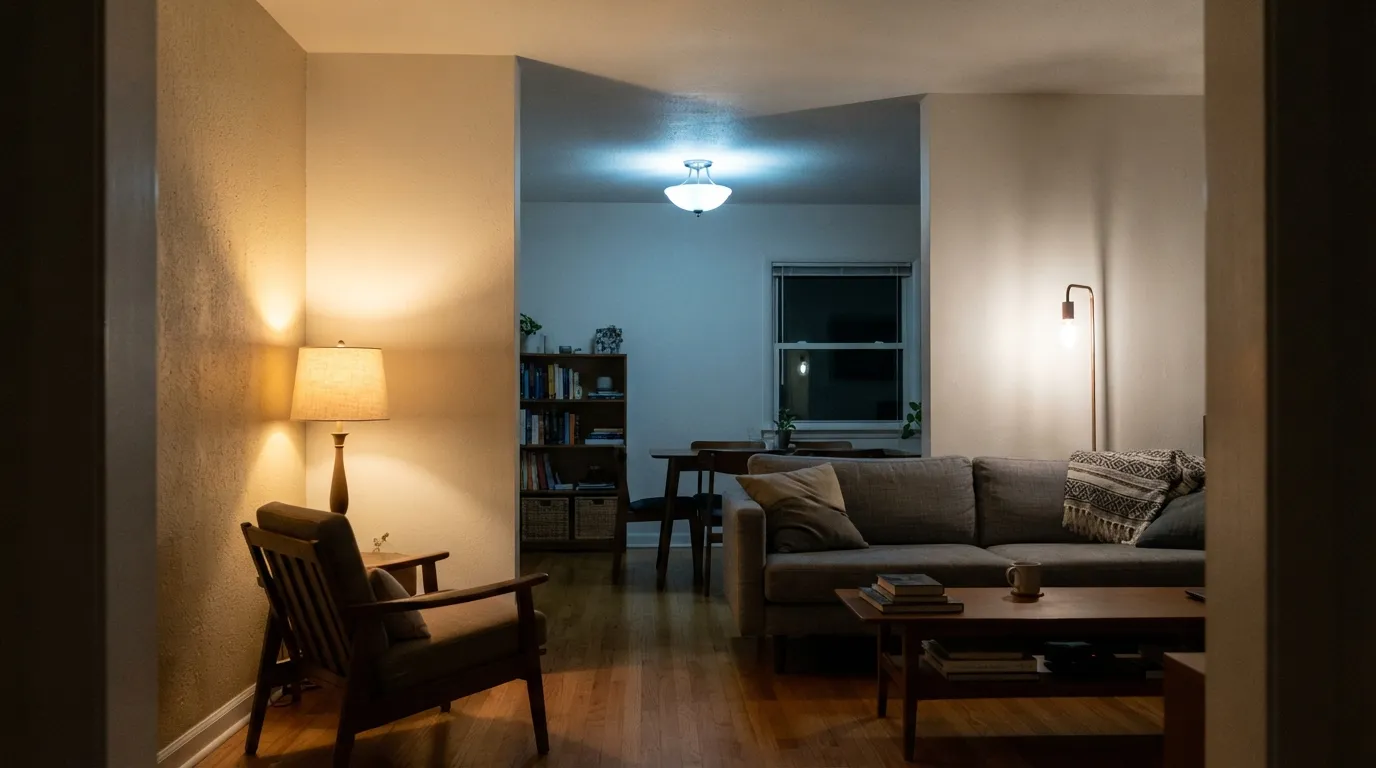
Walk through the room at night and you may find one lamp that looks yellow, a ceiling fixture that looks blue-white and a third that sits somewhere between. That patchwork makes walls and upholstery look like different colors in different corners.
Bulb packaging gives a number in Kelvin, and lower numbers are warmer. Match the Kelvin number on every bulb in the room; 2700K is the warm white most living spaces use. Bulbs sold as “soft white” aren’t always the same, so check the number rather than the label.
Replacing a room’s worth of bulbs costs far less than repainting, and the result is a calmer room. It’s the cheapest change on this list.
The Science Behind This: Kelvin measures the color of the light itself. A cooler 5000K bulb next to a 2700K lamp shifts how the same sofa, wall or wood floor appears, depending on which light falls on it.
Lighting shows you the floor too, and underfoot there’s a habit that looks sloppy and can send a guest tripping.
#10 – Rugs That Curl, Slide or Float
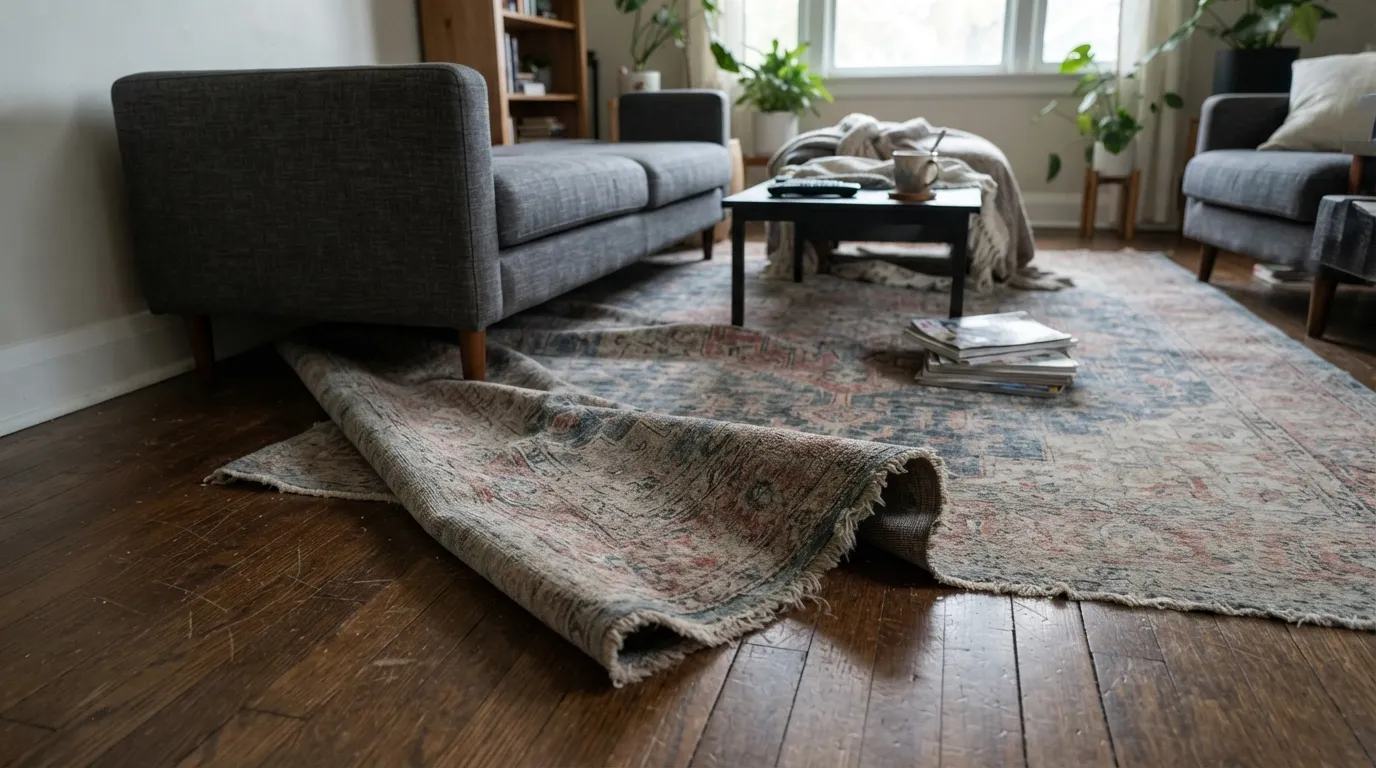
A rug corner that curls up is the one clutter-look that’s also a trip hazard, which matters when your guests include grandparents. Rugs that slide leave a ragged gap against the baseboard and a bunched edge under the sofa.
- Add a rug pad cut an inch or so smaller than the rug on each side, so the edges stay flat and the pad stays hidden.
- Square the rug to the room, with equal margins of floor along the walls it runs parallel to.
- In a seating area, the rug should reach under the seats.
Put at least the front legs of every sofa and chair on the rug. A rug that’s too small leaves the furniture scattered around it and looks like a doormat dropped in the middle of the floor.
Why It Works: When furniture legs touch the same rug, the sofa and chairs read as one group. Without that overlap, each piece looks like it was placed separately.
From the floor, the eye moves to the biggest vertical surface in the kitchen, which in many homes holds more paper than a bulletin board.
#9 – A Refrigerator Door Covered in Paper
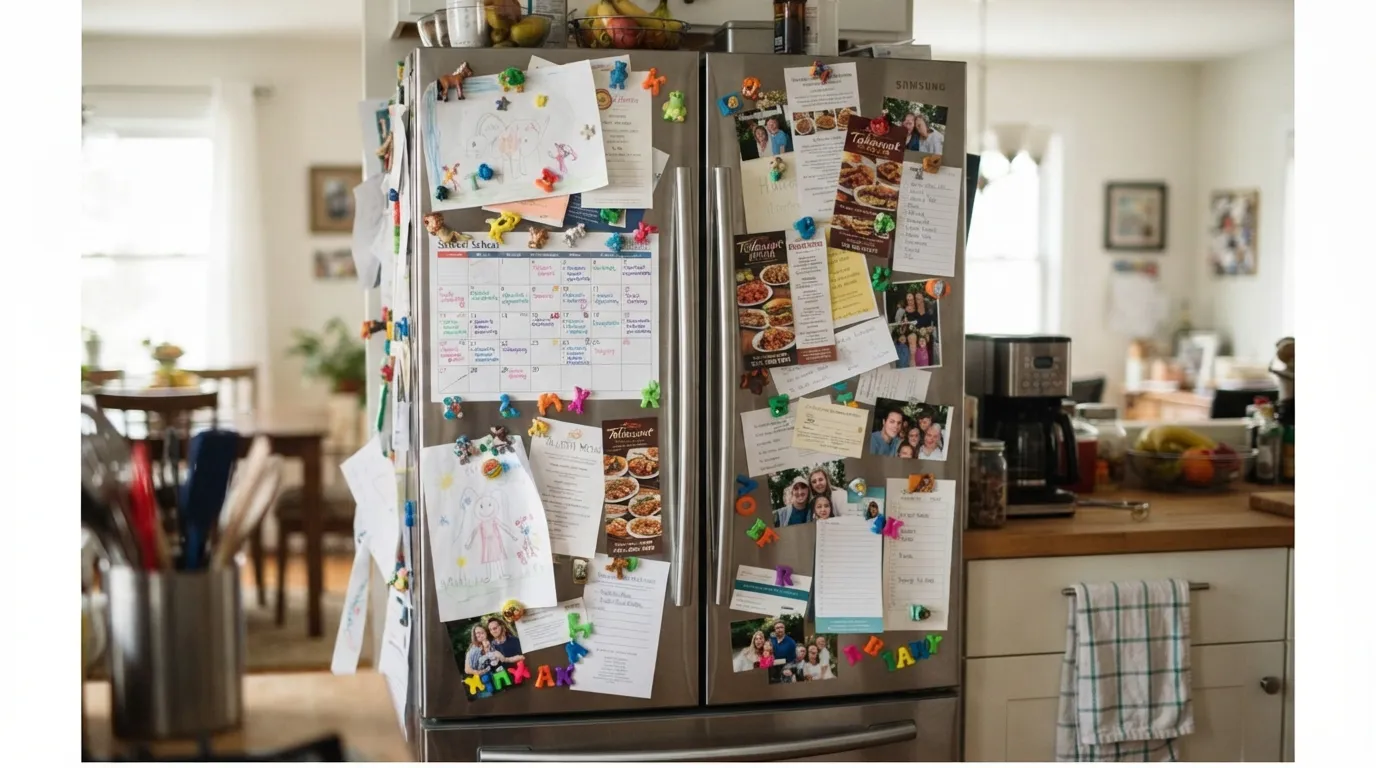
The fridge door is a bulletin board no guest asked to read. Magnets, school calendars, takeout menus and photos in different sizes break a large flat surface into dozens of small shapes, and in an open-plan kitchen the fridge sits right in the sightline.
Here’s a verdict some families will resist: the covered fridge is charming to the people who live there and noisy to everyone else. A clean front, with maybe one photo or one calendar, makes a kitchen look larger, especially with stainless steel or panel-ready finishes.
Worth Knowing
- Panel-ready refrigerators are made to take cabinet-matching fronts, so paper on the door works against the design.
- The inside of a pantry or cabinet door is a good home for calendars and school notices.
- A single corkboard in the mudroom can hold everything else.
- Allow one photo or one calendar on the door, and no more.
Papers still need somewhere to live. Move the paper to the inside of a pantry or cabinet door, or to a single corkboard in the mudroom. You’ll still see it every day, and guests won’t.
Guests also hang up their coats, and that means opening a door you usually keep closed.
#8 – A Coat Closet Nobody Can Add To
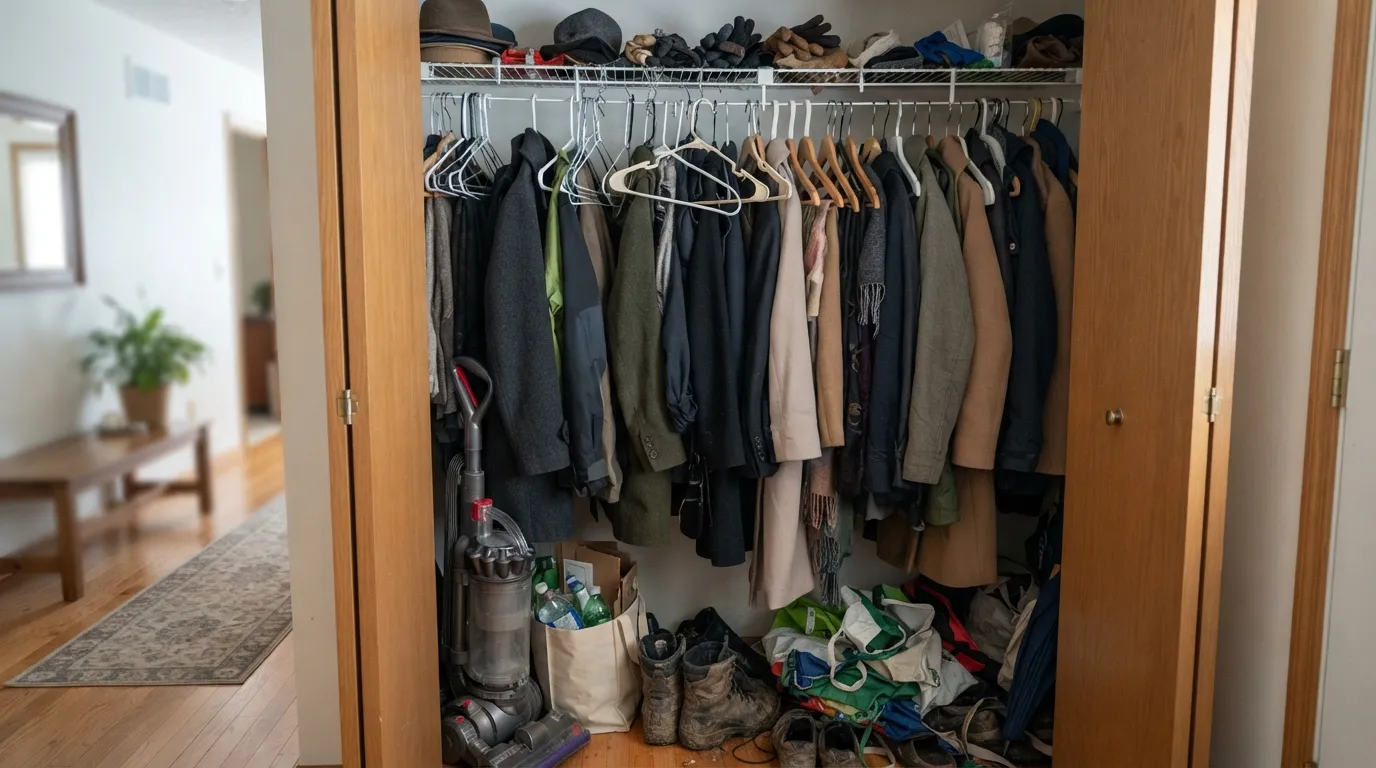
A guest opens your coat closet and finds wire hangers from the dry cleaner, plastic ones, a few wooden ones and no room for another coat. It’s a small moment, but it tells them exactly how much space they weren’t expected to need.
Mixed hangers hang at different heights and angles, so the line of the rail looks ragged. Matching hangers fix that. Wood or slim flocked hangers both work, though a coat-weight hanger should be sturdy enough for a wool overcoat.
Then clear space. Leave at least two feet of rail empty for guests’ coats. Bring off-season gear upstairs, and don’t park the vacuum or a bag of recycling on the closet floor, where it will be the first thing a visitor sees.
Open shelves ask guests to look longer, and they punish a different kind of mismatch: containers that almost match but don’t.
#7 – Open Shelves With Odd Containers
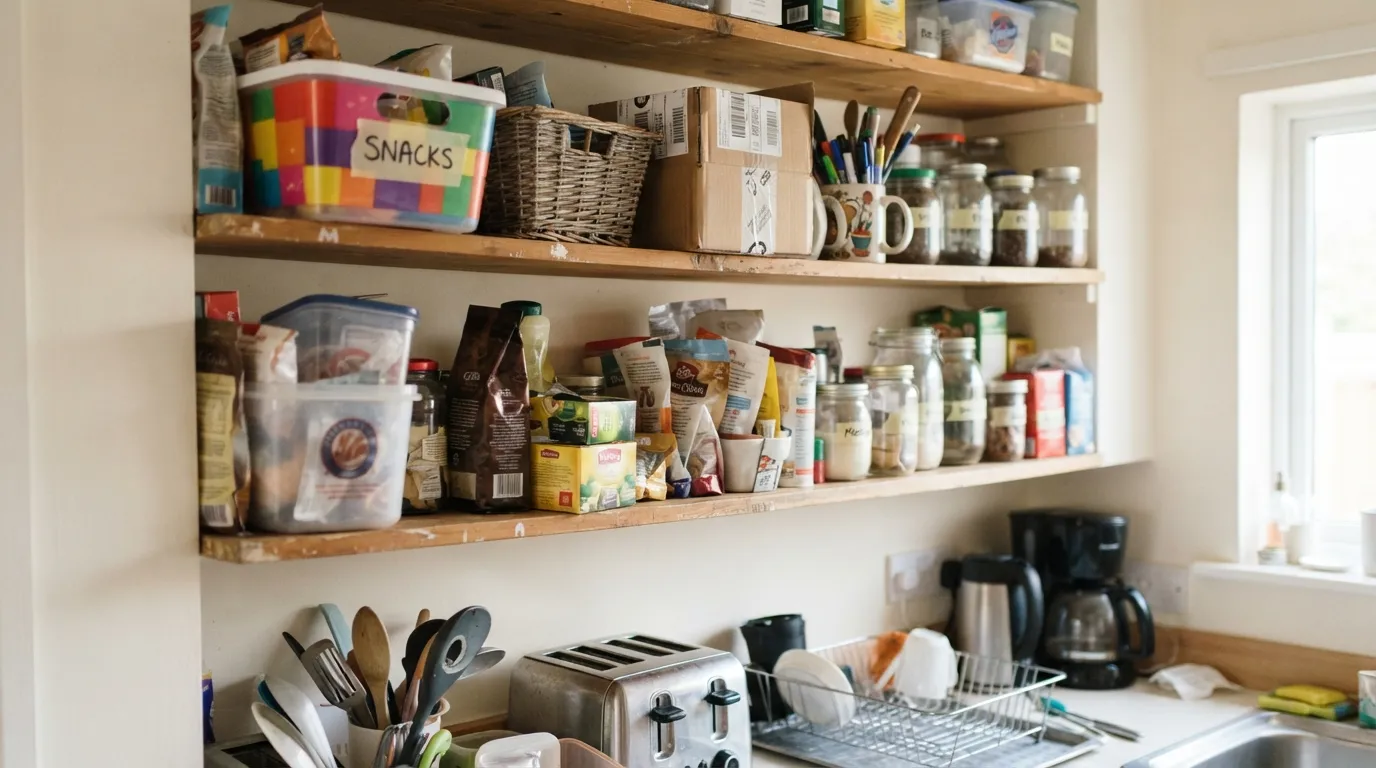
Open shelving is a display, and every container on it is part of the display. Plastic bins from three different stores, a wicker basket, a cardboard box with the label showing and a mug full of pens read as storage that nobody ever edited.
You don’t need to buy new things. Pick one material for the containers you can see, such as woven baskets, wood boxes or matte ceramic, and move the rest behind a door. Turn labels inward and keep bulky things on lower shelves.
Line up the front edges of everything on a shelf. Books, boxes and baskets pulled even with the shelf edge look intentional, while items sitting at staggered depths look as though they were dropped there.
The Psychology Behind This: The eye follows edges before it reads objects. A straight line along a shelf front suggests someone planned it, and a ragged line suggests nobody did.
The sofa has the same trouble in softer form: too many cushions, each one pulling in a different direction.
#6 – Too Many Pillows and a Wadded Throw
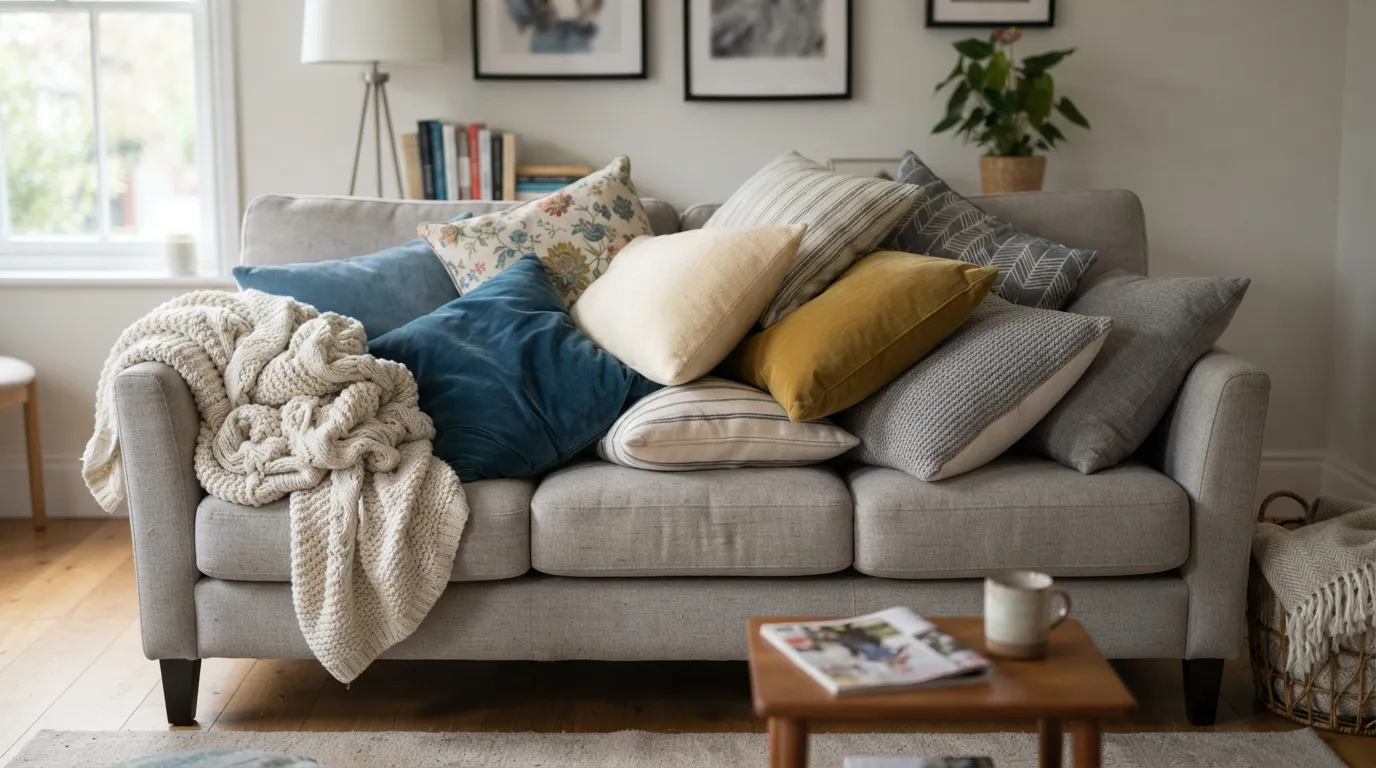
Six pillows on a standard sofa leave no place to sit and make the whole piece look like a pile. A good number for most sofas is two or three, and a sectional can take a few more spread along its length.
Here’s the verdict: extra pillows are overrated. They read as clutter, not comfort. Pick one solid, one pattern and one texture, keep them in the same color family, and stop.
The throw matters as much. A blanket balled up at one end looks like it was just used, while the same one folded over the sofa arm or draped along the back looks styled. Keep one throw on the sofa and store the rest in a basket.
Quick Compare
- Standard sofa: two or three pillows, one solid, one pattern, one texture.
- Sectional: a few more, spread along its length instead of stacked in the corner.
- Throw: folded on the arm or draped along the back, not balled up at one end.
#5 – A Guest Bath Full of Personal Items
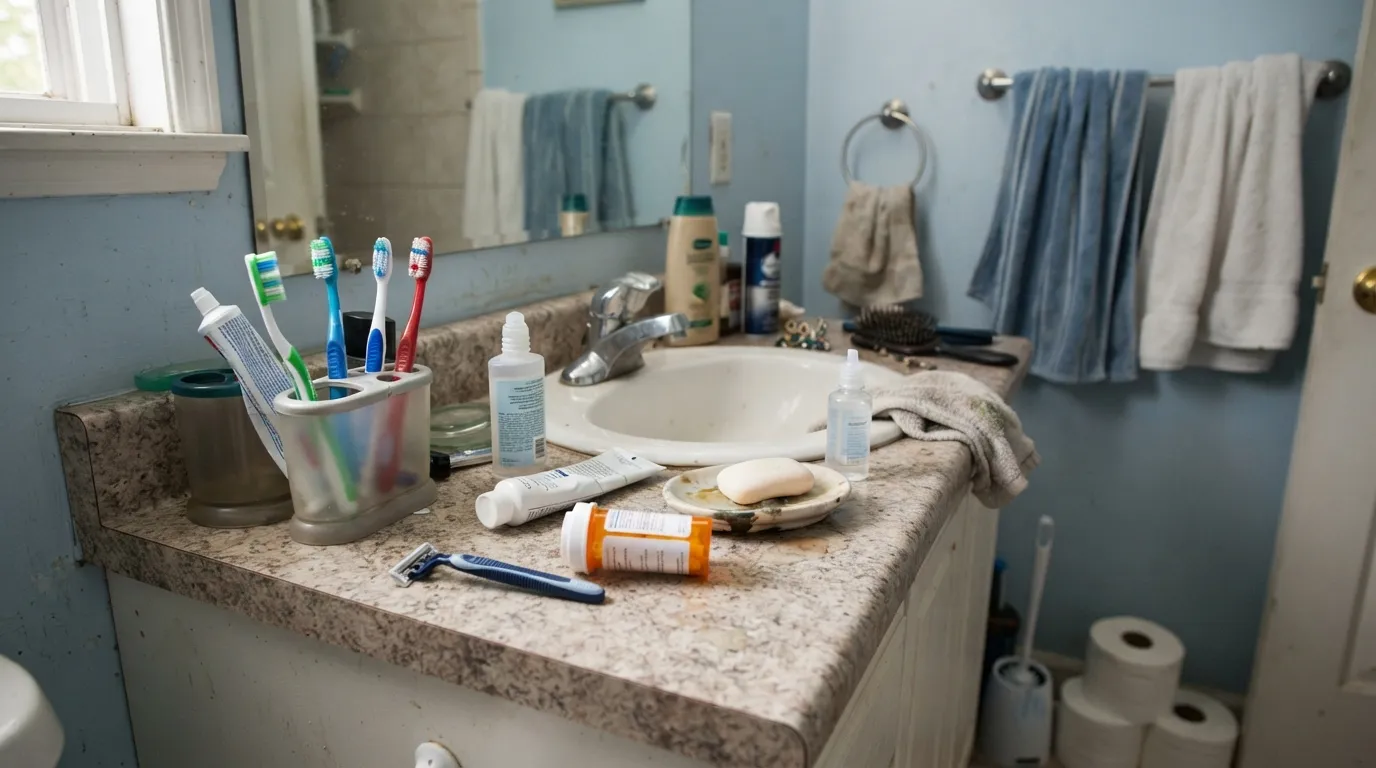
The guest bathroom is the one room where visitors are alone with your belongings, with time to look at all of them. A toothbrush, a razor, a prescription bottle and a half-used tube of hand cream make it feel like a family bathroom.
Use the same tray logic as the kitchen sink. A single tray holds a soap pump and a small jar or candle, and everything personal goes in a drawer or cabinet. Clear the counter down to soap, a towel and one small object.
Check the towels too. A fresh hand towel hung straight looks welcoming, and two mismatched bath towels slung over a rod look like laundry day. The toilet brush and spare rolls belong where they’re handy but out of the sightline.
Try This: Put a basket with spare toilet paper and tissues within reach of the toilet. A guest then doesn’t have to ask, and the supplies don’t sit on the counter.
Back in the kitchen, one of the largest objects in the room is the one you’d least like to point out.
#4 – A Trash Can Parked in the Sightline
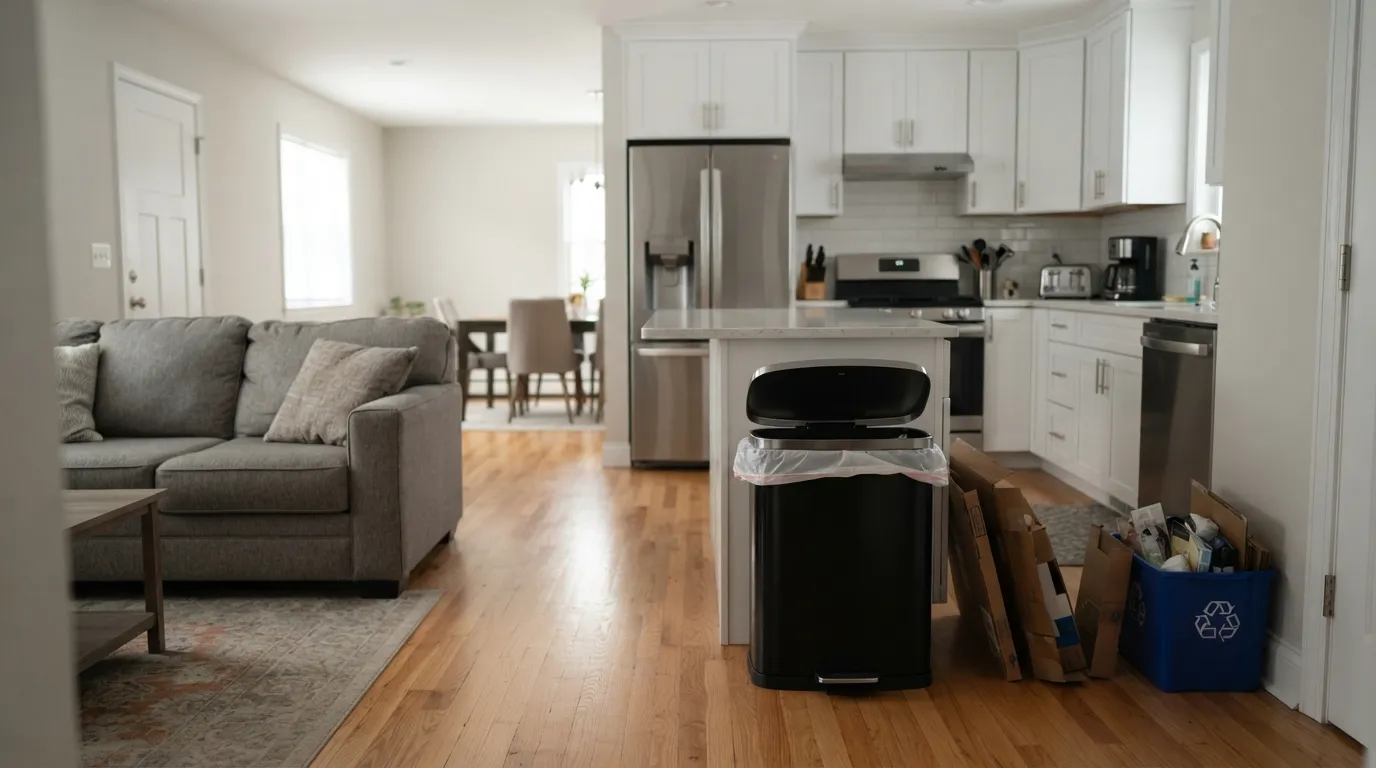
A tall kitchen can in an open plan is often the largest single object a guest sees from the living room. It’s usually black or stainless, which blends with the appliances, and still it reads as garbage.
The best fix is a pull-out cabinet, though that’s a renovation job. The simple version is a lidded can in a neutral finish placed beside or inside a pantry, away from the main line of sight. Empty it before company, because a bag poking over the rim undoes everything else.
Keep the trash and recycling out of the sightline from the main seating area. The recycling bin tends to be the worse offender, with flattened boxes leaning against the wall.
Editor’s Note: A cabinet with a pull-out bin is a design upgrade worth planning if you ever remodel. Until then, location does most of the work and costs nothing.
Guests meet the next problem before they reach the kitchen at all, and it’s waiting on the floor by your front door.
#3 – A Pile of Shoes at the Entry
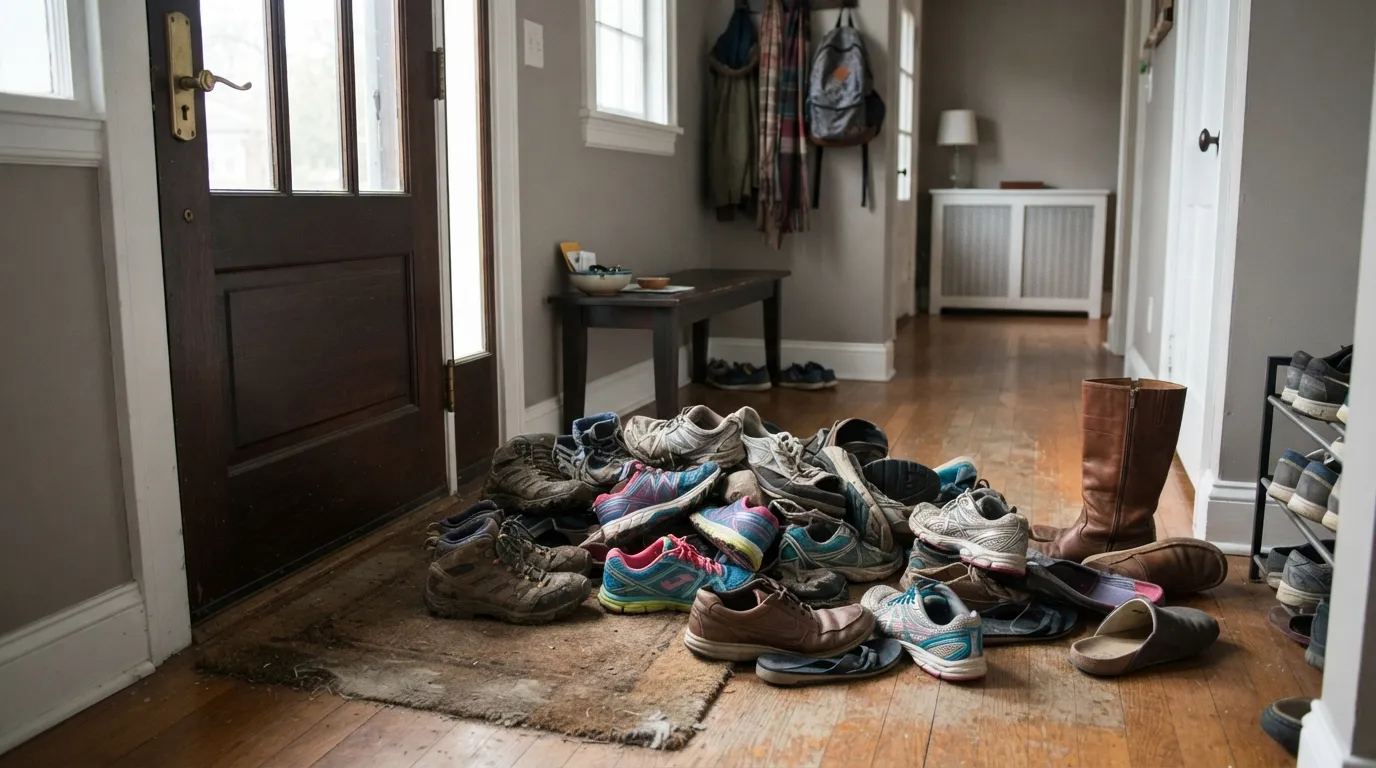
Entries set the tone, and in many American homes the first thing a guest meets is a heap of shoes. Nine pairs piled by the door, in different colors and heights, make even a handsome foyer look like a place where people dump things.
The fix starts with fewer pairs. Keep out only what’s worn this week, one or two pairs per person, and move the rest to bedroom closets. Keep only the pairs worn this week by the door. A boot tray under a bench catches wet or muddy pairs in winter.
If you ask guests to remove their shoes, give them an obvious place to put them, such as a bench with a closed cabinet below or a low shelf near the mat. Guests are more comfortable following a rule they can see.
Did You Know: The hall tree, a piece of entry furniture common in late-nineteenth-century houses, gave coats, hats and umbrellas a fixed place. A modern bench with storage does the same job for shoes.
#2 – The Laundry Basket That Lives on the Sofa
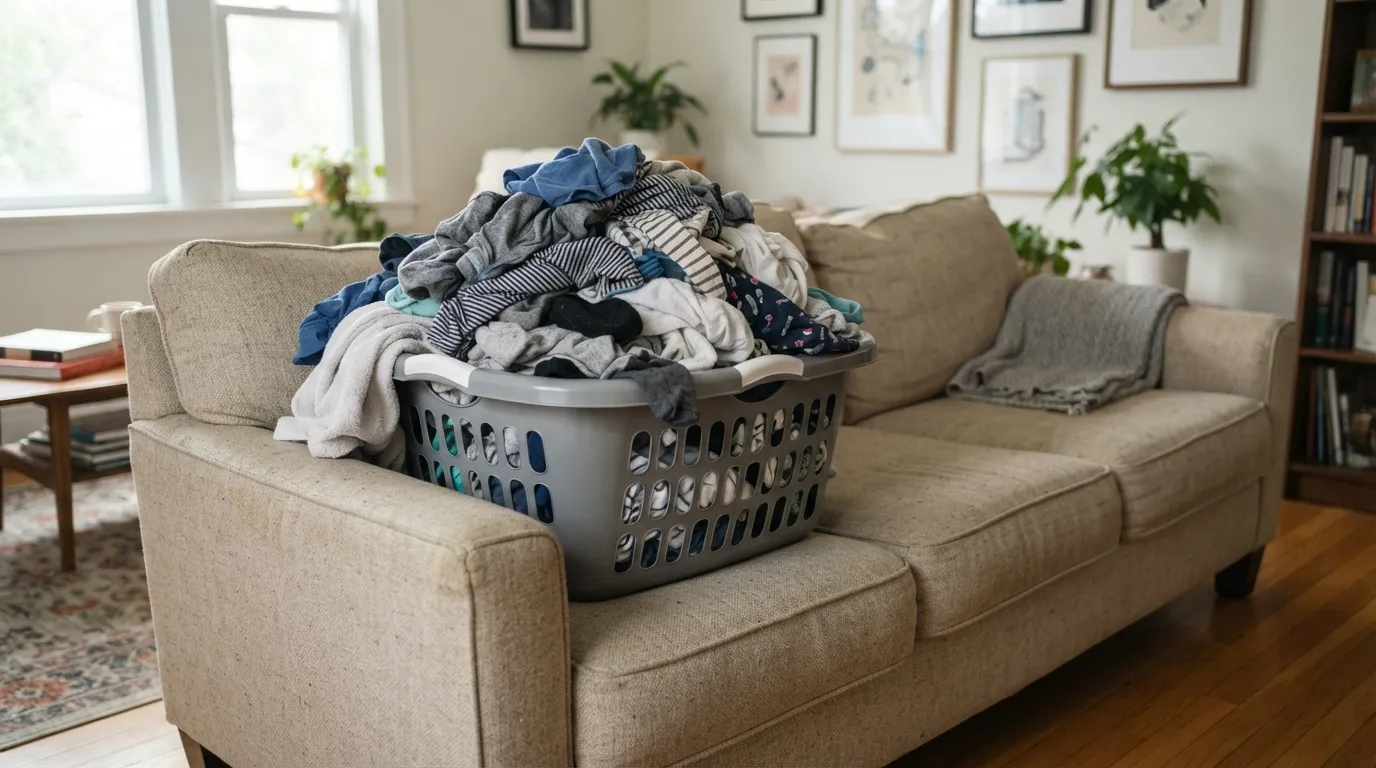
The basket of clean clothes has been on the sofa since Tuesday, and everyone in the house has stopped seeing it. A guest sees it at once: a heap of mixed colors, textures and patterns sitting on the calmest surface in the room.
Folding is the only real fix. Fold at the dryer, or carry the basket straight to the room where the clothes will be put away. If a basket has to wait, a lidded hamper in the bedroom keeps it out of the way.
Lidded baskets are overrated as a cure. A basket shut over a week’s pile is just a larger pile with a lid on it. Empty the basket the day the laundry comes out of the dryer.
Fast Facts
- Fold while the clothes are still warm from the dryer, and creases are easier to smooth.
- Stack by bedroom as you fold, so each pile has a destination.
- A basket belongs in the bedroom or laundry room, never on the sofa.
The biggest case isn’t a basket or a bin. It’s the flat tops of the furniture you walk past every day, and it changes how every other item on this list looks.
#1 – Every Flat Surface Used as a Holding Area
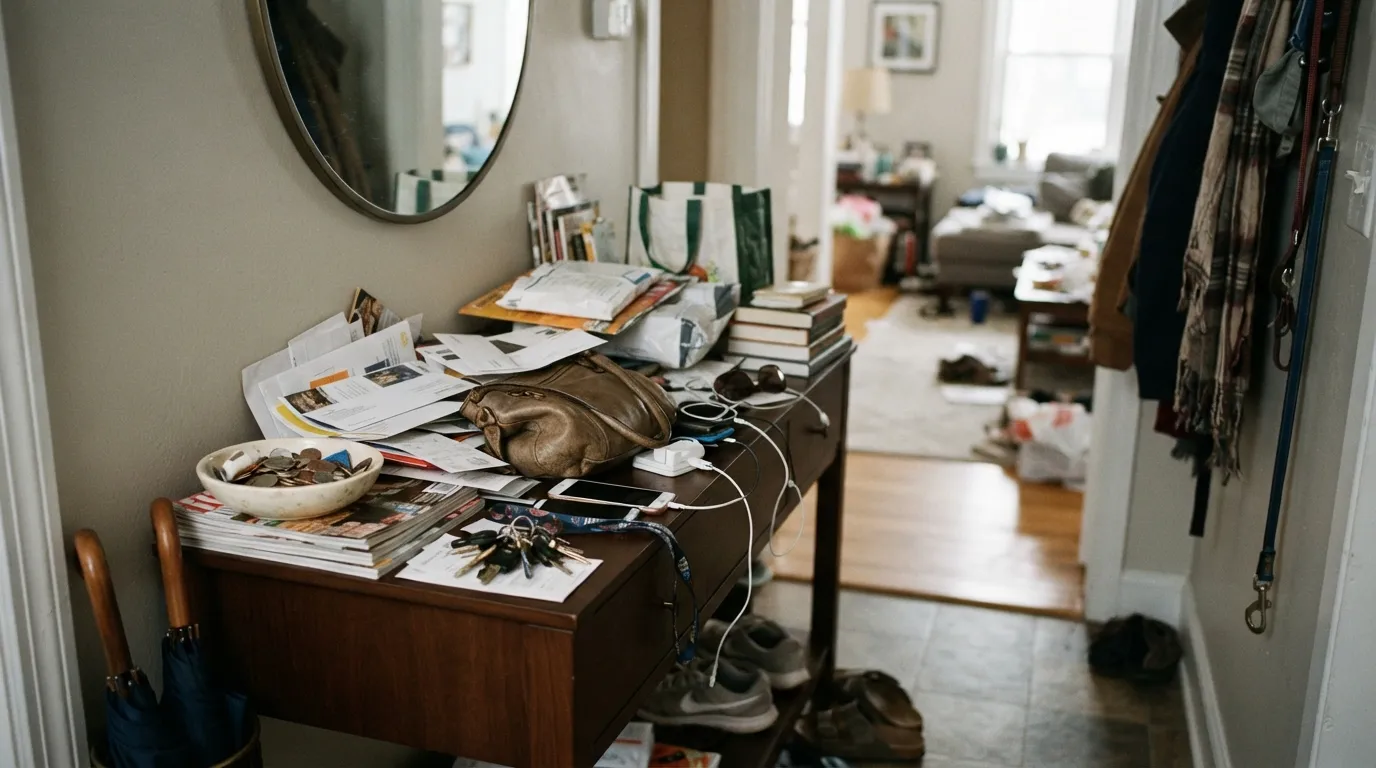
The coffee table, the entry console, the dining table and the kitchen island sit at hand height and in the middle of every sightline, so they collect mail, keys, chargers, remotes, glasses and shopping bags. Each item is small. Together they turn the surfaces guests look at most into a pile.
The other thirteen habits share this root. Cords, shoes, laundry and sink items are things without a home, so they sit wherever there’s a flat spot. Give each thing a place and most of the list resolves itself.
Give each flat surface one job, and leave part of it bare. On a coffee table, that might be a tray holding the remotes, with one book and a plant beside it. On an entry console, it’s a bowl for keys and a sorter for mail.
The kitchen island is the hardest, because it’s where everything lands. Open mail standing over the recycling bin, drop the paper there, and keep the island for food and one bowl.
Editor’s Note: A clear surface doesn’t mean an empty home. Keep the lamp, the books and the plant. The goal is some open space around them, so the eye has a place to rest.
Look at the House From the Door
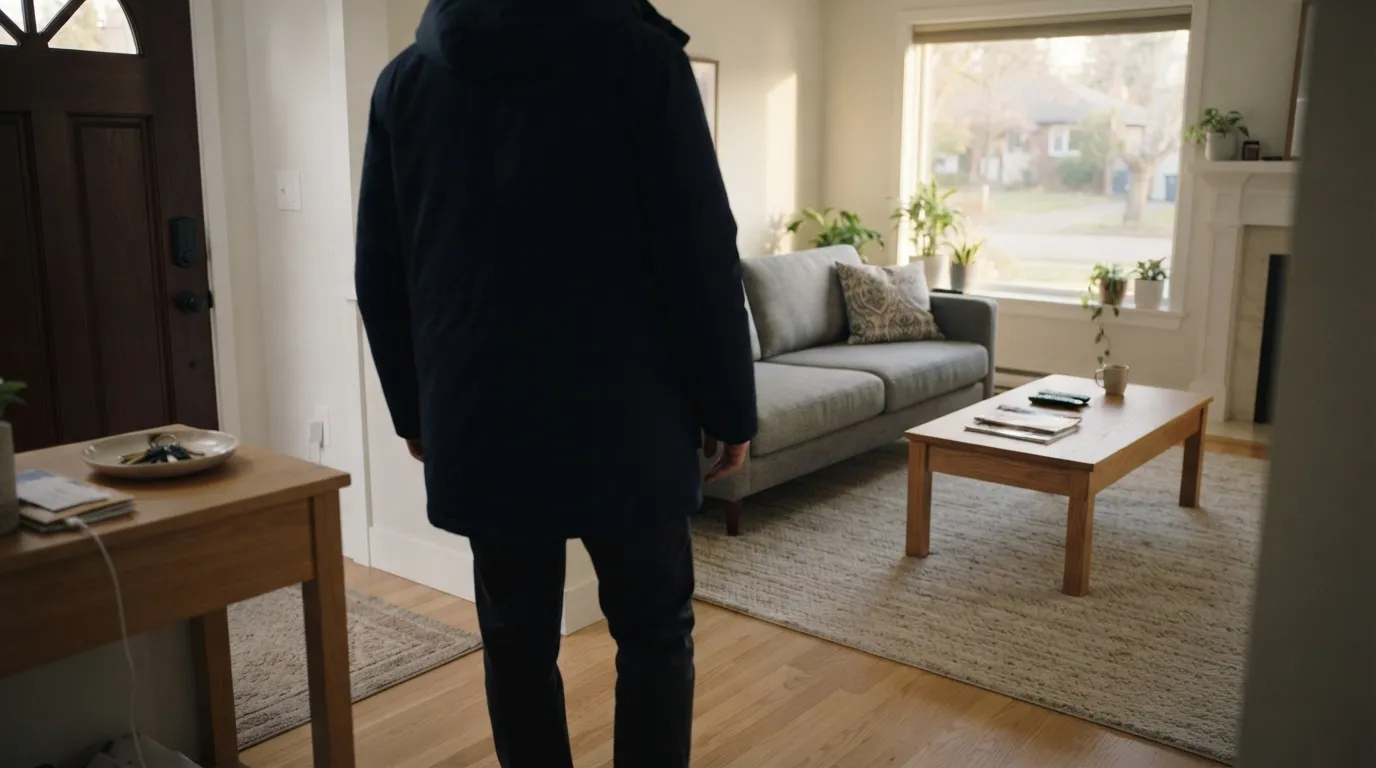
Tidy and calm are different things. Tidy means everything is clean and put away, while calm means the eye can move through a room without catching on a mismatch, a cord or a heap. Guests judge the second.
So try your next cleanup from the front door, with your coat still on. Look at the windows, the entry, the sofa and the nearest flat surface, and fix the first thing that catches your eye before you reach for the vacuum.
Which surface in your home collects the most by Friday night, and what is the first thing you’d move off it?