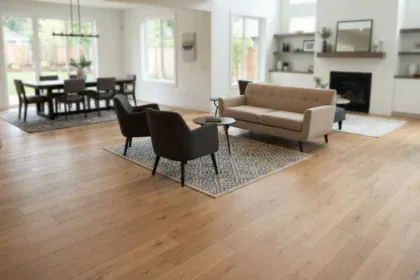


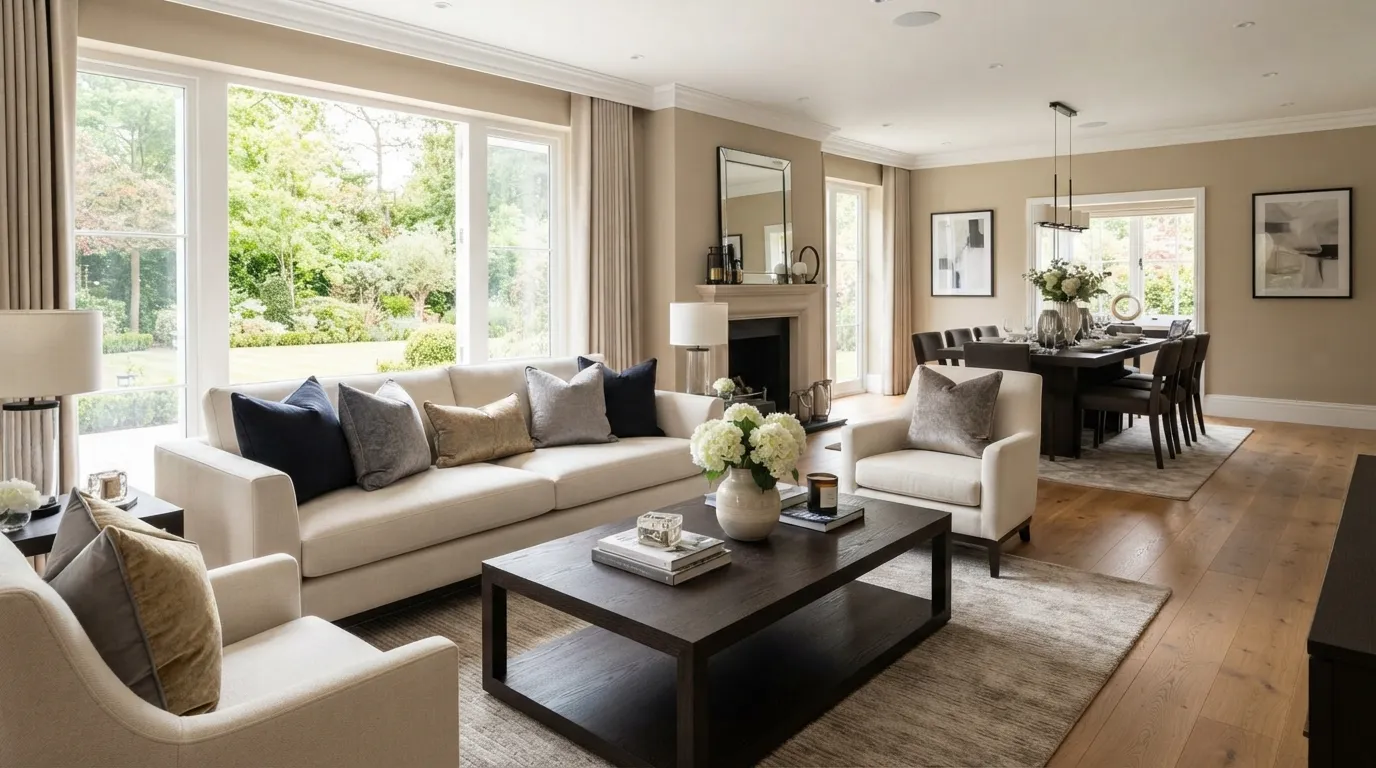
Ask most people what makes a house look expensive and they’ll say marble counters, designer sofas and a florist’s worth of fresh flowers. The National Association of Realtors’ 2025 staging survey points to something far less glamorous: 29% of sellers’ agents said staging led to a 1% to 10% increase in the dollar value offered, and 83% of buyers’ agents said it made it easier for buyers to envision the property as a future home.
So what are agents actually doing? Some of the tricks are free, one room barely gets touched, and the biggest move is not the one most people guess.
#15 – The Guest Bedroom Gets Skipped
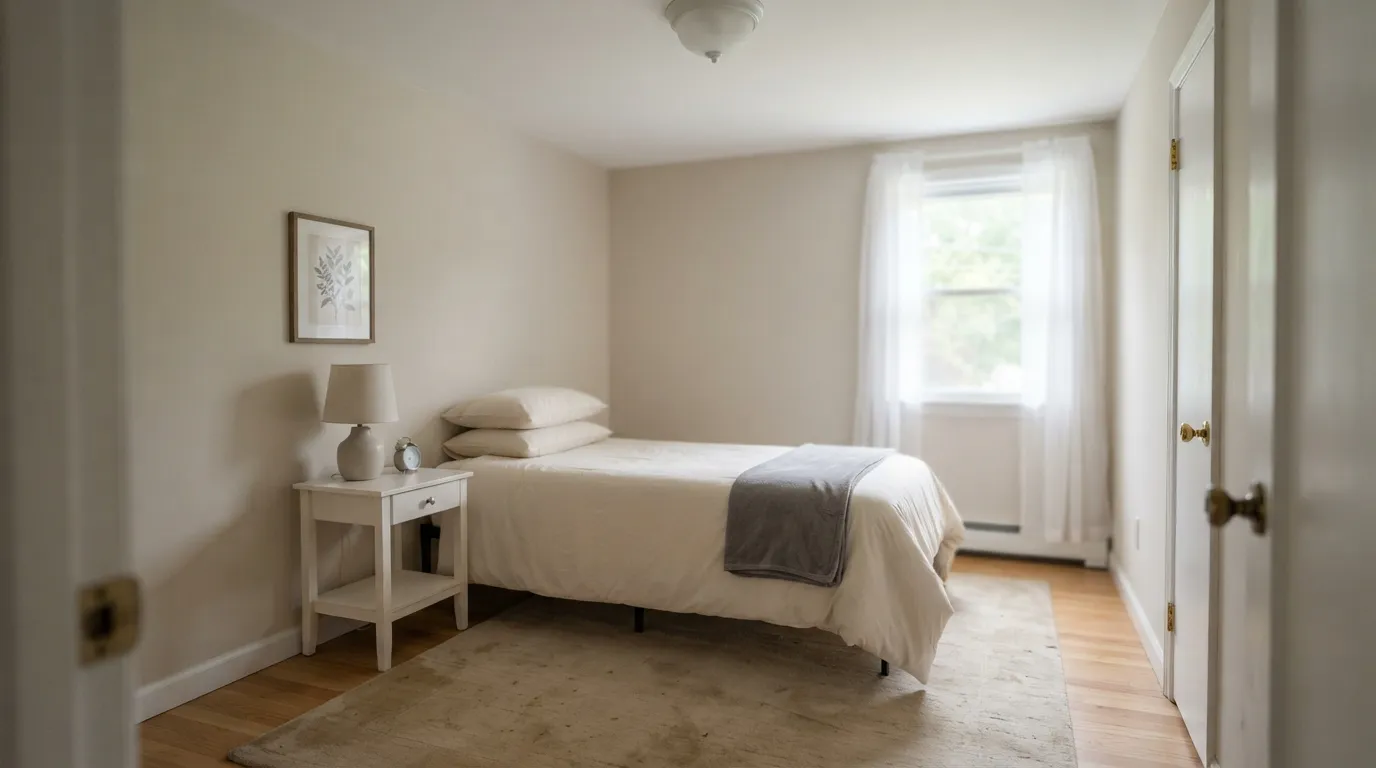
Agents who stage for a living quietly leave one room almost untouched.
It’s the guest bedroom. In NAR’s 2025 report, staging the guest bedroom (7%) ranked as the least important of the rooms listed.
That’s a budget decision, not neglect. Guest rooms, laundry rooms and other lower-traffic areas can typically be skipped, and the money goes to rooms where buyers linger.
“Staged” doesn’t mean every room furnished like a showroom. It means the rooms that carry the sale look finished, and the rest look clean and uncluttered.
Editor’s Note: Skipping a room only works if it’s empty of boxes and exercise gear. A neglected spare room tells buyers there isn’t enough storage, and no styling fixes that impression afterward.
But the next trick is one agents recommend in almost every single listing.
#14 – They Remove Far More Than You’d Expect
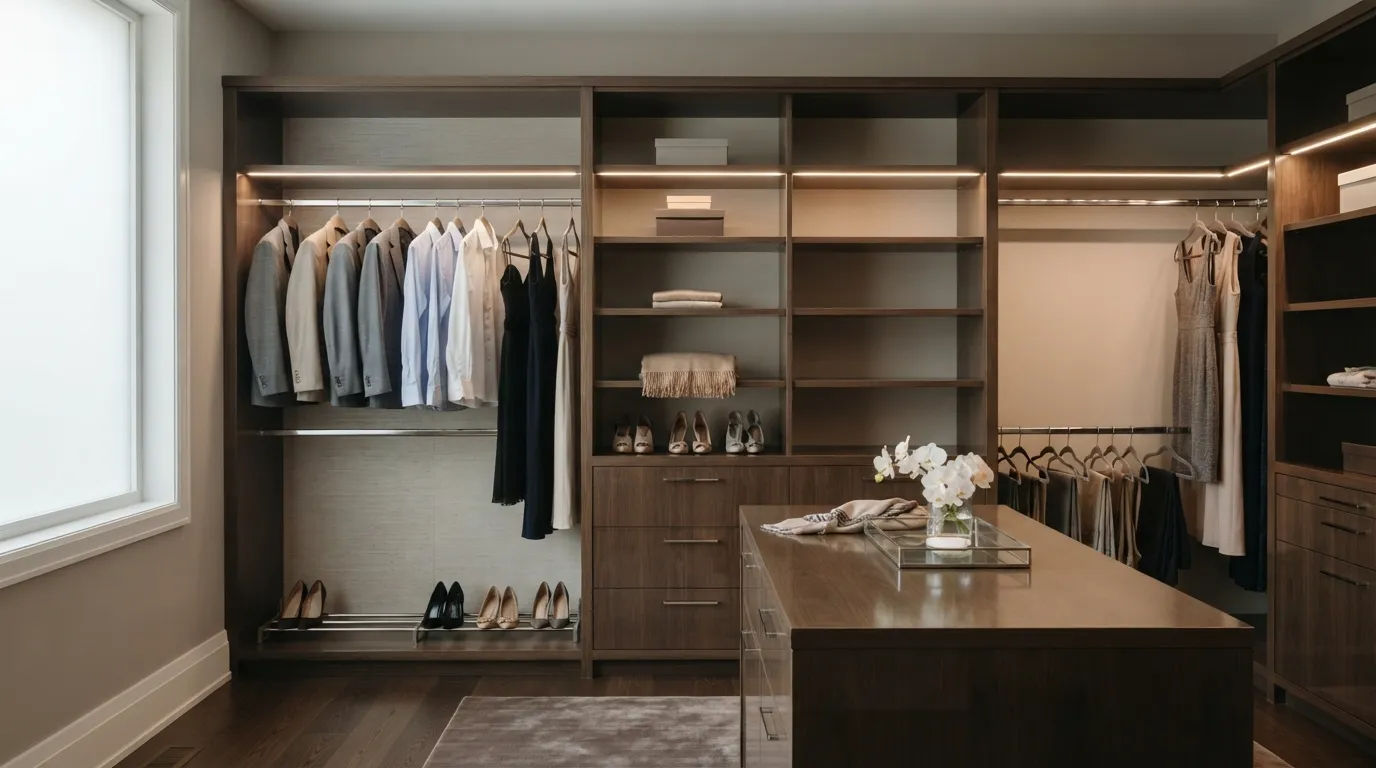
Decluttering is the first move, and most owners stop about halfway.
It’s also the most common advice agents give. In NAR’s 2019 report, 95 percent of agents recommended decluttering, ahead of a full-home clean.
One popular staging checklist suggests clearing 30–50% of items. That number comes from a single guide rather than a formal study, so treat it as a rule of thumb.
Luxury buyers aren’t judging your belongings. They’re judging the space, and every extra object shrinks it.
Closets count too, and that’s where many sellers quit. A packed closet makes a large home feel small, and buyers do open the doors.
Fast Facts
- Decluttering was recommended by 95% of agents in NAR’s 2019 report.
- The 30–50% clearing figure is a guide’s rule of thumb, not a study.
- Closets and storage areas get opened, so they get staged too.
- Fewer objects make every room read as larger.
But clearing the shelves is only half the job, and the second half gets personal.
#13 – Every Family Photo Disappears
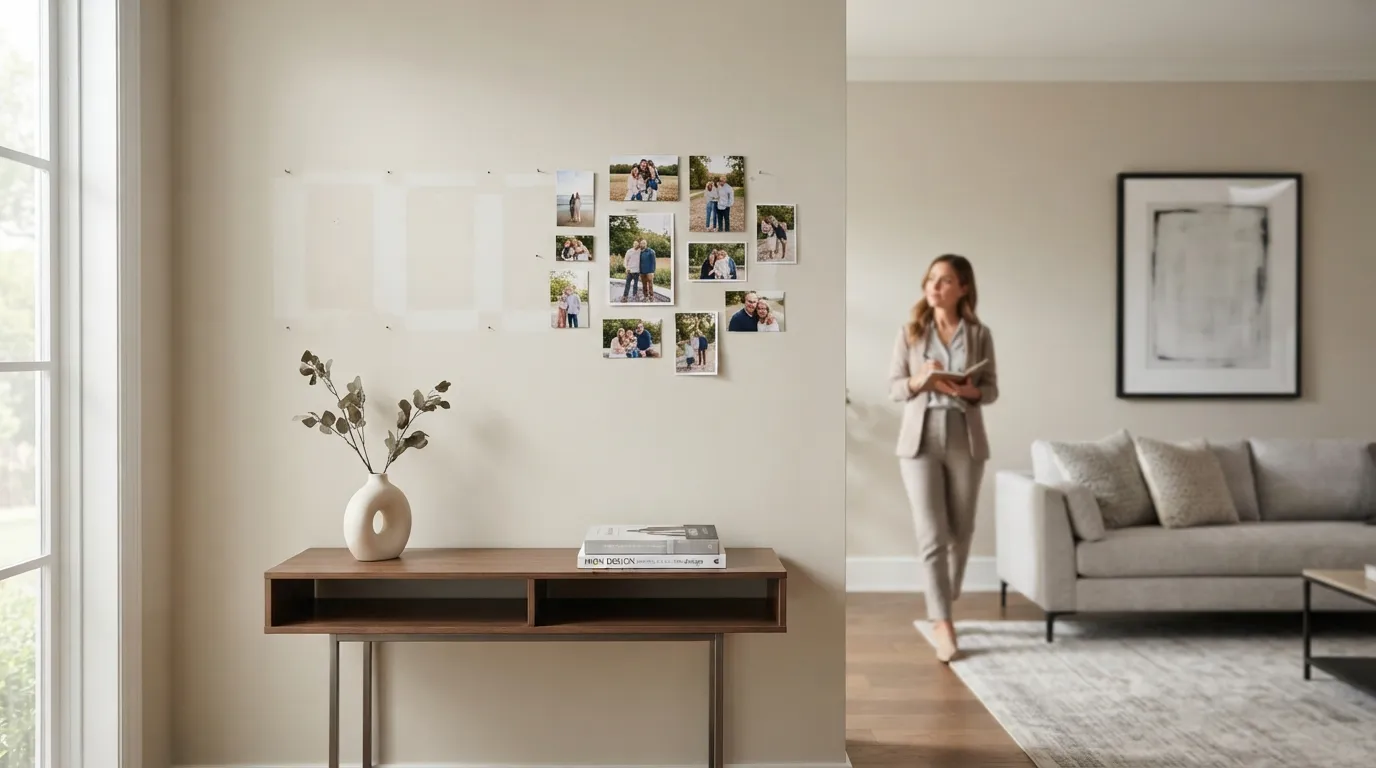
Your house is for sale. Your life story isn’t.
Agents tell sellers to remove personal items such as family photos and personal memorabilia. The reason is simple: buyers need to picture their own life there.
This is where it gets uncomfortable. A wall of your wedding photos can make a buyer feel like a trespasser, not a future owner.
Luxury staging guides take it further. Large collections of art or memorabilia should mostly be removed to create a cleaner, more neutral look.
The Psychology Behind This: Personal objects pull attention toward the current owner’s story. Take them away, and a buyer’s mind has room to start writing their own.
Some people argue this strips every bit of charm from a home, though, and the argument gets loudest when it reaches the paint.
#12 – The Walls Go Quiet
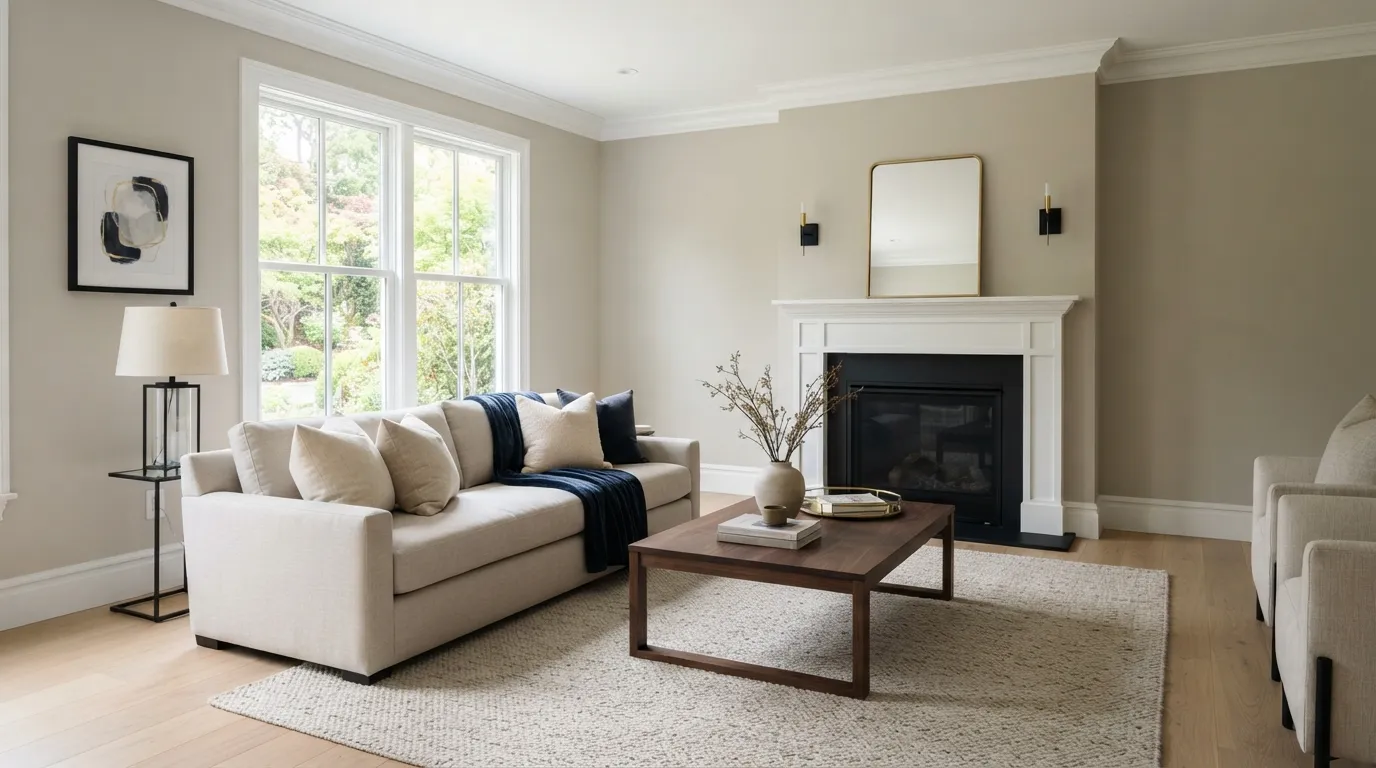
Before the first showing, the loudest walls in the house usually get toned down.
Luxury staging guides lean on a calm base. Soft whites, subtle grays and muted beige form the canvas.
The logic is practical. Neutral tones highlight architectural features and give buyers a backdrop for their own style.
Neutral doesn’t mean flat. One guide pairs soft neutrals with accents of gold, navy or black for depth and sophistication.
Here’s a contrarian view: a fully beige house can read as a rental. The fix is to add depth through texture and a few dark accents instead of color.
But even the perfect palette fails in a dim room, which brings us to the cheapest trick on the list.
#11 – They Open Every Curtain
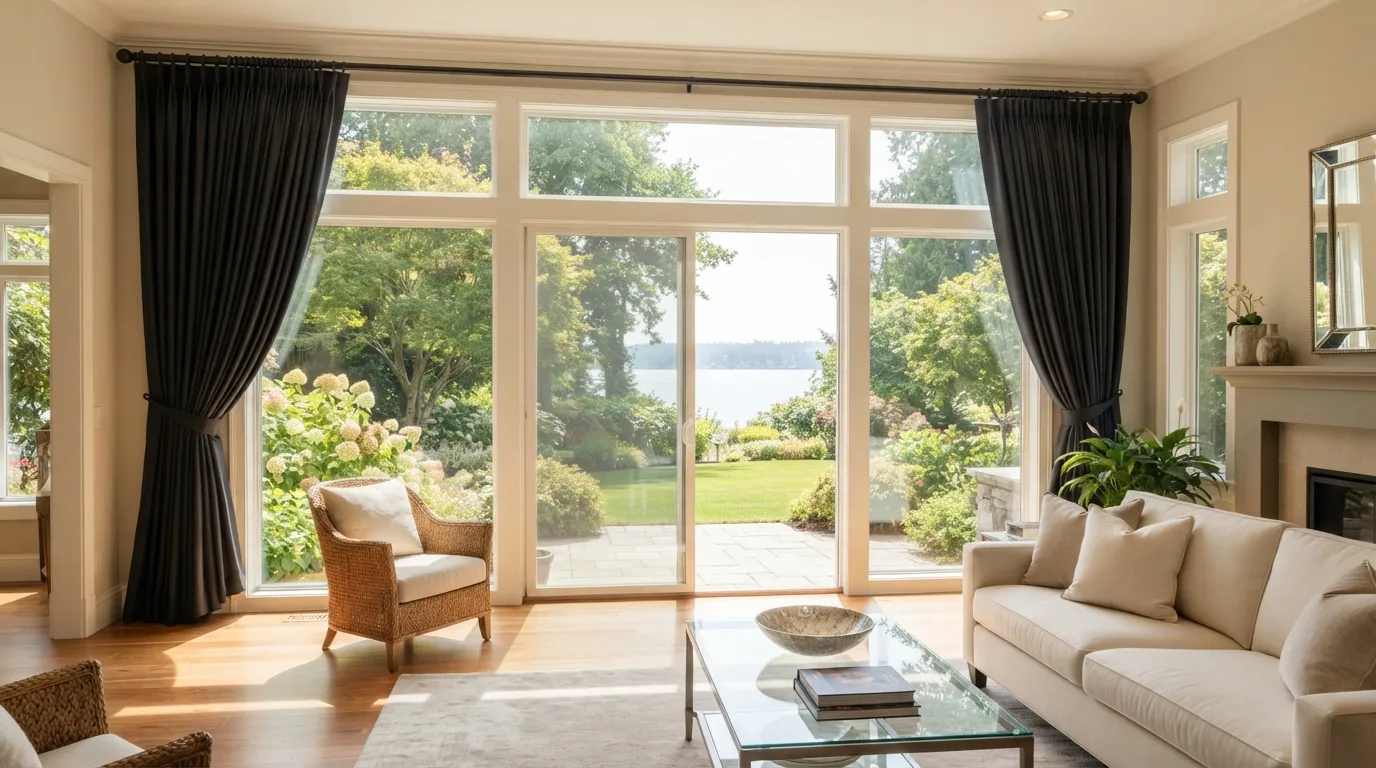
The cheapest upgrade in luxury staging costs nothing at all.
Stagers pull back the curtains and open blinds to let in as much natural light as possible. Where privacy matters, light, sheer drapes let sunshine in while keeping a sense of seclusion.
The payoff is perception. A well-lit home feels more spacious and airy, which is exactly what luxury buyers are hunting for.
Realtors add a plain step most owners overlook: make sure the windows are clean. Dirty glass quietly dims every room before a buyer notices why.
Why It Works: Daylight makes surfaces look cleaner and edges look sharper. A bright room tells buyers the house is well kept without anyone having to say so.
Daylight runs out, though, and what stagers do after dark is far more deliberate.
#10 – They Layer the Lighting
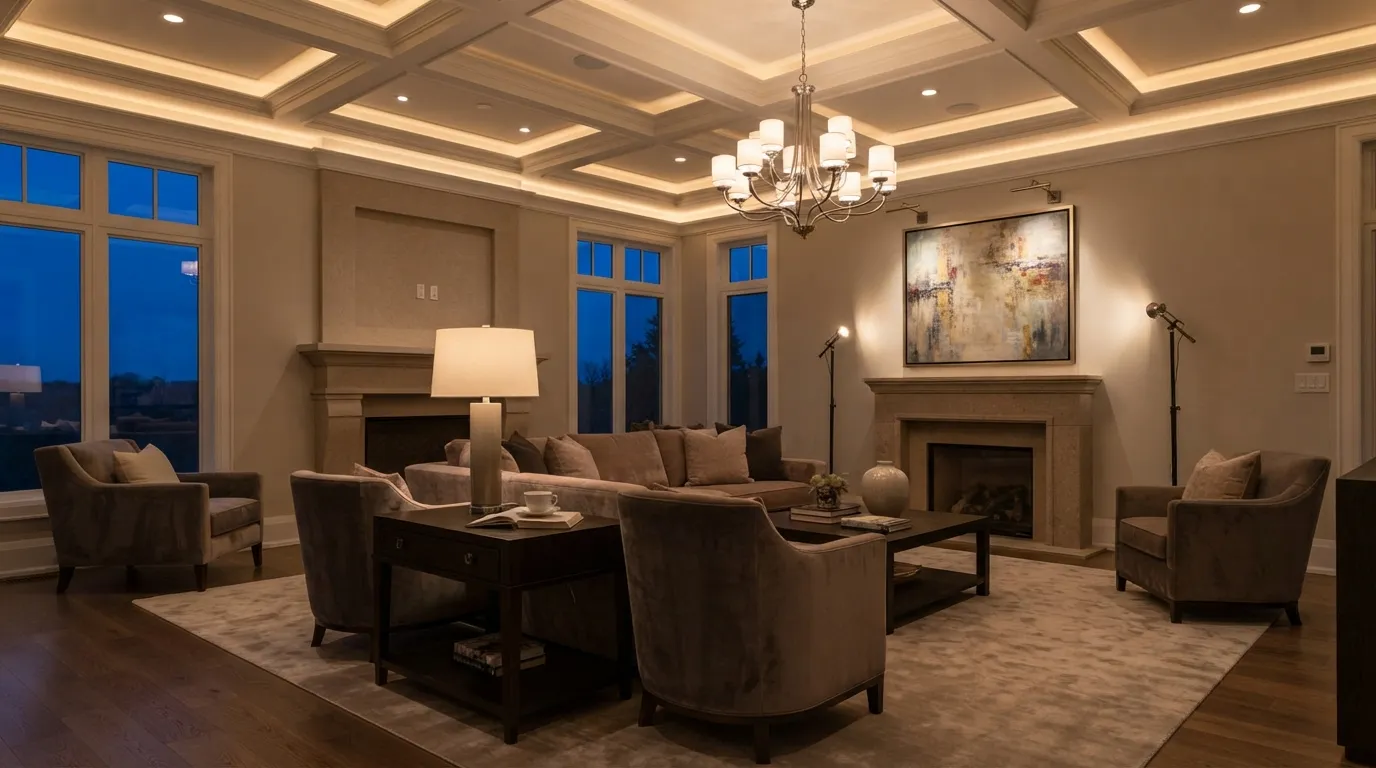
A single ceiling light can flatten even the most expensive room.
Professional stagers often use what one source calls the three-layer rule: ambient, task and accent lighting. Overhead fixtures handle the first, reading or cooking lights the second, and spotlights on artwork or architecture the third.
The bulbs matter as well. One checklist recommends warm-white LEDs.
For luxury listings, there’s one more detail. Dimmers can create ambient lighting that complements the home’s architecture.
At a Glance
- Ambient: overhead fixtures and dimmers set the base mood.
- Task: reading and cooking lights serve the work areas.
- Accent: spotlights pick out art and architecture.
- Bulbs: warm-white LEDs are the checklist favorite.
Turns out the glow of a room is designed, not accidental. Buyers feel the difference even when they can’t name it.
And some of that lighting is chosen to be looked at, not just looked with.
#9 – The Light Fixtures Become the Jewelry
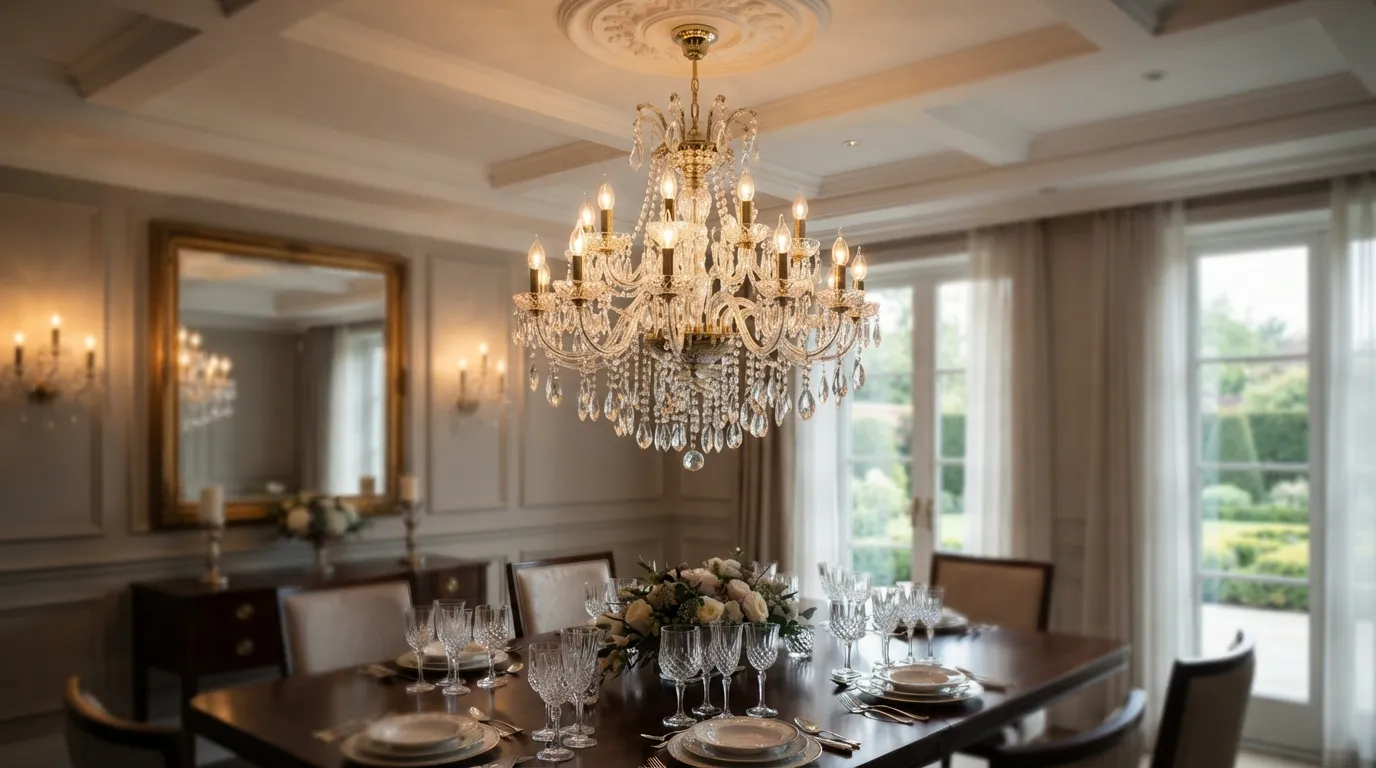
In staged luxury rooms, the fixture is part of the pitch.
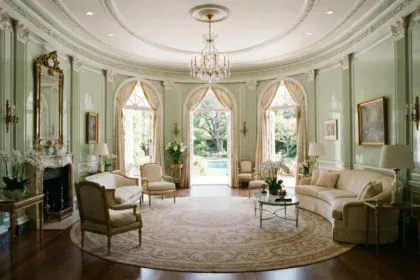
Luxury staging guides advise that lighting fixtures should themselves be statements of luxury, serving as both functional and decorative elements. A chandelier over a dining table isn’t an accident.
Another guide says fixtures can serve as focal points that linger in buyers’ minds. That’s why a dated light fixture can undercut a very expensive room.
Here’s a point worth arguing over. Some sellers swap fixtures before listing, while others say it’s money spent for a buyer who’ll replace them anyway.
Insider Tip: Match bulb color across every fixture in a room. Mixed warm and cool bulbs make a space look patchy, and it’s a quick fix before showings.
But lighting only works if there’s an uncluttered room to light, and furniture is the next place stagers cut.
#8 – Fewer Pieces, Better Pieces
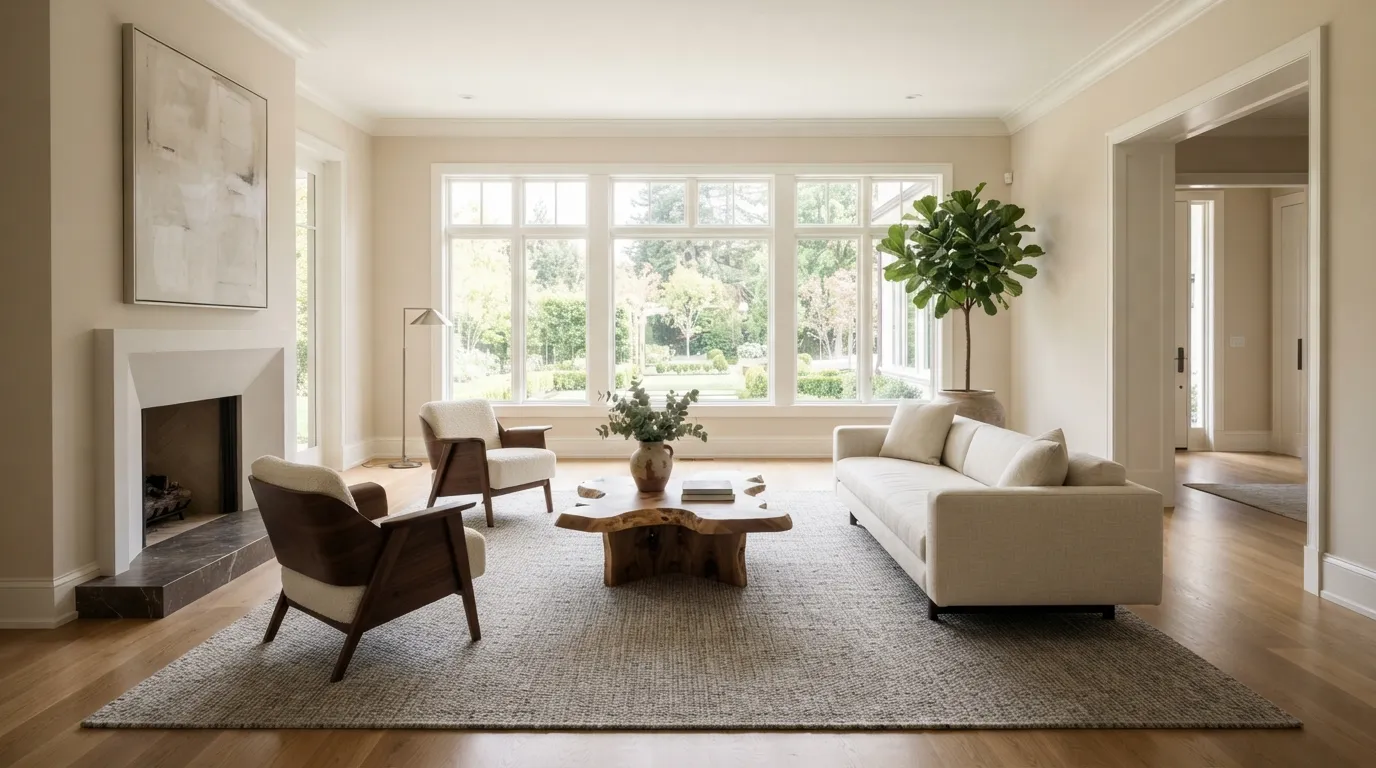
The secret to a pricier-looking room is usually subtraction.
One luxury guide says decluttering and prioritizing quality over quantity lets high-end furnishings and standout pieces take center stage. Another recommends clean lines, timeless furniture and neutral tones that complement the architecture.
In practice, that means a room with a few right-sized pieces reads as more expensive than one crammed with many. Crowded rooms look smaller, and small rooms look cheaper.
This works in reverse for big homes, too. Luxury homes tend to have large, open spaces that can easily become cluttered, so a few lonely pieces in a huge room hurt just as much.
Try This: Walk from the front door to each seating area. If you have to turn sideways to pass a piece, remove it.
Yet some of the most valuable staging happens outside the front door.
#7 – The Patio Gets a Living Room
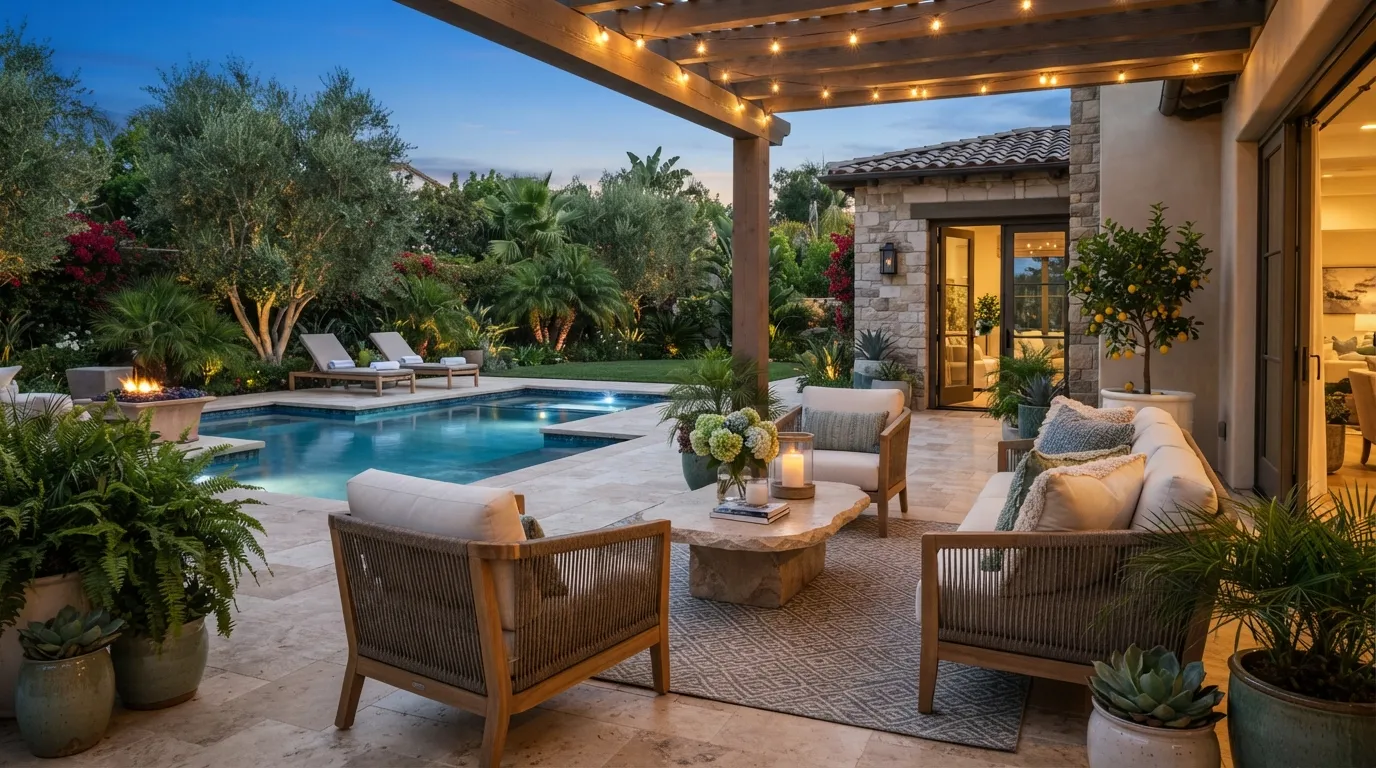
Outdoor space is treated as another room, not an afterthought.
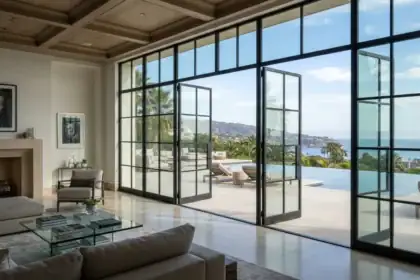
Guides advise that outdoor areas should be staged as an extension of the home’s interior. That includes comfortable, high-end furniture, soft lighting and lush greenery on a patio, pool area or terrace.
Realtors also note that a well-maintained outdoor space can add significant value to a luxury home and improve first impressions. The first thing a buyer sees is often the yard, so it sets the tone.
One guide even suggests outdoor lighting for dramatic effect during evening viewings.
Why It Works: An outdoor space with furniture shows buyers how to use it. An empty patio is just a slab, but a set one reads as extra living space.
That evening glow hints at something agents plan for, and it has nothing to do with furniture.
#6 – Showings Get Timed for Dusk
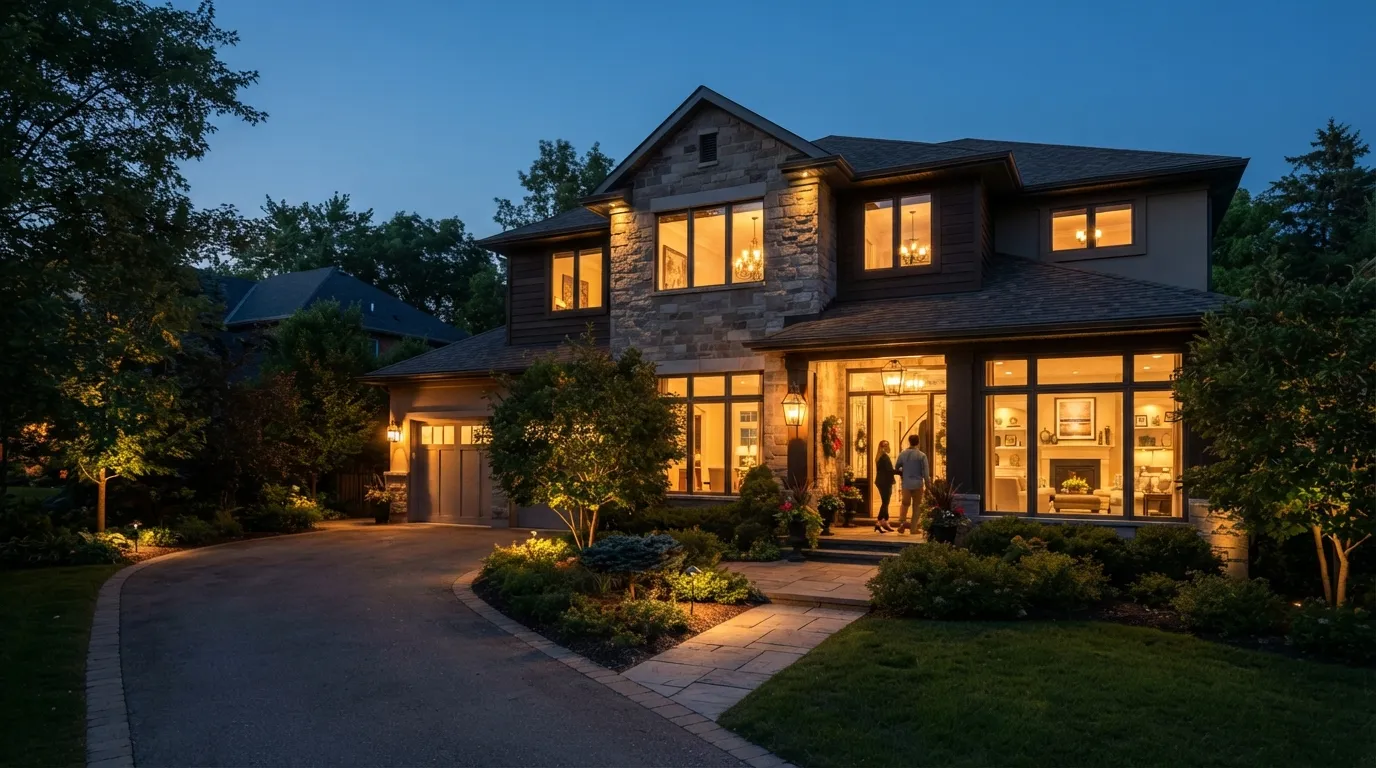
The hour of a showing can change how the whole house feels.
Evening viewings change the mood. Lit windows, warm lamps and outdoor lights make a house look occupied and cared for.
Agents who plan for this schedule the walk-through when the lighting is doing its best work. The same room can look flat at noon and rich at dusk.
The research here is thinner than for the other tricks, so take it as practice rather than proof. Still, the guides that mention evening lighting treat it as a planned step.
Why It Works: Warm light at dusk makes a house feel lived in and welcoming. Buyers walk in already comfortable, which is half the battle in any showing.
Which brings us to a feature luxury buyers now expect, and sellers often forget to show.
#5 – The Smart Home Gets Its Moment
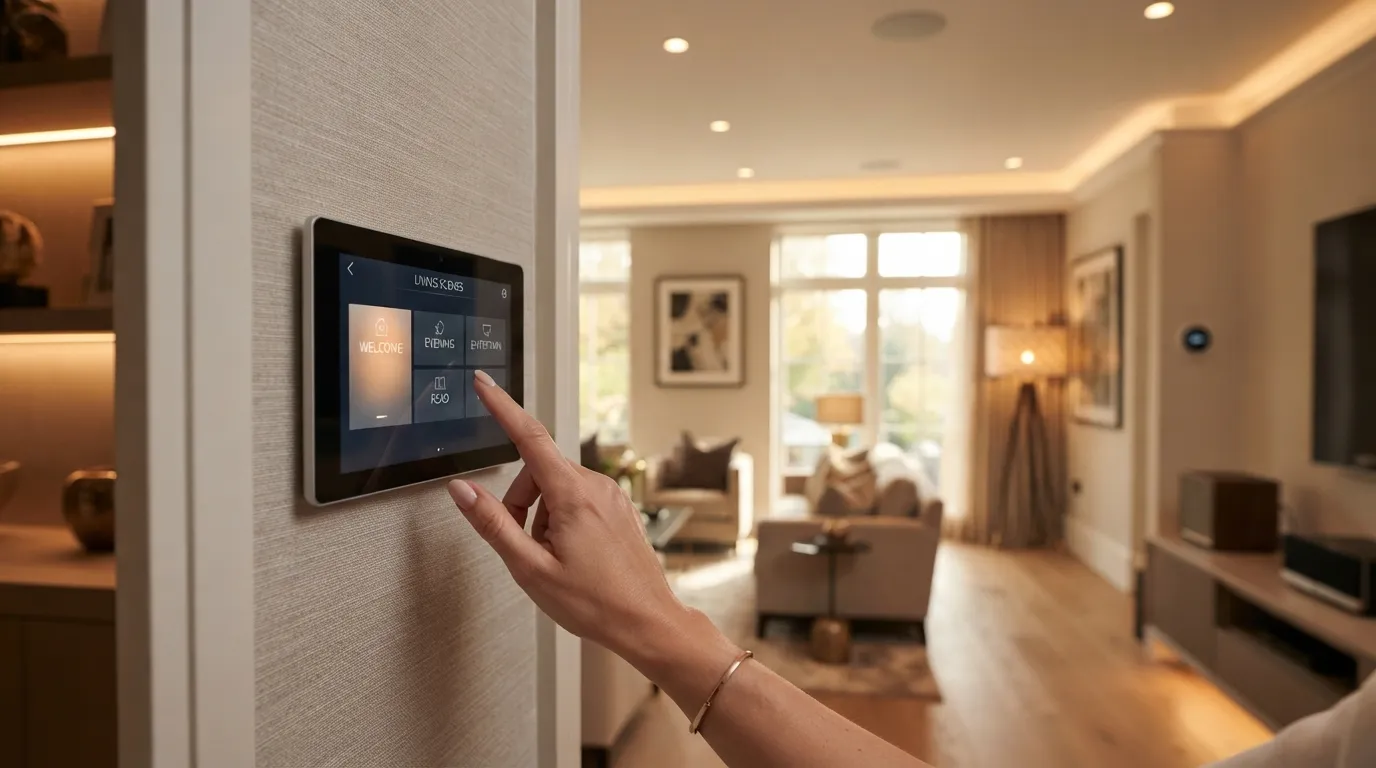
Many luxury homes already have the technology, and staging puts it on display.
One luxury guide notes that in today’s luxury market, many buyers expect modern technology and smart home features. The advice is to highlight smart systems such as automated lighting, climate control or security.
Here’s the catch: features nobody notices don’t add to perceived value. A home with automated lighting that nobody demonstrates is just a home with switches.
Another guide points to smart lighting with adjustable brightness and color for tech-savvy buyers.
Try This: Set the lighting to a warm preset before every showing. Then show buyers one scene on the control panel instead of making them hunt for it.
But the next trick happens before a buyer ever sets foot in the house.
#4 – The Listing Photos Are Staged for a Phone Screen
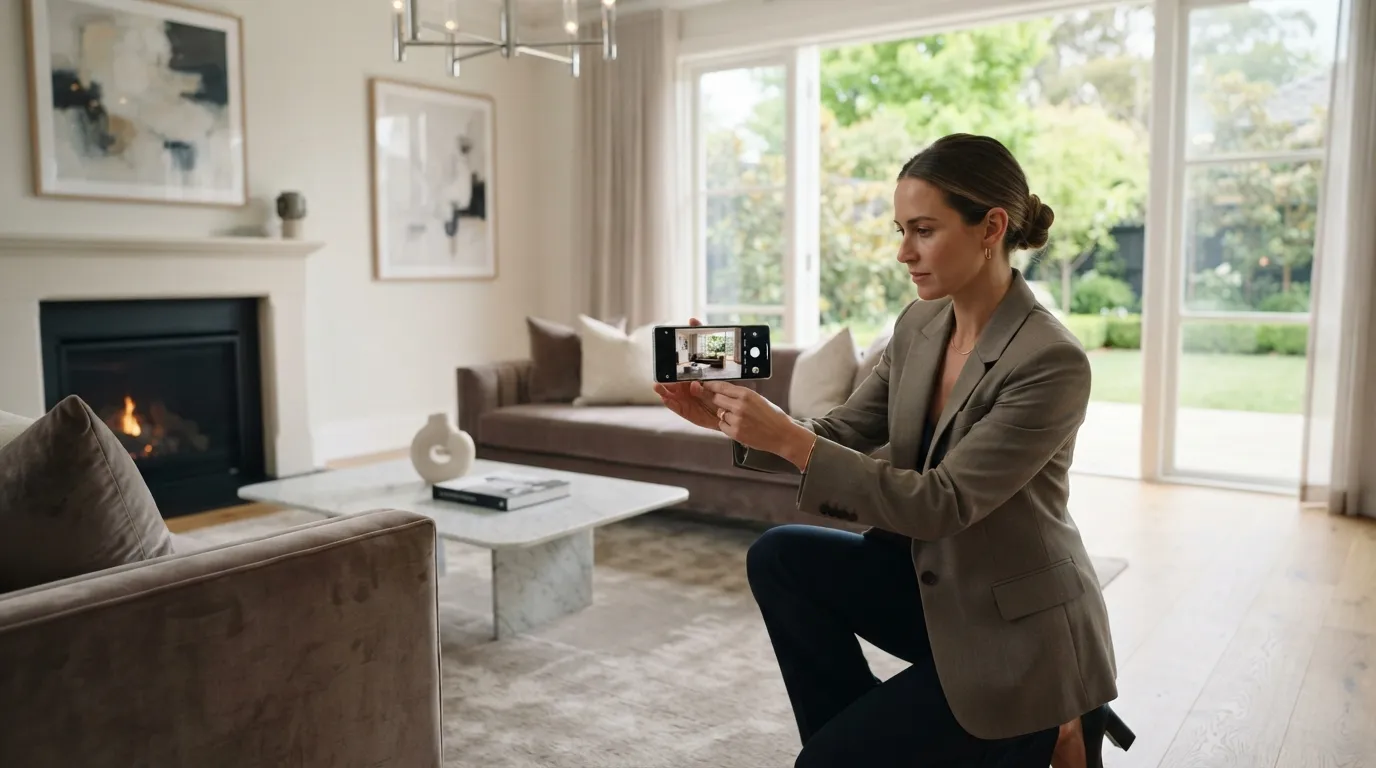
For many buyers, the first showing happens online.
NAR’s data shows why this matters. 31% of buyers’ agents said buyers were more willing to walk through a home they had seen online when it was staged.
Worth Knowing
- Staged online photos made buyers more willing to visit in person, according to 31% of buyers’ agents.
- Luxury guides want photos and virtual tours to feature the home’s luxury details.
- Cords and clutter don’t belong in photo-ready rooms.
Luxury guides add that professional photography and virtual tours should highlight the home’s luxury features. One adds a practical rule: no cords or clutter in photo-ready rooms.
So a staged room has to survive a thumbnail. A cluttered corner you’d never notice in person can jump out in a photo.
Of course, nobody can stage everything, so the next question is where the money actually goes.
#3 – The Budget Goes Where Buyers Look
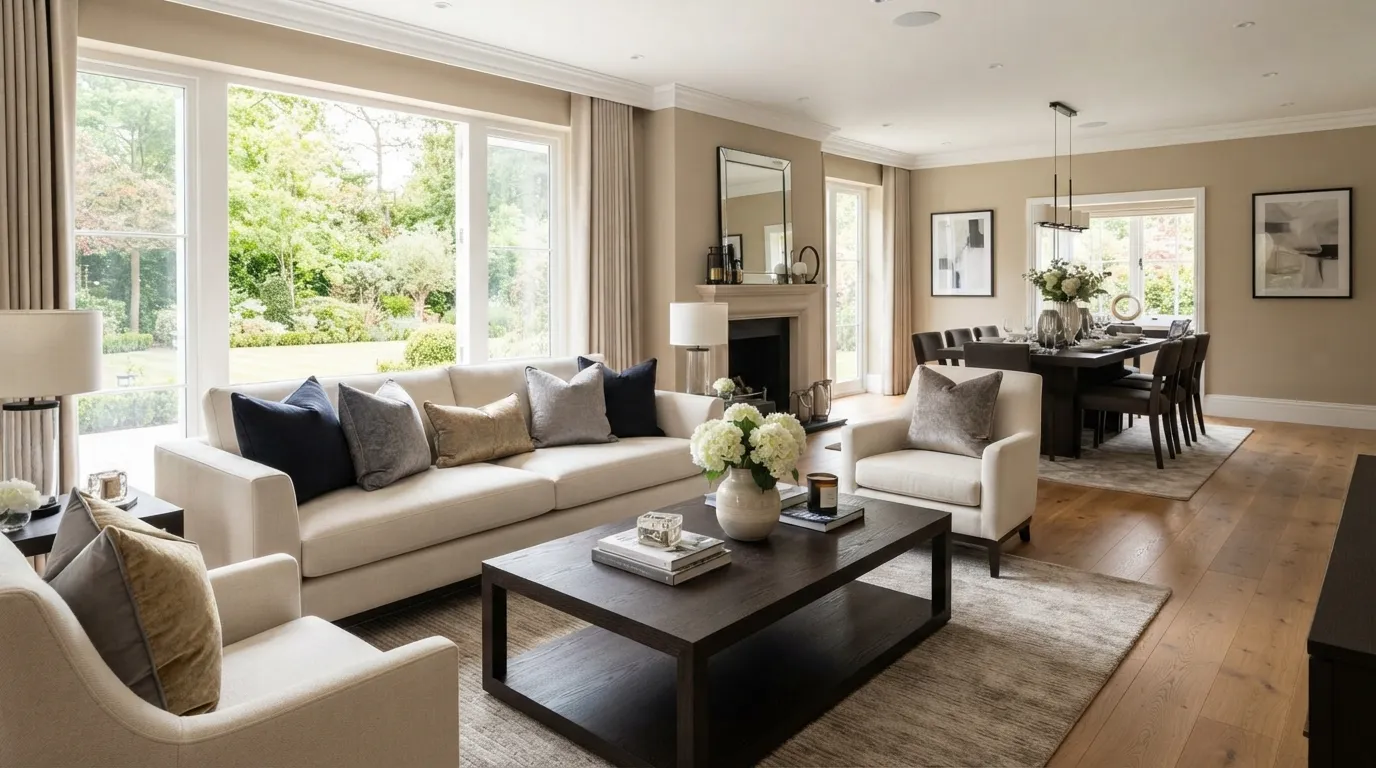
Smart sellers don’t stage everything, and the numbers explain why.
NAR found that the most commonly staged rooms were the living room (91%), primary bedroom (83%) and dining room (69%). Only 21% of sellers’ agents said they staged all of their sellers’ homes before listing.
Experts say that if funds are short, stage the living room and the primary bedroom. Cost also varies sharply by who does the work.
NAR’s median was $1,500 for a staging service, compared with $500 when the seller’s agent handled it. Luxury homes run higher, and one guide estimates $2,000 to $10,000 depending on size and market.
Insider Tip: Ask any stager whether they’ll price by room instead of by house. A room-by-room quote lets you spend on the rooms that count.
Now for the two rooms that earn the most of that budget, starting with the quieter one.
#2 – The Primary Bedroom Becomes a Retreat
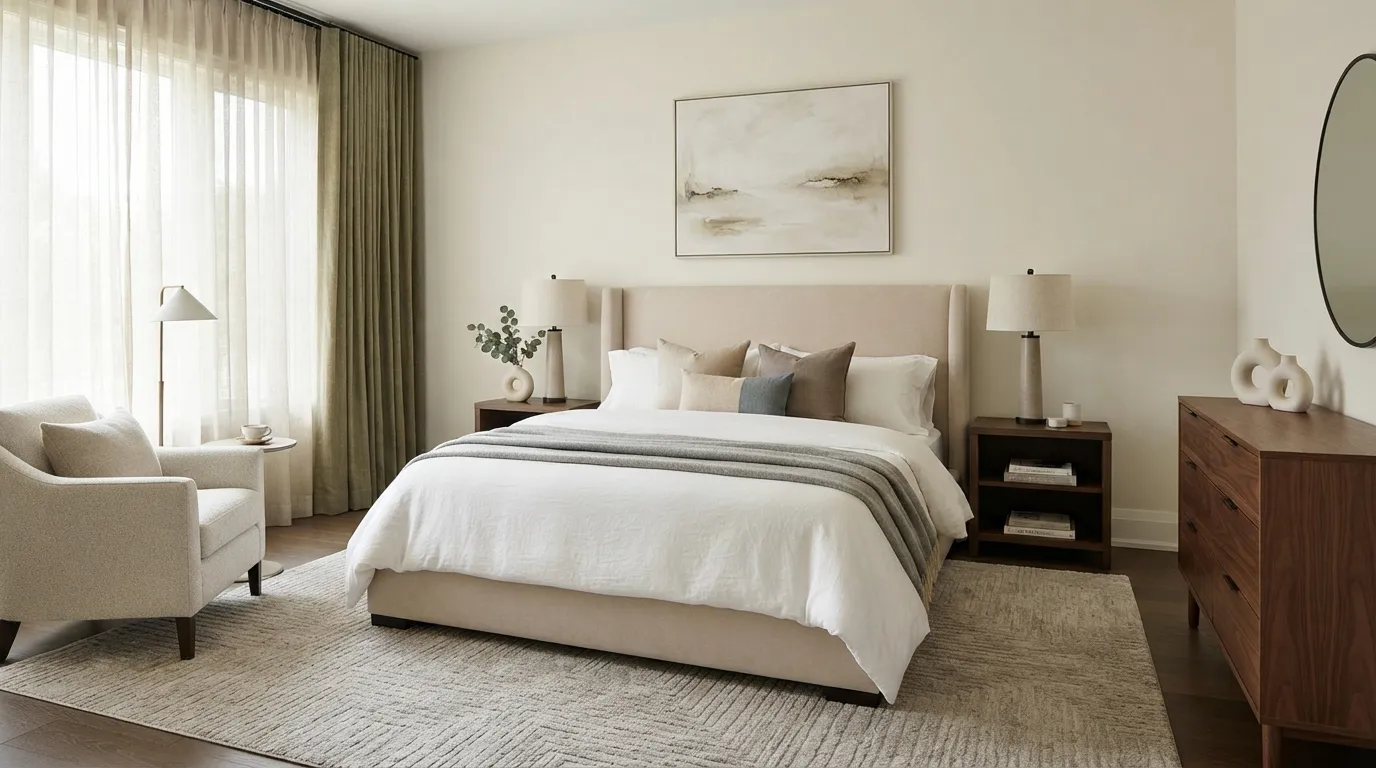
It’s the room buyers rarely talk about and agents rarely skip.
In NAR’s 2025 data, the primary bedroom (34%) came second in the ranking of the most important rooms to stage, ahead of the kitchen at 23%. Sellers’ agents agree, as 83% stage it.
The goal is a mood, not a mattress. One staging source says buyers want a calm retreat, not an empty rectangle or a room filled with leftover furniture.
Another puts it bluntly: the primary bedroom should read as a retreat, not storage. A bedroom that doubles as an office or a dumping ground works against the whole idea.
The Psychology Behind This: A bedroom is where people imagine rest. Cleared surfaces and calm bedding signal that the home will give them that.
But the room that ranks higher still is the one every buyer sees first.
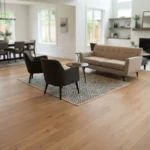
#1 – The Living Room Sells the Whole House
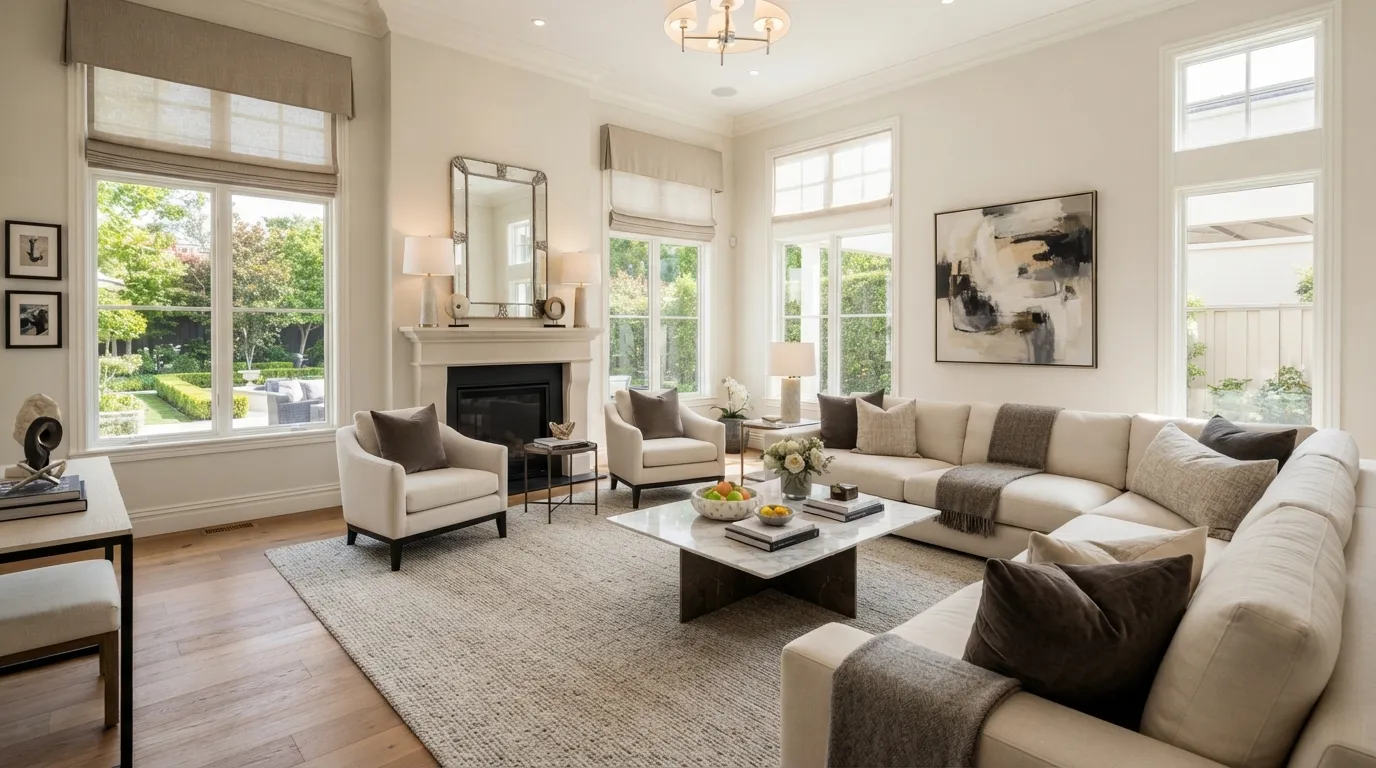
The truth is that one room does the heavy lifting.
37% of buyers’ agents reported that staging the living room was the most important. That puts it ahead of the primary bedroom and kitchen, which surprises anyone who assumes kitchens decide everything.
Why It Stands Out
- It’s the most commonly staged room, at 91% in NAR’s data.
- It ranks first for importance, ahead of the primary bedroom and the kitchen.
- It’s the room buyers see first, so it frames everything after it.
Buyers also arrive with expectations. Nearly half of agents (48%) reported that buyers want to see homes that look as if they were staged on television shows.
That TV-trained eye is part of why staging has become standard practice in so many listings. Buyers walk in expecting a finished, magazine-ready scene.
Be careful with the claims, though. 60% of buyers’ agents said staging affected some buyers but not always, and only 12% said it had no effect.
The data comes from agents’ perceptions, not controlled sales studies. Still, none of the respondents in NAR’s 2019 report said staging had a negative impact on a home’s dollar value.
The Bottom Line
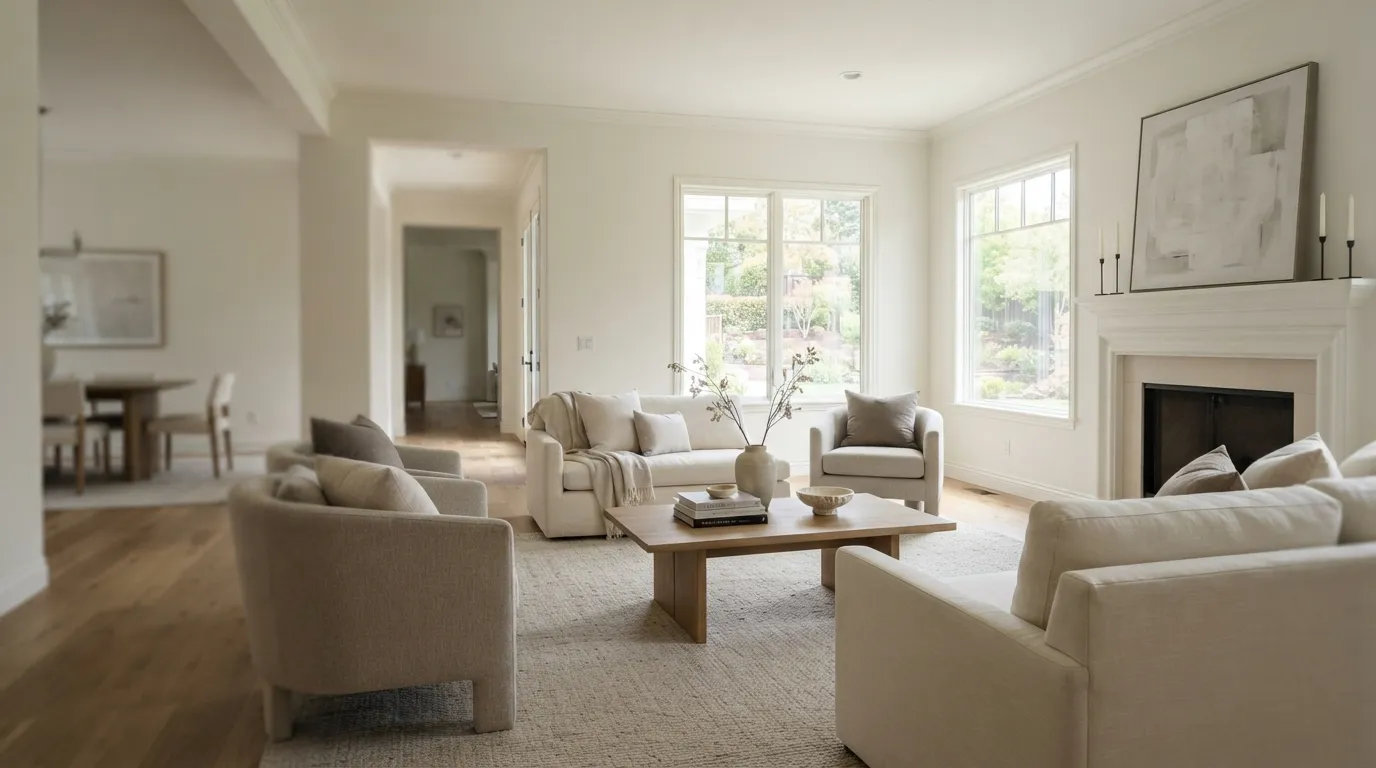
Luxury staging works less through expensive objects than through removal: clutter, personal items, loud paint and dark rooms. NAR’s 2025 survey found that 83% of buyers’ agents say staging helps buyers picture the home as theirs.
The living room matters most, the primary bedroom comes next, and the guest bedroom matters least. Results vary, and agents’ reports aren’t a guarantee of price.
The next time you walk through an open house and think, “This place feels like a million bucks,” look again. You may be admiring what isn’t there.