

You scrubbed, sprayed and polished, and the moment guests step inside, the house still feels stiff, like a showroom nobody lives in. The 14 habits below are the reason, and several of them are things we were taught to be proud of.
Here’s the twist the CDC points to: in most situations, cleaning with soap and water removes most germs, such as harmful viruses or bacteria, from surfaces. So a lot of the extra spraying, scenting and buffing may be doing little for hygiene and plenty for that dated, chemical-aisle look.
We’ve counted these down from the surprising to the one that explains all the rest. Number 14 is the habit most people call basic hygiene.
#14 – Disinfecting Every Surface, Every Day
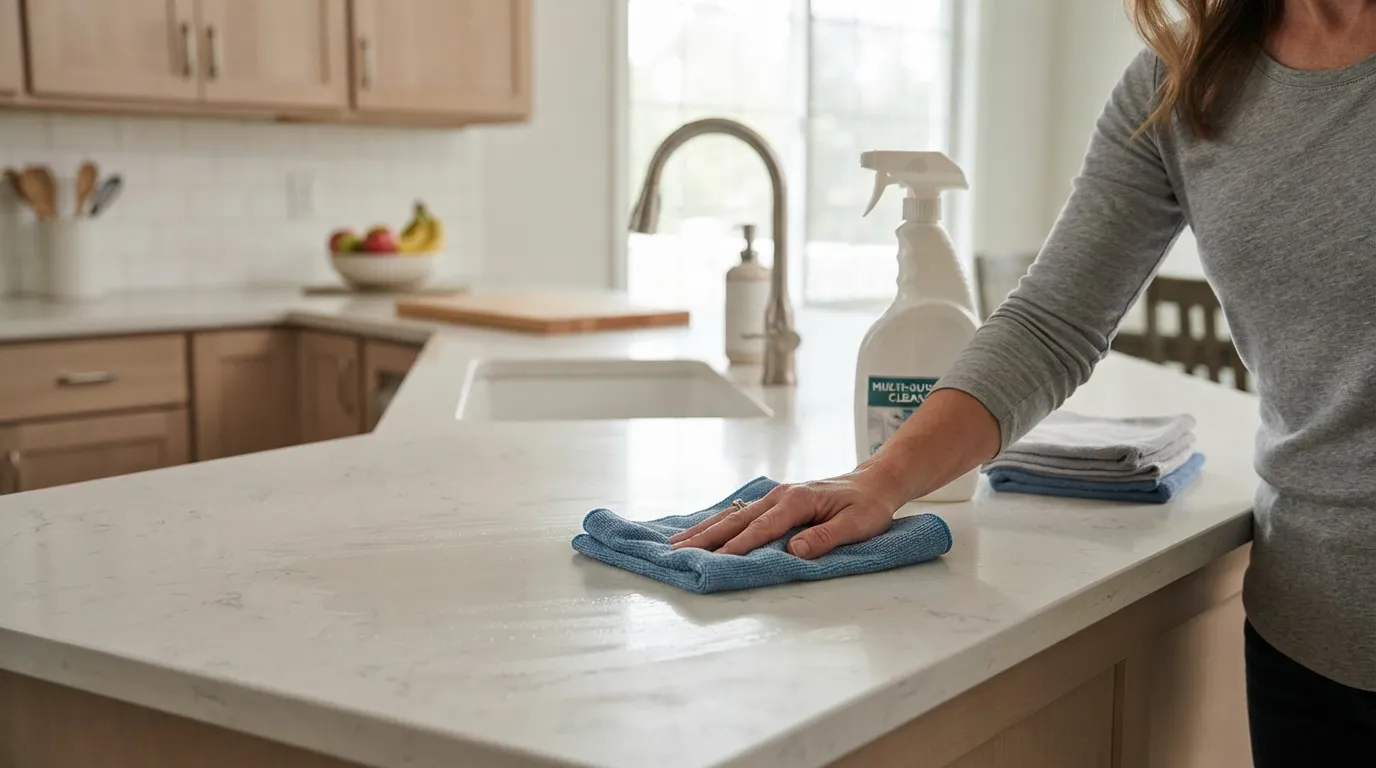
Most people think a daily disinfectant wipe-down is basic hygiene, but the CDC’s own guidance says otherwise. The bottle under the sink has quietly become a daily habit, and it may not be doing what we assume.
The CDC says disinfecting to reduce the spread of disease at home is likely not needed unless someone is sick or a sick person has recently visited.1 For ordinary days, soap, water and a cloth do the job.
Disinfecting does have a place. The CDC lists homes with someone sick, or someone at higher risk because of a weakened immune system, as a real exception.
For everyone else, the agency treats routine disinfecting as the exception, not the habit. The daily chemical wipe turns out to be mostly a ritual.
The look that ritual leaves behind gives it away. Streaky glass, tacky counters and a sharp smell at the door say “hospital,” not “home.”
Why It Works: A dry microfiber cloth lifts dust and grit mechanically, with no chemistry at all. That is why it quietly beats a spray on shelves, frames and tabletops.
But the next habit is one you can smell from the front porch…
#13 – Plug-In Air Fresheners by the Door
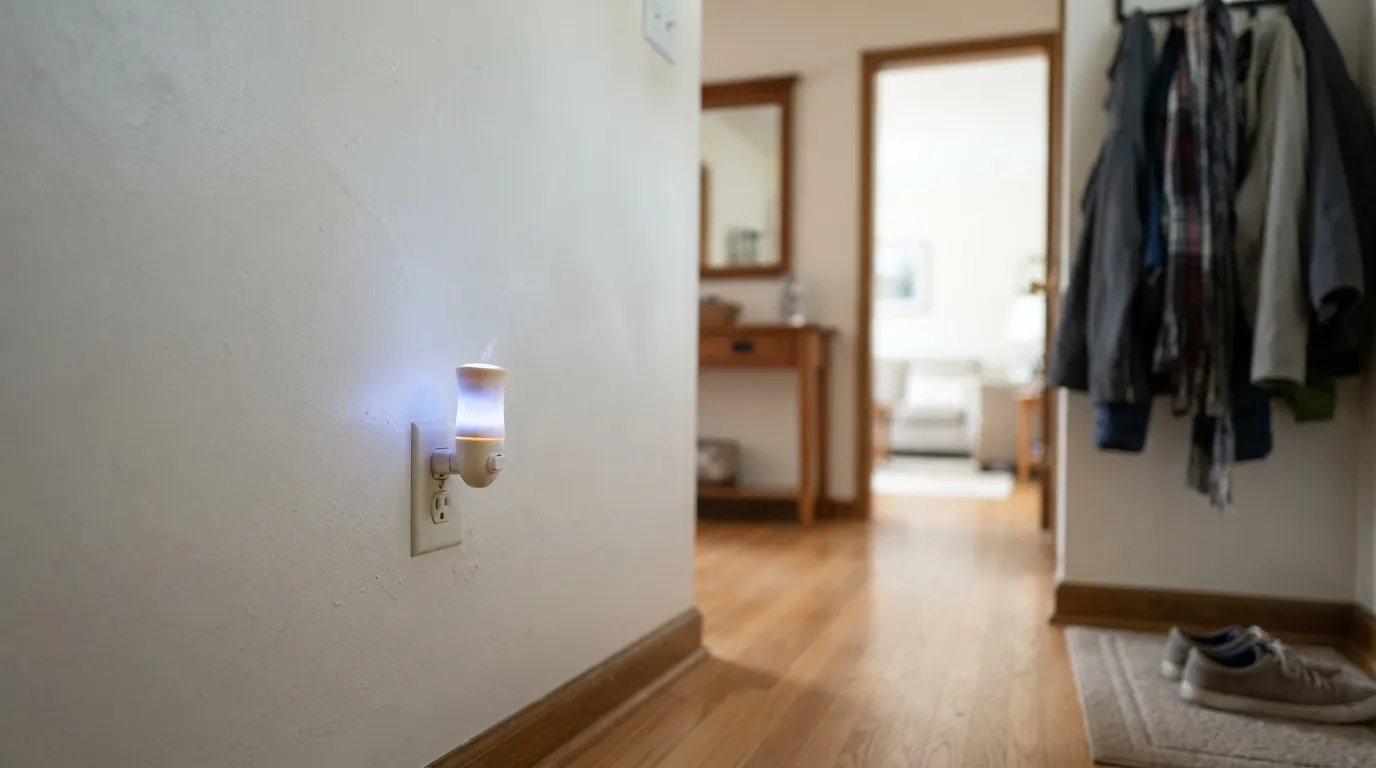
That little plug-in glowing in your hallway outlet is, in our view, the most dated object in the whole entry. It’s also the first thing guests smell, before they’ve even taken off their coats.
Researchers who tested 28 cleaning products and two air fresheners in an air chamber detected 530 volatile organic compounds. Fragrance-free products had significantly lower numbers and concentrations of those compounds.2
Here’s the fair counterpoint. An EPA-hosted abstract says that under ordinary circumstances, exposures from cleaning products or air fresheners alone are not expected to reach guideline values.3
Another study found little impact on indoor air from a plug-in air freshener. So the health case is mixed, and we won’t overstate it.
The style case is clearer. A scent that announces itself the second the door opens tells guests you’re covering something up. A truly fresh home just smells like nothing in particular.
Did You Know: Cooking, heating appliances, furniture and building materials are all listed as indoor sources of volatile compounds too. Scented products are only one piece of the picture.
And the habit coming up next may be doing more than you realize…
#12 – The Spray Blitz Ten Minutes Before Guests Arrive
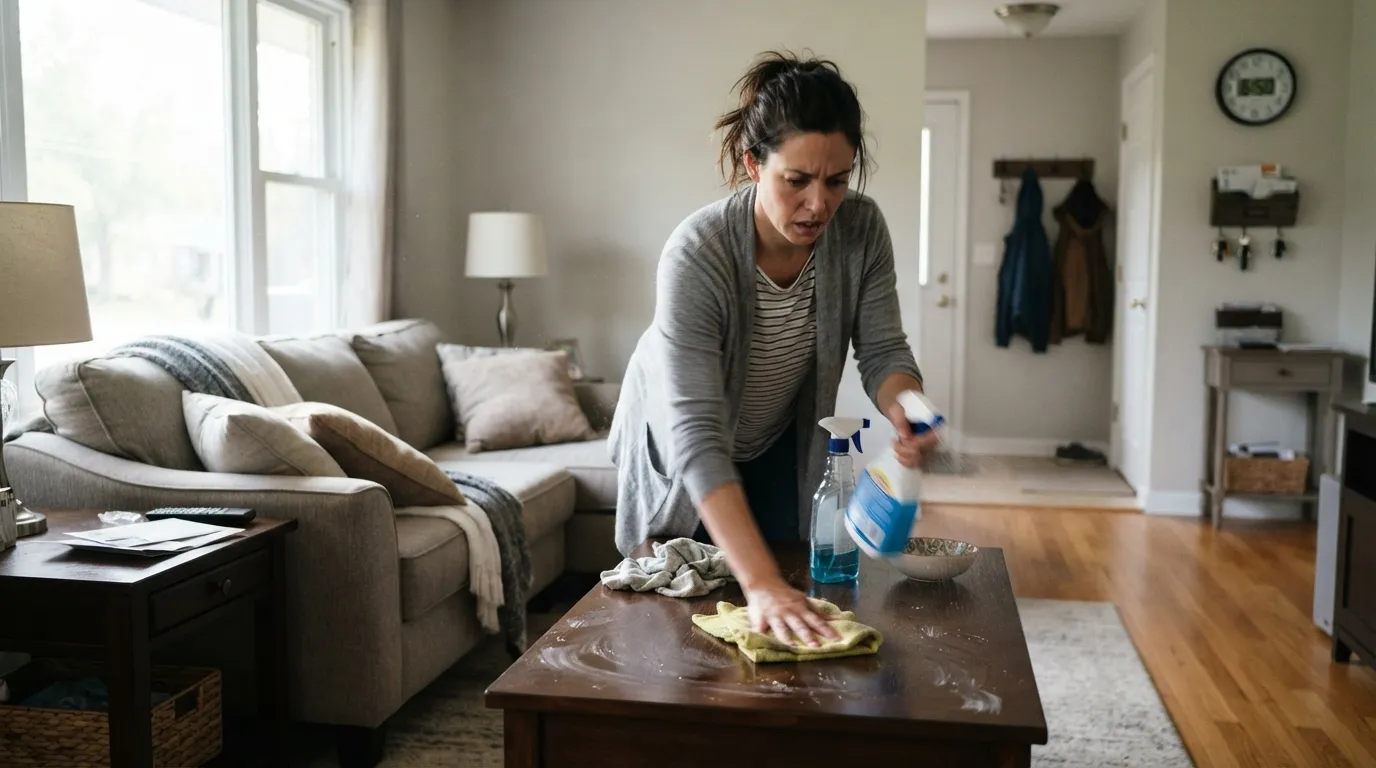
The frantic last-minute spray-down is the mistake most hosts make without a second thought. Ten minutes before the doorbell, out comes the bottle, and every surface gets a mist.
A University of Bergen team analyzed data from 6,235 participants in the European Community Respiratory Health Survey.4 They were followed for more than 20 years.
Women who used sprays or other cleaning products at least once per week had a more accelerated decline in lung function than women who didn’t. The study found an association, and the authors noted a limit: very few women in the study did not clean at home or work.4
Fast Facts
- Participants: 6,235 people in the European Community Respiratory Health Survey
- Follow-up: More than 20 years
- Finding: Weekly spray use was linked to faster lung-function decline in women
- Caveat: It shows an association, not proof of cause
Still, one detail stands out. The senior author said the small particles from sprays can remain in the air for hours after cleaning.5
A mist you’ve just sprayed is still hanging in the air when your guests walk in. It’s also why the room can feel “too clean” before anyone sits down.
Try This: Spray the cloth, not the room. Do the heavy cleaning earlier in the day with a window cracked, so the air is clear by the time the doorbell rings.
But what you do to your furniture next is even easier to spot…
#11 – Polishing Wood Until It Shines Like a Car Hood
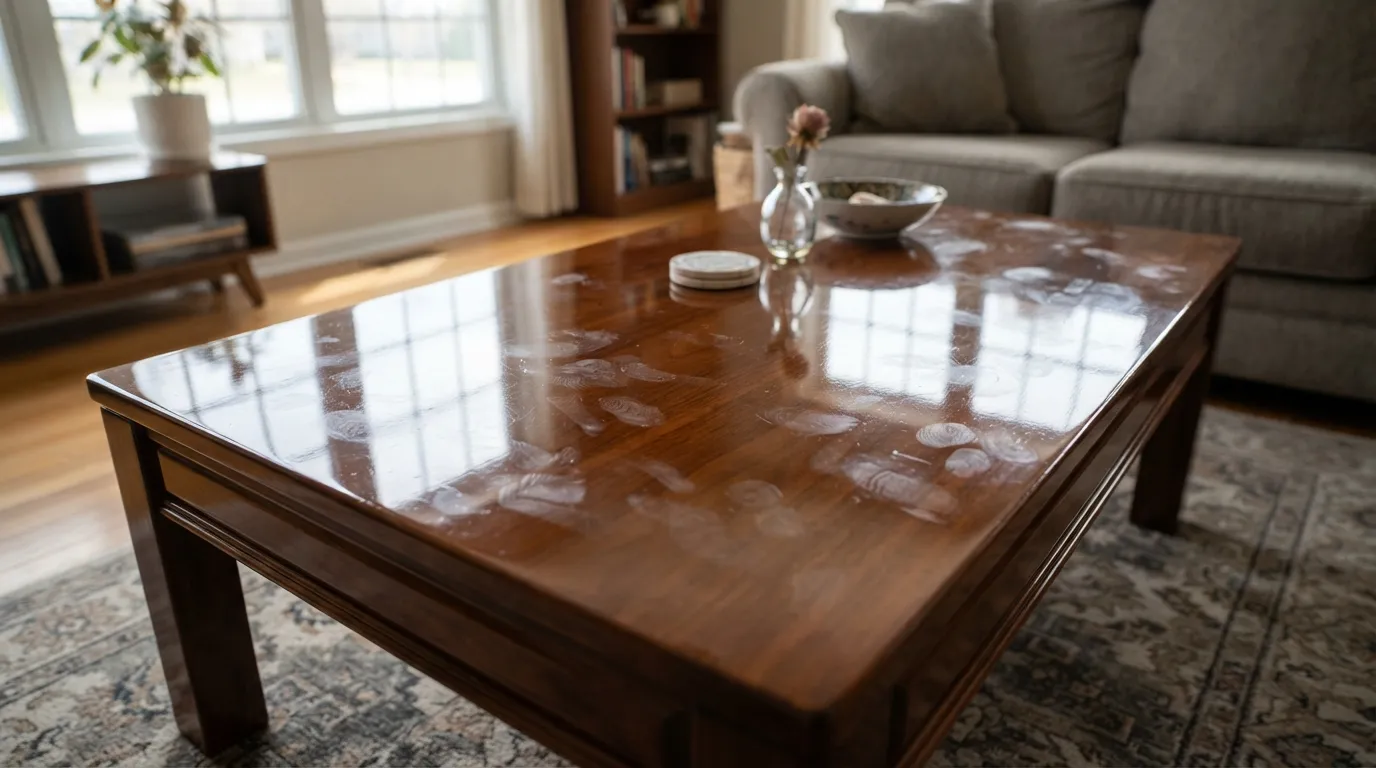
Mirror-gloss furniture is the quickest way to make a living room feel like 1994. One glance at a table that bright, and guests know it has been buffed within an inch of its life.
Heavy, shiny polish was once the sign of a well-kept home. Much of today’s decorating leans toward softer, more natural-looking finishes.
Here’s the practical trouble. Wiping on polish again and again can leave a slick film that catches every fingerprint, and the glare bounces light around the room and flattens the grain you paid for.
Most people don’t realize that wood usually just needs a dry or barely damp cloth. Always check the maker’s care instructions before you reach for anything stronger.
The real mistake isn’t dust. It’s treating a wooden table like something to be buffed rather than used. A soft, even sheen looks expensive, while a slippery one looks anxious.
And the next one is all about lines, literally…
#10 – Vacuum Stripes and the “Hotel Carpet” Look
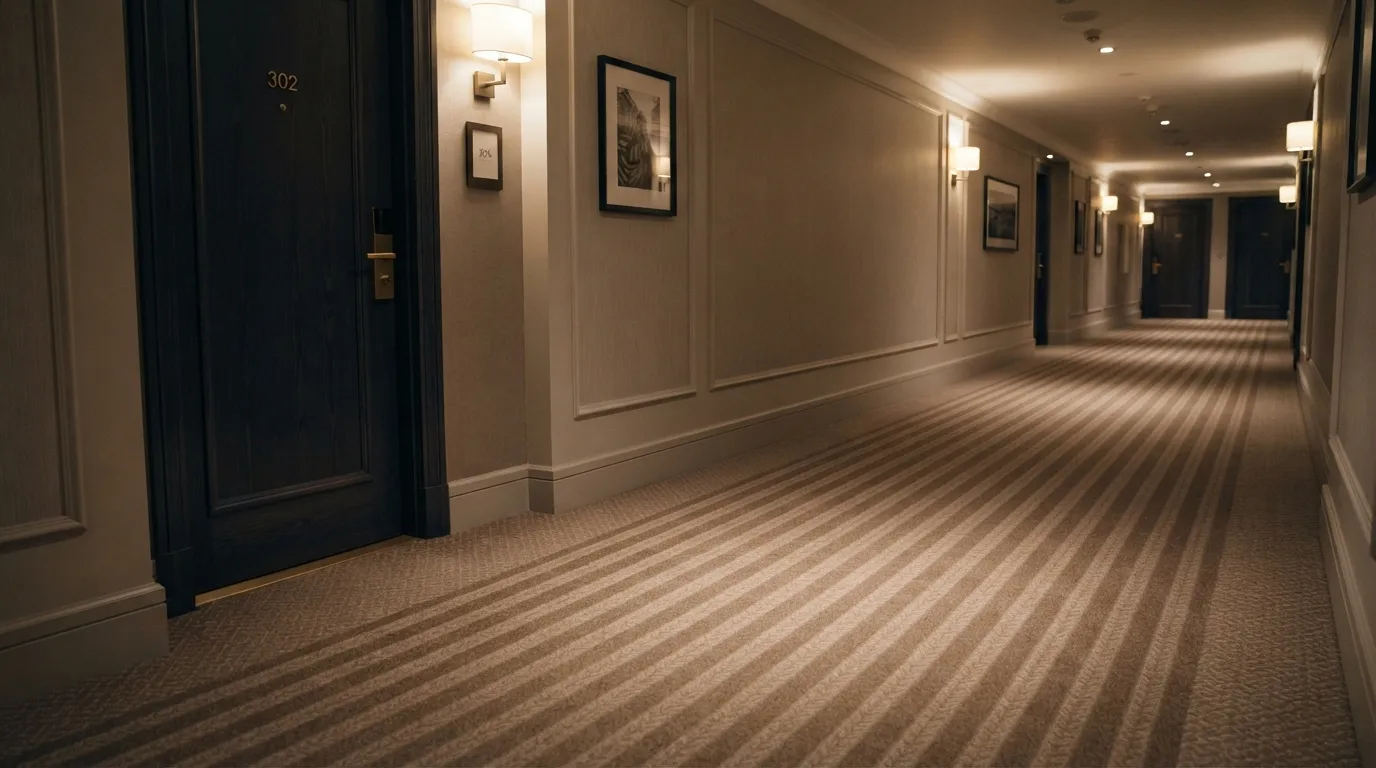
Those perfect parallel lines in your carpet aren’t impressing anyone. They may even be doing the opposite.
The combed-pile pattern comes from hotel lobbies and showrooms. In a house, it announces that nobody has walked across that rug in hours.
Plenty of people take quiet pride in those lines. We’d argue they read as staged, and a rug with a few footprints in it feels more welcoming.
There’s also a simple point about wear. Vacuuming should remove the grit that cuts into fibres, not sculpt a pattern.
The tidiest rooms don’t look combed. They look cleared. Run the vacuum once in a direction that suits your rug, then stop.
The Psychology Behind This: Visitors take in a room as a whole before they notice any single object. Rigid lines signal effort, and effort reads as stiffness, not comfort.
But what happens to your fabrics next is where the damage really adds up…
#9 – Bleaching Towels and Linens Until They’re Blinding White
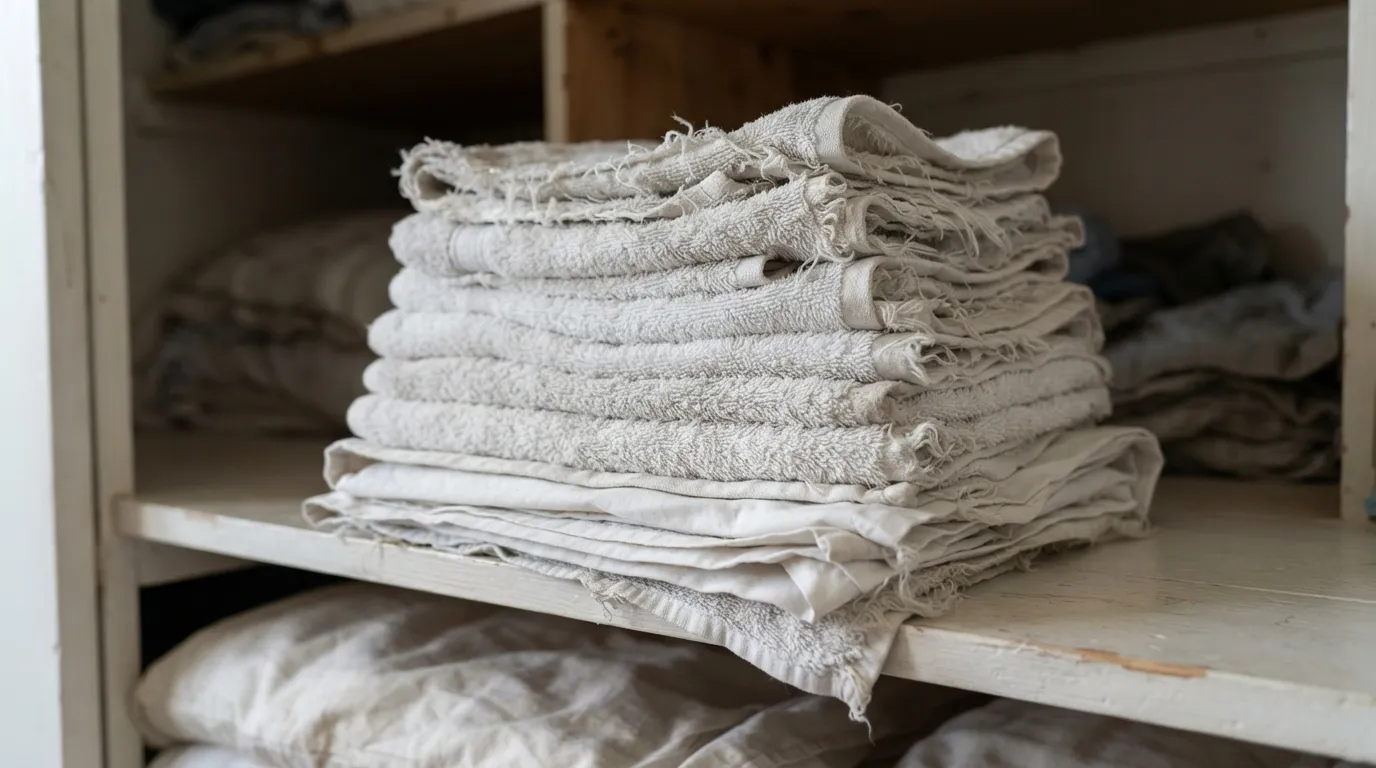
Bright white linens look clean, but the bleach behind them may be wearing your fabric out. The whiter the stack in the closet, the more likely it has been through the harshest treatment.
One home-care guide quotes a textile expert who warns that bleach can warp the fabric threads, causing sheets and pillowcases to lose their texture and shape. That’s a trade most people never see coming.
Fabric type matters too. Certain polyesters require cooler water or a hand-wash setting.
Hot water is still the usual advice for hygiene, as long as the label allows it. The sensible rule is to follow the care tag instead of reaching for bleach by default.
Over-bleached linens go thin, stiff and faintly grey-yellow, and guests feel it the moment they touch one. A soft, slightly worn towel looks better than a rough white one.
The Science Behind This: Chlorine bleach is a strong oxidizer. It breaks down colour molecules and, with repeated use, can weaken cotton fibres along with the stains.
The fix for stiff laundry is not the one most people reach for next…
#8 – Dryer Sheets and Heavy Fabric Softener
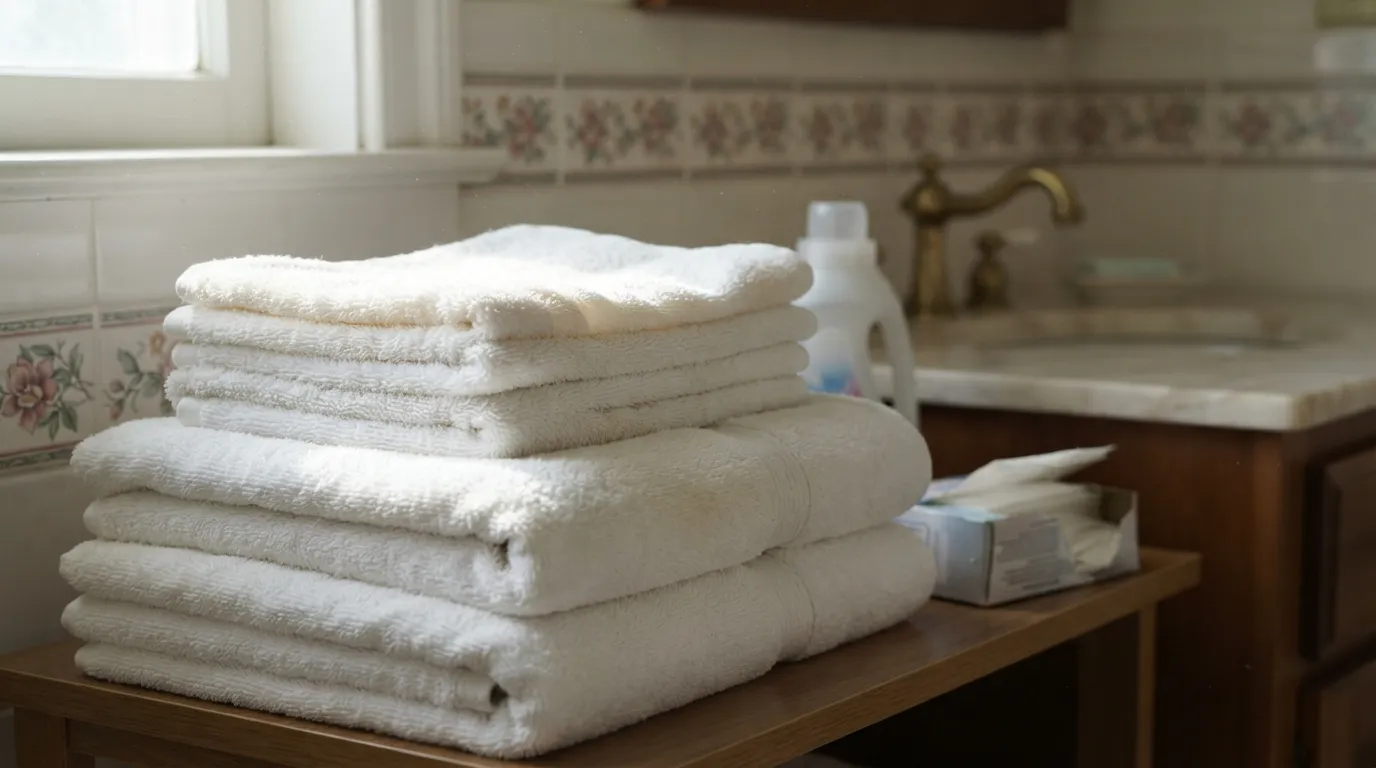
The “fresh laundry” scent in your guest bathroom may be coating the very towels it’s meant to freshen. It smells like care, but it can leave something behind.
Cleaning experts quoted in consumer guides are blunt. Dryer sheets can give linens a waxy coating that traps dust and dirt.
The same advice adds that fabrics get softer after each wash without any help. So the softener is often solving a problem that time would fix.
Scent adds to the picture. A survey of scented consumer goods, including fabric softeners, dryer sheets and disinfectants, found the products emitted more than 100 volatile organic compounds.
A towel that smells like a perfume counter is not what most guests call clean. It’s what they call “a lot.”
Insider Tip: Try wool dryer balls and a slightly shorter cycle. Pull towels out while they hold a touch of dampness and finish them on a rack.
But there’s a towel problem that has nothing to do with scent…
#7 – Decorative Guest Towels No One Is Allowed to Touch
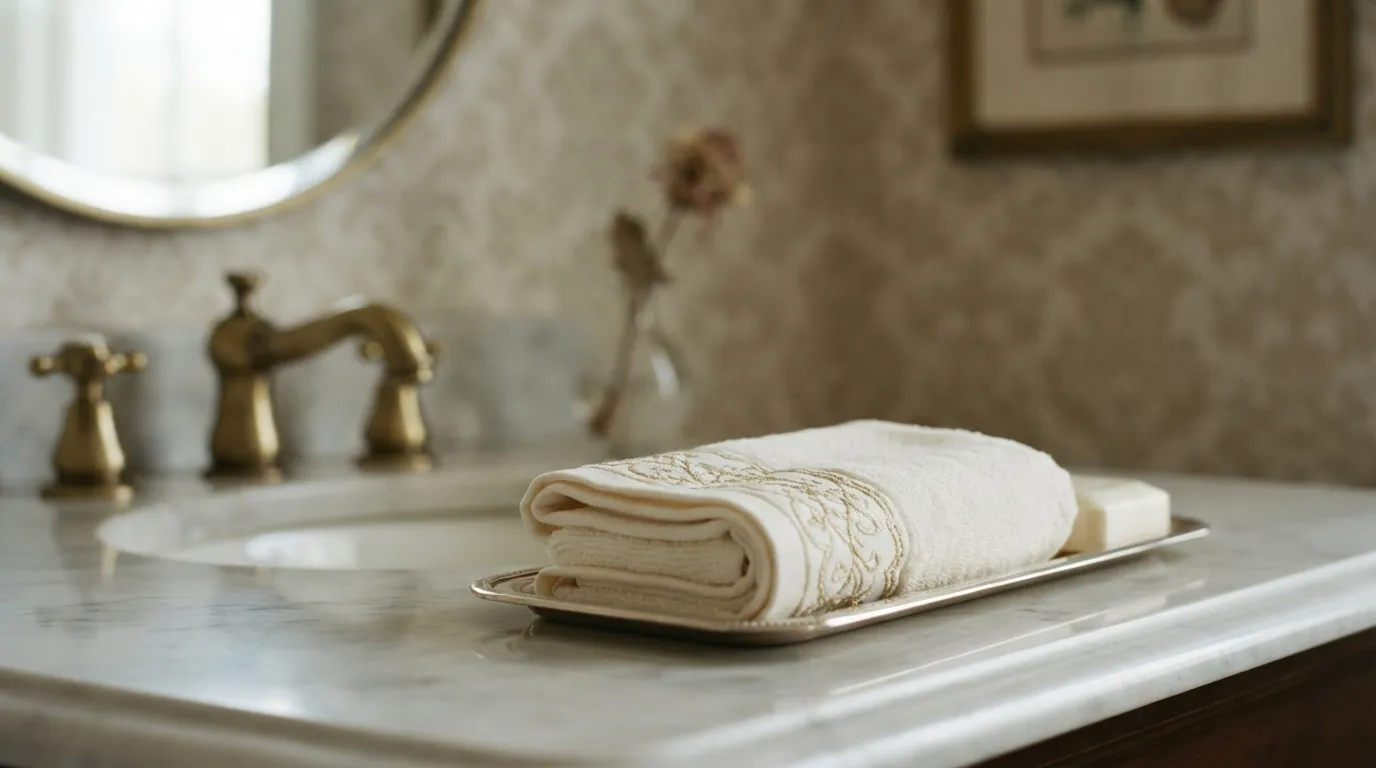
The fancy hand towels folded into a perfect rectangle quietly signal that guests shouldn’t actually dry their hands. Nobody wants to be the person who wrecks the display.
That’s backwards. A towel exists to be used, and a used one needs regular washing.
One expert advises that bath towels should be washed after every three to four uses. Hand towels in restrooms should ideally be washed daily, especially in shared spaces.
The reason is simple. Towels are made of thicker material than sheets and tend to stay damp for longer.
Quick Compare
- Bath towels: Wash after every three to four uses
- Restroom hand towels: Ideally daily, especially in shared spaces
- Bed sheets: Generally every one to two weeks
- Decorative display towels: Never used, so never really “clean”
A “display” towel that never gets washed is not clean. It’s just untouched. Put out a simple stack of plain, fresh towels and let people use them.
That’s the opposite of a showpiece, and it’s what actually makes a bathroom feel looked after. But the next habit takes this “show, don’t use” idea even further…
#6 – Scrubbing Every Bit of Patina Off Brass, Silver and Wood
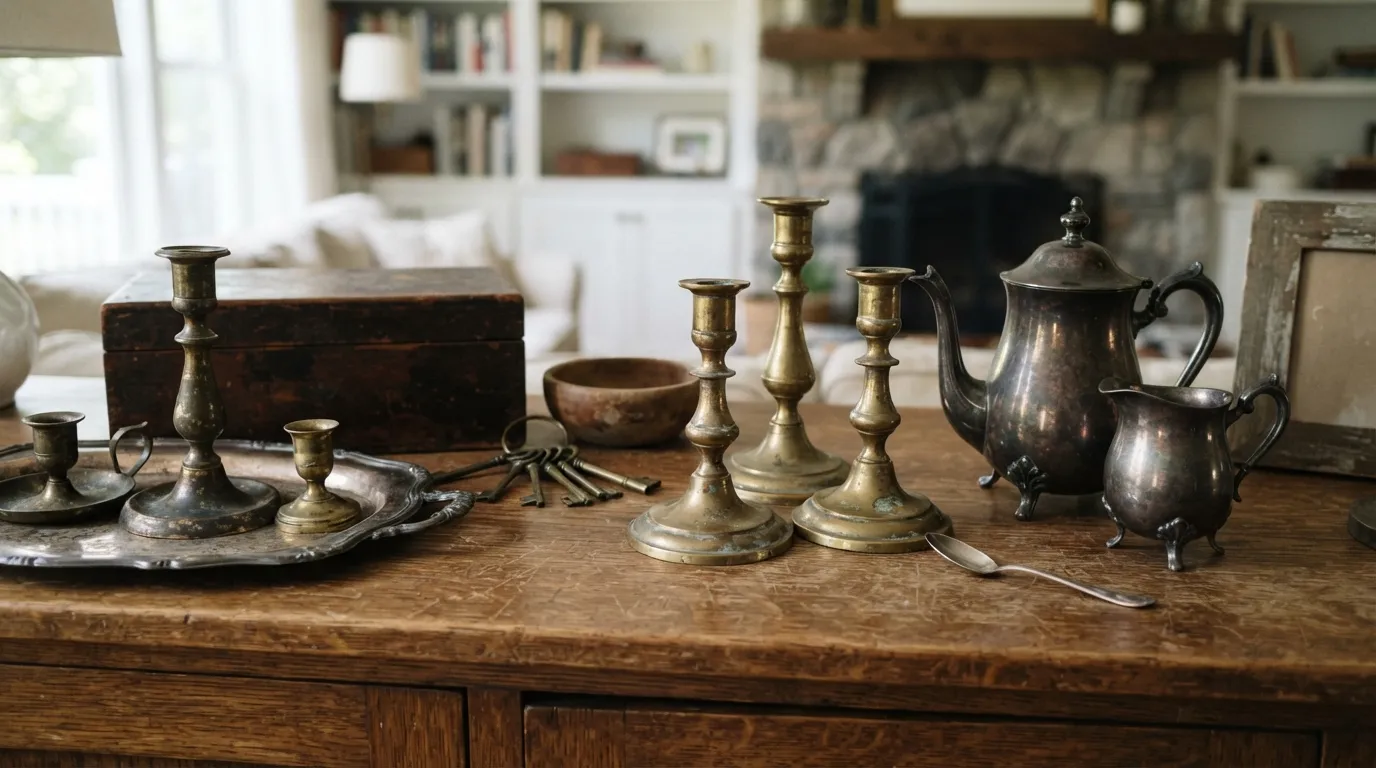
Polishing old pieces until they look new is the habit that makes a house feel the least personal. It wipes out the very thing that made those pieces special.
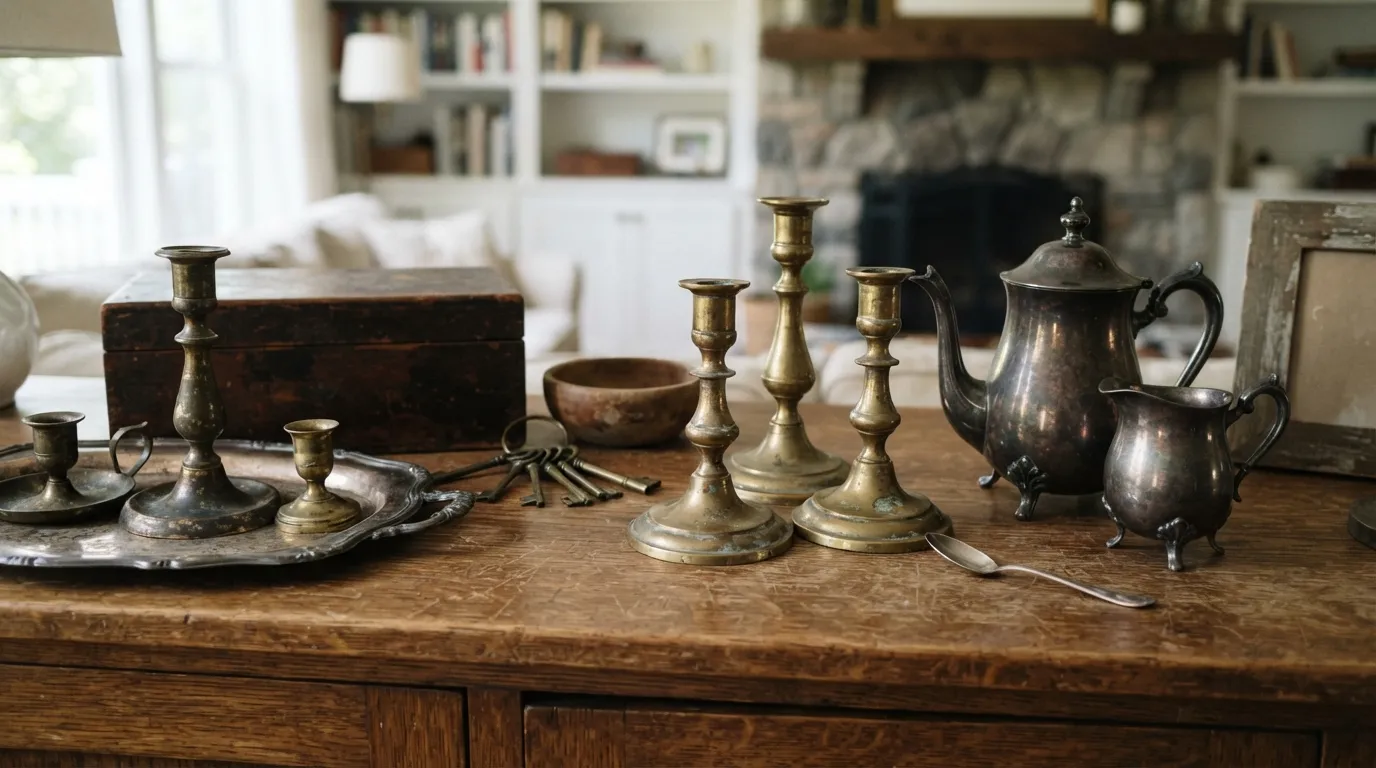
Patina is the soft darkening and wear that builds up on metal and wood with age. Plenty of designers and collectors treat it as part of the value of an old piece.
Here’s the part that stirs up arguments. Some people say brass should always gleam, but we think a tarnished candlestick looks more expensive than a shiny one from a catalogue.
The cost question is real, too. Aggressive polishing can remove a thin finish, and on antiques it can reduce value, so always test a small hidden spot first.
Over-polished heirlooms look like reproductions. The tell is the same every time: nothing in the room seems to have a history.
Editor’s Note: Our view is simple. A little tarnish and a worn edge say a piece has been loved. Polish when you have a reason, not out of habit.
The next one is hiding in plain sight on your kitchen counter…
#5 – The Bare, Cleared-Off Counter
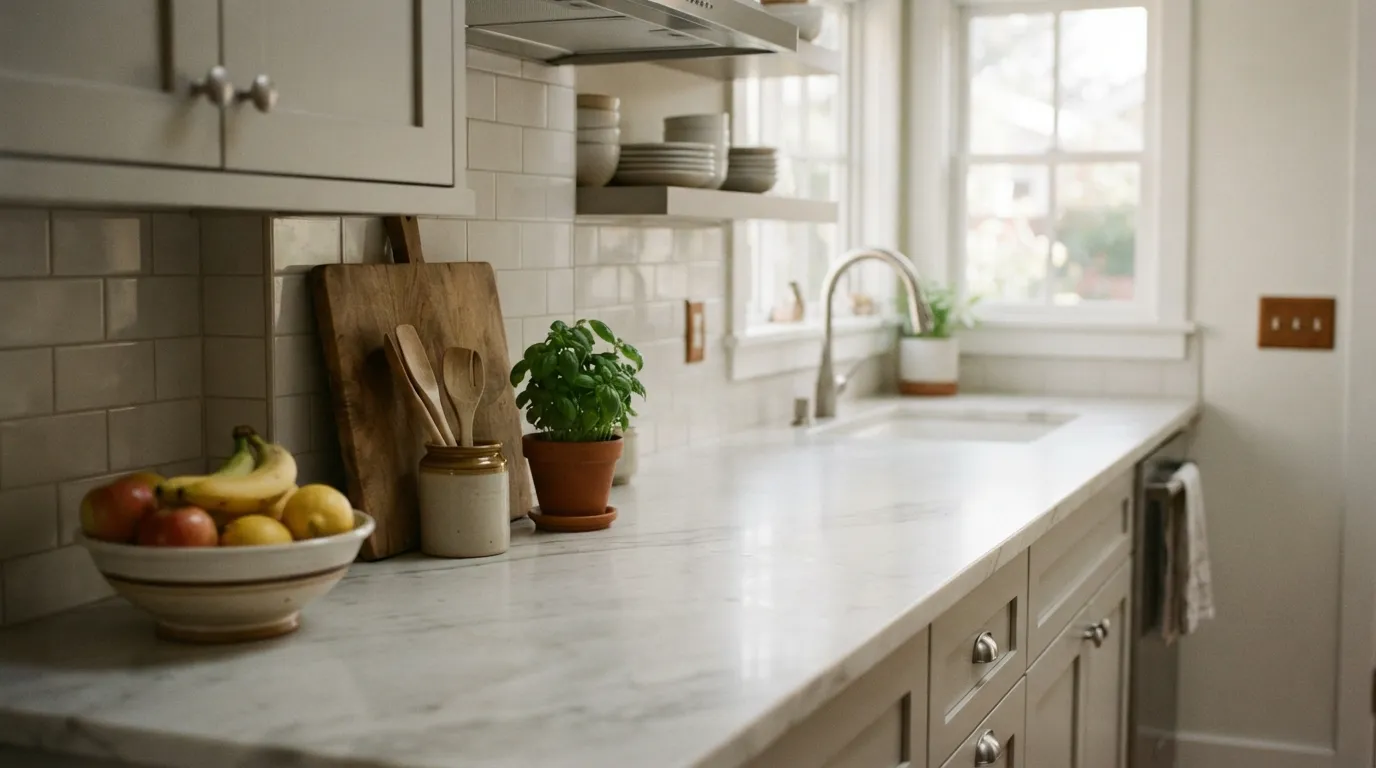
A kitchen counter with absolutely nothing on it is the loudest sign that a house is trying too hard. It looks less like a kitchen than a photo of one.
The empty-surface look spread because it’s easy to wipe. But it also strips out the small things that show who lives there.
Here’s a point most people miss. The CDC advises you to regularly clean light switches, door handles and countertops, especially after receiving visitors.1
That means the counter needs a good wipe after the party, not a vanishing act before it. Putting everything in a cupboard doesn’t make the surface any cleaner.
A counter with a fruit bowl, a cutting board and a plant looks tidier than a bare one, because it looks like it belongs to someone.
Try This: Keep one clear work zone and show three items: something living, something useful and something personal. The counter stays easy to wipe but no longer looks empty.
But if you think that’s extreme, wait until you see what’s under your feet…
#4 – Waxing Floors Until They Glow Like a Bowling Alley
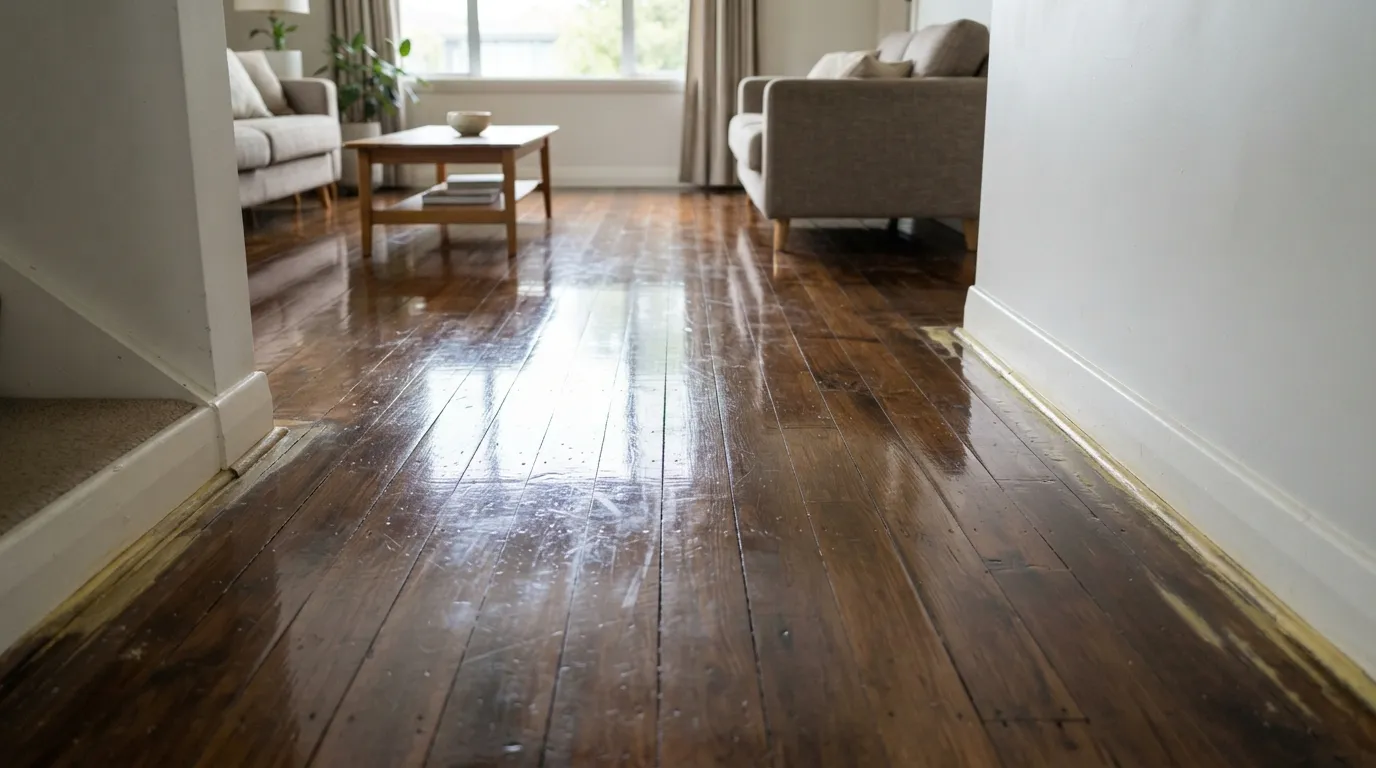
An overly shiny floor is one of the oldest ways to say “we clean a lot.” It’s also one of the easiest to spot from the doorway.
Layers of wax or heavy-duty floor polish can build up in corners and along edges. Over time, that buildup can turn dull or yellowish and show every scuff.
Many flooring makers also warn against too much water on certain floors. Always check what your floor is made of, and follow the maker’s guidance, before you pick a product.
We don’t have solid numbers on how many people over-wax, so we’ll stick to what’s observable. Most modern interiors lean toward matte or satin floors that hide wear.
Worth Knowing
- Corners and edges are where buildup shows first
- Dull or yellowish patches often point to layered product, not dirt
- Test any new cleaner in a hidden spot before using it
- Use as little water as the maker allows
The giveaway isn’t dirt. It’s a floor so glossy that you can see the ceiling lights in it. Guests can’t help noticing, and some start worrying about their shoes.
Next up is a bedroom habit that has less to do with cleaning than with showing off…
#3 – Staging the Bed With Karate-Chopped Pillows
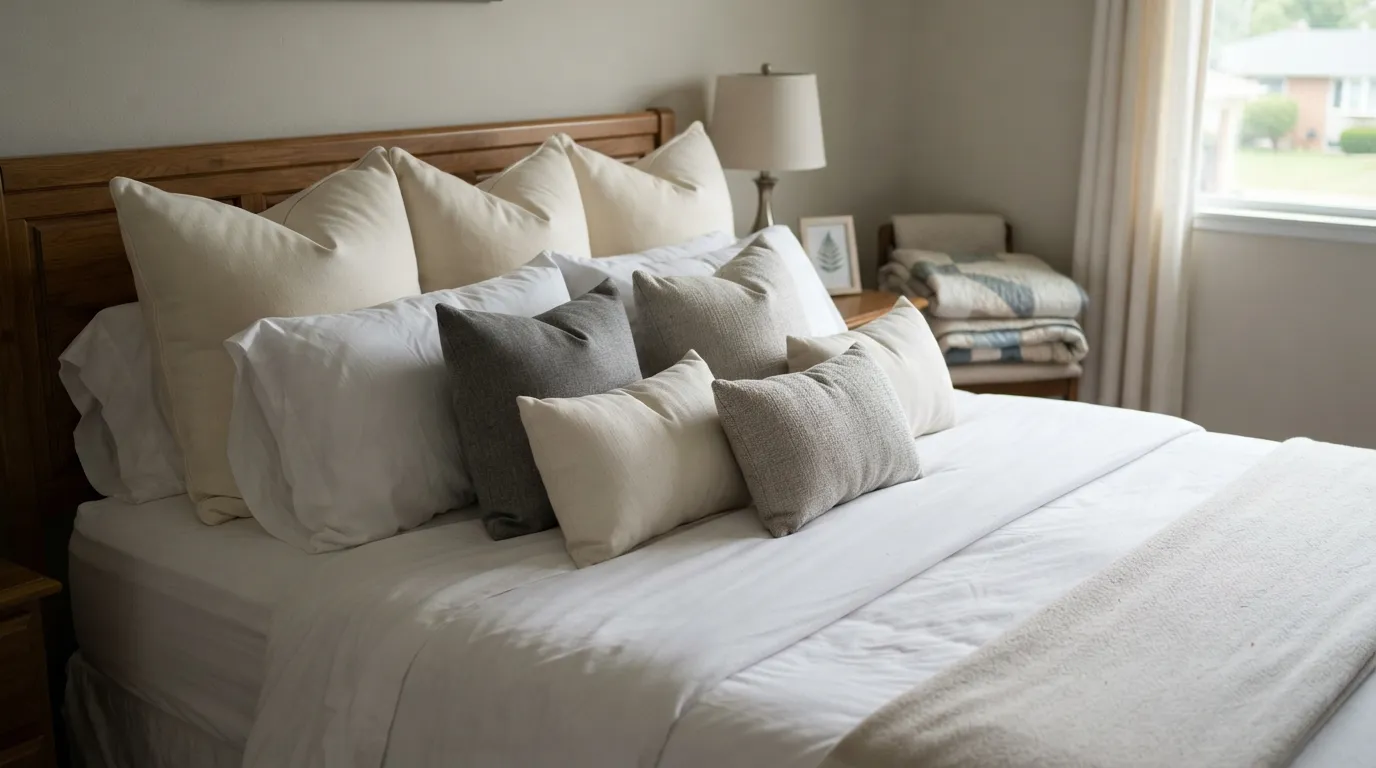
The pillow arrangement you spent three minutes on matters far less than what’s inside the pillowcase. Guests see the styling, but the bed’s real condition is hidden underneath it.
A fussy stack of decorative cushions looks like a catalogue shoot. Guests spot it right away, and most of them can’t decide whether they’re allowed to sit down.
The real cleaning gap is out of sight. A sleep survey cited by Popular Science found the average person pushes bedsheet washing to around 24 days, though it’s generally recommended to wash sheets and towels every one to two weeks.
The Cleveland Clinic adds that you should clean pillows, comforters and the mattress every six months to remove bacteria, dust mites and dead skin.6
Most of us stage the part guests see and skip the part that actually needs washing. Switch that order, and the bed will look better too.
Why It Works: A mattress protector takes the hit a mattress can’t. You wash the cover, not the bed, which makes it one of the easiest upgrades for a fresher room.
But there’s a habit even more common than this, and it involves a whole room…
#2 – Keeping a “Good Room” Spotless and Off-Limits
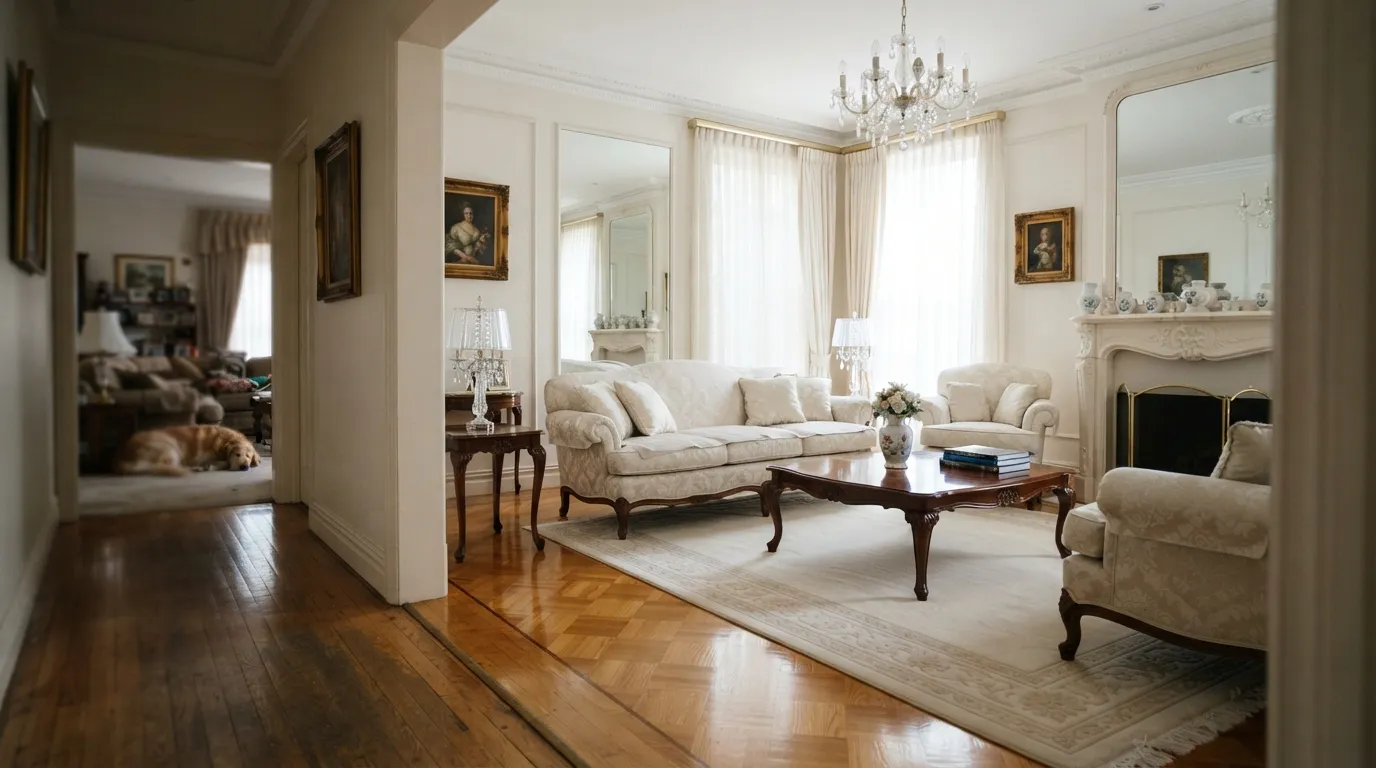
The formal living room nobody sits in may be the biggest waste of cleaning time in the house. It gets all the attention and none of the use.
It’s cleaned weekly, dusted constantly and protected like a museum. Meanwhile, the family lives in the one room with the worn sofa.
Here’s the opinion that starts arguments. We’d say the best-kept room is the one people actually use, and an untouched room is just storage for good furniture.
Dust and grime do collect even in unused rooms, so the cleaning isn’t pointless. But the effort goes toward a room that never pays you back in comfort.
A room that nobody is allowed to enter tells guests that the hosts value the furniture over the people. It’s a very old-fashioned message.
And yet the habit coming up is the one that sums up all the others…
#1 – Cleaning Away Every Trace of Life
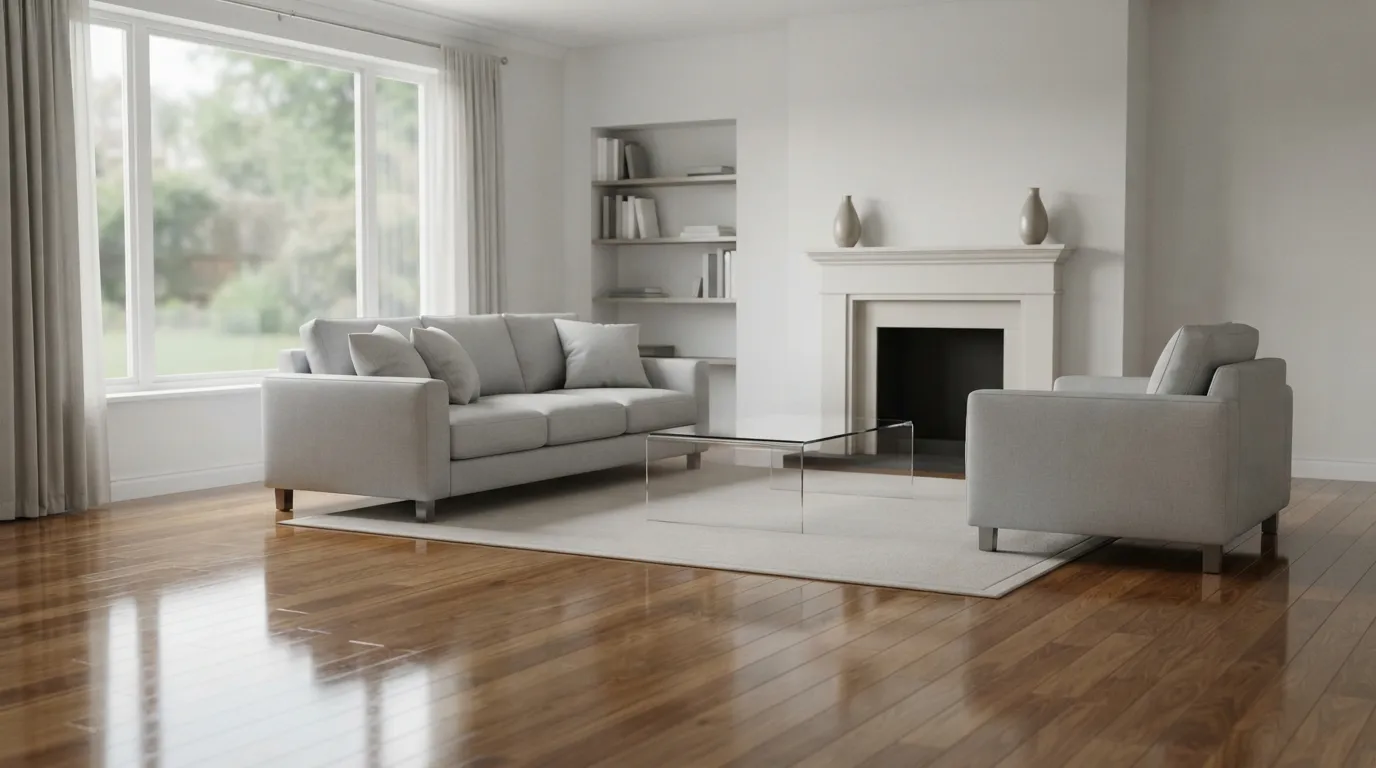
The most dated thing about an over-cleaned house isn’t any one habit. It’s the sterile feeling they all add up to.
The CDC’s advice is more relaxed than most of us are. Clean high-touch surfaces regularly, and clean other surfaces when they are visibly dirty.1
At a Glance
- Every day: Soap, water and a cloth handle most germs on surfaces
- Regularly: Light switches, door handles and countertops
- When visibly dirty: Everything else
- Disinfect: When someone is sick or a sick person has visited
That’s a reasonable standard, and it doesn’t call for fragrance, bleach or a shine you can see your face in. By the agency’s own guidance, a lived-in home with sensible cleaning is not a dirty one.
Cleaning itself is also simply physical. It doesn’t necessarily kill germs, but by removing them it lowers their numbers and the risk of spreading infection.
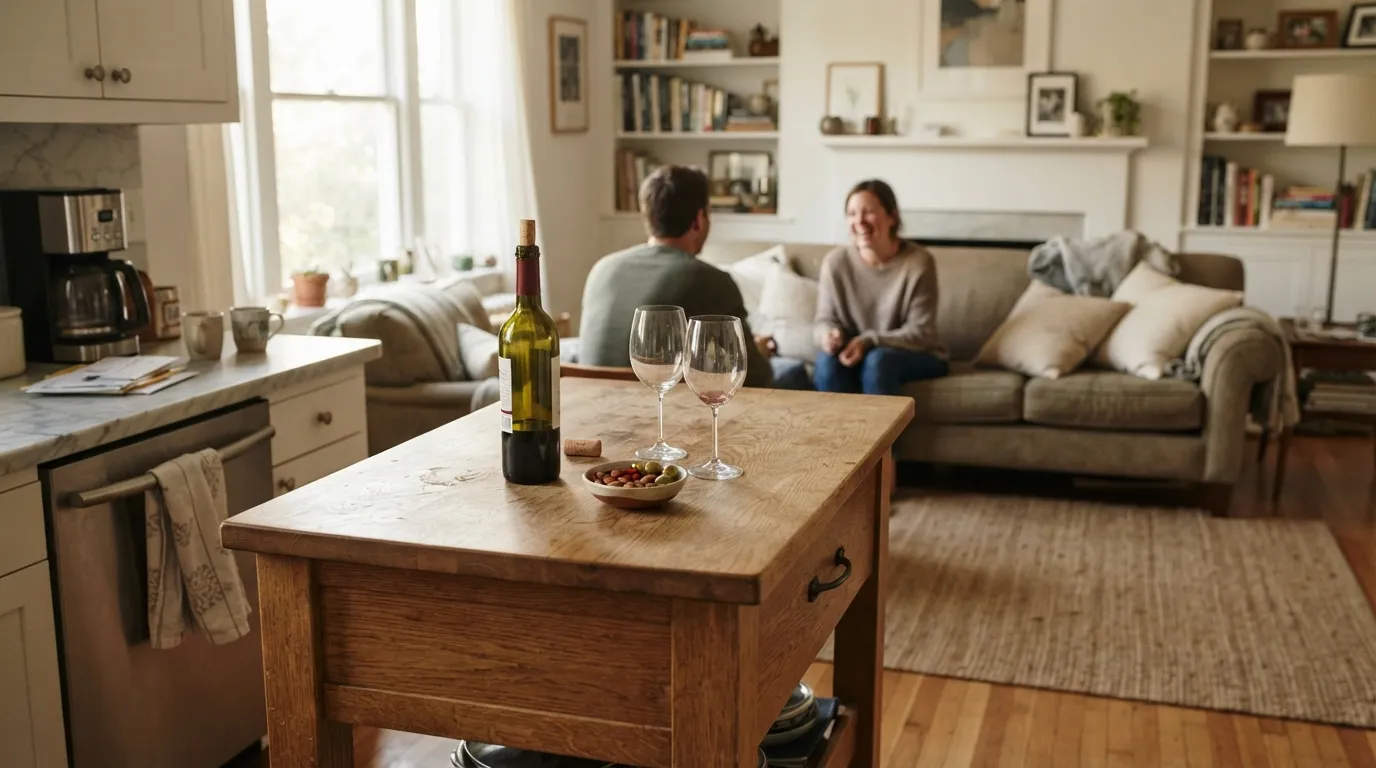
So the goal was never to erase every sign of living. A house that smells faintly of dinner, with a book on the arm of the sofa, tells guests they’re welcome to stay.
The Bottom Line
The pattern is clear. The CDC says disinfecting at home is likely not needed unless someone is sick, and one large European study linked weekly use of cleaning sprays to faster lung-function decline in women.1 4
The research on scents is mixed, but the style problem isn’t. Plug-ins, glossy polish, bleached linens and bare counters all say “performance,” not “home.”
Clean regularly, wash the things guests actually touch, and let the rest look lived in. Which of these 14 habits did you grow up with, and which one are you still doing?
- CDC Cleaning and Disinfecting Home: https://stacks.cdc.gov/view/cdc/107308/cdc_107308_DS1.pdf
- Air Chamber VOC Study: https://www.sciencedirect.com/science/article/pii/S0045653523018374
- EPA Indoor Air Chemistry: https://hero.epa.gov/reference/4682850/
- Bergen Cleaning Lung Study: https://www.newswise.com/articles/women-who-clean-at-home-or-work-face-increased-lung-function-decline
- University of Bergen Cleaning Sprays: https://www.uib.no/en/news/115228/household-cleaning-can-be-bad-smoking-lung-function
- Cleveland Clinic Sheet Washing: https://health.clevelandclinic.org/how-often-should-you-wash-your-bed-sheets