

You wipe the table, plump the cushions, and the living room looks showroom-ready by lunch. Then evening rolls in, and the same room looks like a tornado dropped by, even though you never hauled out a single box of clutter.
The reason is that the real culprits are three things nobody counts as clutter: a slumped pillow, a loose cord, and a tray that quietly became a dumping ground. These habits don’t show up at noon, which is why a spotless room can look chaotic by dusk.
Each of these 15 habits is small enough to ignore, and that’s exactly why it works against you. A few come with real safety warnings attached, and the last one explains why all the others keep coming back.
#15 – Leaving the Pillow Dent Where You Last Leaned
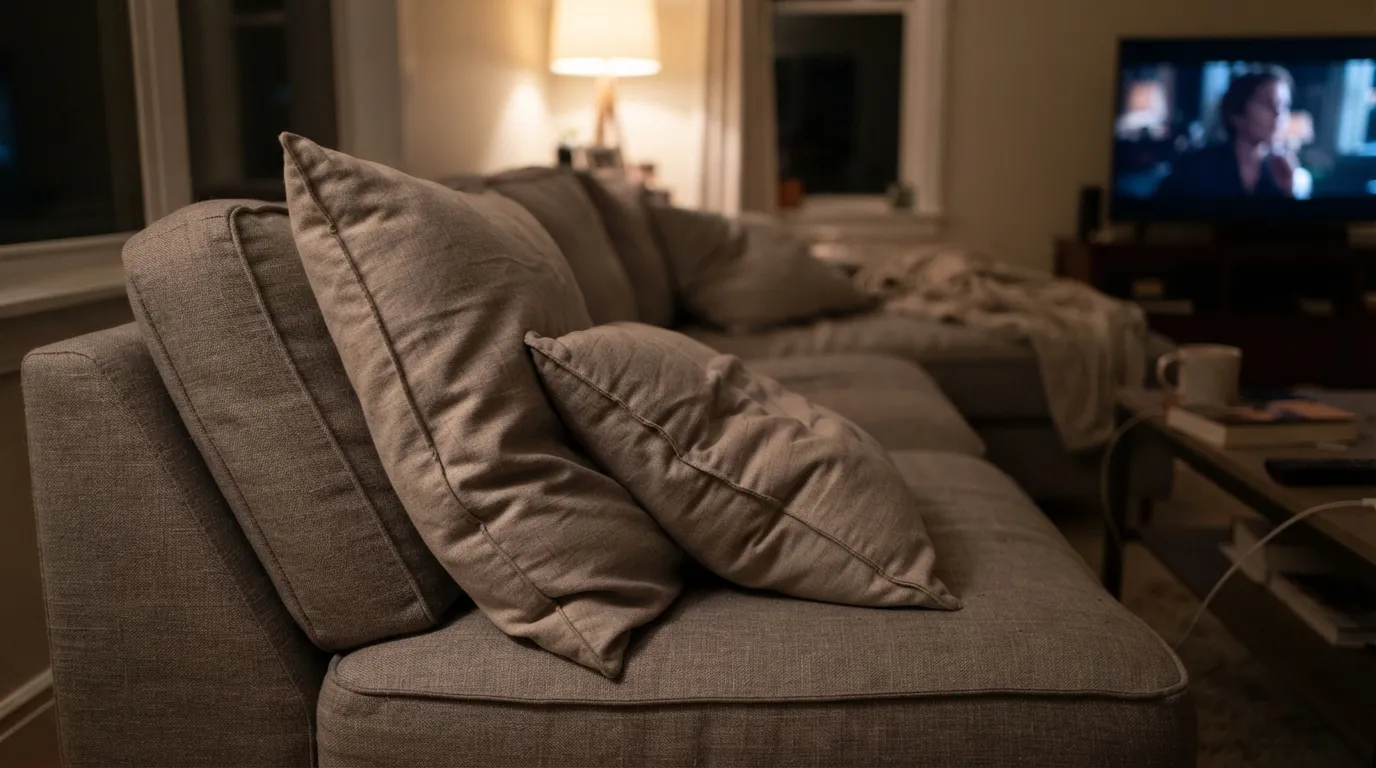
Look at your sofa at 8 p.m. and you can read the whole evening in the pillows. Every lean leaves a dent, a crease, or a corner folded the wrong way.
A pillow that stood square at noon is now slumped against an armrest or wedged behind someone’s back. Soft inserts tend to hold the shape of the last person who used them.
Most of us only tidy the flat surfaces. Pillows are the one thing on the sofa that changes shape every time someone sits down.
Hardly anyone resets them until company is coming. By then the room has looked rumpled for hours.
But that’s nothing compared to what happens when pillows leave the sofa altogether, which is #14.
#14 – Letting Pillows Migrate to the Floor
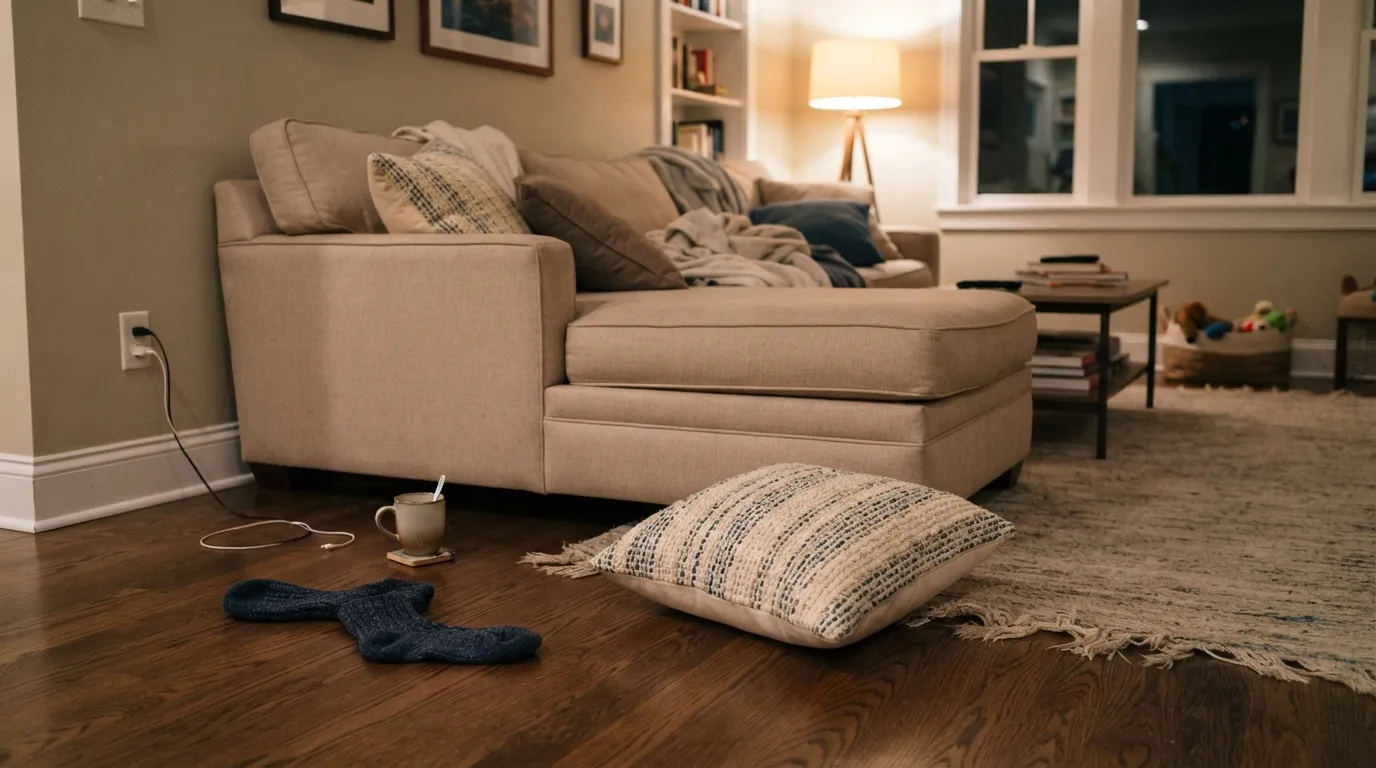
The fastest way to make a clean room look wrecked is to let a pillow hit the carpet. One stray pillow on the floor reads as a mess from across the room.
Pillows slide off during movie nights, naps, and homework sessions. They become footrests, lap desks, and dog beds, and then they stay wherever they landed.
The mistake is treating the floor pillow as a one-off. It’s usually the first domino, because once one thing has been dropped, everything else feels allowed to follow.
Why It Works: A room has a visible baseline. Once one object breaks that baseline, a second and third stop looking out of place, so picking up the first one is the cheapest reset there is.
Next up is a habit that sounds like good decorating advice, and it’s #13.
#13 – Owning More Pillows Than the Sofa Can Hold

Here’s a take some readers will hate: most sofas look tidier with three pillows than with seven. That’s an opinion, not a law, but the logic is hard to argue with.
Every extra pillow is one more object that has to be straightened, stacked, or rescued from the floor. A pile that looks styled at noon needs constant upkeep to stay that way.
Many decorators love a layered look, while plenty of tidy-home fans call it a daily chore in disguise. The more pillows you own, the more places a mess can start.
Quick Compare
- Three pillows: quick to reset, and a stray one is easy to spot
- Seven pillows: more stacking, more floor rescues, more evening upkeep
- Middle ground: keep the extras in a basket or closet and rotate them in
Still, the number isn’t the worst of it, because the next problem is hidden inside the pillows, at #12.
#12 – Ignoring Inserts That Have Gone Flat

A pillow cover can look perfect while the insert inside has given up. The corners sag, the middle bulges, and no amount of karate-chopping brings it back.
A tired insert never stands up properly, so the pillow slumps within minutes of being set down. That’s why some rooms look messy no matter how often you tidy them.
Most people blame their own effort. The truth is the pillow simply isn’t built to hold its shape anymore.
- Corners that fold over instead of pointing out
- A lumpy middle that shifts every time it’s touched
Try This: Stand a pillow on one corner on a flat surface. If it folds in half and won’t hold, it’s due for new stuffing or a replacement insert.
But a pillow can hold its shape and still look tired, and #11 shows why.
#11 – Skipping the Wash Until They Look Dull

Dingy pillows make a whole room look tired. Skin oils, dust, and pet hair collect in the fabric a little at a time.
Home-care guidance from Homes & Gardens says throw pillows should be washed at least once a quarter, depending on how, where, and how often they are used. If pets are allowed on the sofa, you may want to wash them more often.1
That’s the part people skip. A pillow that has gone dull by evening has usually been going dull for months.
Did You Know: Throw pillows and other decorative items are often dry-clean only, so check the care label before washing.
Now we move from pillows to cords, and the first offender, at #10, is sitting right beside your sofa.
#10 – Letting Charger Cords Dangle From the Wall
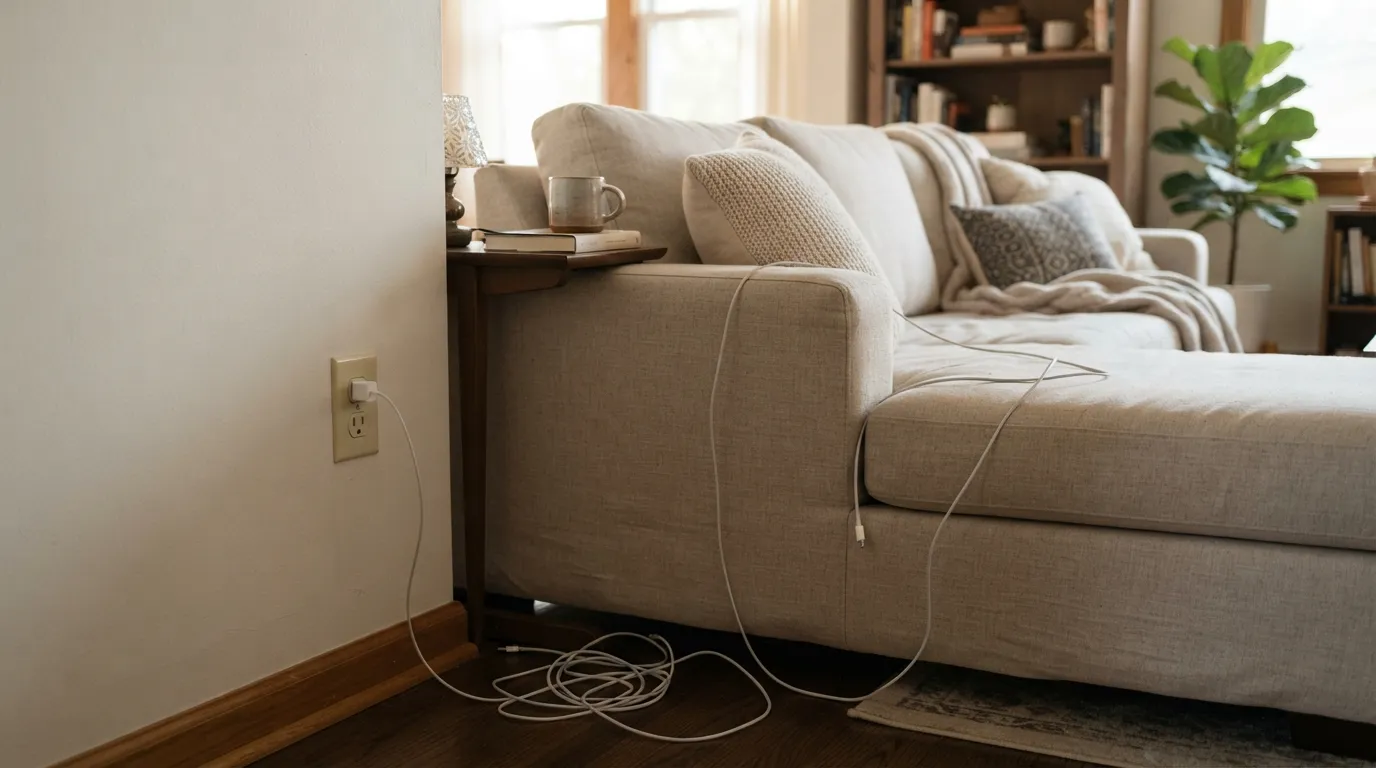
The charger plugged in beside the sofa is the most overlooked eyesore in the room. A thin white cable hanging from an outlet pulls the eye straight to it.
Chargers are left in place all day, then get dragged across cushions in the evening. By night the cable is draped over an armrest or snaking across the floor.
People assume a cord this small can’t matter. But in a room full of soft shapes, one dangling line is one more thing for your eye to snag on.
Worth Knowing
- A cable at outlet height sits right in the sightline of anyone on the sofa
- Extra slack is what gets dragged onto cushions and floors
- A shorter cable or a small adhesive clip keeps the slack off the seating
- Unplugging it when nobody’s charging removes the eyesore entirely
But a loose cable is mild compared to what we found at #9.
#9 – Running a Cord Under the Rug
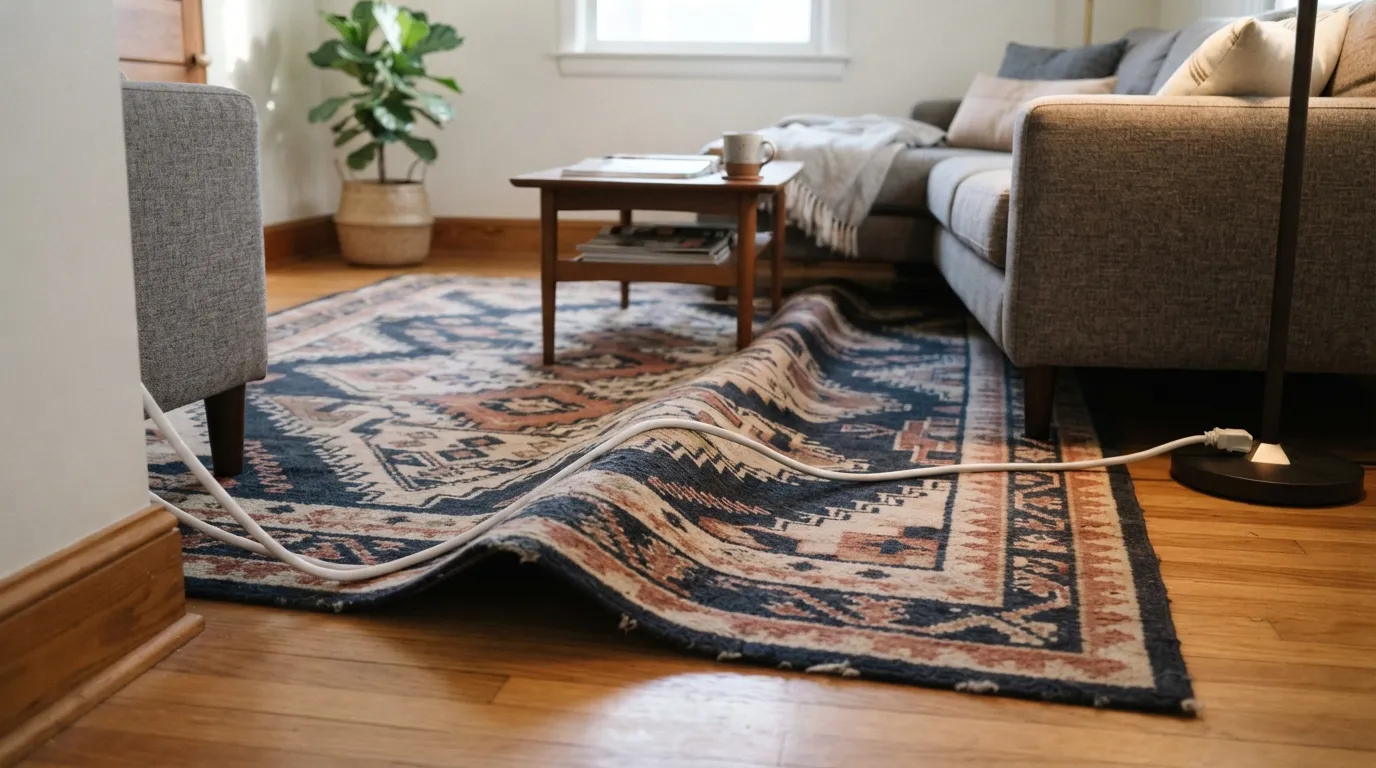
Hiding a cord under the rug looks tidy for about a day. Then the rug bulges, the edge curls, and a visible ridge runs across the room.
It’s also the habit safety groups warn about most plainly. The Electrical Safety Foundation International says to never run extension cords under rugs, carpets, or through doors or windows.2
Most people don’t realize a covered cord is the problem, not just an ugly lump.
The Science Behind This: ESFI notes that when a cord is covered, heat cannot escape, which may create a fire hazard. A rug is a blanket for the cord, and it traps what the cord gives off.
Next is a habit almost every living room has, and #8 is where the safety numbers get serious.
#8 – Chaining Power Strips and Extension Cords
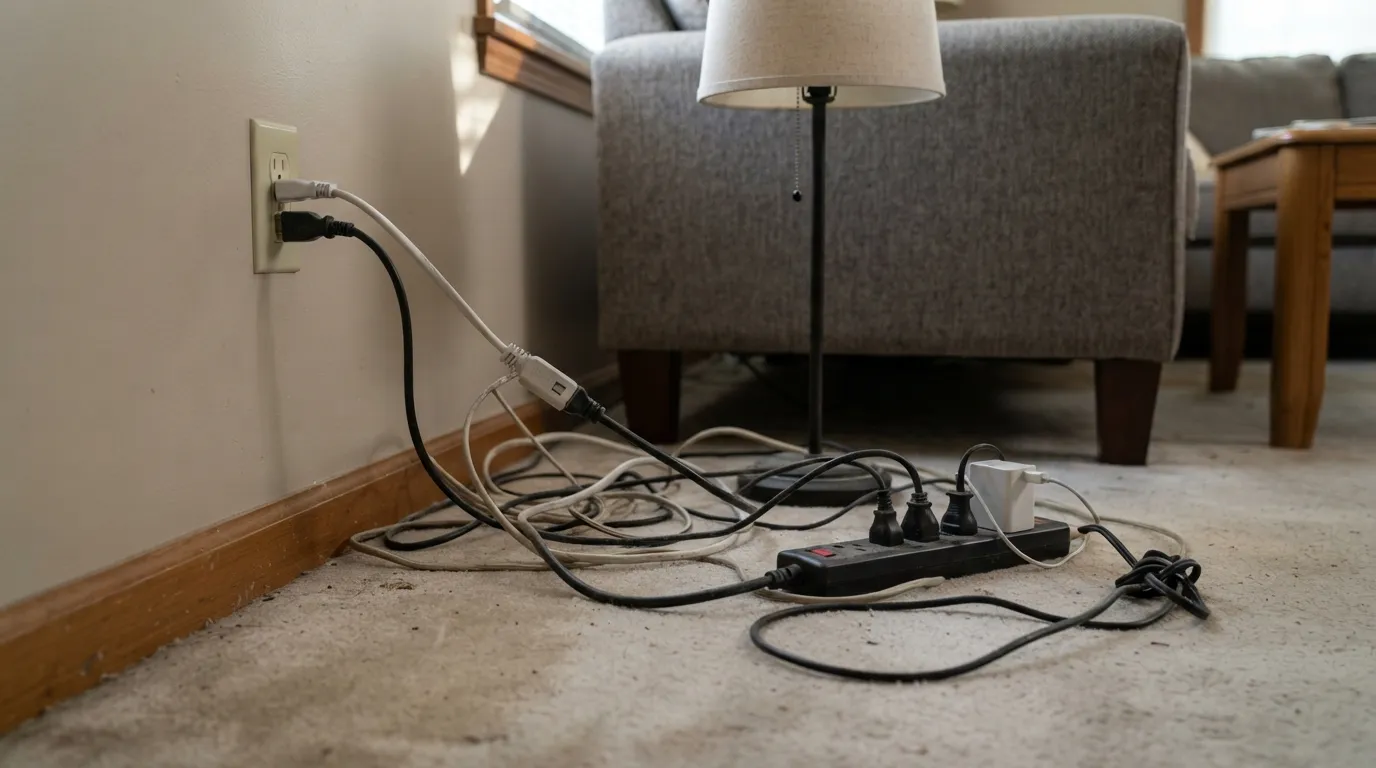
One strip plugged into another is the quiet cause of a lot of tangles. It starts as a fix for one lamp and ends as a knot behind the sofa.
ESFI’s guidance is blunt: don’t plug extension cords into one another, and don’t overload them.3 It also says extension cords are for temporary use only.2 3
A daisy chain is really a sign the room has too few outlets in the wrong places. ESFI says as much, noting that heavy reliance on extension cords suggests you need additional outlets installed.3
By The Numbers: ESFI estimates roughly 3,300 home fires originate in extension cords each year, killing 50 people and injuring 270 more.
But the untidiest cord habit of all is the one that takes only a second, and it’s coming up at #7.
#7 – Coiling Cords Loosely and Leaving Them on the Table
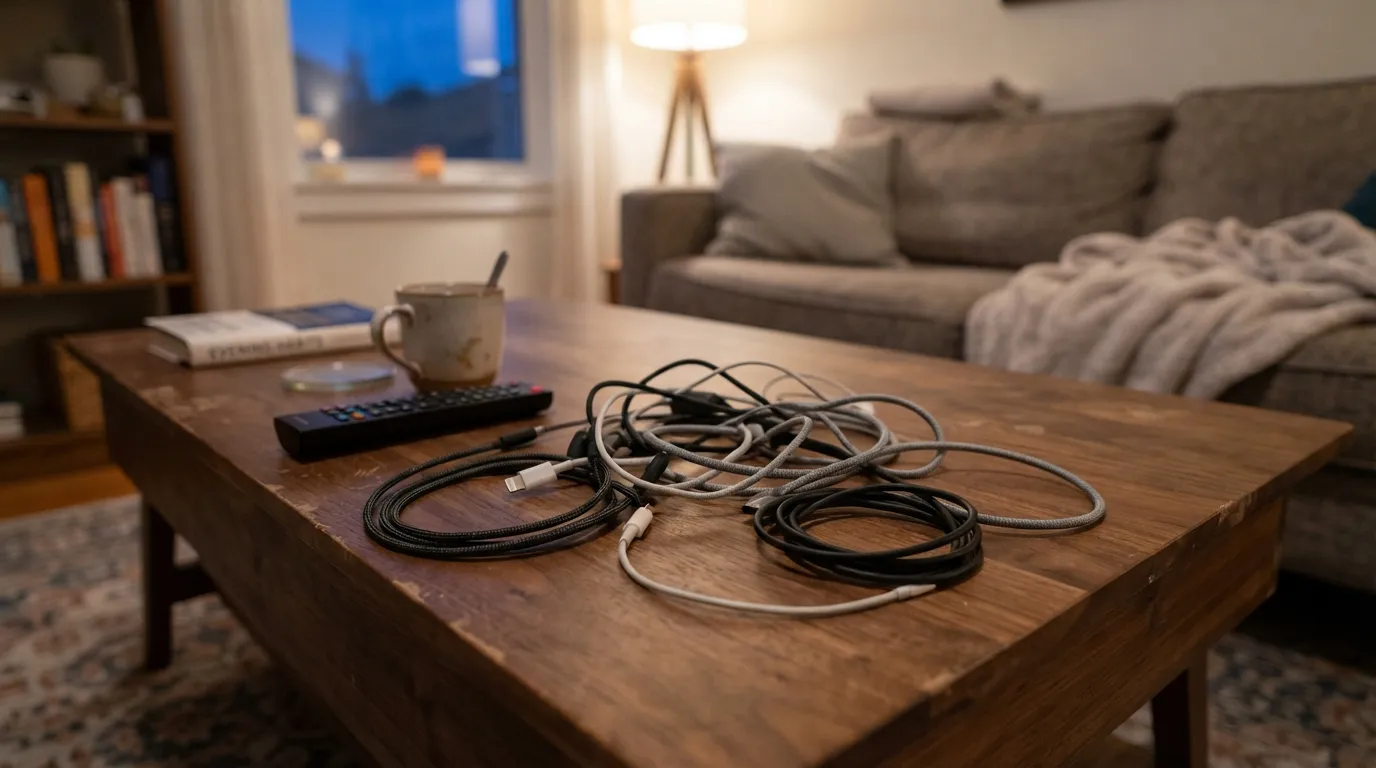
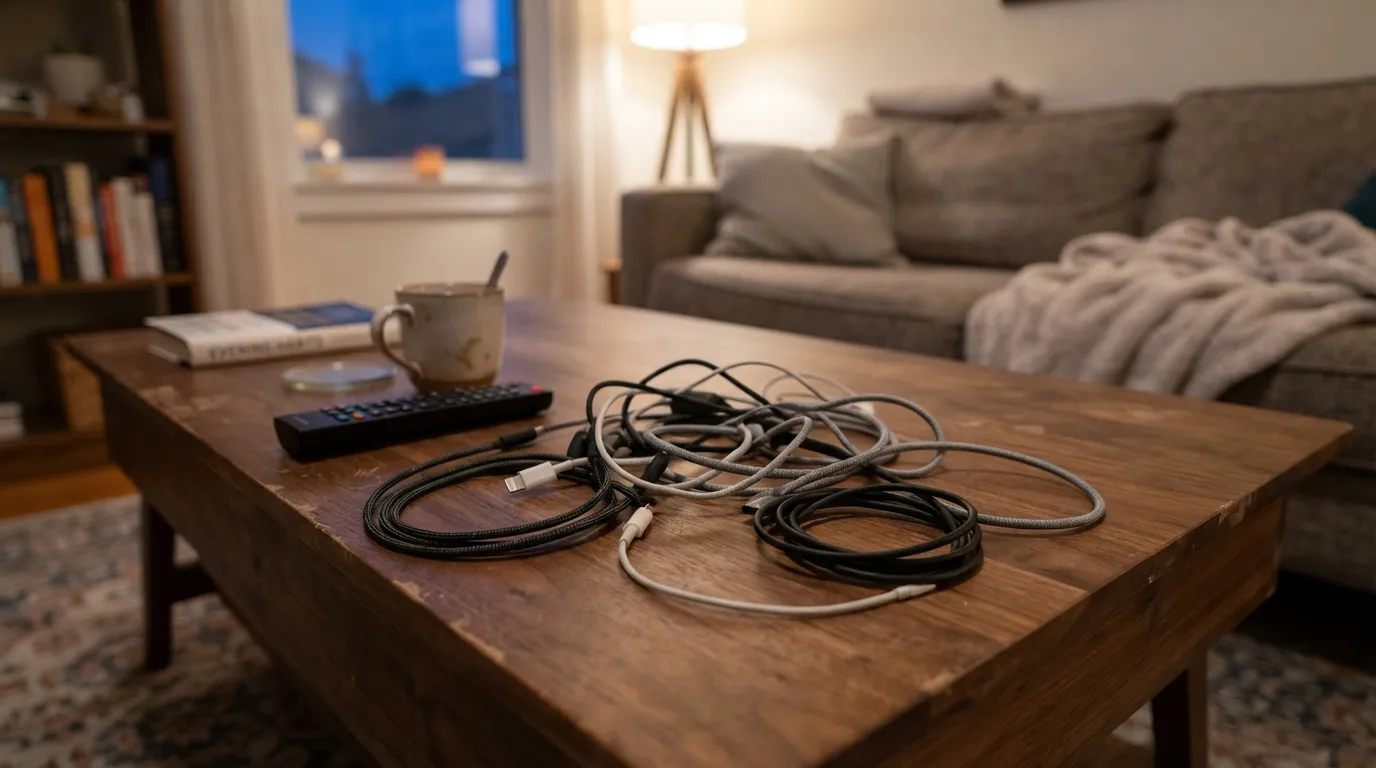
A loosely coiled cord looks organized for about ten minutes. Then it uncoils itself across the coffee table.
Headphone wires, game controller cables, and phone chargers all behave the same way. They pile up in a nest, and the nest grows each evening.
Here’s the part nobody mentions. The nest is rarely one cord. It’s five cords tangled into one object that looks like a mess even when each piece is where it belongs.
- Loose coils spring open as soon as they’re touched
- Tangles form where cords cross each other
The real fix isn’t a tidier coil, and #6 explains why.
#6 – Leaving the TV Cable Cluster in Plain View
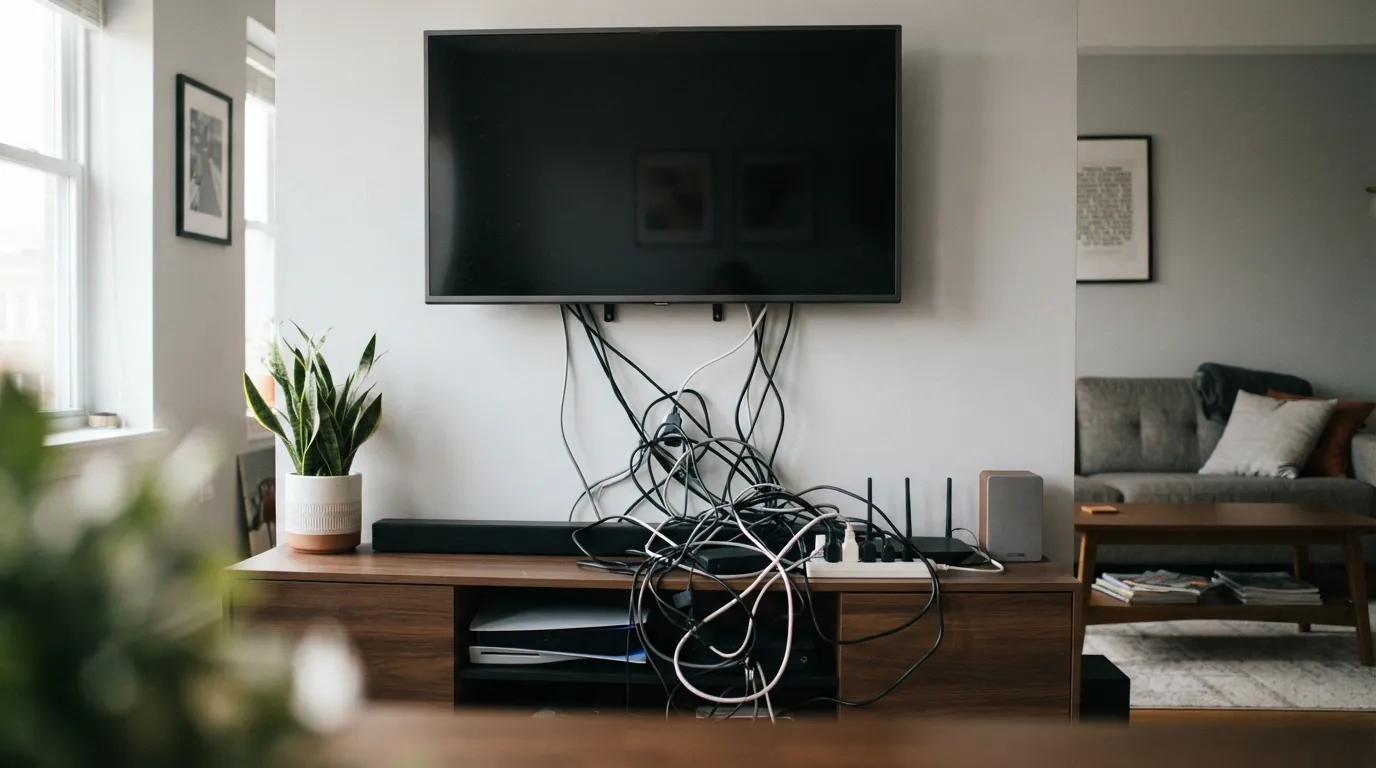
The tangle behind or beside the TV is the cord problem everyone sees and nobody fixes. It sits at eye level in the one spot where everyone looks.
Researchers at Princeton found that when several objects are in view at once, they compete for neural representation and suppress each other’s responses. The same work found that a scene that is already well grouped needs less attention.
That study used images on a screen, not living rooms. But the principle suggests a bundled cable is easier on the eye than five loose ones.
The Psychology Behind This: The eye tends to go to whatever looks unfinished. A loose bundle of cables can read as a task nobody has completed, even when nothing is actually wrong.
Cords aren’t the only thing creating this effect, as #5 shows, and it starts with the tray.
#5 – Loading the Tray Until It Stops Looking Like a Tray

A tray is supposed to make clutter look intentional. A tray that’s too full does the opposite.
Remote, candle, coaster, mug, phone, glasses, and a magazine all fit at first glance. By evening you can no longer see the tray, only the pile on top of it.
At a Glance
- Works: three or four items, each with a clear job
- Fails: items stacked on top of each other
- Quick test: if you can’t see the tray’s base, it’s overloaded
A tray works by grouping, and grouping only works when there’s a limit. A tray with nine things on it is just a smaller floor.
Insider Tip: Decide what lives on the tray before you buy it. If you can’t name its three or four jobs, it will end up collecting everything else.
Overloading is a slow problem. The next one on the list, #4, builds up through the evening.
#4 – Never Emptying the Evening Tray

The tray is spotless at noon and wrecked by nine. It collects mugs, plates, and wrappers one at a time.
Each item is minor on its own. Together they turn a styled surface into a dishes station without anyone deciding it should be one.
Most people tidy the room and leave the tray for tomorrow. That’s the mistake, because the tray is the first thing people see when they walk in.
Try This: Make the last person off the sofa responsible for carrying one thing from the tray to the kitchen. It takes seconds and prevents a morning pile-up.
But where the tray sits matters even more than when it’s emptied, which brings us to #3.
#3 – Putting the Tray on the Wrong Surface

Where the tray sits changes how messy it looks. A tray on an ottoman that people use as a footrest never has a chance.
Moved, tilted, and bumped, it ends up crooked on the cushion or half off the table. A tray that can’t sit still reads as clutter no matter what’s on it.
Plenty of designers love the ottoman tray, but many tidy-home fans call it a trap. If the surface is also a seat or a footrest, the tray is working against you.
Editor’s Note: This is a judgment call, not a rule. If your ottoman is never used as a footrest, a tray there can work well. The test is whether it gets bumped.
Two habits remain, and the next one at #2 hides in plain sight.
#2 – Turning the Tray Into a Catch-All
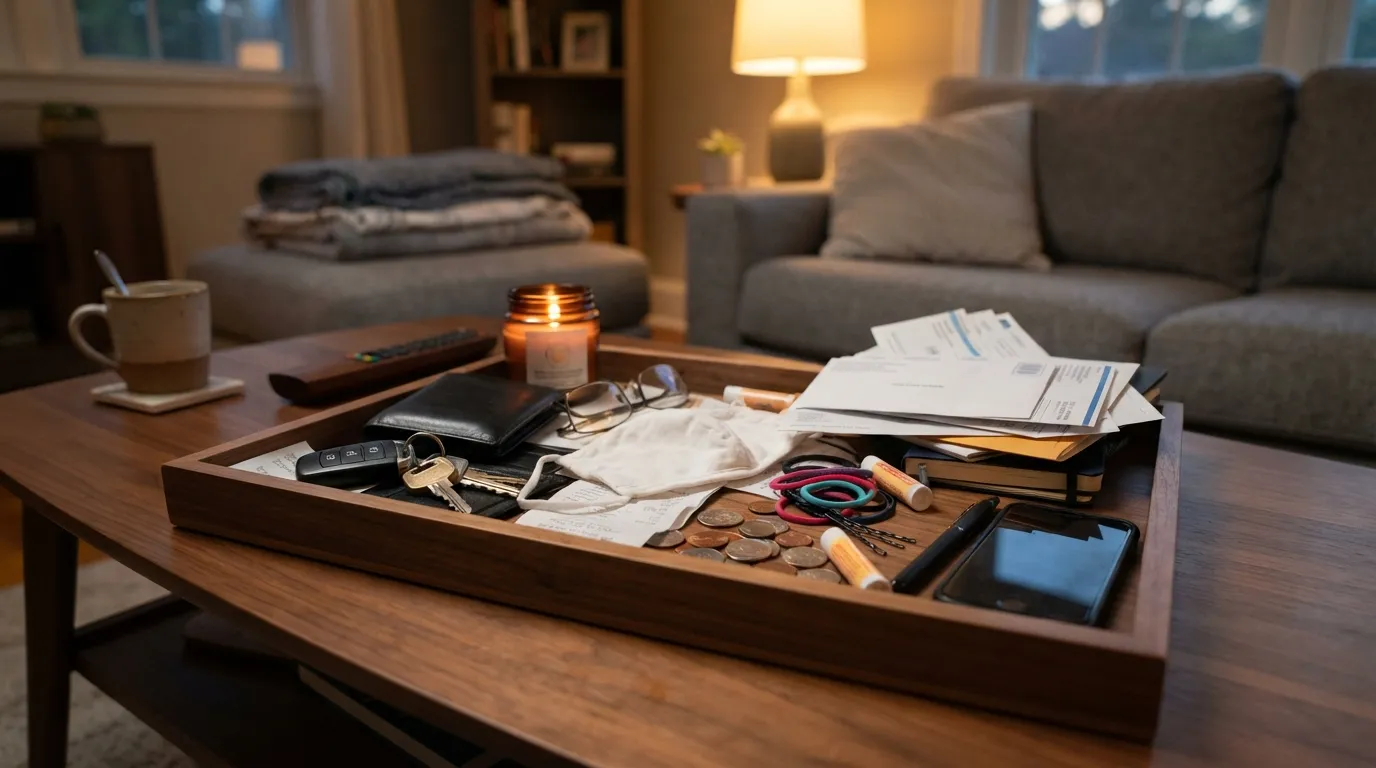
The tray that was meant for a remote and a candle becomes the family’s junk drawer. Mail, keys, receipts, hair ties, and loose change all drift there.
Nobody decides to turn it into a dumping ground. It happens one small drop at a time, usually by the end of the day.
That’s how a catch-all tray beats a tidy room. Anything is allowed on it, so everything ends up there.
Why It Works: A tray with a narrow job gives people a clear rule. A tray with no job gives them permission to leave anything.
All of these habits point to one bigger problem, and #1 is the one almost nobody fixes.
#1 – Skipping the Two-Minute Evening Reset
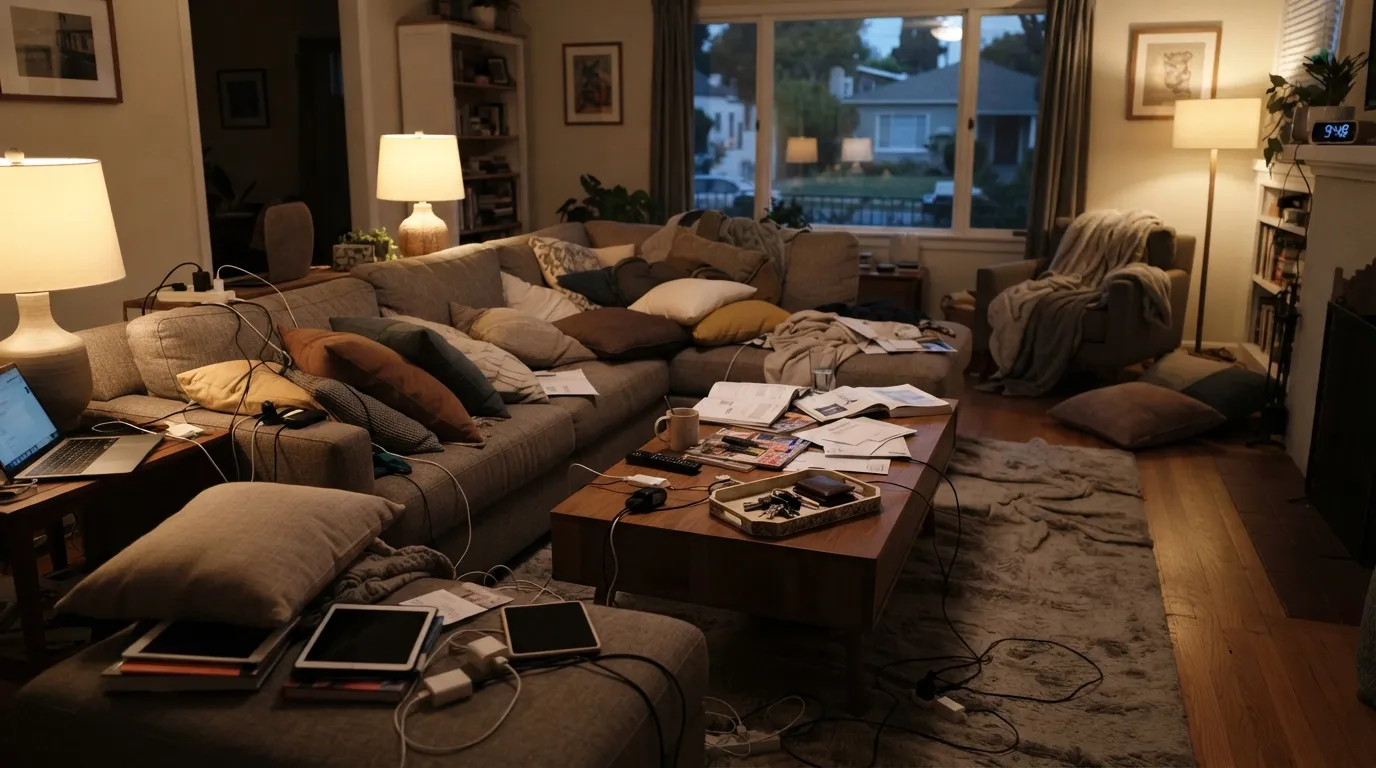
The pillows, cords, and trays are symptoms. The habit behind them is that nobody resets the room before the evening ends.
The research on home clutter is limited, so take it with care. The best-known example comes from UCLA’s Center on Everyday Lives of Families.
Fast Facts
- Who: 32 Los Angeles families
- When: the early 2000s
- What it found: mothers who described their homes in cluttered, stressful terms tended to show less healthy daily cortisol patterns4 5
- The catch: it shows a link, not proof of cause
Even so, the way people describe a room appears to line up with how stressed they feel in it. A two-minute reset won’t make a home spotless, but it can turn “a mess by evening” into a room you’d actually want to sit in.
Pillows, cords, and trays rarely look bad on their own. They look bad because they shift, drift, and fill up one small act at a time.
The best-backed takeaways are the safe ones: never run a cord under a rug, don’t chain strips together, and keep a tray to a few clear jobs.2 3 Which of these 15 habits is already in your living room by 9 p.m.?
- Homes & Gardens Pillow Care: https://www.homesandgardens.com/solved/how-to-wash-dry-care-for-pillows
- ESFI Extension Cord Safety: https://www.esfi.org/extension-cord-safety-video-short/
- ESFI Use Extension Cords Properly: https://www.esfi.org/reaching-to-safety-use-extension-cords-properly/
- UCLA CELF Clutter Culture: https://newsroom.ucla.edu/magazine/center-everyday-lives-families-suburban-america
- Saxbe Clutter Cortisol Study: https://darbysaxbe.substack.com/p/cogsplained-by-my-ai-doppelganger