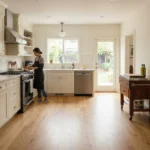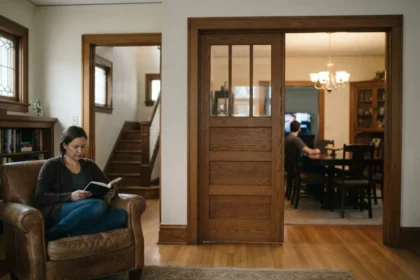


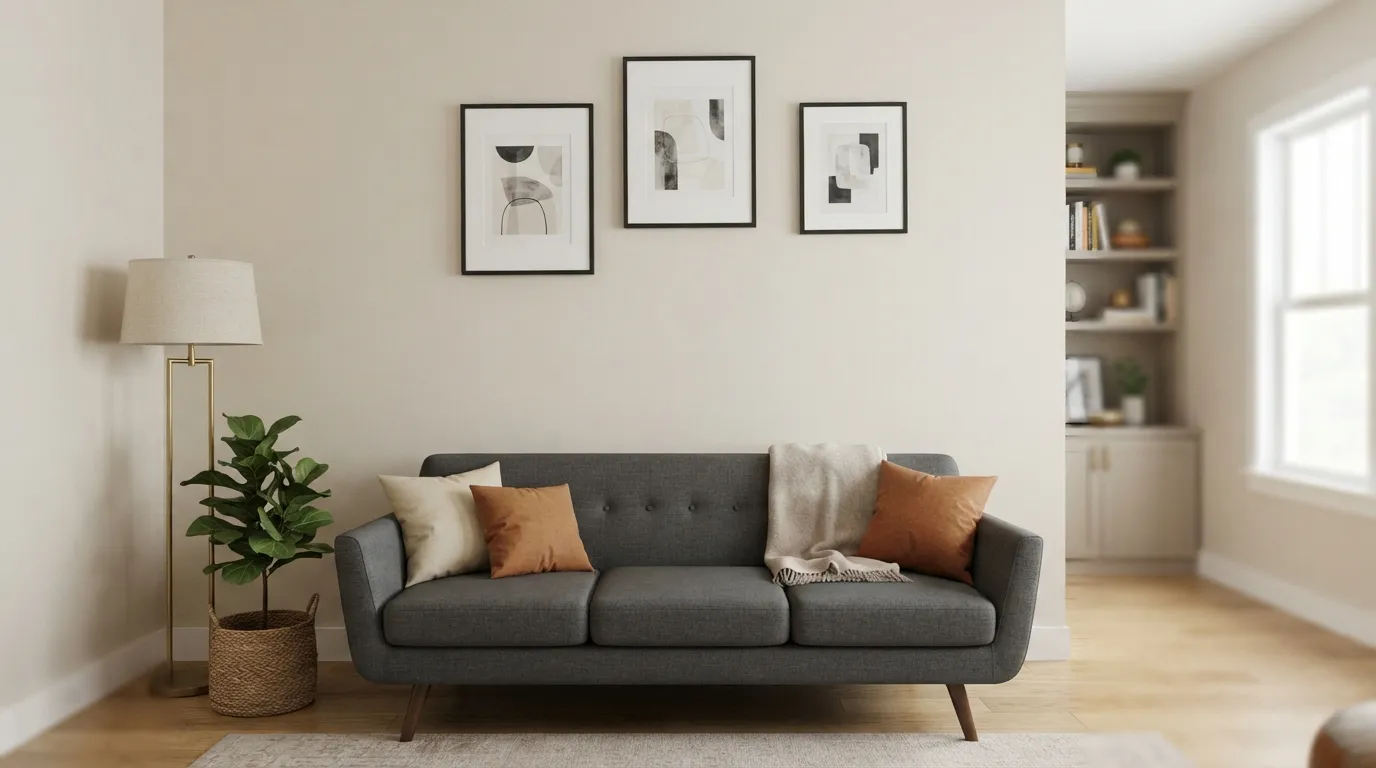
Your floors gleam and the counters shine, yet a visitor still walks in and senses a house barely holding itself together. Agents surveyed by the National Association of Realtors recommended decluttering to sellers more often than cleaning, 91% to 88%.1
Fourteen small habits create that impression, and the last one on the list explains the other thirteen. Stay with us until then, starting with a problem you can fix before dinner: the cords behind your television.
#14 – Cords and Cables Draped Across Surfaces
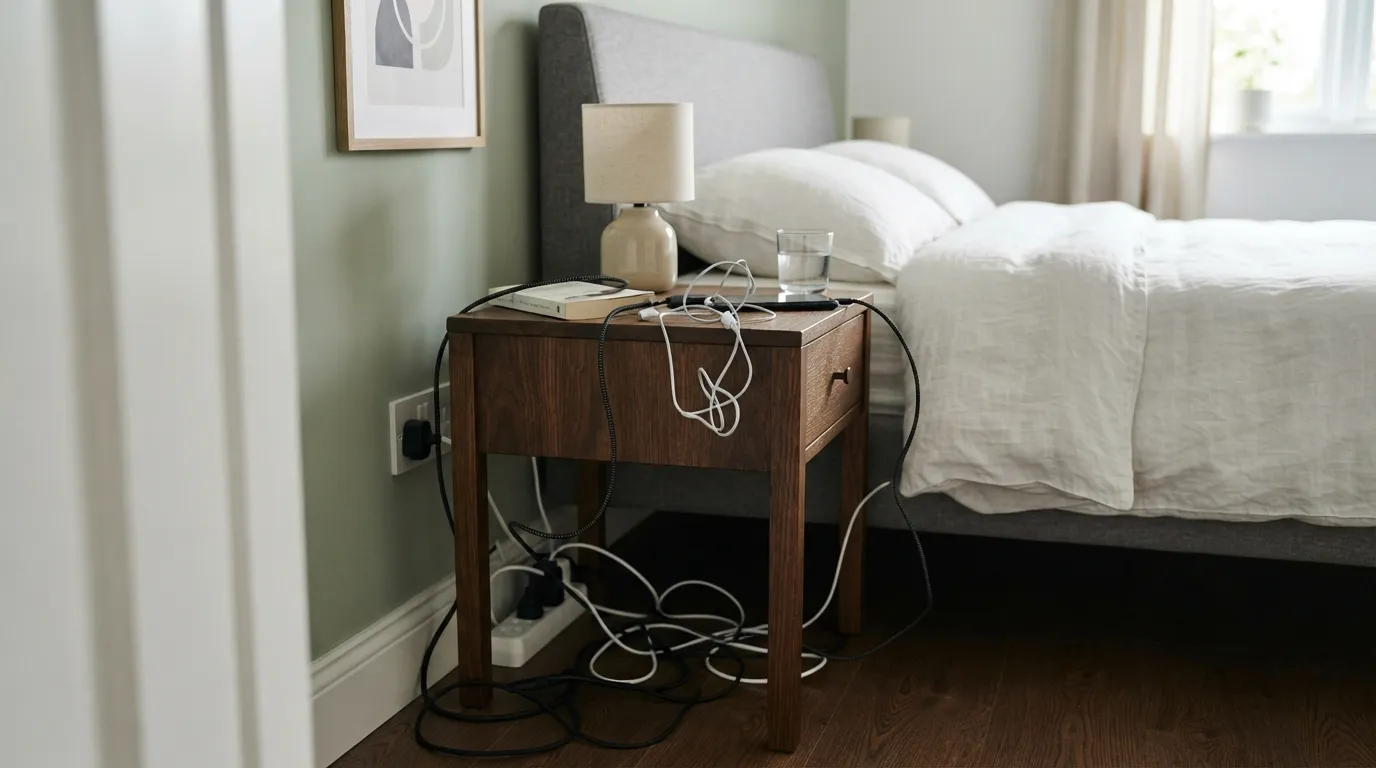
A phone charger crossing a nightstand and dropping behind the bed reads like a loose thread on a clean sweater. Cords are thin, dark and everywhere, so they slice across a room’s clean lines in a way a little dust never does.
Begin behind the television, where the tangle is usually worst. Bundle each cluster of cords with one tie and route them behind furniture.
Adhesive clips cost a few dollars and keep a charging cable from sliding off the table every time you unplug it. For a lamp cord that has to cross open floor, a paintable cover along the baseboard makes the run nearly invisible.
Snap a quick photo of each room from the doorway. Cords you stopped noticing months ago tend to jump out on a screen.
The Psychology Behind This: A dark cord against a pale wall forms a line, and the eye follows lines automatically. Hide the cord and the line disappears, so the room feels calmer without anything else changing.
Cords are the easy fix. The bathroom counter is trickier, because the clutter there arrives printed with loud labels.
#13 – Bathroom Counters Crowded With Bottle Labels

A counter lined with bottles looks cluttered even when every one has been wiped clean. Each package carries its own color, typeface and logo, so the eye sees several competing signs instead of one calm surface.
Leave out only what gets used every day, which is usually hand soap and a toothbrush cup. Only daily-use items stay on the counter.
Everything else belongs in a drawer or under the sink. If you want something on display, set it on a small tray so it reads as a choice and not as an accident.
At a Glance
- Stays out: hand soap and a toothbrush cup.
- Goes in a drawer: skincare, makeup and hair tools.
- Goes under the sink: backup bottles and cleaning supplies.
- Optional display: one tray holding one or two pretty items.
Decanting every product into matching bottles isn’t worth the effort. A drawer hides the labels for free, and it never needs refilling.
Did You Know: Re-grouting tile sits on the list of improvements that more than half of surveyed agents suggest before listing, next to carpet cleaning and paint touch-ups. Discolored grout is a flaw that wiping alone often can’t fix.
The kitchen sink has its own version of this problem, and one item there belongs in the trash far sooner than you’d think.
#12 – The Sponge, Rack and Soap by Your Sink
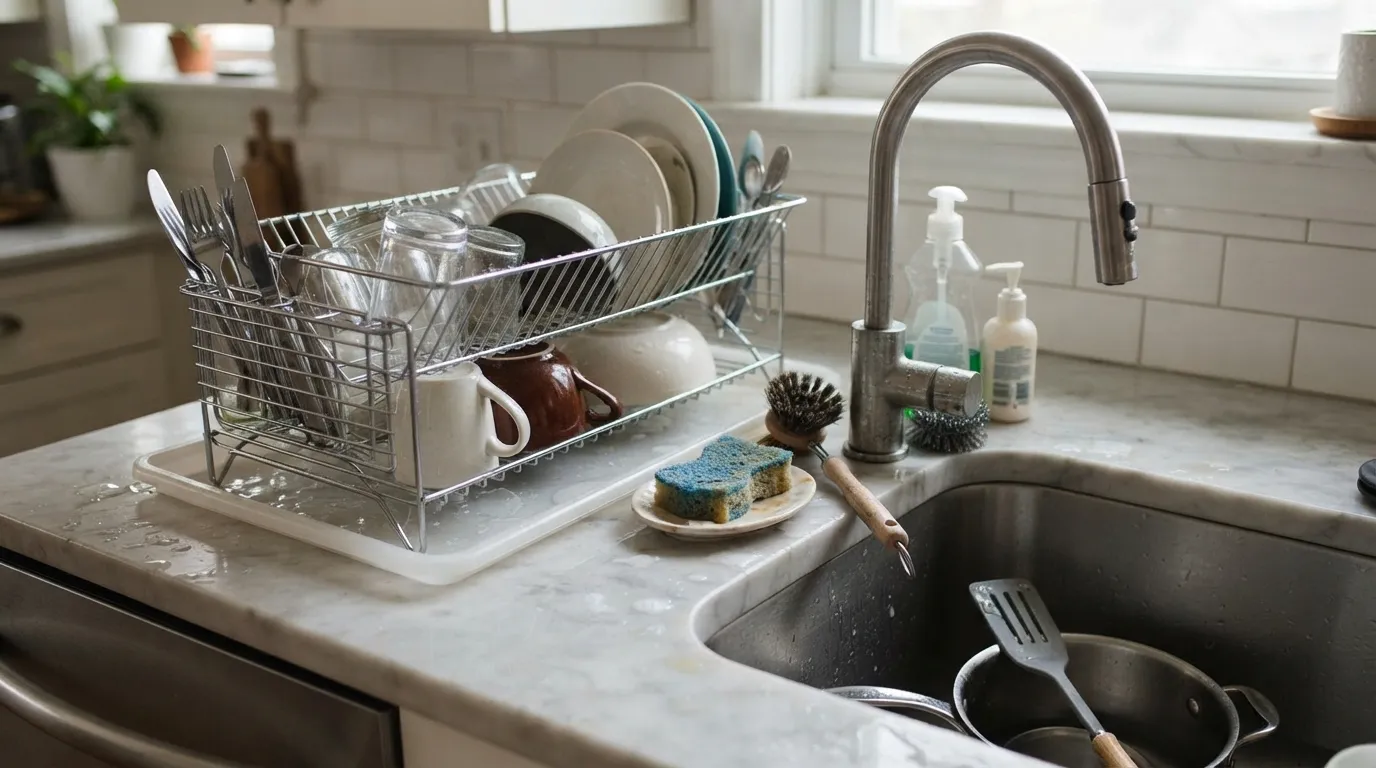
A kitchen can be scrubbed to a shine and still look unfinished if the sink area is crowded with tools. Every item there is a working object, and working objects look like work in progress.
Gather the essentials on one small tray: a soap dispenser, a brush and a sponge. Replace the sponge when it smells or starts to fall apart, because a gray, flattened sponge looks as tired as it is.
The dish rack is the bigger offender. Put the rack away the moment it’s empty.
A few dishes soaking for an hour look better than a rack that never leaves the counter. The dishes will disappear by evening, and the rack won’t.
By The Numbers: In the 2025 Realtor staging survey, 23% of buyers’ agents named the kitchen the most important room to stage. That ranked it third, so the room you cook in is also a room strangers judge.
Above the counter, the refrigerator door is where kitchen clutter turns personal, and agents have a word for what they ask sellers to do about it.
#11 – A Refrigerator Door Covered in Paper
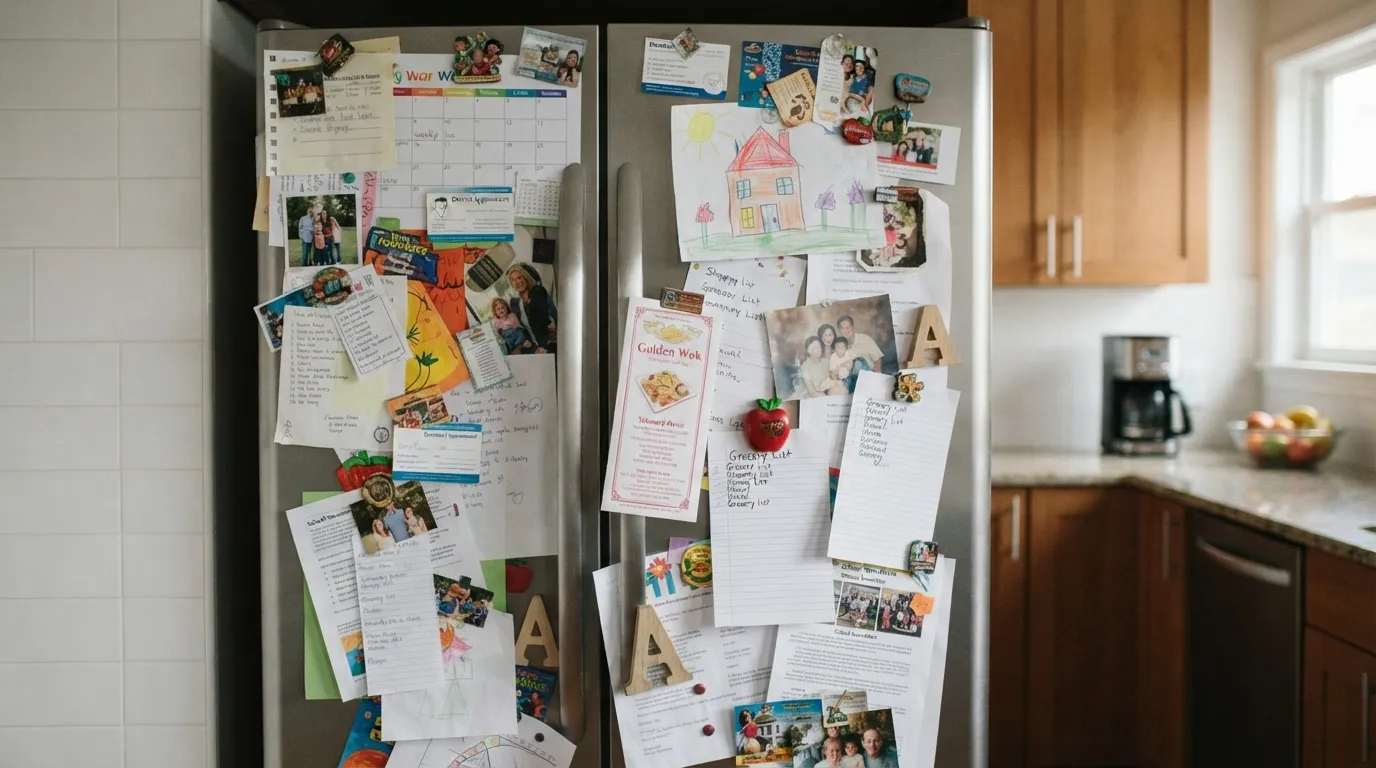
A refrigerator door is the largest flat, vertical surface in most kitchens, which makes it the easiest place for paper to pile up. It also sits at eye level, so every menu, magnet and school notice becomes a small visual spike.
Taken together, they turn a clean appliance into a bulletin board. That happens no matter how well the rest of the room has been wiped down.
The agents’ word for the fix is depersonalizing, and it appears among the improvements that more than half of them suggest before a home is listed. You don’t have to live like a listing, but the same logic applies whenever you want a room to read as calm.
Limit the door to one grouped cluster of papers and magnets. Move the calendar, emergency numbers and takeout menus to the inside of a cabinet door, where they’re still one step away.
Paper that leaves the fridge tends to land somewhere worse, and that spot is usually within reach of the front door.
#10 – Shoes, Mail and Keys Piled at the Entry
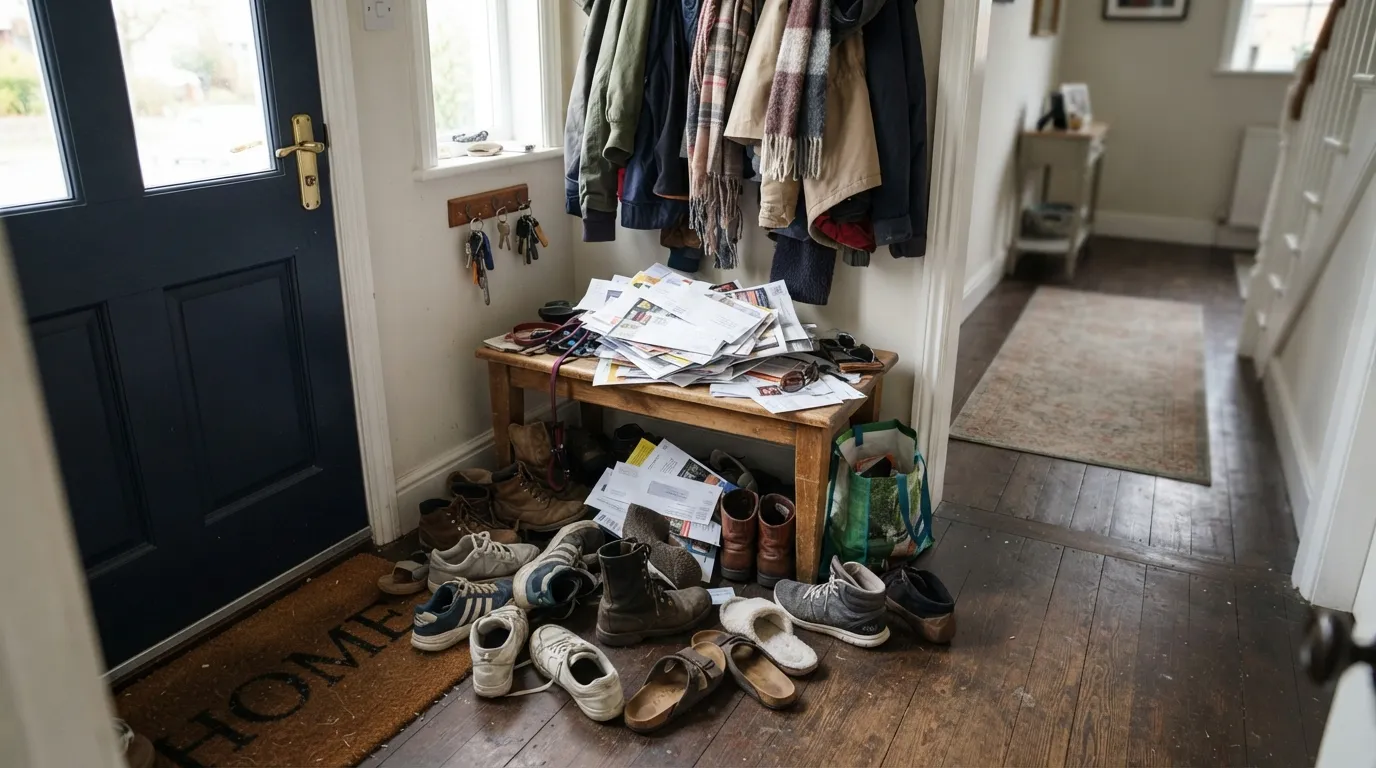
Improving curb appeal was the third most common recommendation agents gave sellers, at 77%. The front hall is where that first impression continues indoors, and it’s also where the day’s belongings land.1
Entries collect clutter because every member of the household passes through them carrying something. The pile grows because nobody has assigned the pile a place.
Give the entry one landing zone: a tray for keys, a basket for the paper that came off the fridge door, and a bench or rack for shoes. Sort the mail over the recycling bin the day it arrives so the basket never overflows.
Keep only this week’s shoes by the door. Out-of-season pairs belong in a closet, since a rack holding every pair you own is just a pile with shelves.
Fast Facts
- 83% of buyers’ agents said staging made it easier for buyers to picture a property as their future home.1
- 49% of sellers’ agents said staging reduced the time a home spent on the market.1
- 29% of agents reported that staging raised the dollar value offered by 1% to 10%.1
- 21% of sellers’ agents staged all of their sellers’ homes before listing.
The entry resets in minutes once it has a system. The living room needs a different kind of attention, because the mess there sits in plain sight.
#9 – Sofas Holding Remotes, Throws and Slumped Cushions
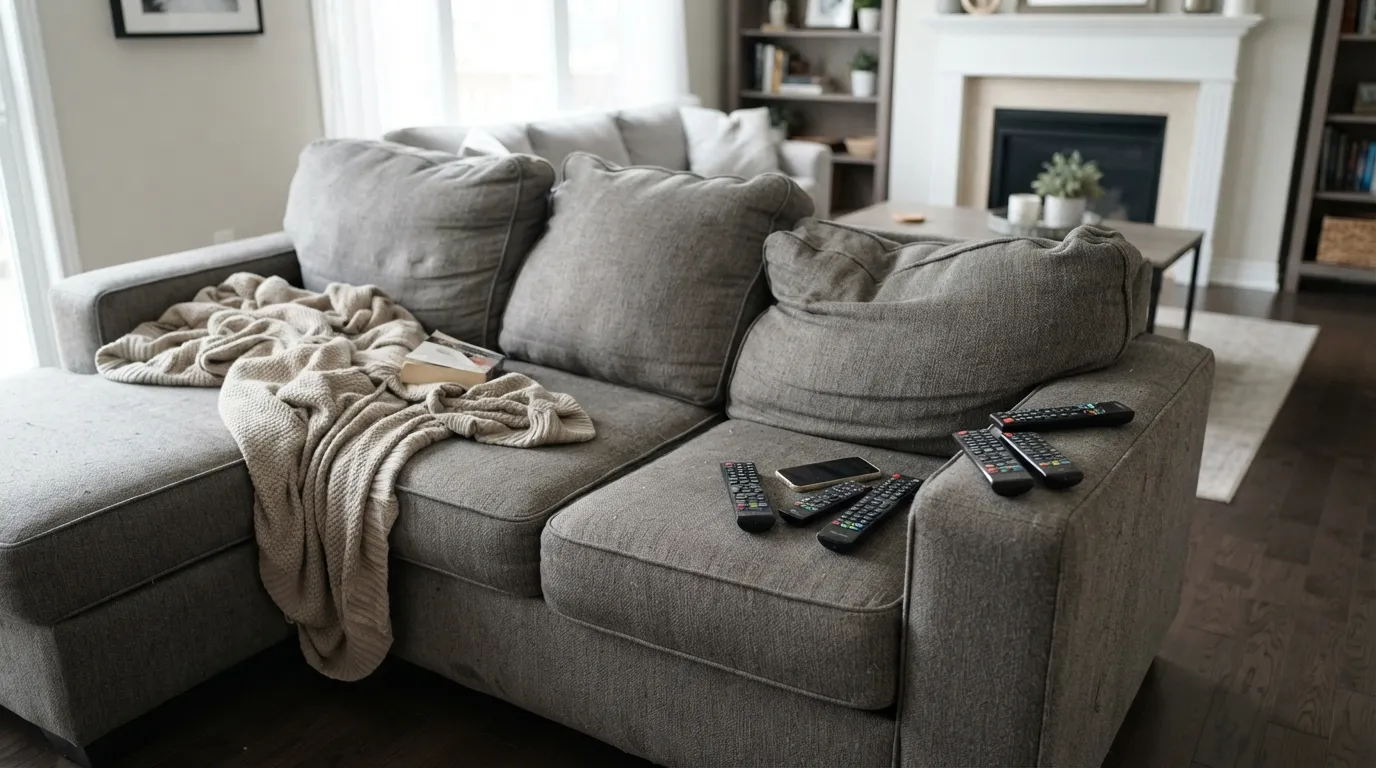
Buyers’ agents named the living room the most important room to stage, at 37%. The sofa is that room’s anchor, so its condition sets the tone before anyone looks at a shelf.
A slumped cushion, a crumpled blanket and a few remotes on the armrest tell the eye that the room is mid-use. Each is small, and together they cancel the effect of a freshly vacuumed rug.
The reset takes about a minute. Stand the cushions up and fold one throw over an arm.
Give the remotes a lidded box or tray. Keep one folded throw on display and store the rest in a basket or an ottoman, because a stack of blankets on view reads as storage, not as style.
Why It Works: A folded throw reads as a decision, while a crumpled one reads as an accident. The eye picks up that difference from the doorway, long before it notices dust.
Soft furnishings reset in a minute. Laundry is harder, because it comes with a basket that has to live somewhere.
#8 – Laundry Baskets Parked in the Bedroom
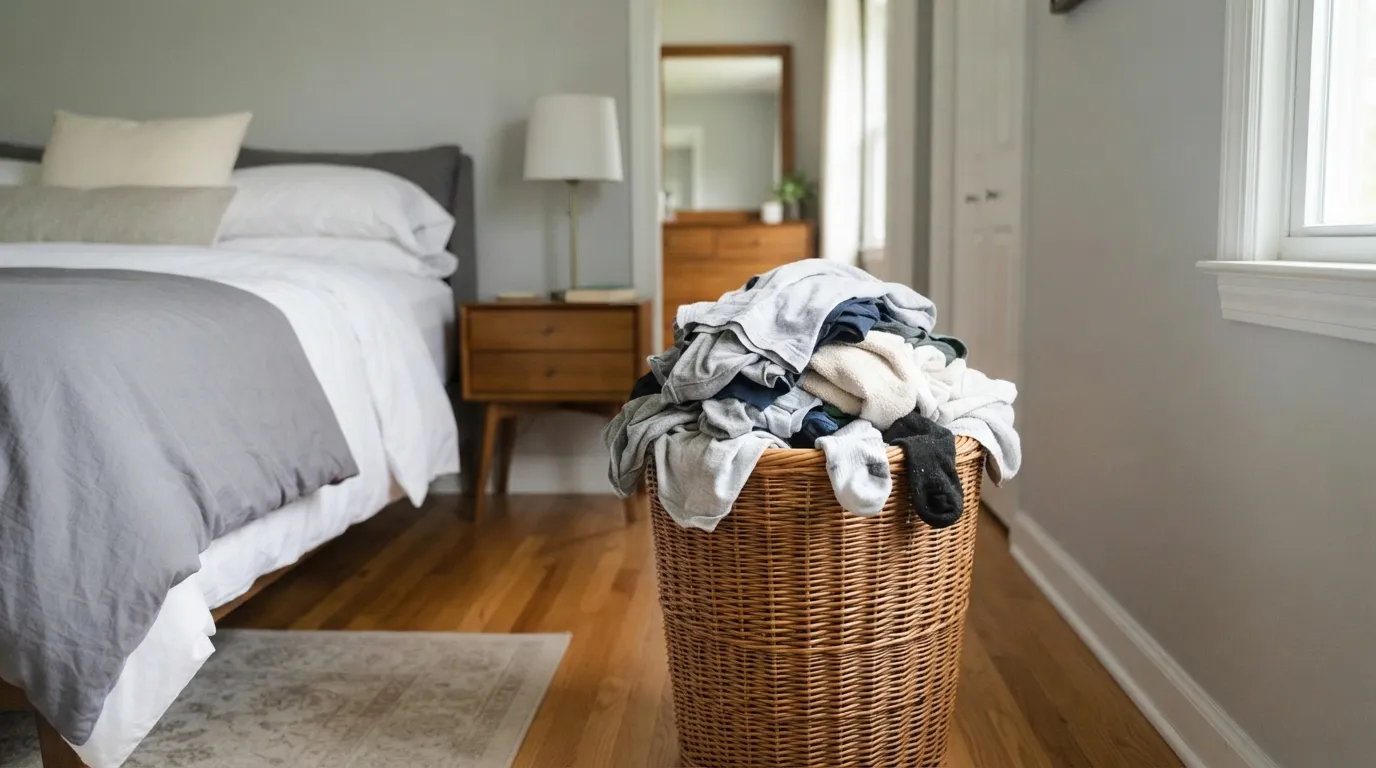
A full hamper in the corner undoes a freshly made bed in one glance. Buyers’ agents ranked the primary bedroom second for staging importance, at 34%, so it’s a room strangers read closely.
A bedroom is judged as a place to rest. A pile of laundry says the day’s work is still going on.
Clean laundry counts too. A basket of folded towels waiting in the hallway is clutter with a good reputation, so carry it to the shelf or drawer where it lives.
Keep the hamper inside a closet or behind a cabinet door. If space is tight, a narrow lidded hamper turns an eyesore into a piece of furniture.
Insider Tip: The same survey ranked the guest bedroom last for staging, at 7%. If your time is short, spend the first hour on your own bedroom.
Once the room itself is settled, look up. Windows are where uneven lines show most, and they show from outside too.
#7 – Blinds and Curtains at Mismatched Heights
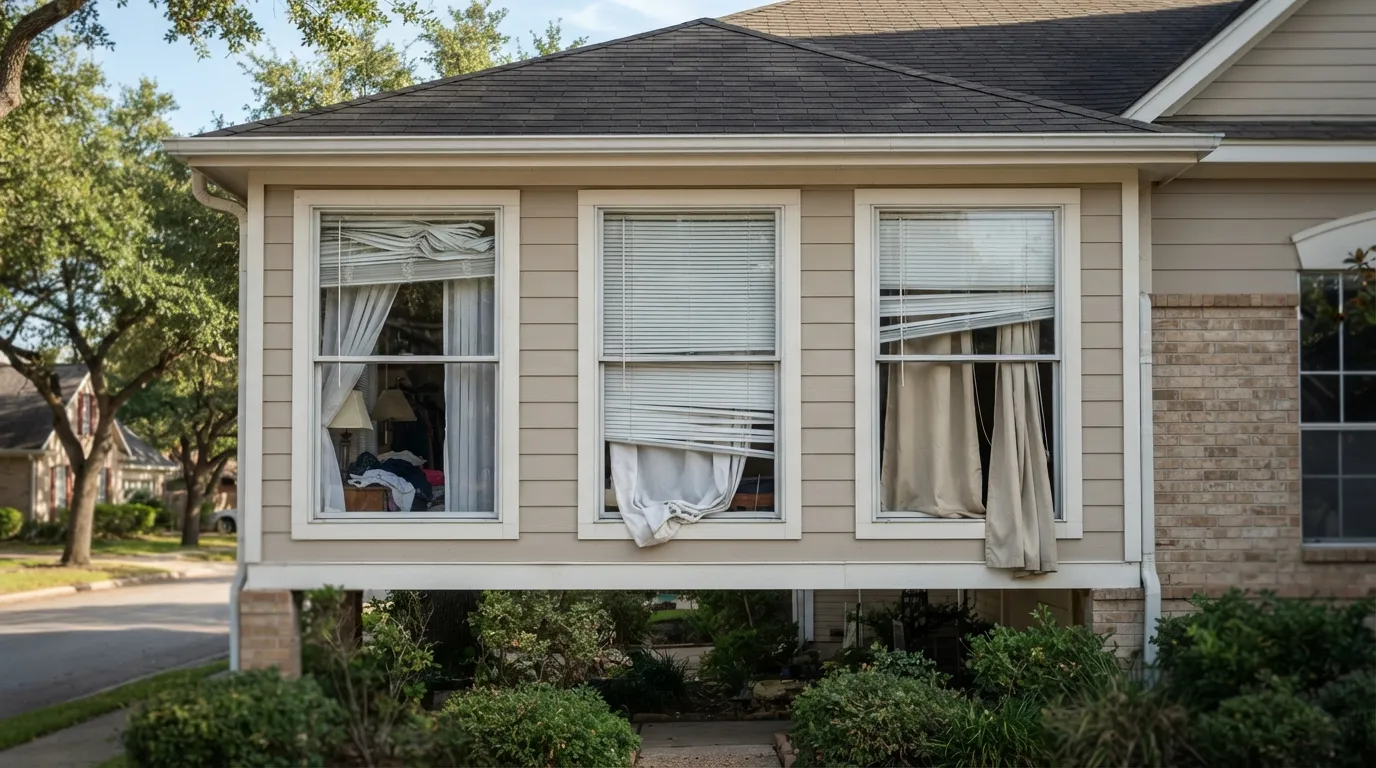
Uneven blinds are among the cheapest flaws on this list to fix and among the most visible from the street. One half raised, one closed and one tilted the other way makes a spotless room look abandoned in a hurry.
The pattern is easy to spot because windows usually sit in rows. A single odd blind breaks the rhythm for the whole wall.
Set every blind to one height, slats tilted alike. For curtains, hang the rod high and wide, close to the ceiling and past the frame, so the panels make the glass look larger.
Let the fabric just skim the floor, since a heap of cloth on the boards reads as sloppy. Fix the blinds before you shop for new curtains, because straight old blinds beat expensive drapes hanging crooked.
Try This: Before you leave in the morning, look at the house from the street. Uneven blinds are easy to spot from that angle and take about a minute to line up.
Once the lamps come on after dark, a different flaw takes over, and it comes from the bulbs instead of the blinds.
#6 – Light Bulbs That Don’t Match
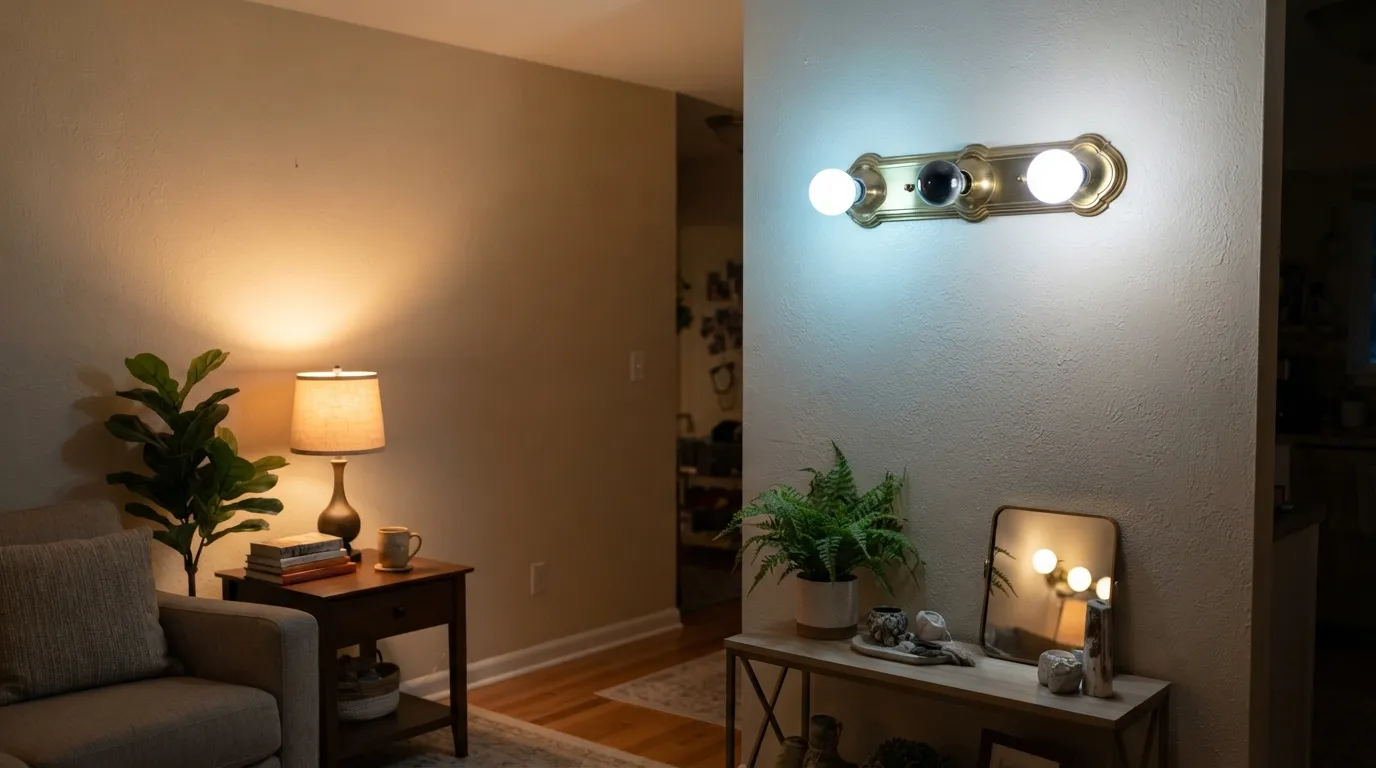
Bulbs are sold by color temperature, measured in kelvins, and a warm white near 2700K often ends up beside a cool 5000K in the same room.2 One lamp glows amber while its neighbor looks bluish.
The walls seem to change color from corner to corner as a result. A burned-out bulb in a multi-bulb fixture adds a dark gap that looks like neglect.
Check the box or the base of the bulb for the kelvin number before you buy. Use the same color temperature for every bulb in a room.
Worth Knowing
- 2700K: a soft, warm glow that suits living rooms and bedrooms.3
- 3000K: a slightly crisper warm white that works in kitchens and bathrooms.3
- 5000K: a bluish daylight tone better kept for a laundry room or workshop.
Matching bulbs does more for a room than a new fixture, and it costs far less.
The Science Behind This: Kelvin numbers describe the color of the light, not its brightness. Lower numbers glow amber, higher ones shift toward blue-white, and brightness is measured separately in lumens.
Bulbs cost a few dollars to match. The next item has four legs, sheds, and owns more belongings than you might expect.
#5 – Pet Beds, Bowls and Toys on Open Floor
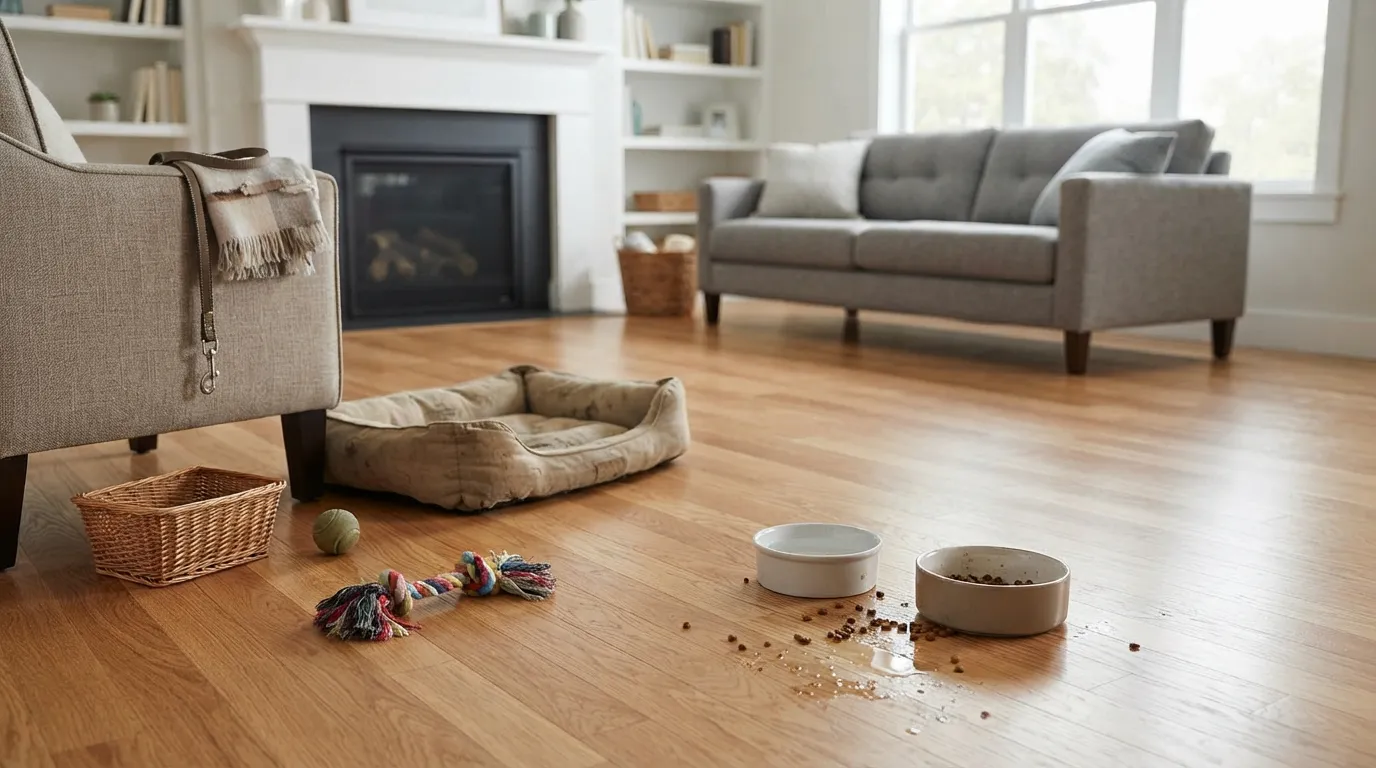
Fur gets the blame, but pet gear is what the eye catches first: bowls, beds, chew toys and a leash left on a chair. These items sit at floor level, so they interrupt the clear expanse that makes a clean floor look clean.
On hardwood or tile, a single scattered toy is visible across the room. A spotless floor with three of them on it still reads as untidy.
Give every pet item one fixed spot. A basket takes the toys, a hook by the door takes the leash, and a washable mat under the bowls keeps spilled water inside a neat edge.
Real estate agents know this problem well. Removing pets during showings is among the improvements more than half of agents suggest to sellers, which shows how much a pet’s presence shapes a first impression.
Floors are only the start, though. Eye-level surfaces collect their own kind of noise.
#4 – Collections on Every Shelf and Tabletop

A shelf crowded with small objects reads as noise, however carefully it has been dusted. Each piece has its own color, height and shape, so the eye has to stop at every one.
Grouping cuts those stops to a few. Build each group around one taller item and one lower item, and leave a bare gap beside them.
Show three to five objects per surface and store the rest. Set the group on a tray, the same trick that calms a bathroom counter, and it will read as arranged instead of accumulated.
Dusting a crowd of trinkets every week is a poor use of a Saturday. Rotating half of them into a box does more for the room than any cloth.
Walls carry the same risk, plus a problem no cleaning can solve: the height at which things hang.
#3 – Art Hung Too High or Without a Plan
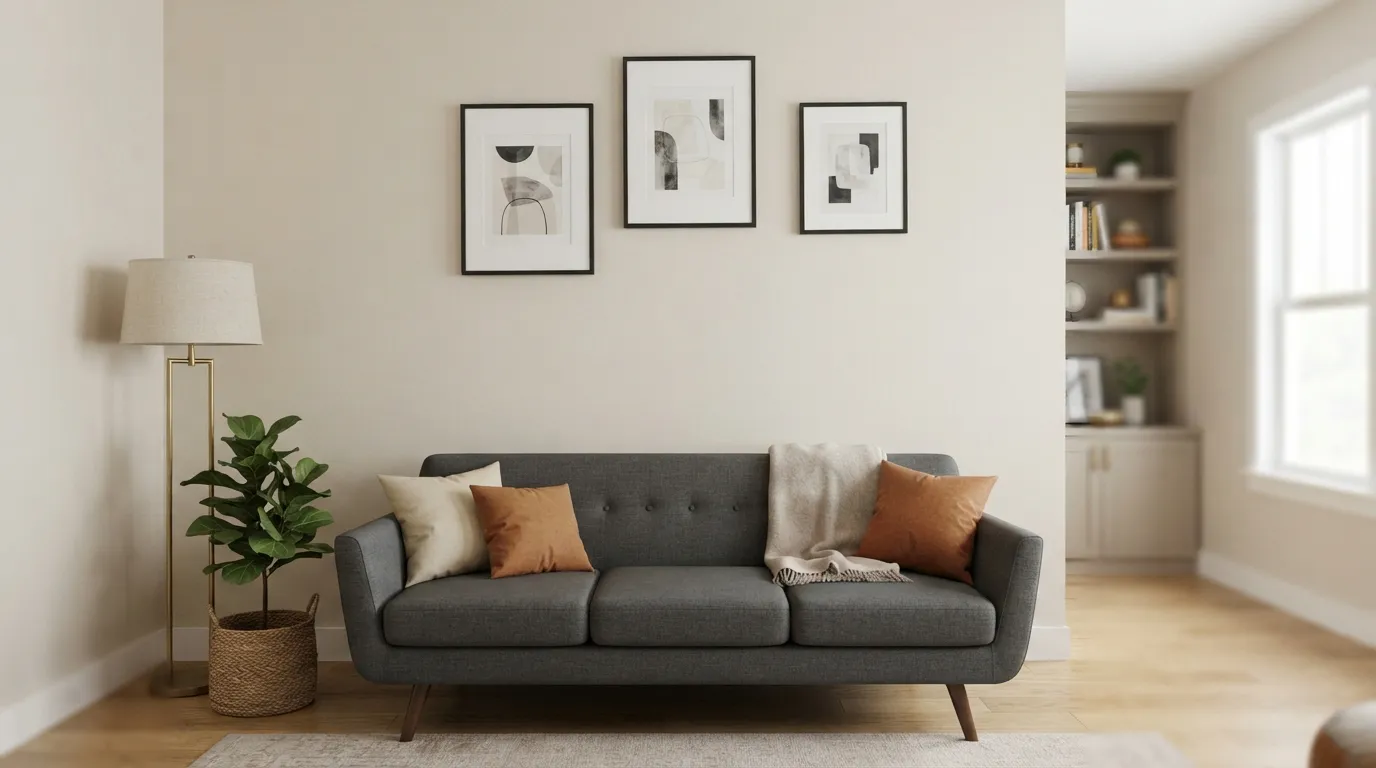
Gallery practice puts the center of a picture at about 57 to 60 inches from the floor, which is roughly average eye level.4 Art hung well above that line seems to float away from the furniture beneath it.
The wall then looks unfinished however clean the paint is. Above a sofa, the bottom of the frame belongs roughly six to eight inches over the back.4
Center artwork about 57 to 60 inches from the floor. Cut paper templates, tape them to the wall and live with them for a day before you pick up a hammer.
Gallery walls need the same discipline. Lay the frames out on the floor first and keep the gaps between them equal, since a few well-spaced pieces look calmer than many crowded ones.
Editor’s Note: One large piece usually looks calmer than six small ones scattered across a wall. It also leaves only one nail hole to fill if you change your mind.
Frames hang on the wall. The piece that decides whether the furniture looks anchored lies on the floor, and it is often too small.
#2 – A Rug Too Small for the Seating Area
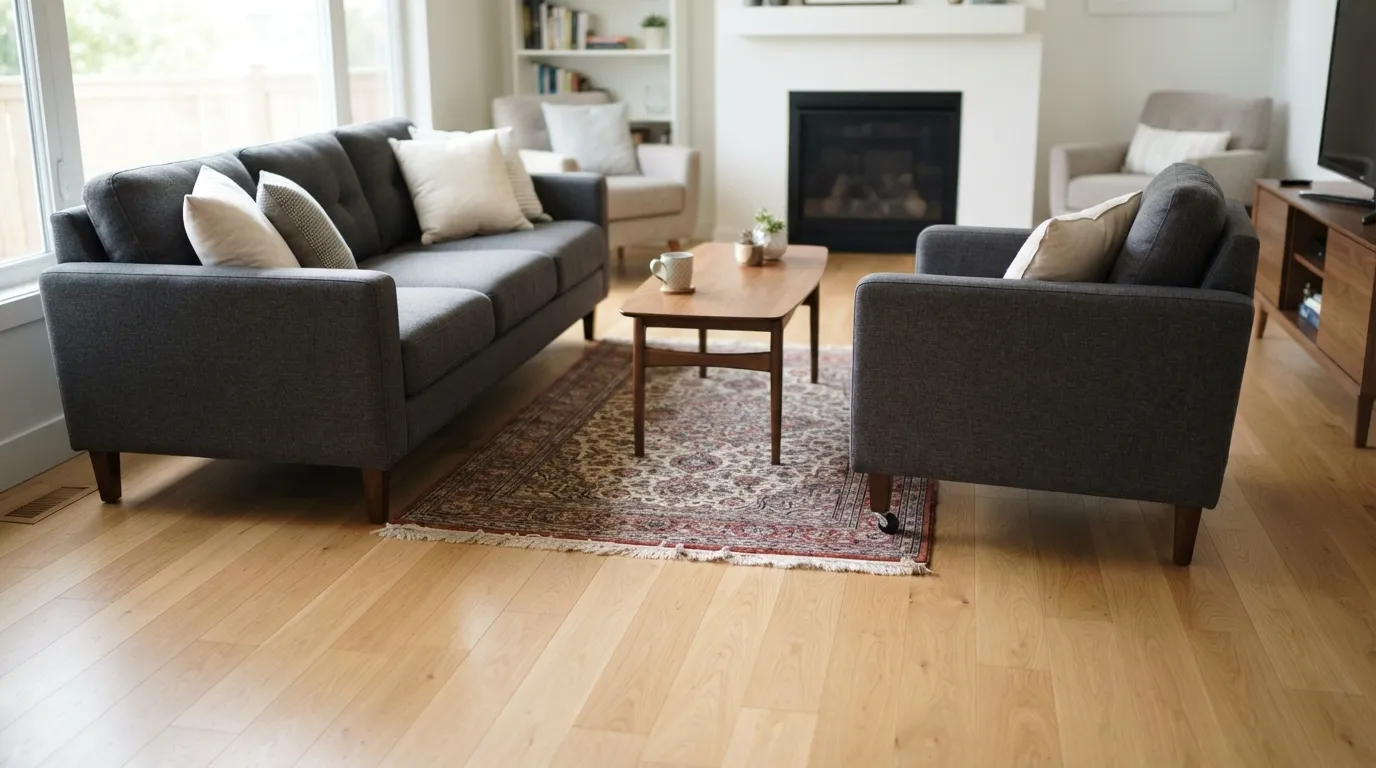
A rug that stops short of the furniture makes every piece look as if it drifted there by accident. The room can be vacuumed daily and still seem disconnected.
The usual design rule for a living room is to rest at least the front legs of the sofa and chairs on the rug.5 Put at least the front legs of every seat on the rug.
Under a dining table, the rug should extend roughly two feet past each edge so the chairs stay on it when pulled out.6 A rug that chairs slide off at every meal tilts them and snags the legs.
Quick Compare
- All legs on the rug: the most unified look, and the easiest way to make a room feel pulled together.
- Front legs only: the minimum that still ties a seating group together.
- No legs on the rug: the furniture appears to float, which is the look to avoid.
Size matters more than pattern, because a plain rug of the right size looks better than a pricey one that’s too small. Check the edges too, since a non-slip pad keeps corners from curling and a quick comb straightens tangled fringe.
That covers the objects you can buy and move. The final item is one a cleaner can’t deliver, because it is made of what’s missing from the room.
#1 – Flat Surfaces With No Empty Space Left
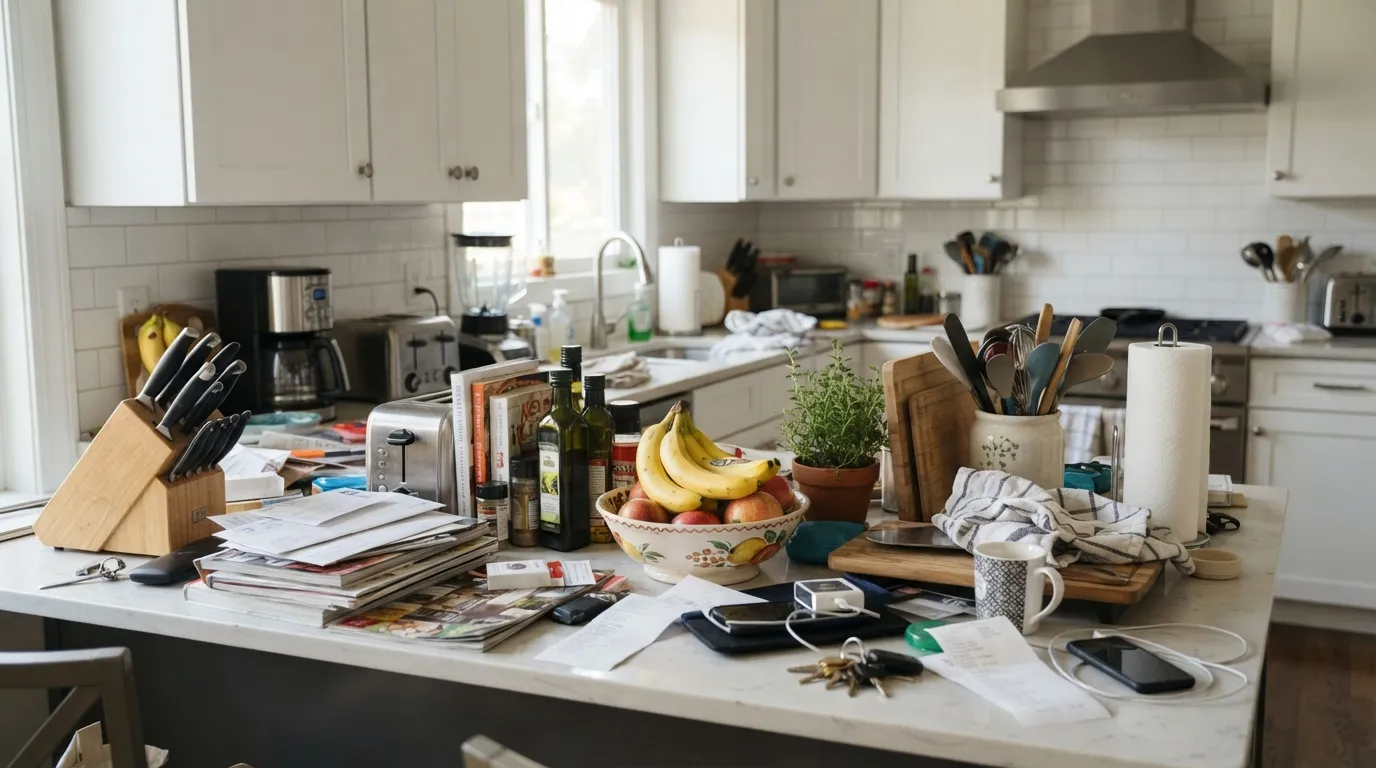
Clear one kitchen counter completely, and the whole room looks cleaner before you’ve picked up a cloth. That is the rule behind the other thirteen items: each one is an object with no assigned home, or too many objects competing in a small area.
Clean and tidy are different tests. Clean means no dirt, while tidy means room around things.
Agents treat them as separate jobs, and the difference shows in listing photos. Bare surfaces photograph as clean even when the camera can’t see the scrubbing.
Leave at least a third of every counter and table bare. Treat that as a working rule of thumb, and start with the cords, labels and papers from the earlier items.
By The Numbers: More than half of sellers’ agents, 51%, don’t stage homes but still recommend that sellers declutter or correct property faults. Clearing space is the step they ask for even when nothing else is done.
Dusting can wait a week. Clearing can’t, because clutter is what visitors notice first and dust is what they notice last.
Clear One Surface Before Bedtime
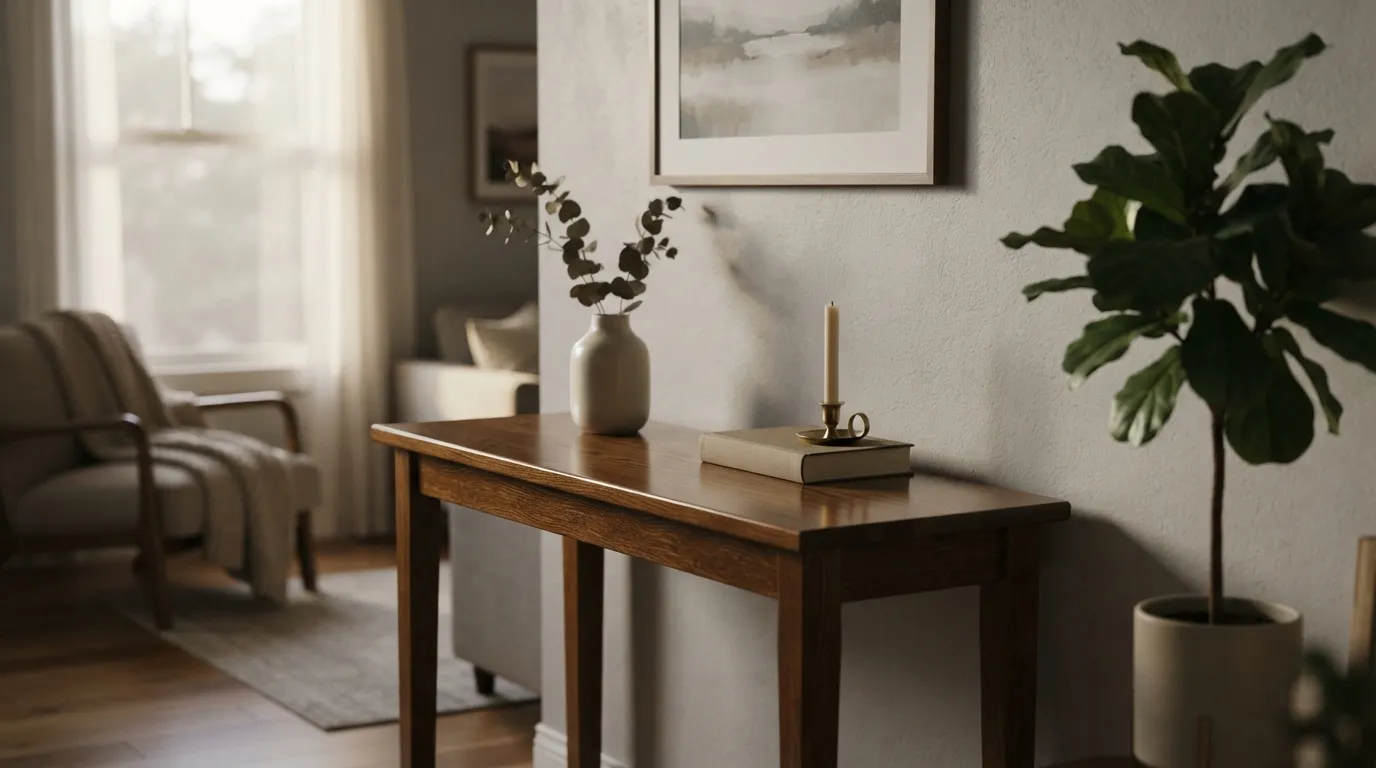
Tonight, pick one flat surface and take everything off it. Put back only what earns its place, and notice how much more of the room you can see.
Judge your house by the space between objects instead of the shine on them. A clean room with room to breathe will always read as better kept than a clean room that’s full.
Which surface in your home collects the most stuff, and what’s the first thing you’d take off it?
- NAR 2025 Home Staging Profile: https://kbbonline.com/business-people-news/nar-2025-profile-of-home-staging-released/161855/
- Mixing Bulb Colors Guide: https://dreamyhomestyle.com/tools/light-bulb-color-visualizer/
- Kelvin Color Temperature Chart: https://lovelighting.com/color-temperature-chart/
- 57 to 60 Inch Hanging Guide: https://www.artfullywalls.com/artful-insights/how-high-should-pictures-be-hung
- Living Room Rug Sizing: https://www.finerugcollection.com/blogs/blog/how-to-choose-the-right-rug-size-for-every-room
- Dining Rug Size Guide: https://www.gorinsfurniture.com/size-of-rug-under-dining-room-table/