

Everyone tells you a luxury upgrade is the safest money you can spend on a house. But a 2026 Clever Real Estate survey found that about half of homeowners regret a past renovation, and 49% say the work cost more than expected.
Builders see the aftermath up close: showpiece features that go quiet within months and rooms nobody walks into. Some regrets below will sound obvious, but the ones near the top come with price tags that are hard to explain away.
#14 – The Built-In Coffee Bar
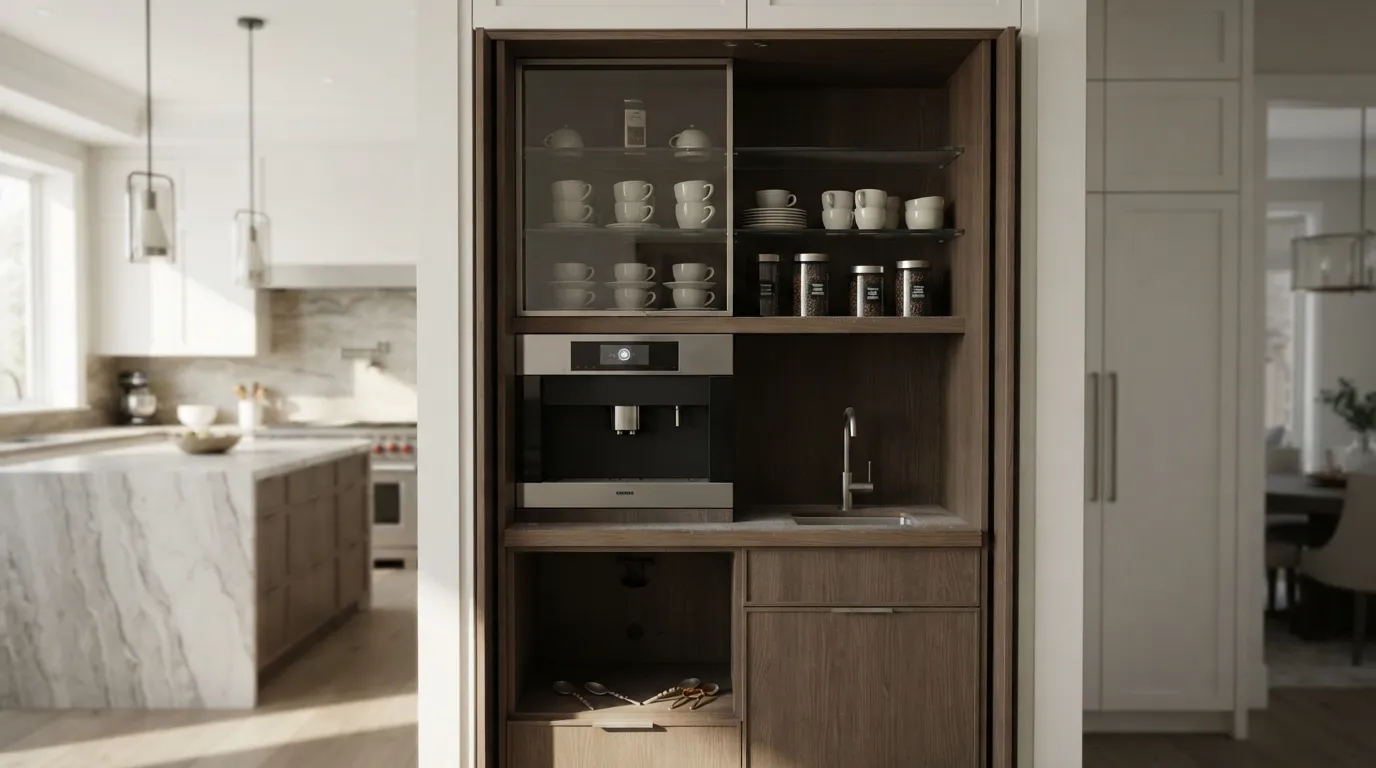
The first regret on this list fits in a space the size of a closet door.
Contractors who spoke with Apartment Therapy named the built-in coffee bar as homeowners’ number-one kitchen regret, and said most clients end up ignoring it entirely. These nooks typically add a high-end machine, shelving, a small sink and plenty of storage.
Contractor Adrian Andronachi of AGA Builders calls it “the siren song of the modern kitchen.” A feature can look essential on paper and still go unused.
The most regretted luxury in that roundup wasn’t a pool or a ballroom. It was a coffee station. A free-standing machine on an ordinary counter does much the same job for far less money.
The Psychology Behind This: Wish-list features are picked by the person we imagine being, not the person we are at 6:30 on a workday. A built-in feels like a commitment to a routine you may never actually keep.
The next kitchen feature looks even smarter on paper, and contractors say it is quietly collecting clutter at #13…
#13 – The Second “Prep” Sink
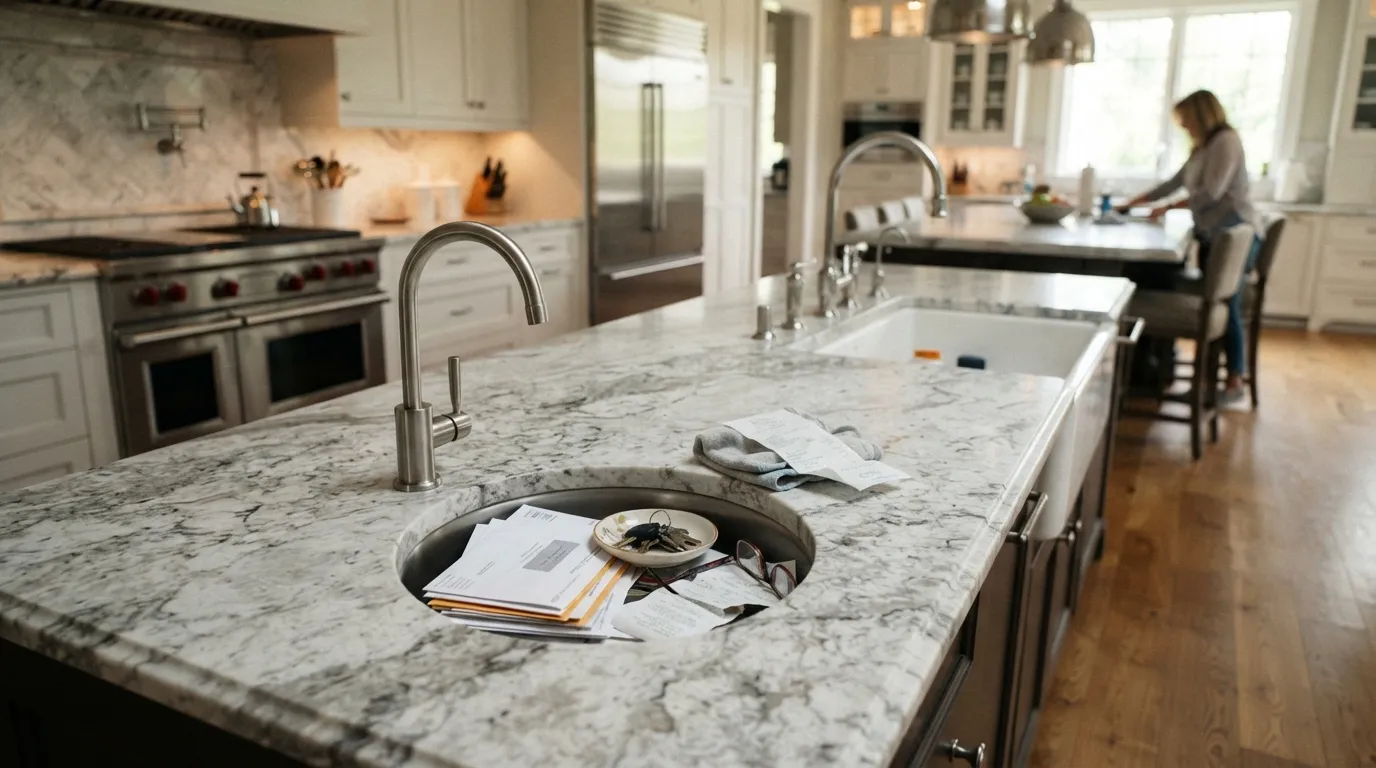
Plenty of kitchens get a second sink, and builders say plenty of them barely get used.
Several contractors shared the same gripe about a bonus feature homeowners assume will be more useful than it is. It sounds like a smart way to keep two cooks out of each other’s way.
Mike Belk, owner of BELK Tile, says homeowners default to the main sink for almost everything, leaving the prep sink to collect dust or become a place where random items get tossed. In other words, a plumbed, drained, countertop-cut luxury becomes a catch-all.
Design magazines treat the prep sink as the mark of a serious cook, yet many contractors call it one of the easiest upgrades to cut. Belk’s own summary is blunt: luxury in a kitchen should make life easier, not add frustration.
Try This: Before you sign off on a second sink, walk through a typical dinner and mark where you would actually stand to rinse, peel and drain. If the answer is always the main sink, spend the money elsewhere.
Next up is a look that photographs beautifully and, according to one painting-company CEO, wears on clients fast at #12…
#12 – Open Kitchen Shelving
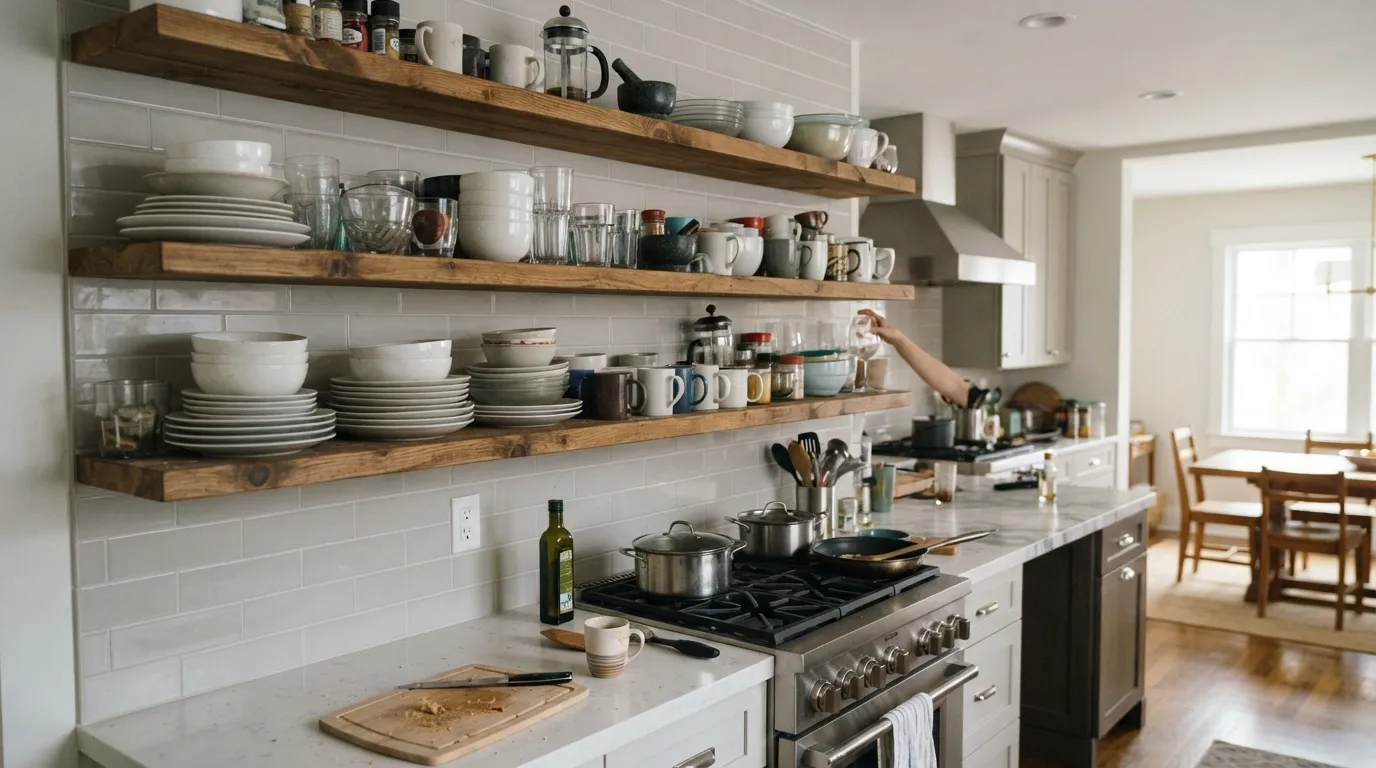
The look that sells a kitchen on the first tour is the one some clients resent by the second year.
Carr Lanphier, CEO of the paint service company Improovy, says he has seen clients regret choosing open shelving in a kitchen. The complaint is not about style.
Exposed shelving can make a space feel elevated and open-concept, but the lack of functionality quickly irritates many homeowners. The problem is function, not looks.
Why It Stands Out
- It wins the first tour, then loses the daily routine.
- Every plate, glass and bowl stays in public view.
- The look only works while the kitchen is tidy.
- Designers are split, but contractors keep hearing the same complaint.
In daily life, every plate, glass and bowl on display stays in public view. The shelves only look right while the kitchen is tidy.
Experts are split on this one. Some designers still love the look, but the contractors in this roundup keep hearing the same irritation after move-in.
And if shelves sound like a risky call, wait until you hear what builders say about the room at #11…
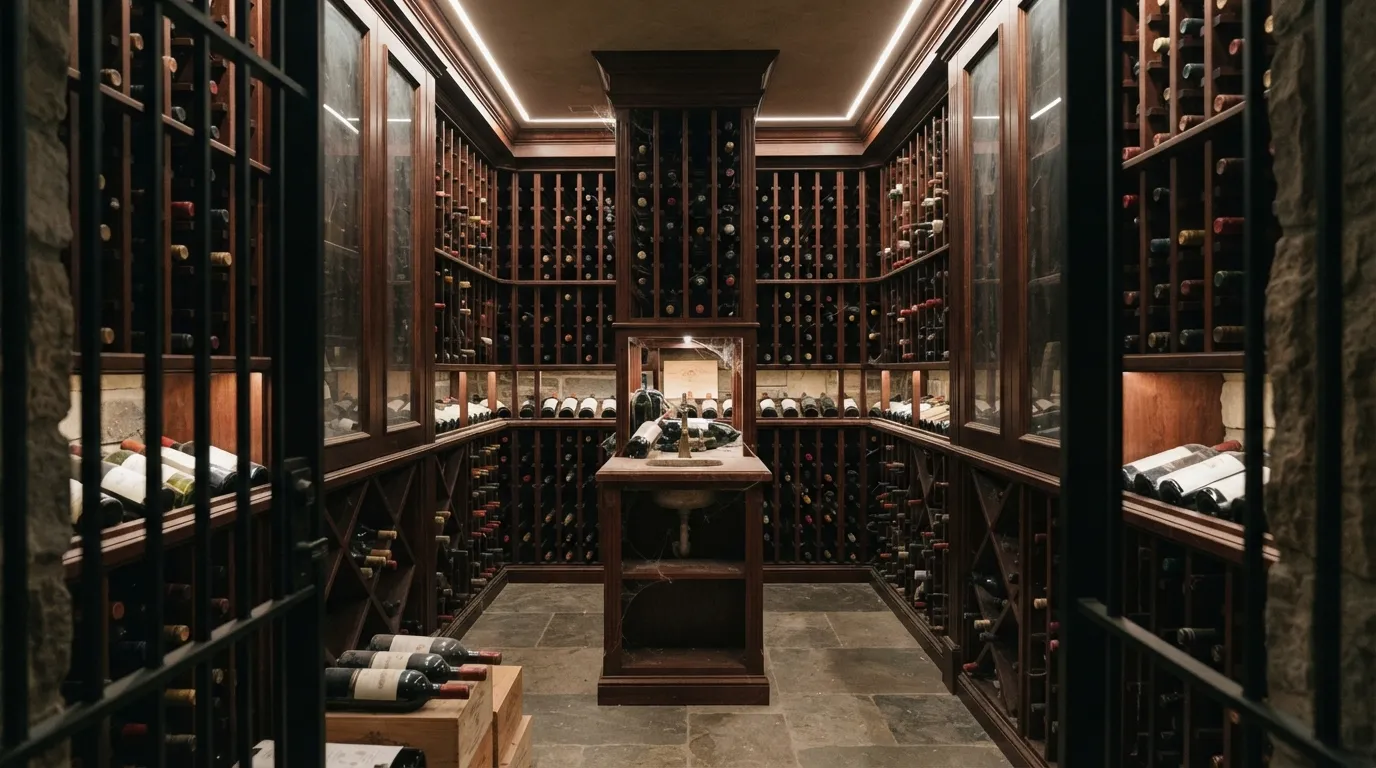
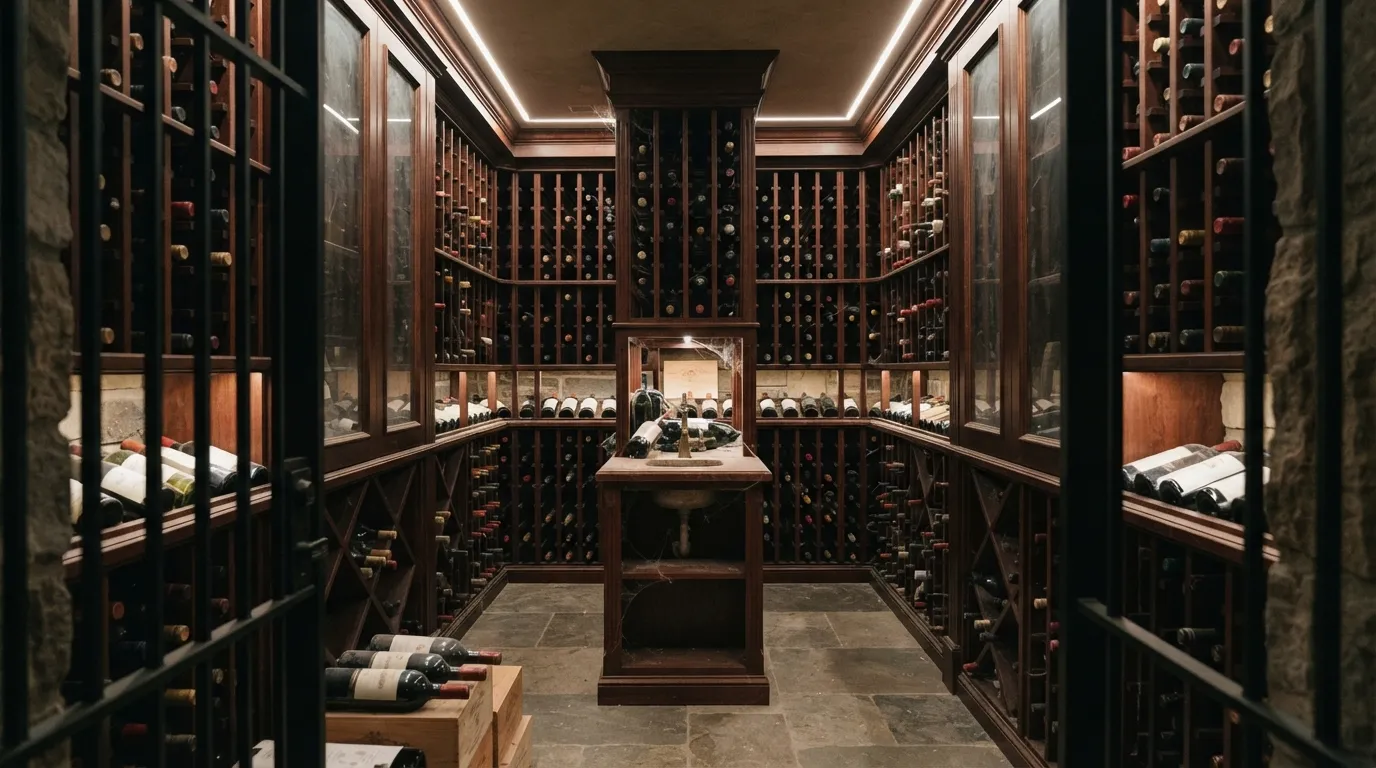
#11 – The Wine Cellar With Twelve Bottles
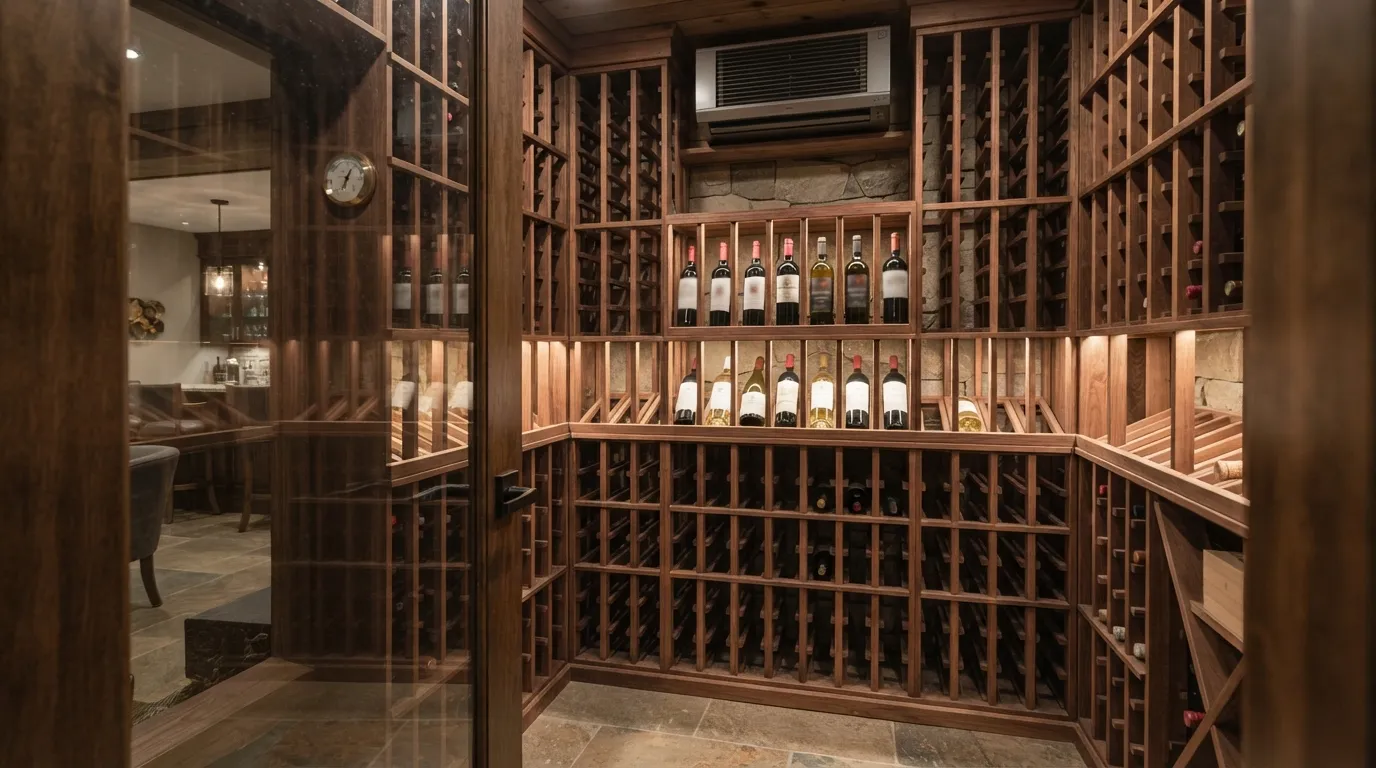
A wine cellar is secretly one of the hardest rooms in a house to get right.
One custom builder in British Columbia says wine cellars and home theatres appear reliably on feature lists and see the least use in the first decade. That is a builder’s view, not a national survey, but it matches what other contractors describe.
The same builder notes that a cellar makes sense for a serious collector. Even then, a temperature-controlled cabinet in the kitchen achieves the same function with far less construction complexity.
The engineering is the catch: temperature and humidity control, the builder says, is “an engineering problem, not a millwork problem.” A cellar built for a dozen bottles is a mechanical system with a very small payoff.
One real-estate site adds that custom built-in wine walls severely limit the buyer pool at the luxury tier.
Did You Know: The same builder says the feature clients most often wish they hadn’t skipped is far humbler. A heated primary bathroom floor gets mentioned by those who left it out within two winters.
The next room is even more popular on dream-home lists, and builders say it often ends up dark…
#10 – The Dedicated Home Theater
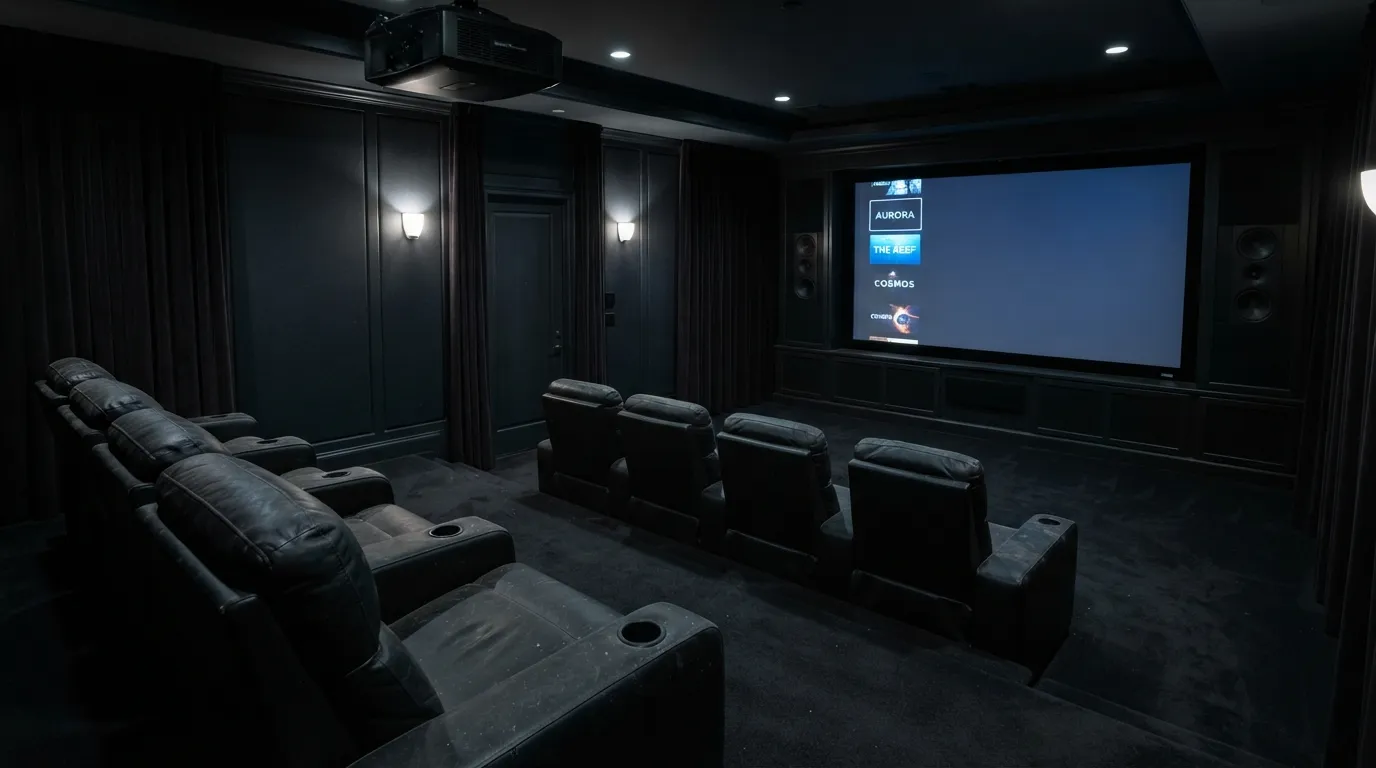
Everyone loves the idea of a home theater, and that is exactly the trouble.
A custom builder at Explore Springs Homes puts it among the upgrades clients picture with great enthusiasm. Other writers say home theaters can become costly spaces that are seldom used, and they limit the flexibility of the home’s layout.
The builder describes the typical outcome as a dark room that rarely gets used six months later. A sealed room built for one purpose has few backup jobs.
Here is the contrarian part: a big living-room screen, good speakers and solid curtains cost a fraction of a purpose-built room. Many builders now steer clients that way.
The wine-cellar builder quoted at #11 makes the same point about theatres without a real use case. If you watch movies four nights a week, the room earns its place.
Insider Tip: One builder says anything needing rough-in behind finished walls must be decided before framing. That includes speaker wiring conduit, which you can install now and fill later.
But the most expensive version of “custom” may not be a room at all, as the next one shows…
#9 – The Overly Custom Floor Plan
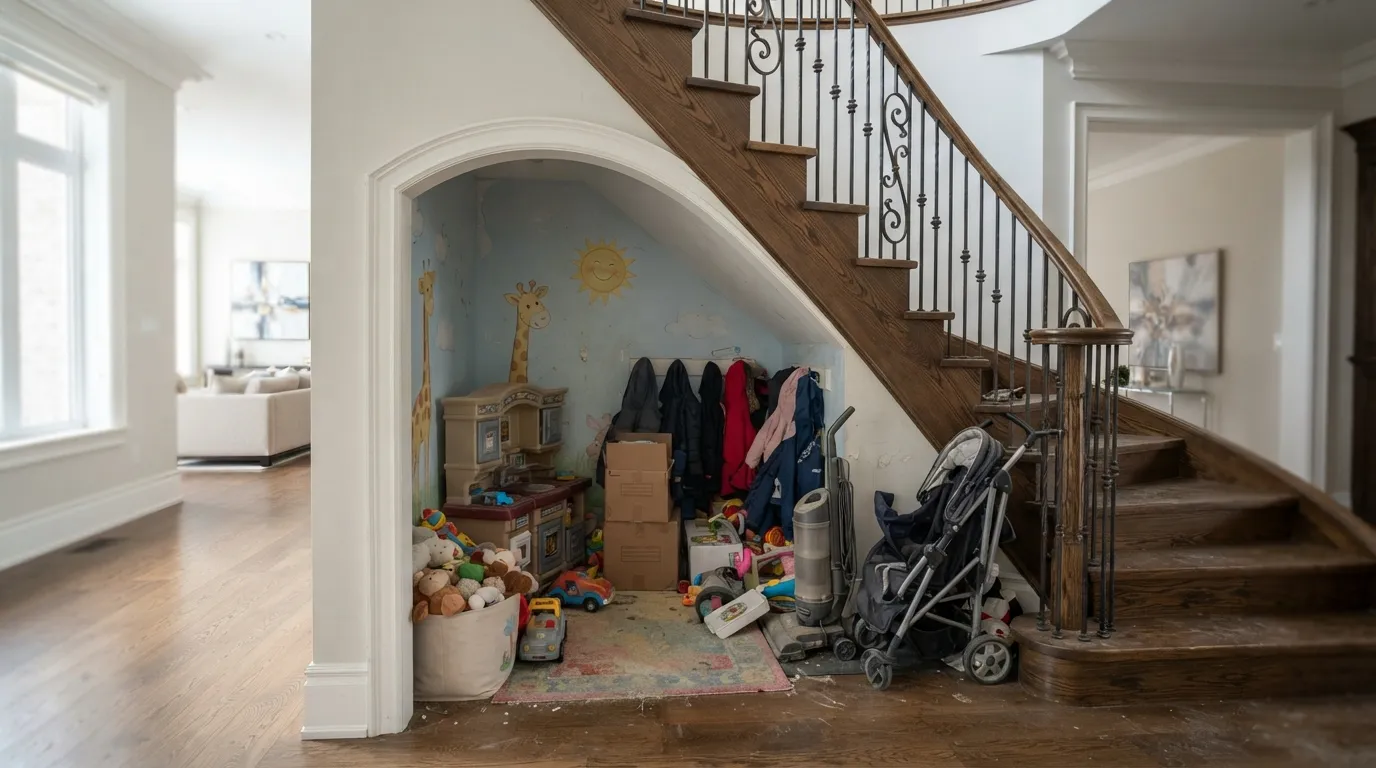
Building custom is supposed to mean freedom, but builders say freedom has a price.
The Explore Springs builder warns about floor plans so specific that they only work for your exact lifestyle. They have seen oddly shaped rooms with no clear purpose, oversized offices that sit empty, and specialized spaces that become hard to use as life changes.
One example stands out. A custom play area built underneath a staircase eventually became awkward storage space.
A feature designed around a toddler had a shelf life of a few years. Kids grow, jobs change and the space stays.
The builder’s own summary is worth remembering: “The best custom homes aren’t necessarily the most unique.” Anyone who has outgrown a room built for one stage of life will recognize it.
Next, a wiring decision that tech-minded homeowners often get wrong at #8…
#8 – Hardwiring Everything
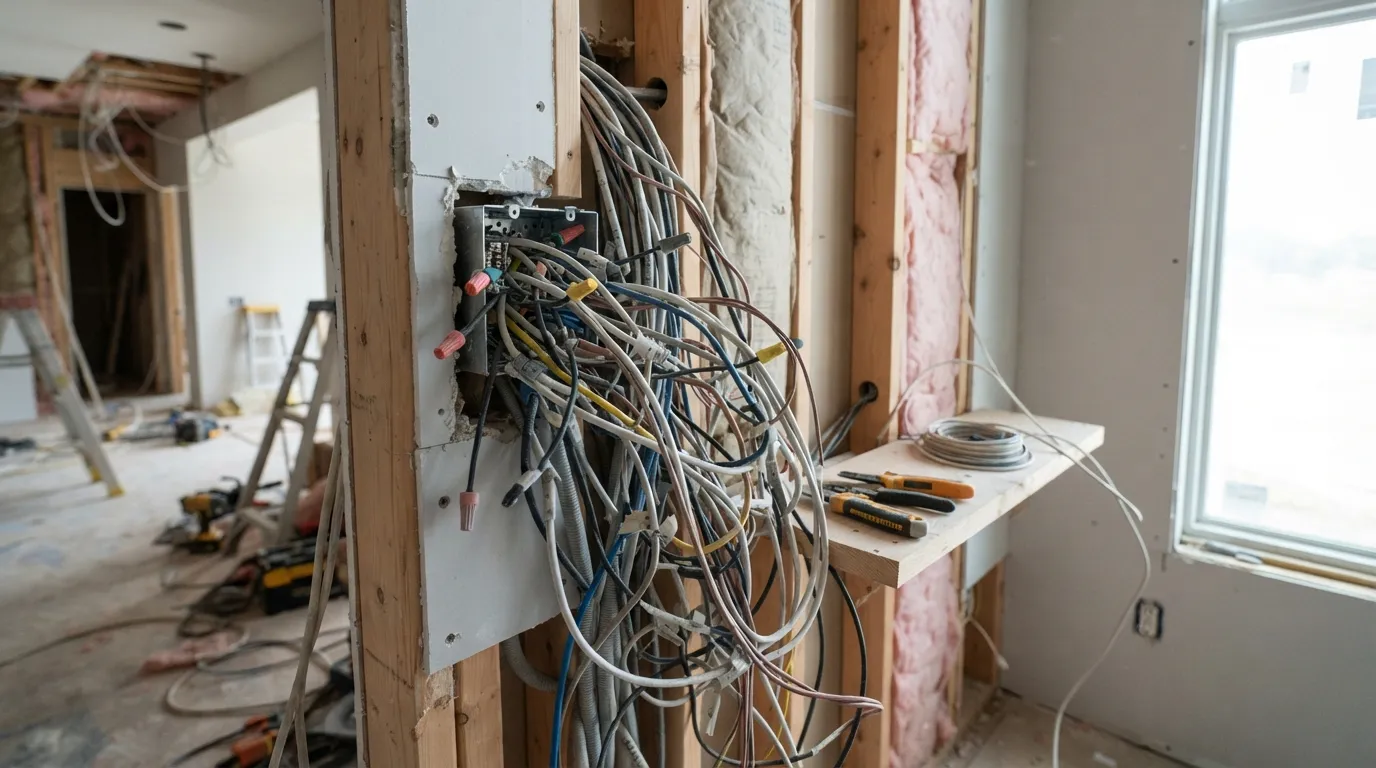
The smart home is the upgrade that most often arrives with a headache attached.
The same custom builder says homeowners often spend significant money hardwiring systems they could easily accomplish wirelessly. That is a builder’s observation, but it is easy to see why.
A separate consumer roundup says smart home technology promises convenience but leaves many owners frustrated, and security and privacy concerns make some wish for traditional solutions.
There is also the resale question: one 2026 roundup built from NAR-based data lists a smart home package at just 40% recoup, among the five worst on its list.
Editor’s Note: Gadgets age faster than walls. It is easier to defend a conduit that lets you swap devices later than a locked-in system that a wireless setup could have handled.
But the next upgrade has nothing to do with technology, and it raises a design problem builders rarely mention up front at #7…
#7 – The Attached RV Garage
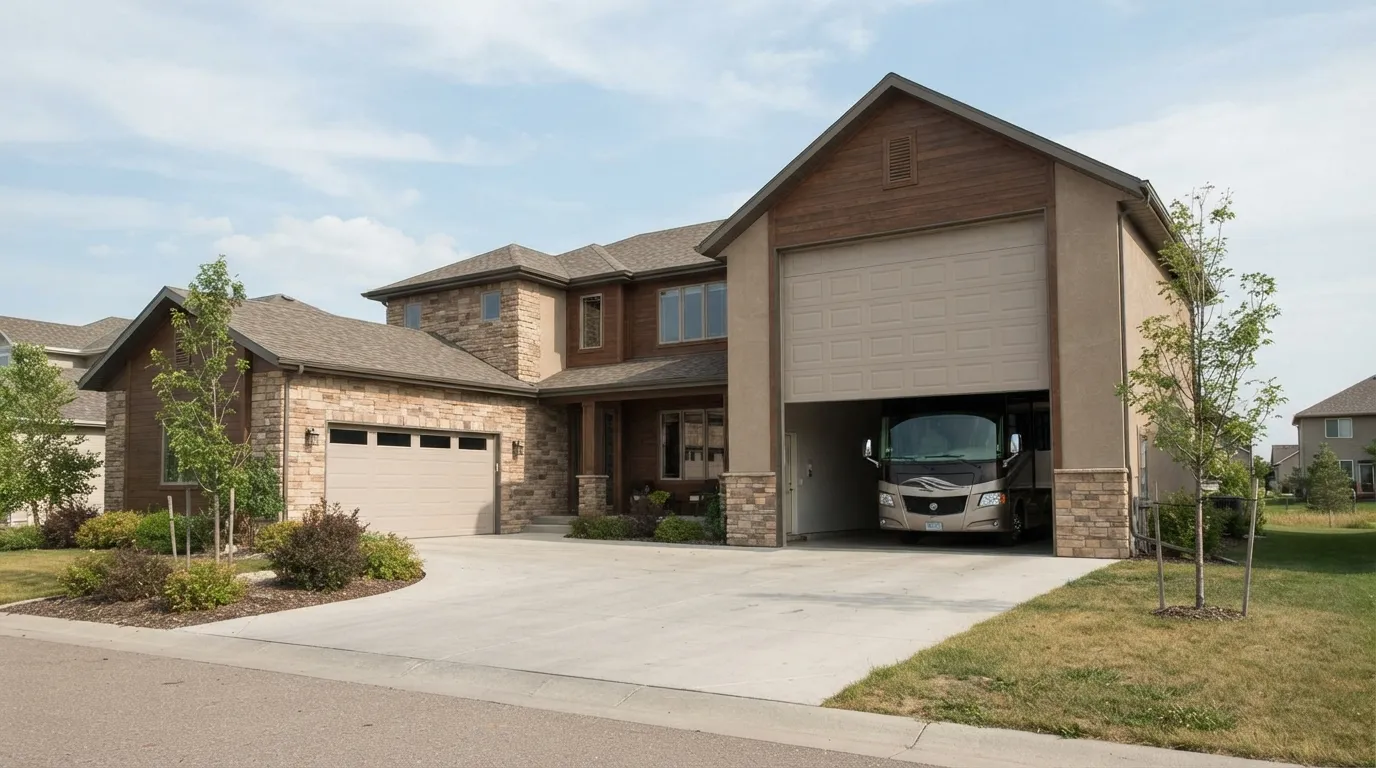
Parking a motorhome at home sounds like a simple luxury until the plans come back.
The Explore Springs builder writes that an attached RV garage creates a significant design challenge in many custom homes. The bay needs room, height and a door that most house designs were never meant to carry.
Worth Knowing
- The bay needs extra room, height and a larger door.
- Attaching it can make the whole home look oversized or unbalanced.
- A detached building or off-site storage can keep the house in proportion.
- Ask to see the front elevation before you commit.
The result, they say, is that these structures are difficult to integrate into the architecture without making the whole home feel oversized or unbalanced. The garage ends up shaping the house, not the other way around.
Most people don’t realize this until the elevations are drawn. A detached building, or off-site storage, often keeps the main house in proportion.
If you own the RV, you may still want the garage. Just ask to see the front elevation before committing.
Up next is an outdoor upgrade that eats weekends, and the data on it is more mixed than you would expect at #6…
#6 – Intricate Landscaping
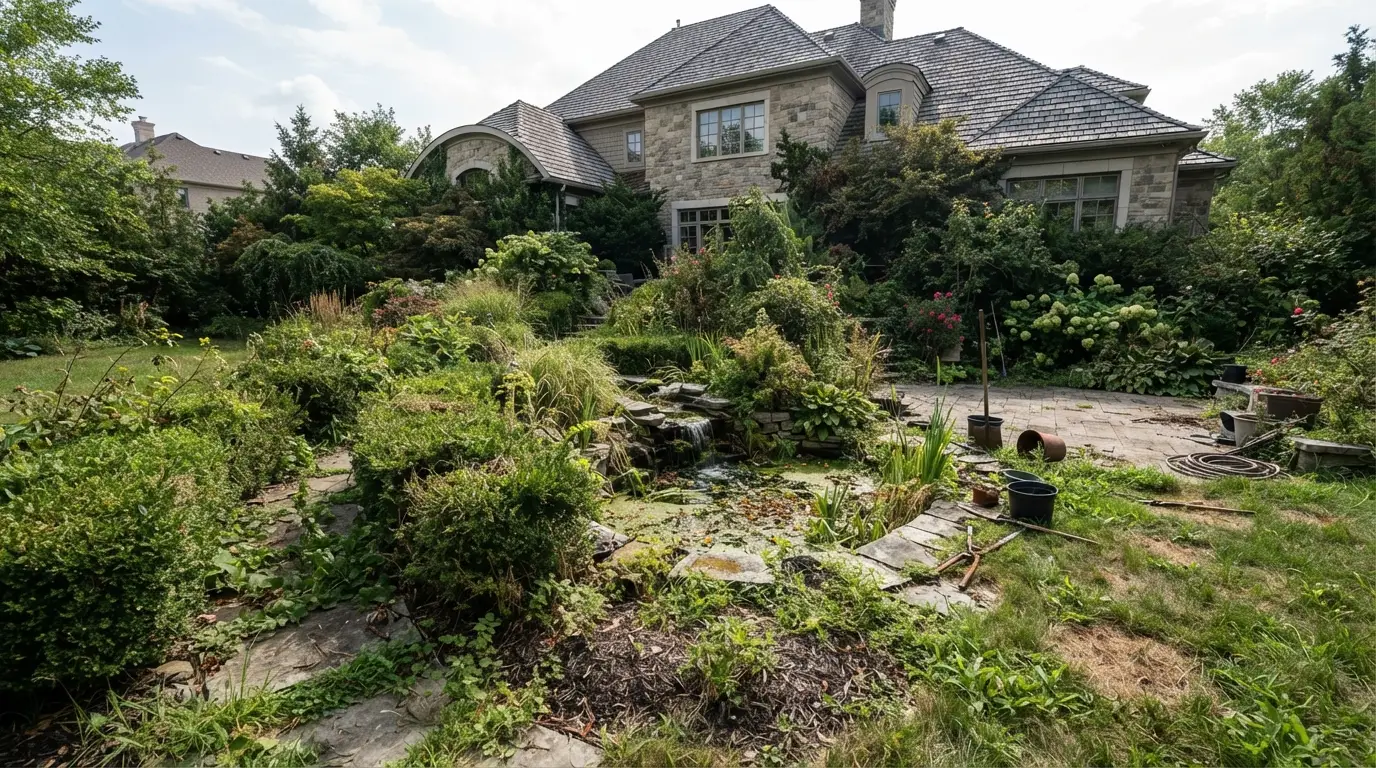
The lawn that looks perfect on handover day has to be kept that way.
The same builder says they have seen homeowners spend thousands on landscaping, only to realize they don’t want to spend every weekend maintaining it. HomeAdvisor’s list of regretted projects makes a similar point, noting that too many trees, shrubs and plants can detract from curb appeal.
Here is the twist: one 2026 resale roundup shows major landscaping recouping most of its cost. It lists an $8,500 job returning $7,900.
That suggests the regret is about upkeep, not value. A simple plan buyers like and owners can maintain beats an elaborate one that needs constant attention.
Try This: Ask your landscaper for the weekly hours the design will need once it matures. If you would not do that work yourself, price the ongoing help before you plant.
The next one takes you indoors, where the floor under your feet is quietly costing owners more than they expect at #5…
#5 – Statement and Luxury Flooring
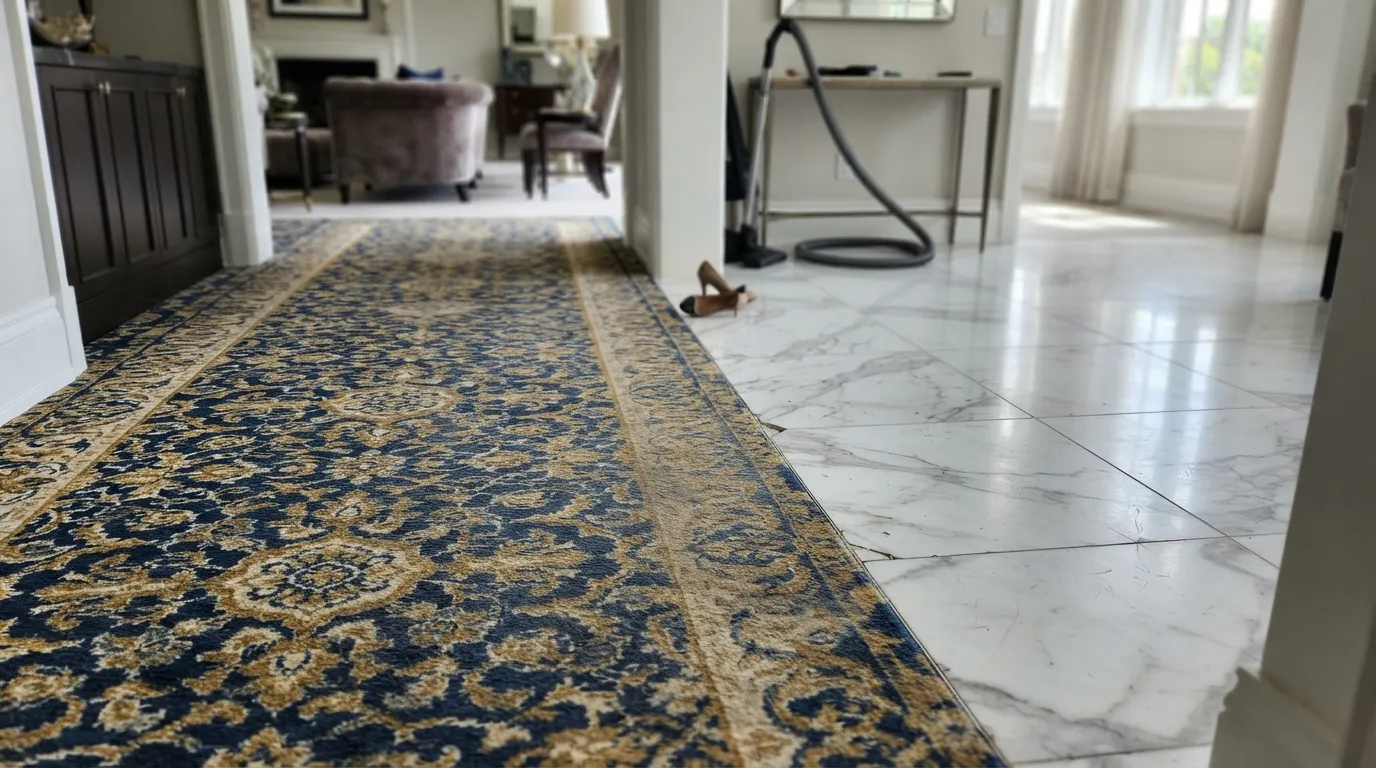
Flooring is the one upgrade you walk on all day, and the regrets show it.
A 2023 Slickdeals survey of 2,000 American homeowners found that 75% regret at least one home improvement decision, with statement carpeting among the most common culprits. Carpet that looked bold on the showroom floor tops the list.
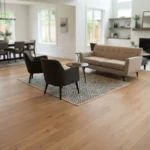
A consumer roundup says luxury surfaces like marble or hardwood attract owners seeking elegance. But many end up wishing they had chosen more practical, forgiving flooring, especially in high-traffic areas.
Not every hard surface is a mistake, though: one real-estate site lists hardwood among the upgrades worth making, citing a 70-80% ROI. The split between hardwood and marble is a good place to start an argument with your builder.
The Science Behind This: Marble is made largely of calcium carbonate, which reacts with acids such as lemon juice and wine. That chemistry is why it etches and dulls in a working kitchen.
Wait until you see the renovation that can actually take value out of a house at #4…
#4 – Turning a Bedroom Into a Giant Closet

This one comes from a very specific wish: more space for clothes.
HomeAdvisor’s guide to regretted projects says converting a bedroom into a closet will make a realtor cringe, because removing a bedroom usually decreases a property’s value by up to 15%. You can lose value by building a feature people love.
Fast Facts
- Removing a bedroom can cut a property’s value by up to 15%.
- Closet shelving runs $1,000 to $2,600 in HomeAdvisor’s estimate.
- That cost comes before the lost bedroom is counted.
- The usual advice: maximize the storage you already have.
The shelving adds up as well. Installing it costs between $1,000 and $2,600 in that guide’s estimate, before the lost bedroom is counted.
A separate roundup agrees that repurposing bedrooms can reduce a home’s marketability. The usual advice is to maximize the storage space you already have.
The next upgrade gets the dreamiest sales pitch of all, and the bills keep coming long after the party at #3…
#3 – The Backyard Pool
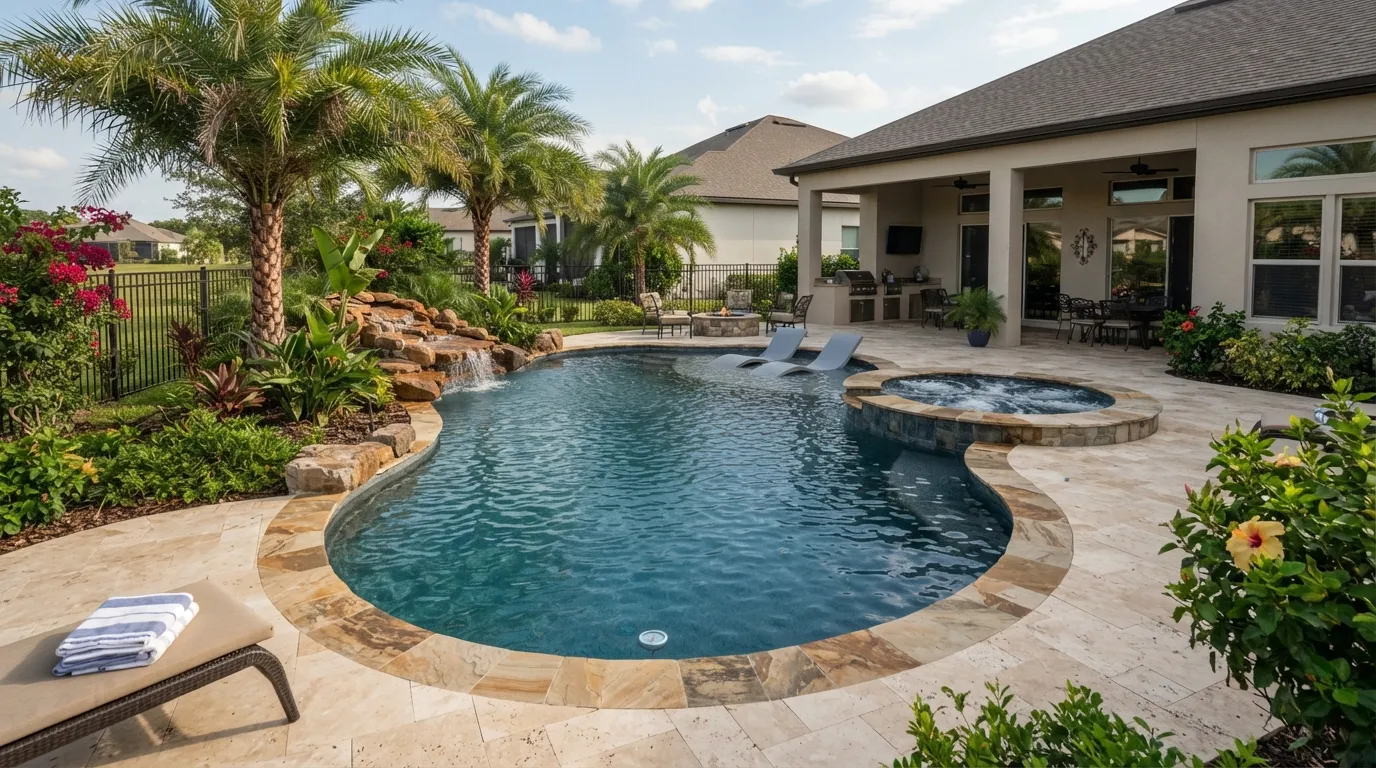
A pool is the classic dream upgrade, and the numbers are blunt about what it does at sale.
HomeAdvisor’s guide warns that building a pool can increase the cost of homeowners insurance and property taxes. The bills keep arriving after the construction is finished.
A 2026 renovation-value guide says room additions, finished basements and pools add livability but rarely return more than 50-60% at resale. Its advice is to do them for yourself, not for the next buyer.
Location matters, though: the same guide notes that in Arizona or Florida, a pool adds real value. So the verdict depends on your climate and how long you plan to stay.
By The Numbers: One 2026 roundup of NAR-based data lists a new inground pool at a 25% recoup, the lowest on its list of five worst projects. Treat it as a rough guide, since different sources report different figures.
Next we move to the room homeowners dream about for years, and the numbers there are worse than most expect at #2…
#2 – The Spa-Level Bathroom
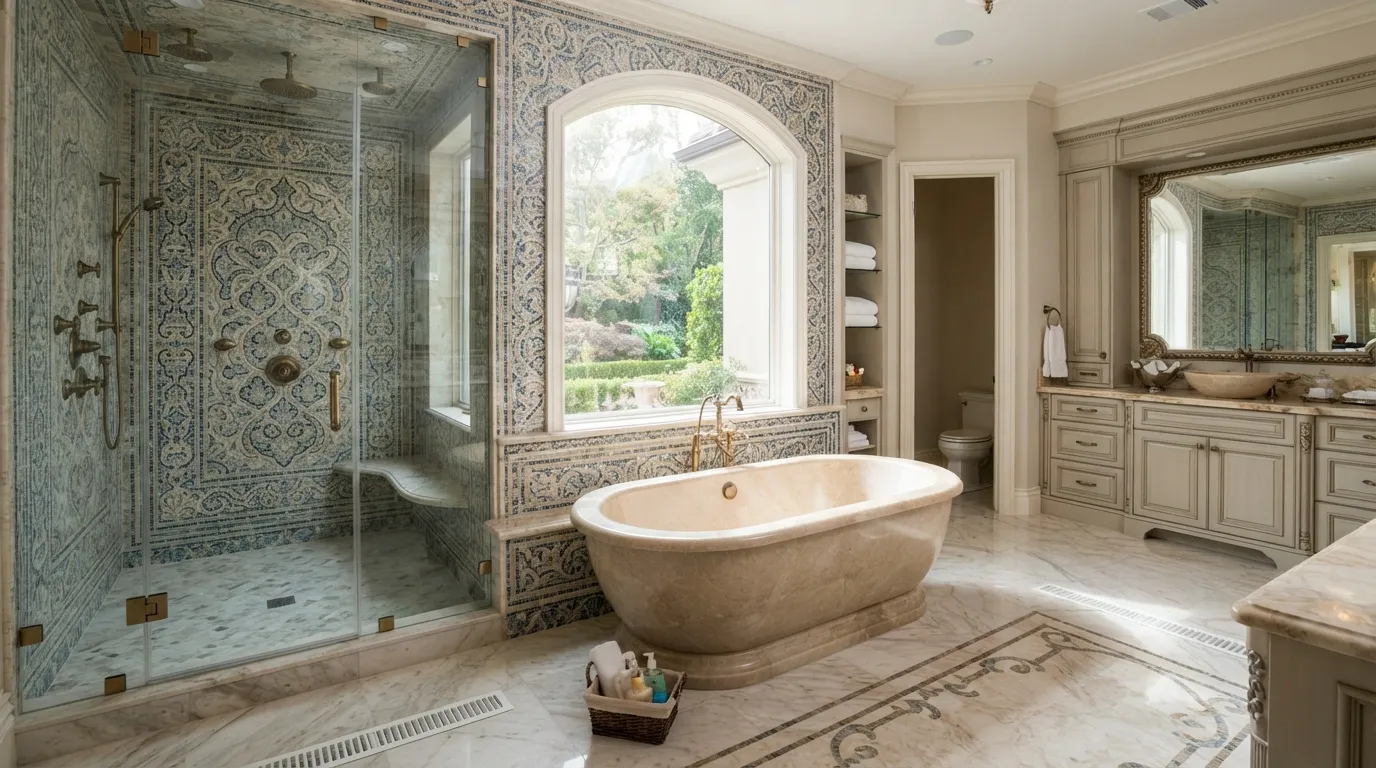
The luxury bathroom is where the budget most often gets out of hand.
HomeAdvisor says high-end finishes, including time-consuming tile patterns, costly tubs and showers, and luxury faucets, can break the budget and fall short of the anticipated return. Another roundup notes that many buyers won’t pay extra for luxury bathroom features, and basic porcelain toilets are fine for most owners.
One 2026 summary of Zonda cost-versus-value data puts an upscale bath remodel at about $78,840, with roughly $35,152 in resale value. That works out to a 45% return.
Not every bathroom luxury is a regret. Builders consistently praise radiant heated floors as one of the few luxury amenities owners rarely regret.
Why It Works: One general guideline is to spend no more than 10% of the home’s value on a bathroom remodel. A cap forces you to rank features instead of adding every one.
But the biggest regret on this list is bigger than a single room, and the figures at #1 are hard to ignore…
#1 – The Full Upscale Kitchen Remodel
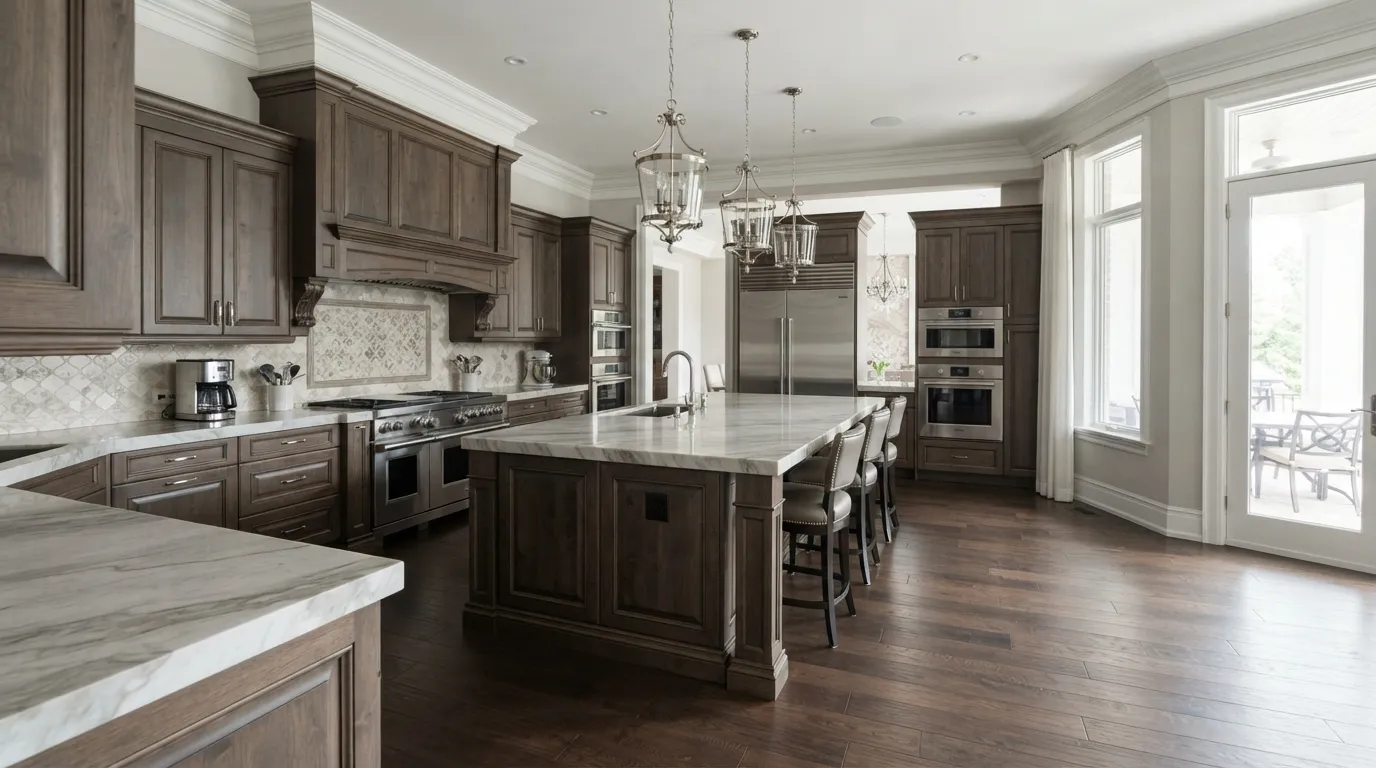
The kitchen is the room everyone says to splurge on, and the data suggests that advice breaks down at the top end.
One 2026 report built on Zonda’s cost-versus-value figures lists an upscale major kitchen remodel at $164,104, with about $58,592 in resale value. That is a 35.7% return, and the report calls it low financial ROI.
Other summaries land in the same range. One notes that a major upscale remodel can cost $80,000 to $150,000 or more, which translates into roughly 40% ROI, and exact figures vary by source, but none show a full return.
The regret isn’t only financial. A different survey found 47% of homeowners who remodeled preferred their home before the remodel.
A modest kitchen refresh, by contrast, tends to do far better. The full gut job is where the money disappears.
Did You Know: The same reports show that a minor kitchen remodel does far better. One puts a minor midrange remodel near a 95% return, while another reports 112.9%.
That gap between the showpiece and the sensible choice is the real story, and it ties the whole list together.
The Bottom Line
The common thread isn’t price. It’s the distance between a feature on a wish list and a feature you use on an ordinary day, which showed up in a coffee bar, a prep sink, a wine cellar and a home theater.
The financial numbers back it up. Upscale kitchens and baths recoup far less than their cost, often around 35% to 45% in the reports cited here.
At a Glance
- Upscale kitchen remodel: about 35.7% recouped in the Zonda-based report.
- Upscale bath remodel: about 45% recouped in the same data.
- Smart home package: 40% in the NAR-based roundup.
- New inground pool: 25% in that same roundup.
One caution: no survey we found measures regret on an exact two-year clock. What builders describe is a pattern of unused features, and the figures above are summaries that vary by source.
A luxury feature earns its place the way a good kitchen drawer does, by getting used on an ordinary Tuesday. Which one on this list would you cut first?