

Estate sale pros don’t admire a house from the doorway; they flip chairs over, open drawers and check the undersides of tables for stamps, labels or engravings. Skip those spots and you can sell a family piece for yard-sale money, or pay antique prices for a reproduction.
This list runs from small clues to big ones, starting with one that’s probably sitting in a closet. The last item is a well-meant chore that can cut a piece’s value before a buyer ever sees it, and it changes how you read the other thirteen.
#14 – The Portable Typewriter in the Closet
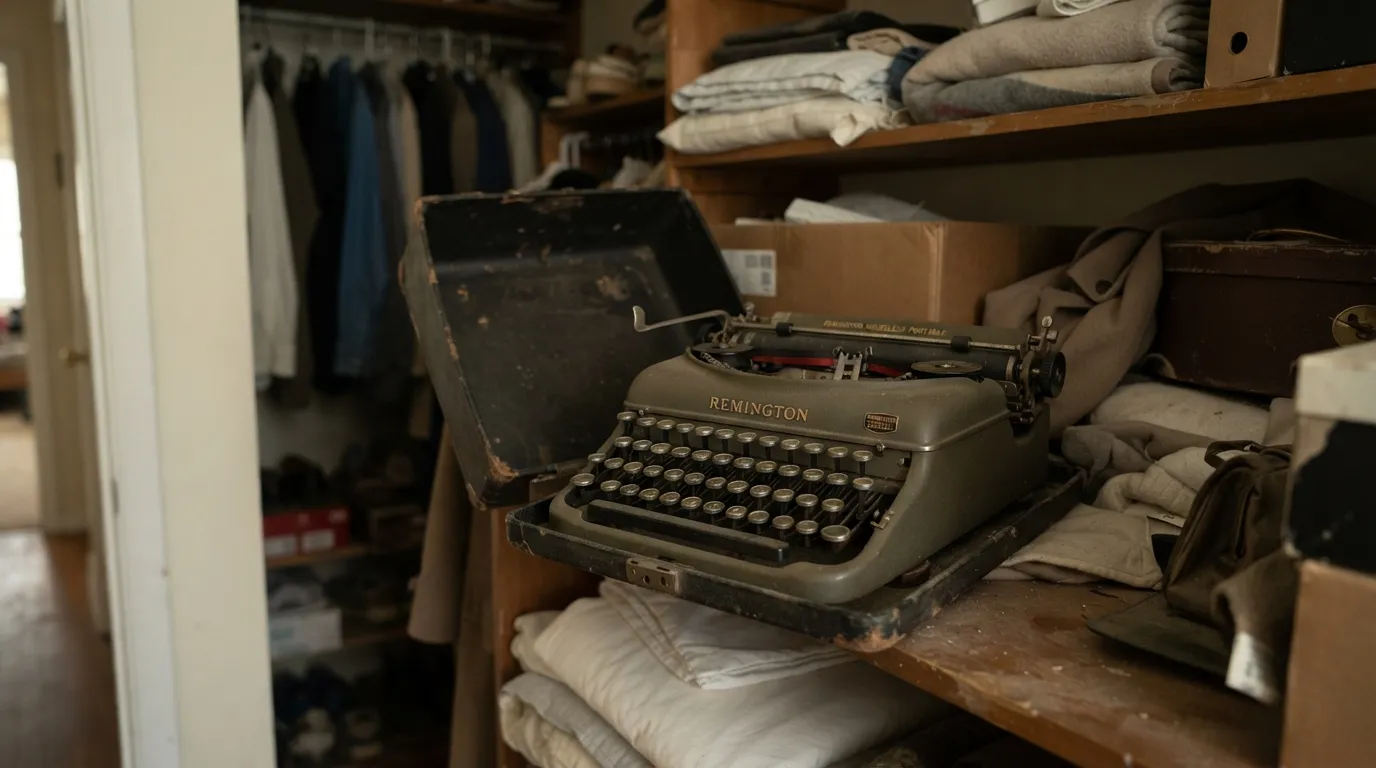
A portable typewriter in a hall closet looks like clutter, and the name on its front decides whether it’s more than that.
Brands such as Underwood, Corona and Remington are the ones to look for, and the model name or number lets you date the machine. Both are on the machine itself, so you can start without any research.
Write down the brand and model number before you leave the room. Then look up what that exact model has sold for, not what sellers are asking, because asking prices on old machines tend to run high.
Condition moves the number up or down. A carriage that travels freely, keys that strike, and an original case all help, while rust and missing parts hurt.
Insider Tip: Past auction results show what buyers paid, while asking prices only show what sellers hope for. Compare machines of the same model and similar condition before you trust any figure.
Typewriters are easy to spot on a desk, but the same closet may hold a sewing box, where the valuable pieces are small enough to be thrown out with the thread.
#13 – The Sewing Box Nobody Wants to Open
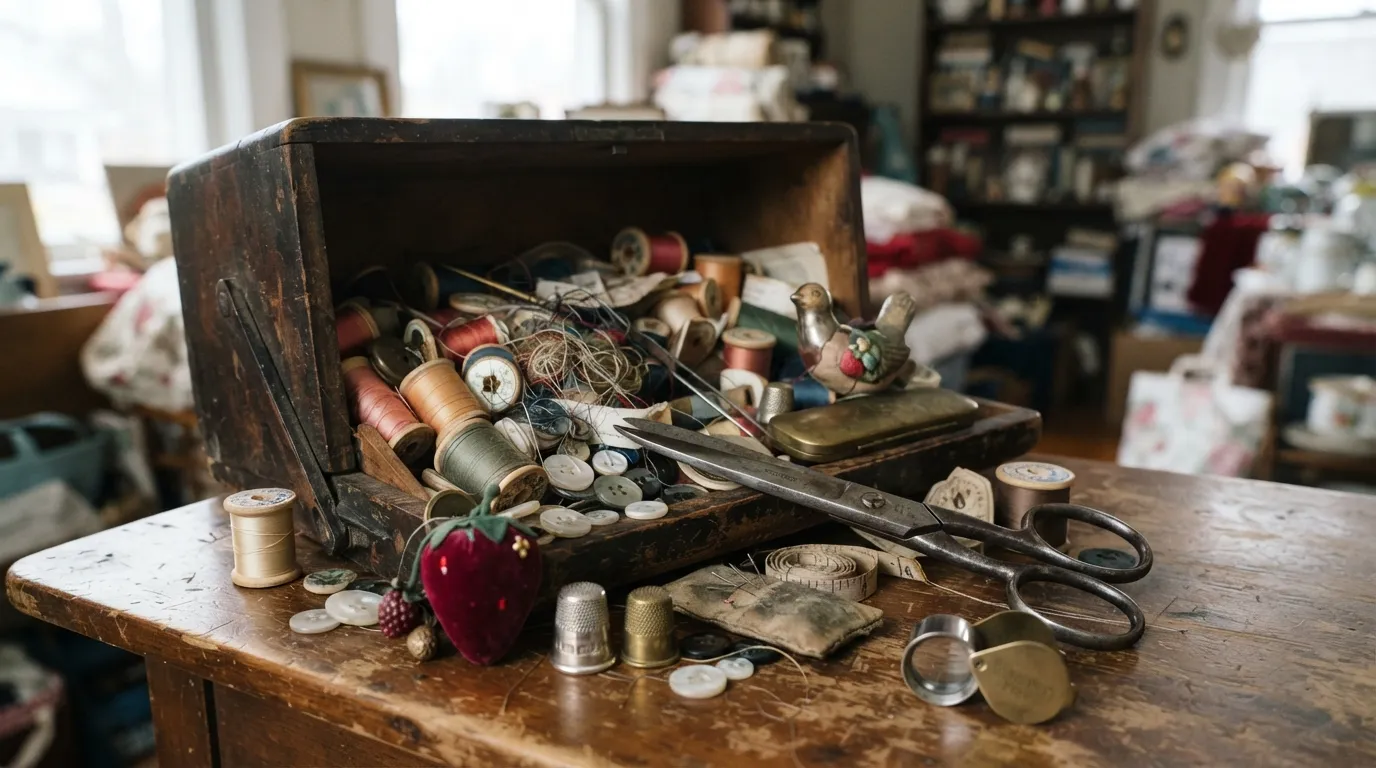
Sewing boxes get dumped by the bagful because they look like a tangle of thread and buttons.
A box of old sewing supplies deserves a closer look, since antique pincushions and scissors can be valuable. The scissors are the quickest to check because makers often stamped a name on the blades.
Thimbles, needle cases and tape measures can be worth setting aside too. A thimble in silver or gold carries a stamp, which you’ll learn to read a few items from now.
Empty the box onto a table and check every metal piece for a mark. A loupe or a phone camera with the zoom turned up works well in bad light.
Look at the pincushions as objects, not as filler. Figural ones shaped like animals or fruit, or ones with decorative metal work, belong in a separate pile from plain fabric cushions.
At a Glance: Sewing Box Hot Spots
- Scissors: read the blades for a stamped maker’s name.
- Thimbles: silver or gold ones carry a small stamp.
- Pincushions: figural shapes beat plain fabric ones.
- Tape measures and needle cases: set them aside for a second look.
Small things like these reward patience, but the next object rewards a coin and a quick test, and it comes with a warning about fakes.
#12 – A Cast-Iron Bank That Still Moves
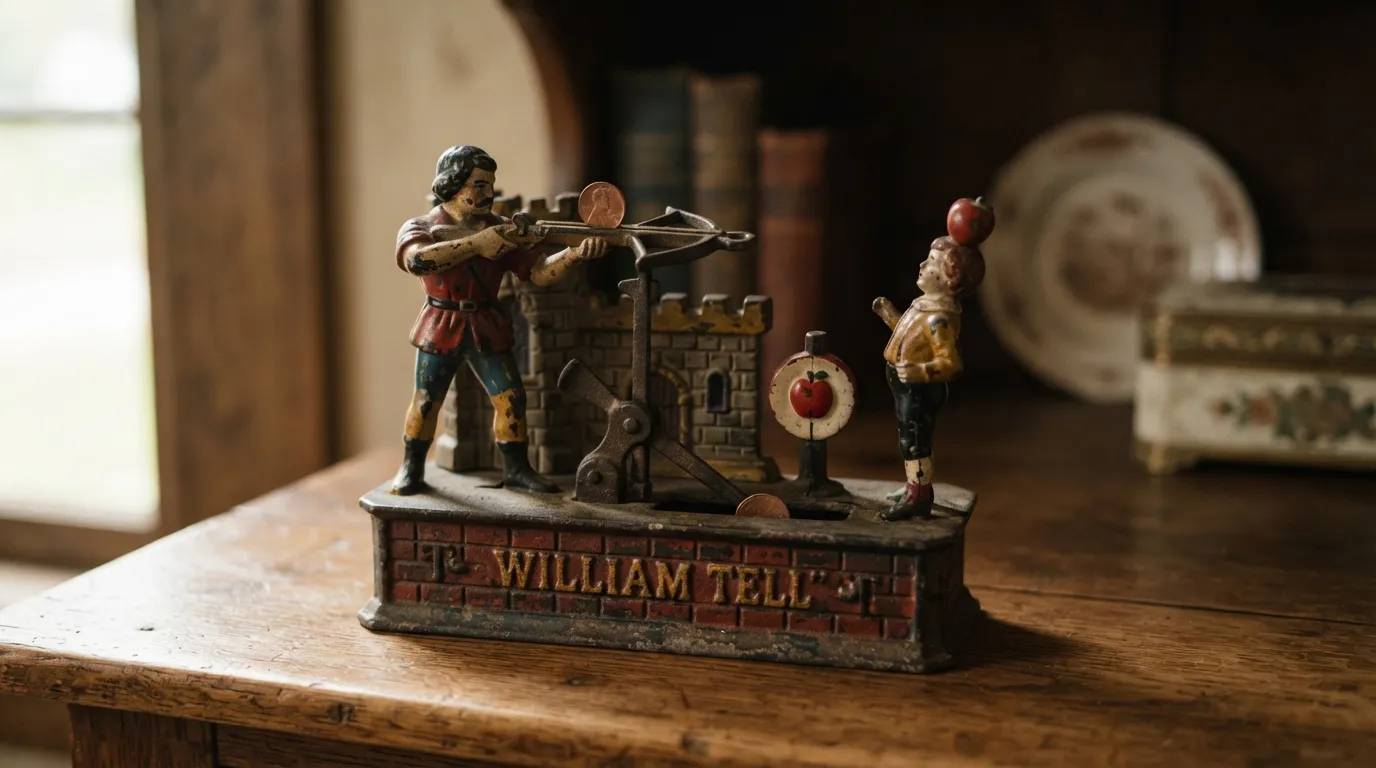
A coin bank that does something when you drop a penny in it belongs in a different category from a plain piggy bank.
These metal banks have some kind of action triggered by depositing a coin, and a working one is both valuable and delightful. Slow down here, because true antique banks may date from as early as the 1860s, but fakes exist.
Reproductions are common because the originals are worth copying. Casting that looks rough and grainy, paint that’s bright and even, and modern-looking screws are all reasons to hold off.
A bank that works and wears its original paint is the one to keep. Test the action gently with a coin and never force a stuck lever.
Did You Know: The coin-triggered action is what makes a bank mechanical. A still bank with no moving parts is a different collecting category, so check whether yours does anything before you compare prices.
Paint that’s original matters more than paint that’s fresh, a point that comes back near the end of this list. For now, look up, because the next clue hangs from the ceiling or sits beside a chair.
#11 – Dusty Glass Shades and Matching Sconces
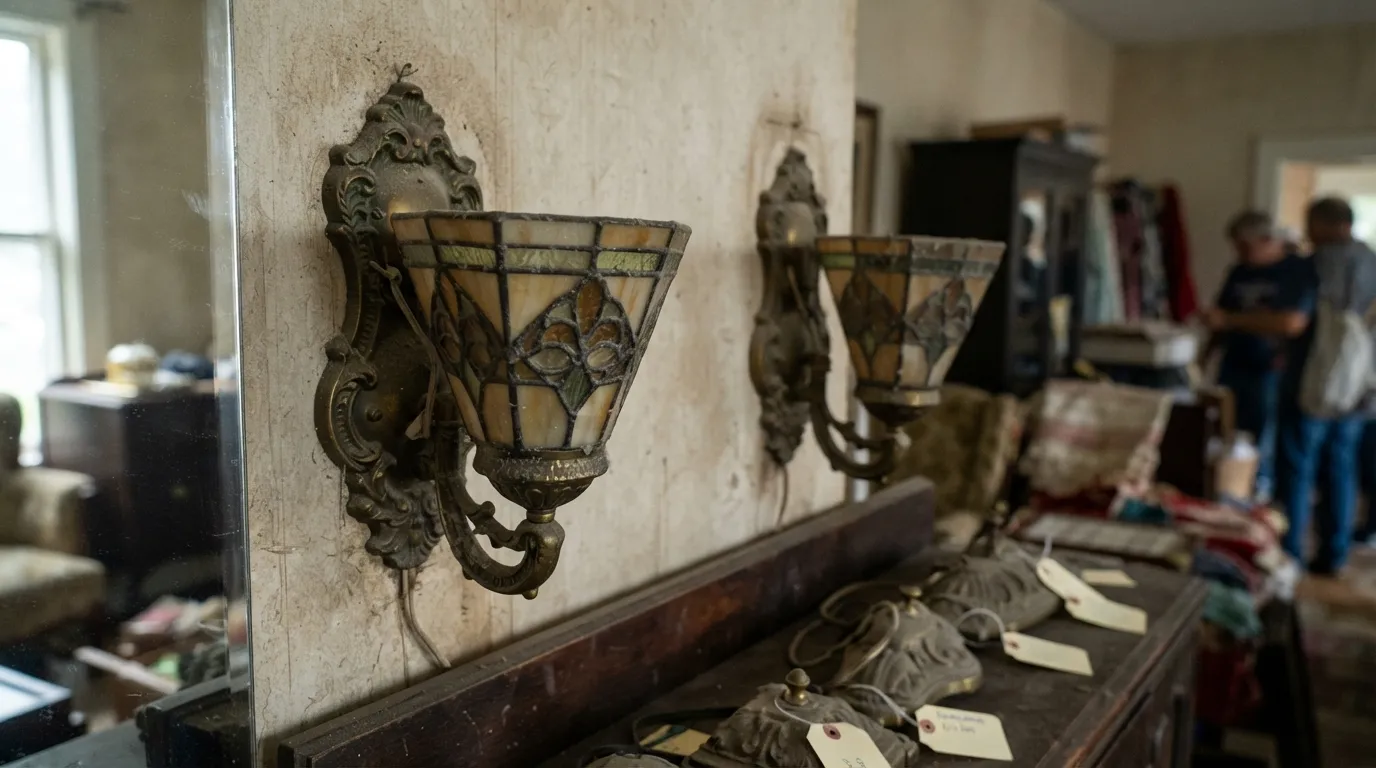
Dusty lampshades are easy to walk past, and the right one can be worth more than the sofa beside it.
A set of dust-covered stained glass lampshades could be well worth the hassle of hauling home if they were made by Tiffany or another early 20th-century maker. The name is the first thing to look for.
Check the metal base and the rim of the shade for a stamped name or number. Brands such as Lightolier and Holophane carry value too, especially when you find matching sets of sconces or other fixtures.
Matching pairs matter because buyers who want to light a room need two, not one. A single sconce from a set is a harder sale than the pair.
Look for a stamped name on both the base and the shade. Because Tiffany is a name copied for decades, a signature alone doesn’t settle anything, and a bargain price on a famous name calls for an appraiser’s opinion.
The next item is also on a shelf and also looks ordinary, but its secret is on the bottom, and you’ll need to pick it up to find it.
#10 – Matte Pottery That Looks Like Craft-Fair Stock
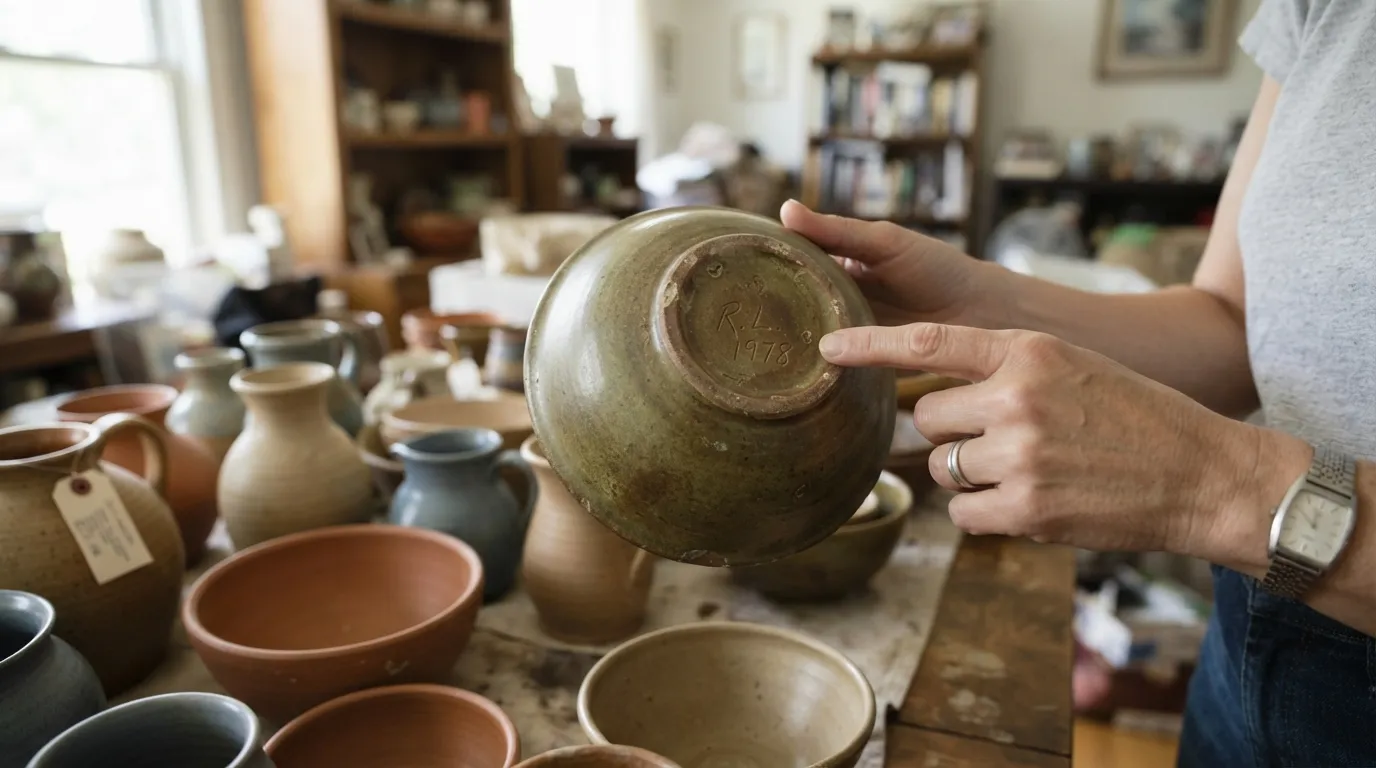
You might breeze by a stack of earthy bowls or matte vases, thinking they’re only decorative, but estate sale pottery often carries serious value. The plain look is part of the problem.
Pick up each piece and turn it over. Check the underside of ceramics for stamps, painted marks or incised signatures.
A mark you can’t read still helps, because you can photograph it and search for it later. A piece with no mark at all isn’t worthless, but it has lost its easiest route to a price.
Condition then does the rest. Even a small chip can drastically affect value.
Turn it over, because the maker’s mark is usually on the base. Run your fingertip around the rim and the foot, where chips like to hide under glaze.
Try This: Hold a phone flashlight flat against the surface and sweep it slowly. Light from the side throws shadows across hairline cracks and tiny chips that flat overhead light hides.
Pottery is judged one piece at a time. The kitchen cabinet has a different test, and it rewards the person who counts.
#9 – The Complete Set in the Kitchen Cabinet
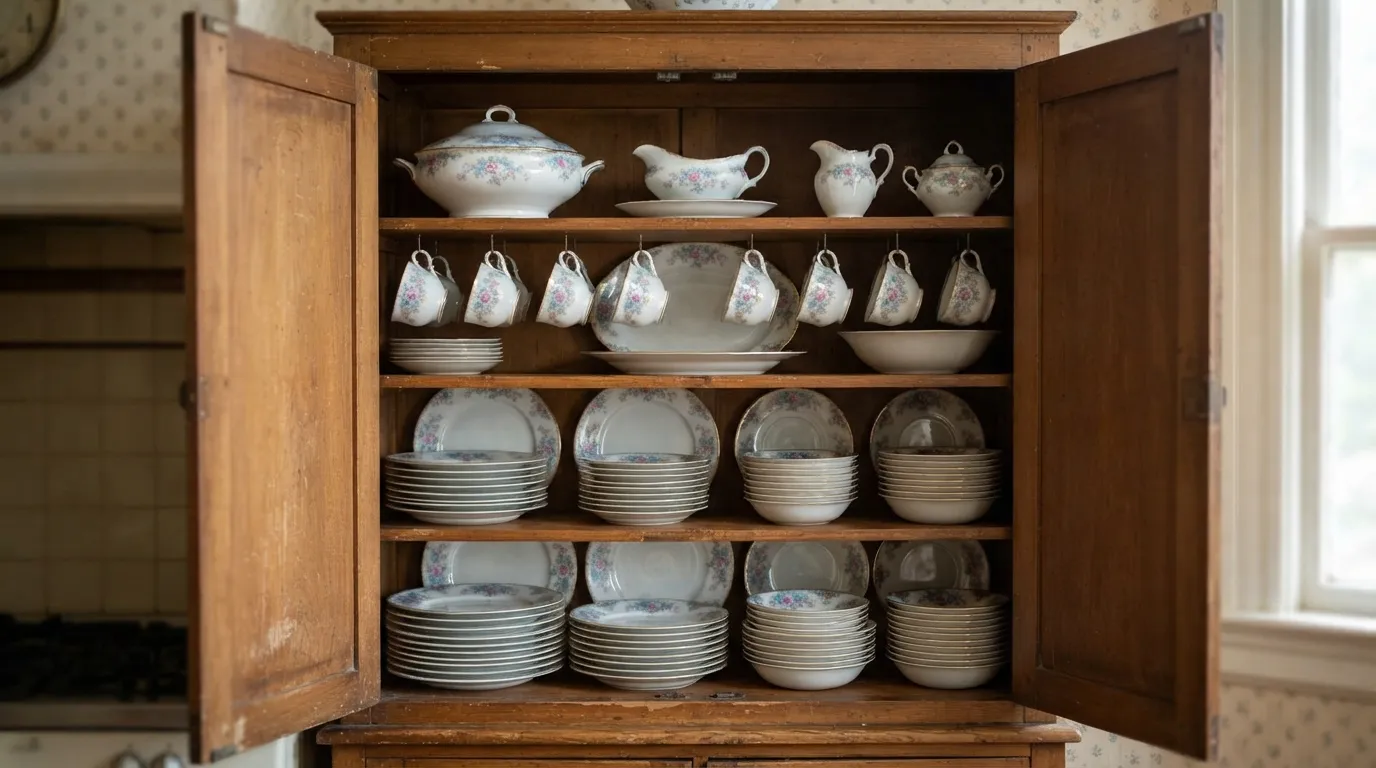
A full set of dishes can bring far more than the same pieces sold one by one.
Look for complete sets in good condition, since chips, cracks and missing lids can drop resale value. That advice covers vintage Pyrex, and complete fine china sets from known brands follow the same logic.
Count the pieces before you look at the pattern. A twelve-place setting with three plates missing is a different product from a full one, because a buyer who wants to serve twelve will move on.
Here’s my verdict: a chipped or incomplete set isn’t worth the trunk space, however pretty the pattern. It sells as parts, and parts sell slowly.
An incomplete or chipped set sells as parts, not as a set. Check every lid and serving piece first, because those are the ones that go missing.
The cabinet below the dishes sometimes holds a heavier prize. It’s metal, it can be tested in seconds, and some of it is worth money even if it’s ugly.
#8 – A Silver Tea Set That May Be Plate
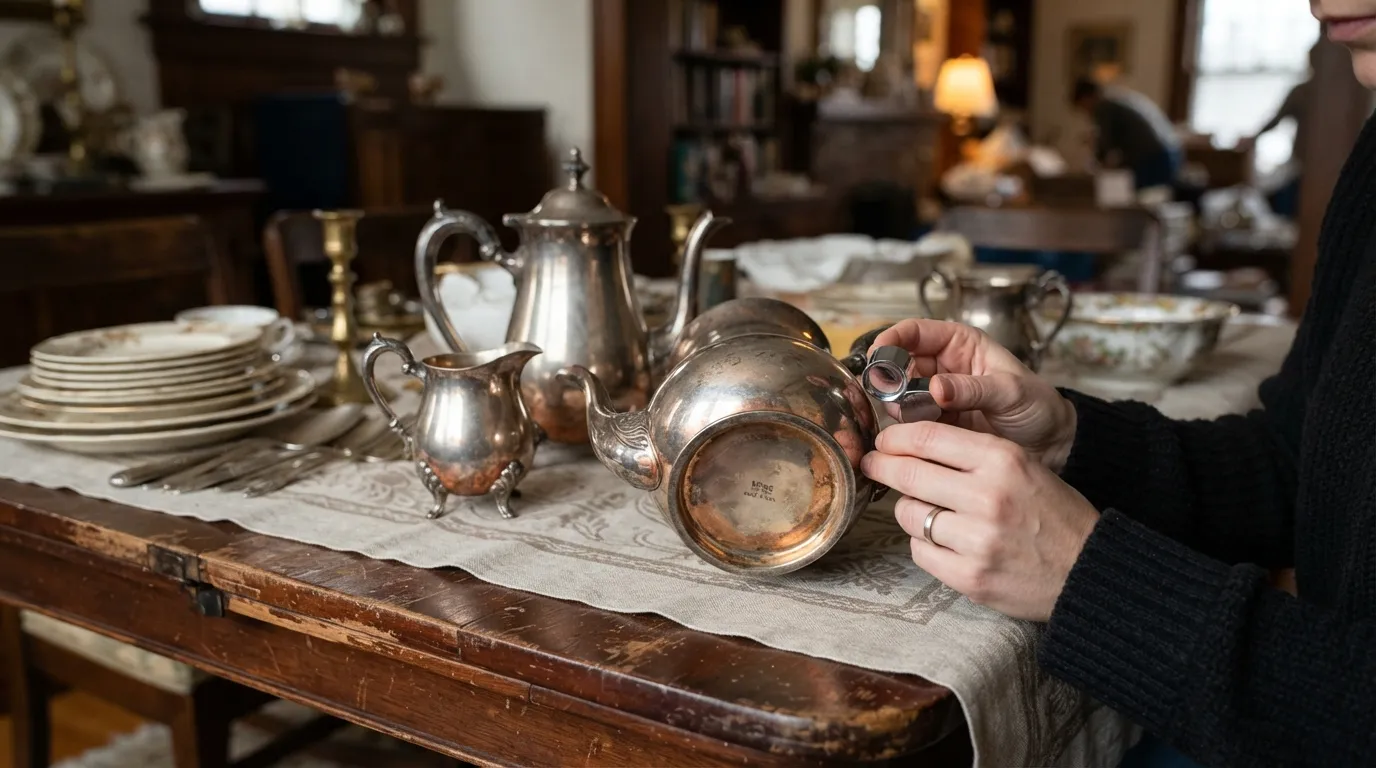
Silver has a trap built in: plated pieces can look identical to solid ones and feel just as heavy.
On American pieces, the word STERLING or the number 925 certifies at least 92.5% silver. Words like EPNS, A1 or Triple Plate mean the piece is plated.
Makers cloud the picture. Reed & Barton, Rogers Brothers and Oneida all made both sterling and silver plate in large quantities, so only the presence or absence of a sterling mark tells them apart.
Then run two quick checks: a piece that is magnetic or shows a coppery tint where it’s worn is likely plate. Sterling rings clearly when tapped against another piece of sterling, while plate thuds.
Quick Compare: Sterling vs. Plate
- Sterling: stamped STERLING or 925, rings when tapped, not magnetic.
- Plate: stamped EPNS, A1 or Triple Plate, thuds, may show copper where worn.
- Imported silver: often 800 standard, slightly below sterling’s 925.
STERLING or 925 means solid silver; EPNS or A1 means plated. One more rule applies to imported pieces: much Continental silver is 800 standard, slightly below sterling’s 925, which affects melt value.
The Science Behind This: Silver isn’t magnetic, so a magnet that sticks means iron, steel or nickel under the surface. A magnet that doesn’t stick proves nothing alone, because plate over brass won’t attract it either.
Solid silver keeps some value even as scrap, a floor under the price that other items on this list lack. Something on the floor of the living room can have a floor of its own, but its clue sits on the back.
#7 – The Rug Everyone Has Walked On
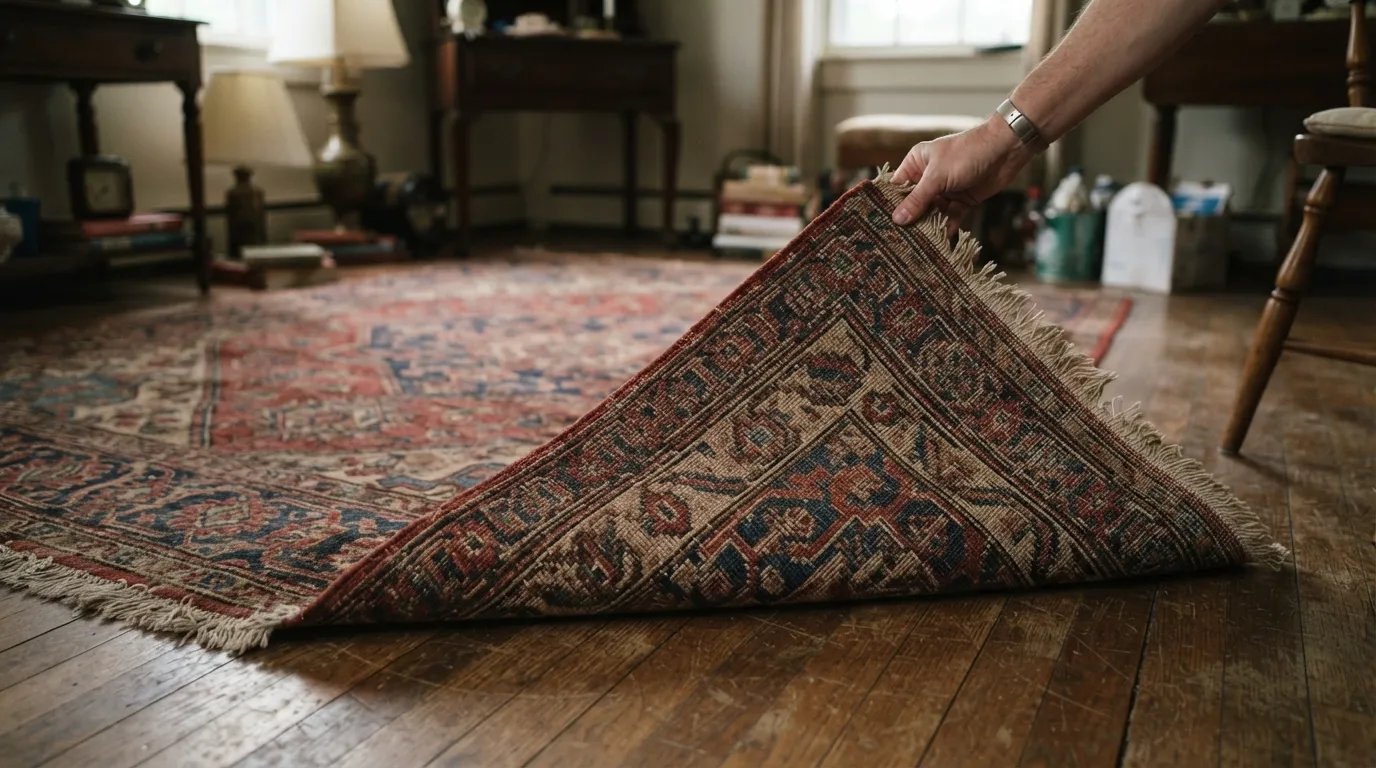
Flip up one corner of the rug before you decide it’s only a floor covering.
If the back matches the front, it’s very likely a hand-knotted rug. Hand-knotted rugs have no backing, while hand-tufted and machine-made rugs carry a latex coating on the back.
Look at the fringe too. On a hand-knotted rug it extends the foundation threads instead of being sewn on, while machine-made rugs often have a sewn-on fringe and knots as even as print.
If the back mirrors the front pattern, it’s probably hand-knotted. Keep expectations level, though, since inherited household rugs more often land in the range of a few hundred to a few thousand dollars than at headline prices.
By The Numbers: It can take up to one year to produce a 9-by-12-foot hand-knotted Oriental rug. That labor is why a true hand-knotted rug and a printed copy of its pattern are priced so differently.
A rug’s back is plain evidence. The next item has a back of its own, and that’s where a gallery or an artist may have left a note.
#6 – The Framed Picture With a Paper Back
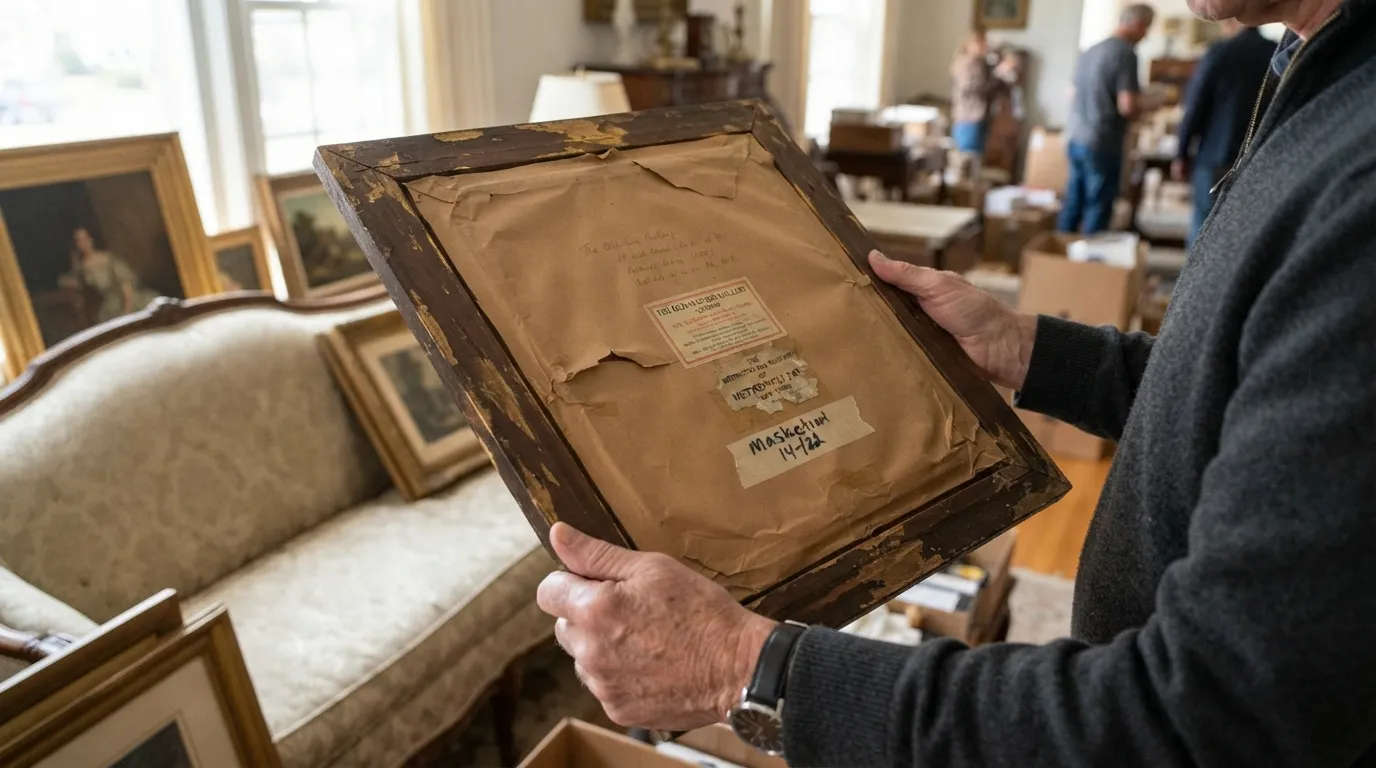
A framed picture over the sofa gets judged by its front. A professional turns it over.
Pickers check the back for gallery labels, exhibition stickers or notes from the artist. Those scraps of paper can connect a picture to a place, a show or a name.
Then check the front for a signature. A magnifying glass helps with signatures on art, prints and jewelry.
Original paintings, signed prints and regional art are worth looking for, and even a modest original can be valuable if the artist gained recognition. That’s why a plain landscape by an unknown name deserves a photo and a search.
Check the back for gallery labels, exhibition stickers and handwritten notes. Don’t peel, trim or rewrap anything while you look.
Insider Tip: To tell a painting from a print, look closely at a dark area under magnification. Printed pictures are built from tiny dots or a regular pattern, while paint shows brush texture and uneven layers.
Pictures hang on walls, but the next item sits flat on a shelf, and one thing about its cover decides most of what it’s worth.
#5 – The Bookshelf, Judged by Its Covers

Shelves of books look like a heavy job to haul away, and most of them are exactly that.
Beloved authors, significant topics and beautiful illustrations make a book valuable. Condition matters on top of that, and pickers look for original dust jackets on old books.
A first edition and a later printing can look identical on the shelf. The copyright page usually carries the edition information, though each publisher states it differently.
Worth Knowing Before You Donate a Single Book
- Original dust jackets add value, even worn ones.
- The copyright page is the first place to check the edition.
- Illustrations and subject matter can matter as much as the author.
- Tape, trimming and wet wipes can all hurt a jacket.
Now for a verdict that may start an argument. Old encyclopedias and condensed-book sets are rarely worth the shelf space, and a family that spends a weekend sorting them has spent it on the wrong shelf.
Never discard an original dust jacket, even a worn one. Don’t tape it, trim it or wipe it with anything wet.
From here the objects get heavier, take two people to lift, and carry their evidence on the underside.
#4 – A Label Inside the Drawer
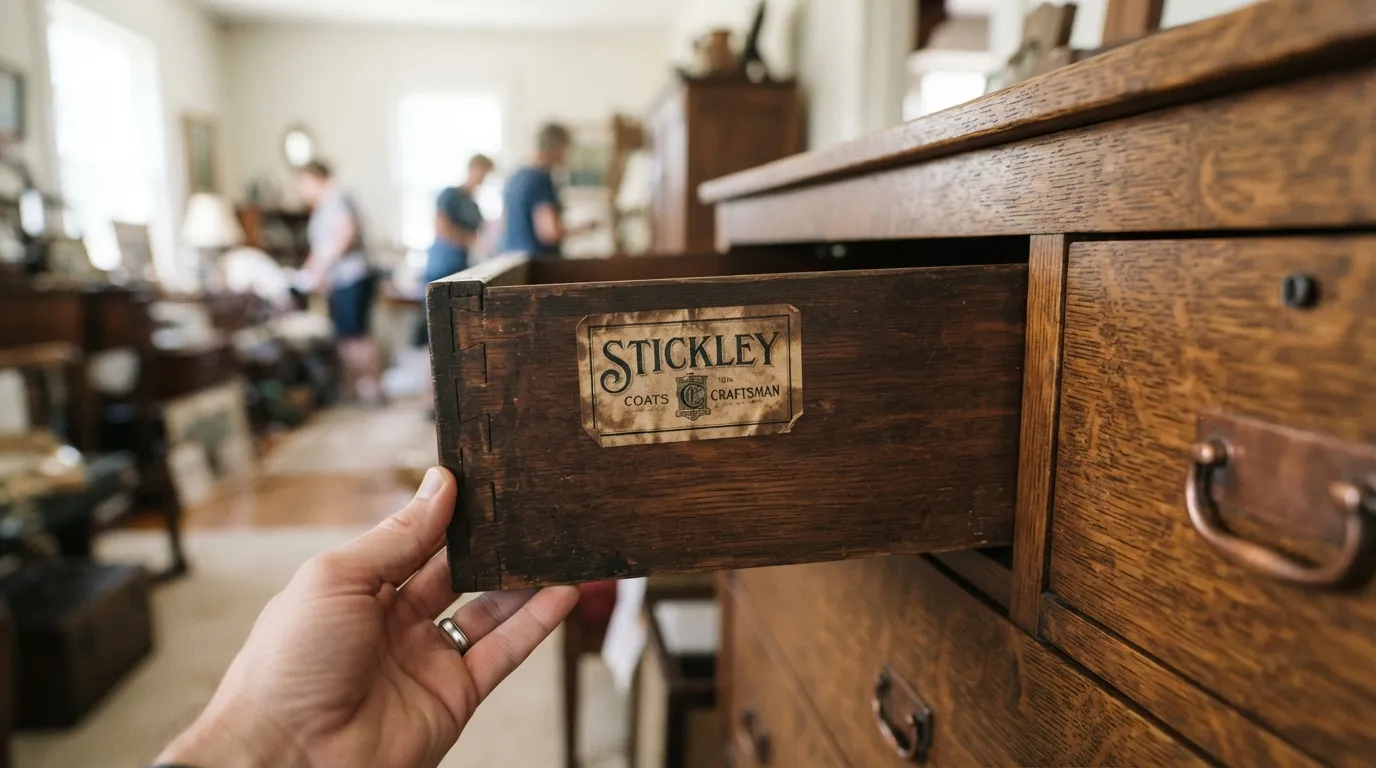
Furniture seldom announces its maker from the front.
Labels, stamps and branded marks on furniture are often hidden inside drawers. That’s why professionals open drawers and tip chairs over before they look at anything else.
Look at the underside of tabletops, the back of the piece and the inside of drawer fronts. Names such as Stickley can lift a piece well above its plain neighbors.
Here’s a verdict that cuts against how most people shop: a label is not proof of anything. A fancy label means little if the piece has machine-cut dovetails but is supposedly from 1780.
A label counts only when the construction agrees with it. Treat the name as a question and the joints as the answer.
The Psychology Behind This: A printed name feels like a verdict, so buyers stop looking once they find one. Labels can be moved, copied or added, which is why a pro treats a name as a claim to check.
The joints are in the drawer you’ve just opened, and they take about ten seconds to read.
#3 – Drawer Corners That Aren’t Quite Even
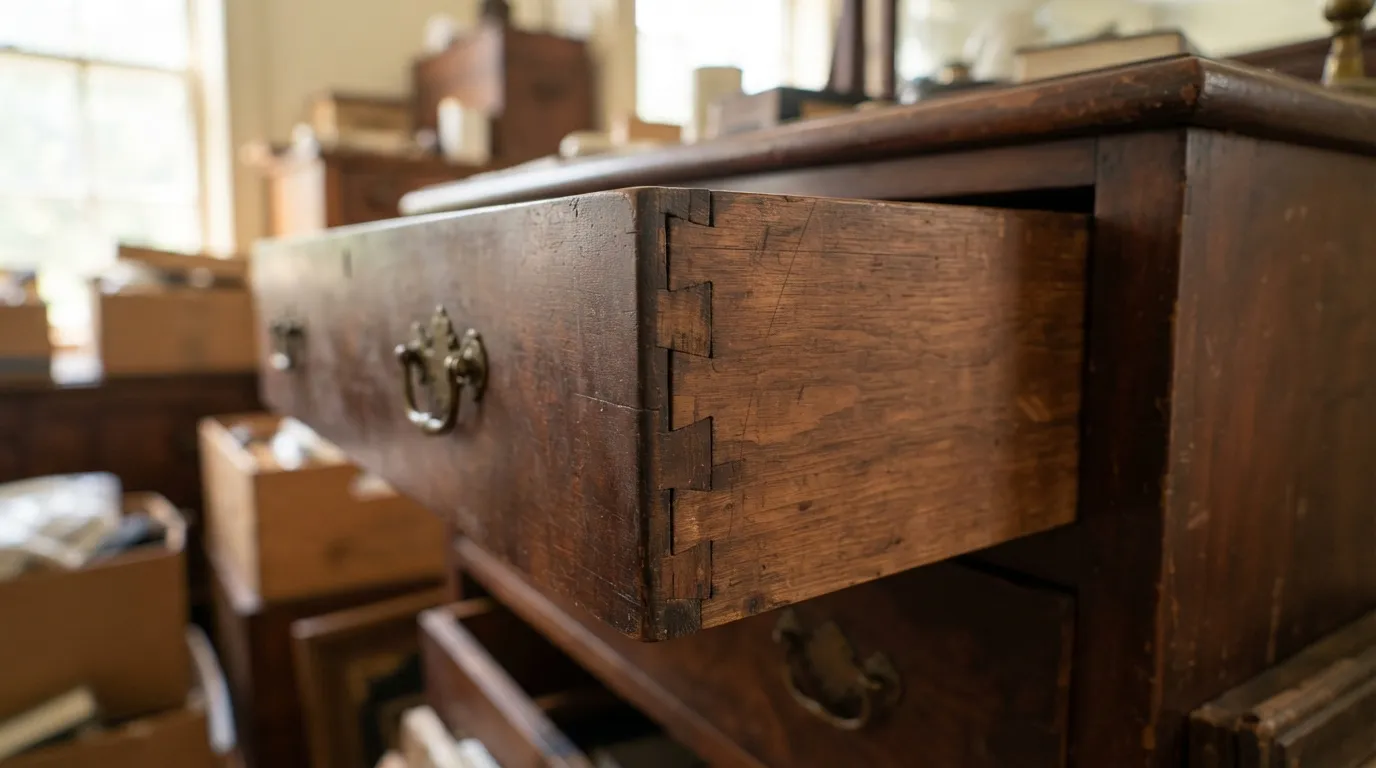
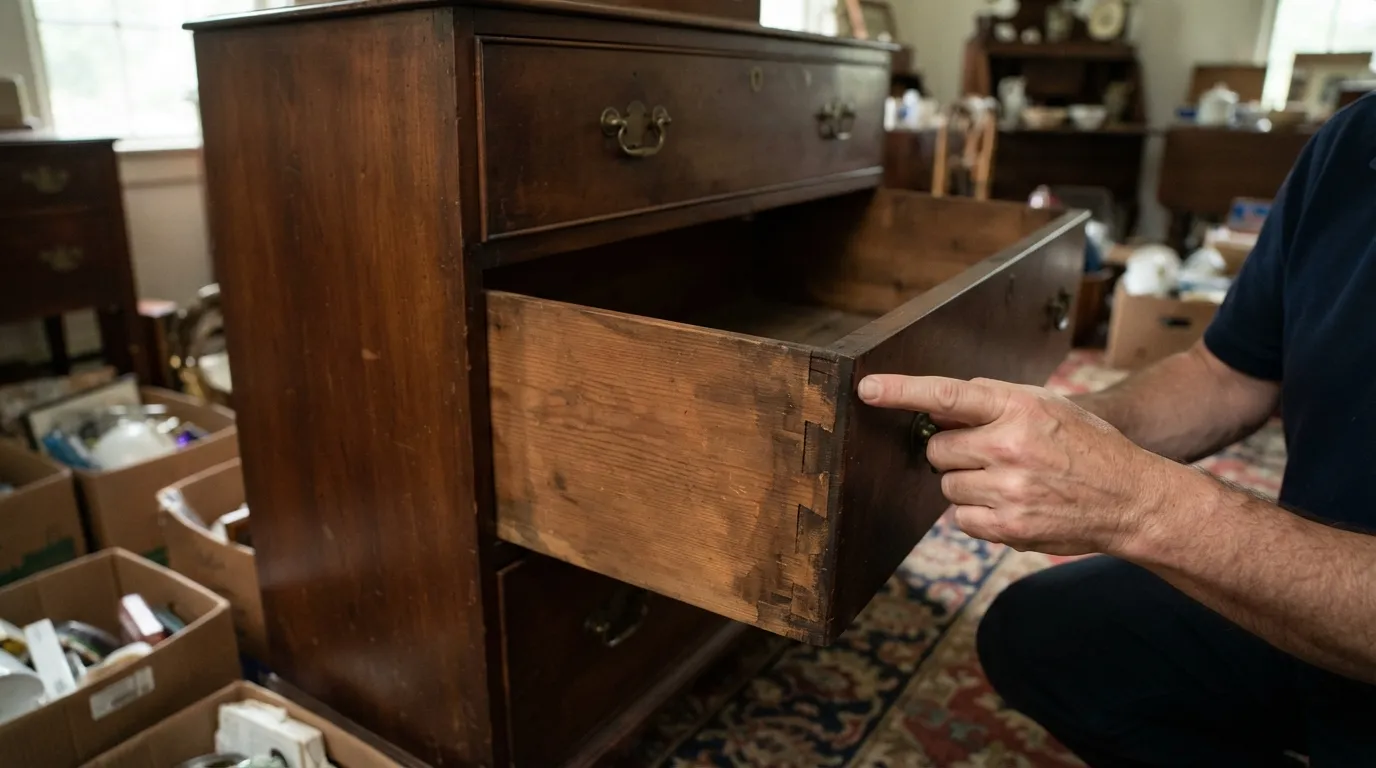
Pull one drawer all the way out and look at the corners where the front meets the sides.
A hand-cut dovetail joint has only a few dovetails and they aren’t exactly even, while closely spaced, precisely cut ones were machine-cut. You may also see a thin scratched line where the cabinetmaker marked his cut.
The dates need care. Popular Woodworking notes that machine-cut dovetails establish a piece is no older than about 1895, when the cutting machine was invented.
Hand-cut dovetails indicate the furniture was made in the 19th century or before, as long as other clues don’t point to a more recent time. A skilled woodworker can cut irregular dovetails on a modern piece on purpose.
Fast Facts: Reading Dovetails
- Hand-cut: few dovetails, slightly uneven, sometimes a scratched layout line.
- Machine-cut: tightly spaced and identical, no older than about 1895.
- Best test: compare two drawers, since hand-cut joints differ from one to the next.
Uneven, hand-cut dovetails point to a piece made in the 19th century or earlier. Perfect, identical joints on a piece sold as 18th-century should end the conversation.
Why It Works: On a hand-cut piece each drawer’s dovetails differ slightly, while on machine-cut furniture every drawer has identical joinery. Comparing two drawers is a check anyone can do.
Joints give the date range. Two quieter clues, in the wood nobody meant you to see, tell you whether the piece has stayed whole.
#2 – Pine, Poplar and Ghost Marks Behind the Pulls
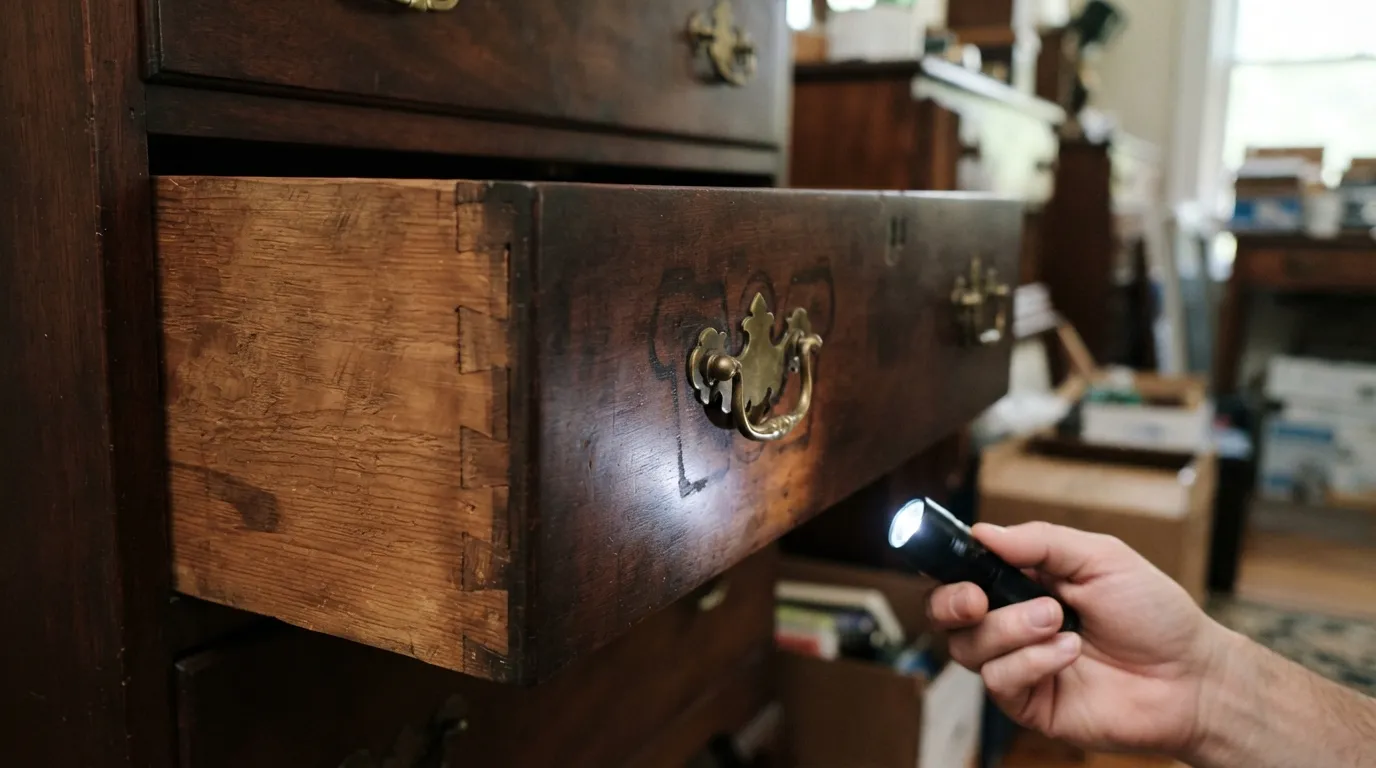
The wood nobody was meant to see often says the most. Fine furniture was usually built with a good wood on show and a cheaper secondary wood, like pine or poplar, inside.
Now look at the drawer fronts. If the current pulls don’t match the ghost marks of previous hardware, the pulls were replaced.
Replaced hardware isn’t a disaster, but it changes the price and should change your offer. A piece with pulls that fit the old marks has kept more of itself.
Handwork shows up elsewhere, since on handmade furniture the rungs, slats and spindles are not uniform. Check the back panel too, where nobody bothered to hide anything.
Check drawer sides, back boards and pulls with a flashlight. Matching secondary wood and untouched hardware holes are signs of a piece that hasn’t been messed with.
That phrase, messed with, covers the costliest item on this list. It isn’t a fake or a replaced pull, and it often happens the week before the sale, with the best of intentions.
#1 – The Original Finish Someone Is About to Fix
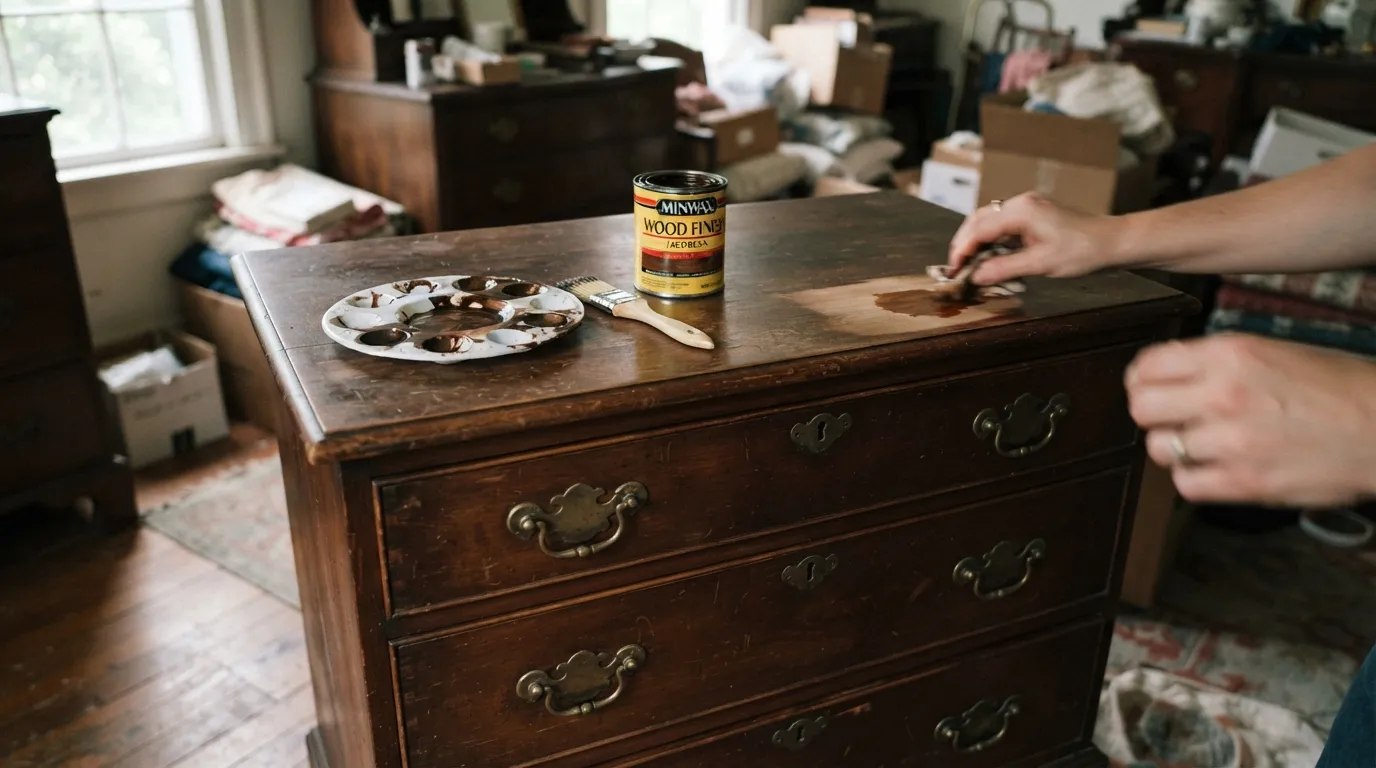
The most expensive mistake in a house full of antiques is a good deed.
Original finishes, unbroken parts and minimal wear enhance value, while repairs, rust and heavy damage typically decrease it. Patina on wood and slight fading on fabric are signs of genuine age.
Look back through the list. Stripping a table sands off the label from #4, new pulls erase the ghost marks from #2, and a fresh coat of paint on a cast-iron bank hides what #12 told you to look for.
Taping a dust jacket, re-gluing a chair, or scrubbing a rug are the same story. Buyers are wary of items that are heavily restored.
Leave the finish, the hardware and the labels exactly as you found them. Dust gently with a dry soft cloth and photograph the piece before anything else.
A qualified appraiser should put a number on anything that looks significant, and should see it before any repair. If you’ve already refinished something, that’s still worth telling them.
Editor’s Note: Dull spots, worn edges and darkened wood are evidence of use over many years. A professional reads them as information about the piece, and a polish can erase that information for good.
Read the Back Before You Clean the Front
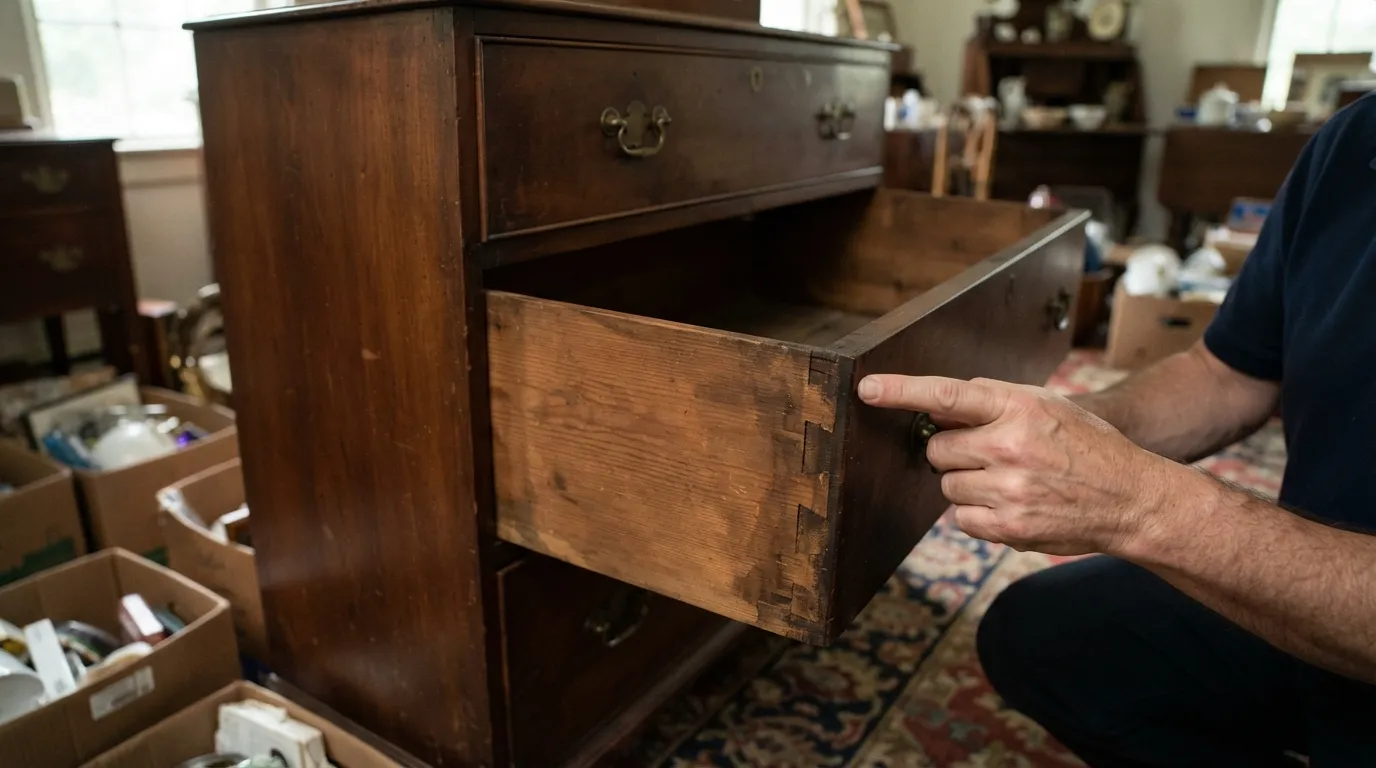
Value sits where nobody dresses things up: undersides, drawer corners, the back of a frame and the base of a bowl. That’s why a house can look ordinary from the doorway and still hold something worth checking.
The better habit is to slow down. Look first, photograph what you see, and touch as little as possible until you know what you have.
What’s the oldest piece of furniture in your home, and when did you last pull a drawer out and look at the corners?