


The typical U.S. home flip earned a gross profit of $60,526 in the second quarter of 2026, a 21.5 percent margin that was down from 27.6 percent a year earlier, according to ATTOM.1 That figure comes before rehab, financing and carrying costs, so when margins shrink, the money tends to drift toward whatever photographs best.
The 15 features below win the listing photo and then lose the first rainy month. Stay for #1, the costliest item on the list, which comes with one phone call that checks it before you close.
#15 – Vessel Sinks That Splash and Collect Grime
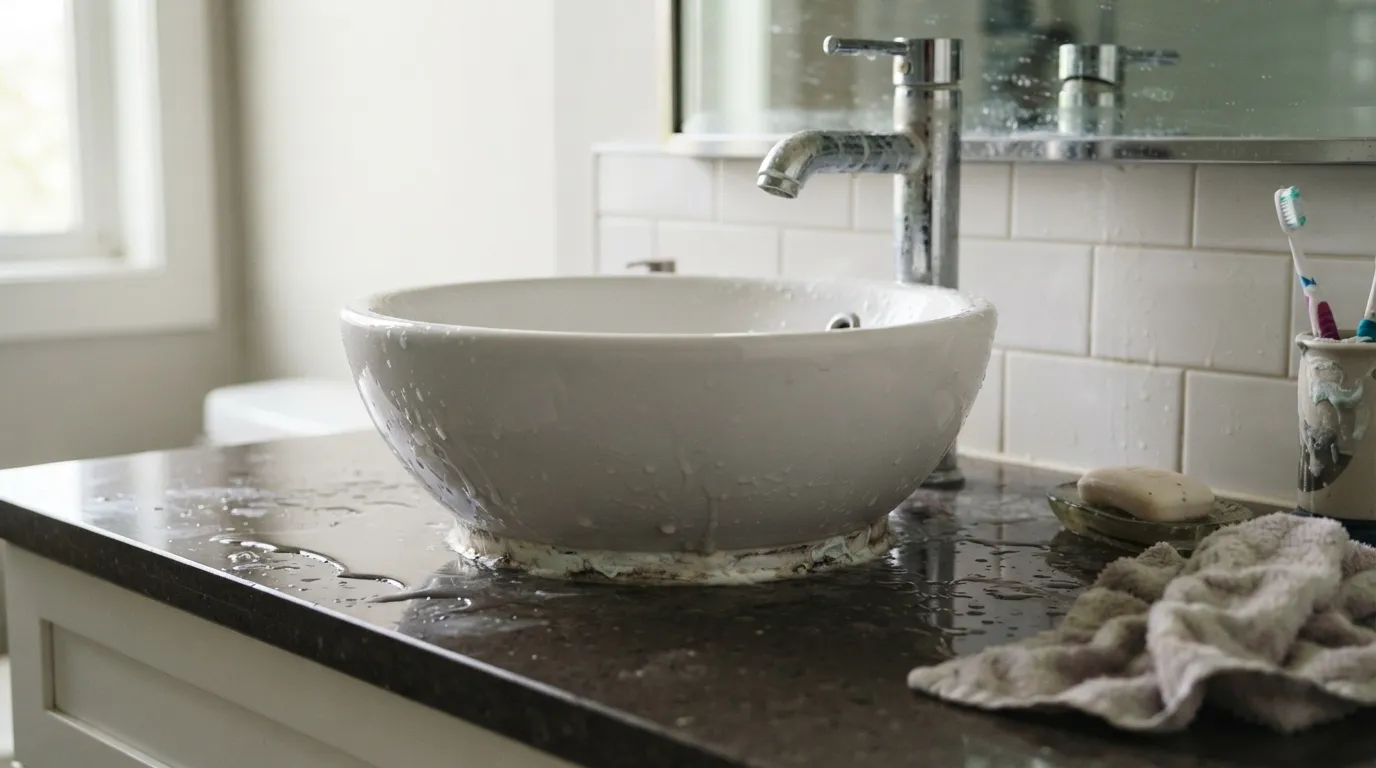
A bowl perched on top of the vanity looks like a boutique hotel in a listing photo. Daily use is less flattering, because the rim sits higher than a standard sink and water that misses the bowl lands on the counter.
The seam where the bowl meets the counter traps soap scum. The tall faucet it needs usually costs more than a standard one, too.
Fit matters as well, since a spout that’s too short splashes and one that’s too tall leaves your hands out of reach. Anyone who has rinsed a toothbrush in one knows the splash zone is wider than the bowl.
Verdict: a vessel sink is a poor bargain in any bathroom that gets daily use. If the bowl sits above the counter, run the tap before you buy.
Try This: At a showing, turn the faucet on full and watch where the stream lands. Then run a finger along the seam under the bowl, because that’s the spot you’ll be cleaning every week.
Kitchen shelves have the same weakness, with cooking grease added.
#14 – Open Shelving in a Kitchen Built for Cooking
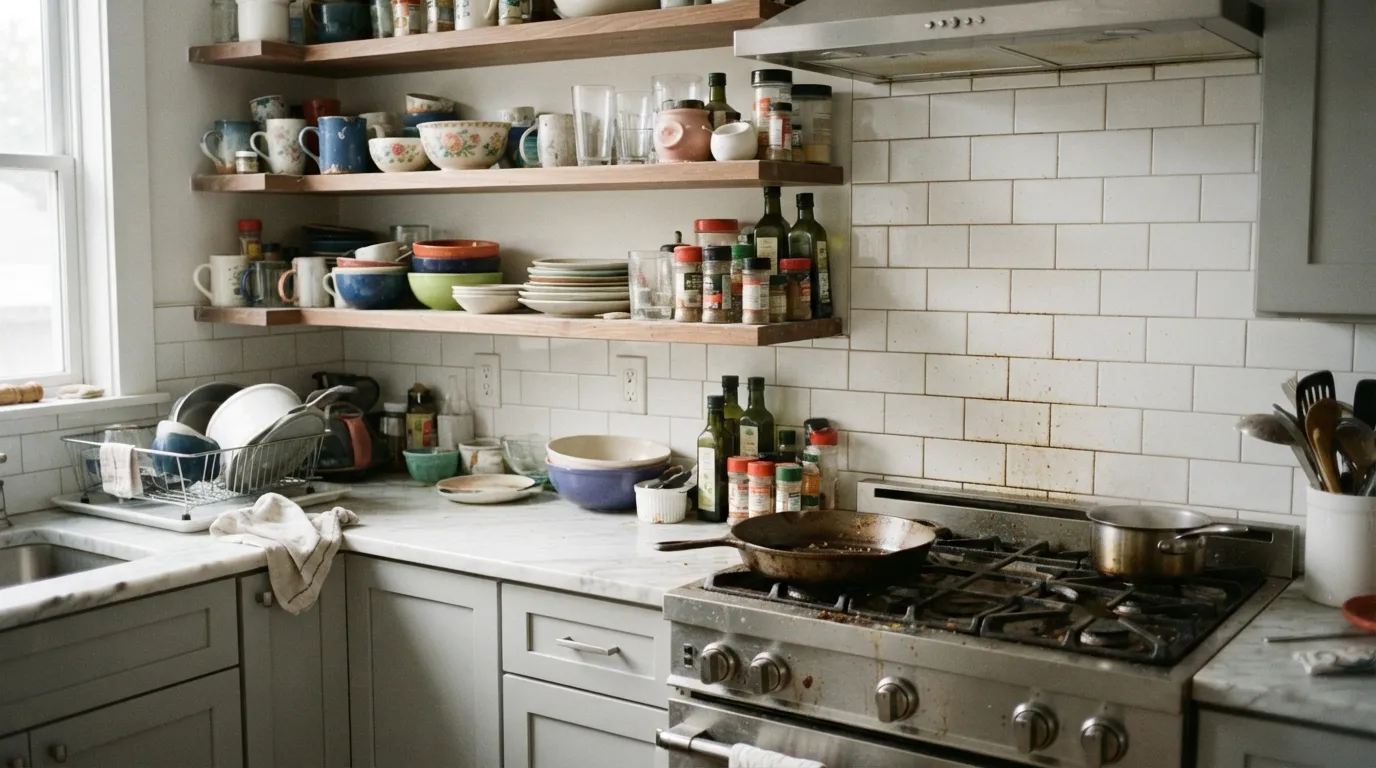
Open shelving looks its best on the day the stylist leaves. Three matching white bowls aren’t how a real kitchen, with its mismatched mugs and cereal bowls, stores dishes.
Anything without a door catches dust, and shelves near the range catch cooking grease as well. Dishes you rarely use need a wash before they reach the table, which defeats the convenience.
A flip that removes upper cabinets to get the look also removes storage. A buyer feels that loss the first week of unpacking.
Verdict: open shelving is overrated as primary storage. Keep it to one short run of everyday plates and glasses, away from the stove.
The Science Behind This: Cooking sends fine droplets of oil into the air, and they settle on whatever is nearby. A range hood catches only part of it, so dishes beside the stove collect a sticky film faster than dishes across the room.
Doors have their own showpiece style, and one popular version trades privacy for looks.
#13 – Sliding Barn Doors on Rooms That Need Privacy
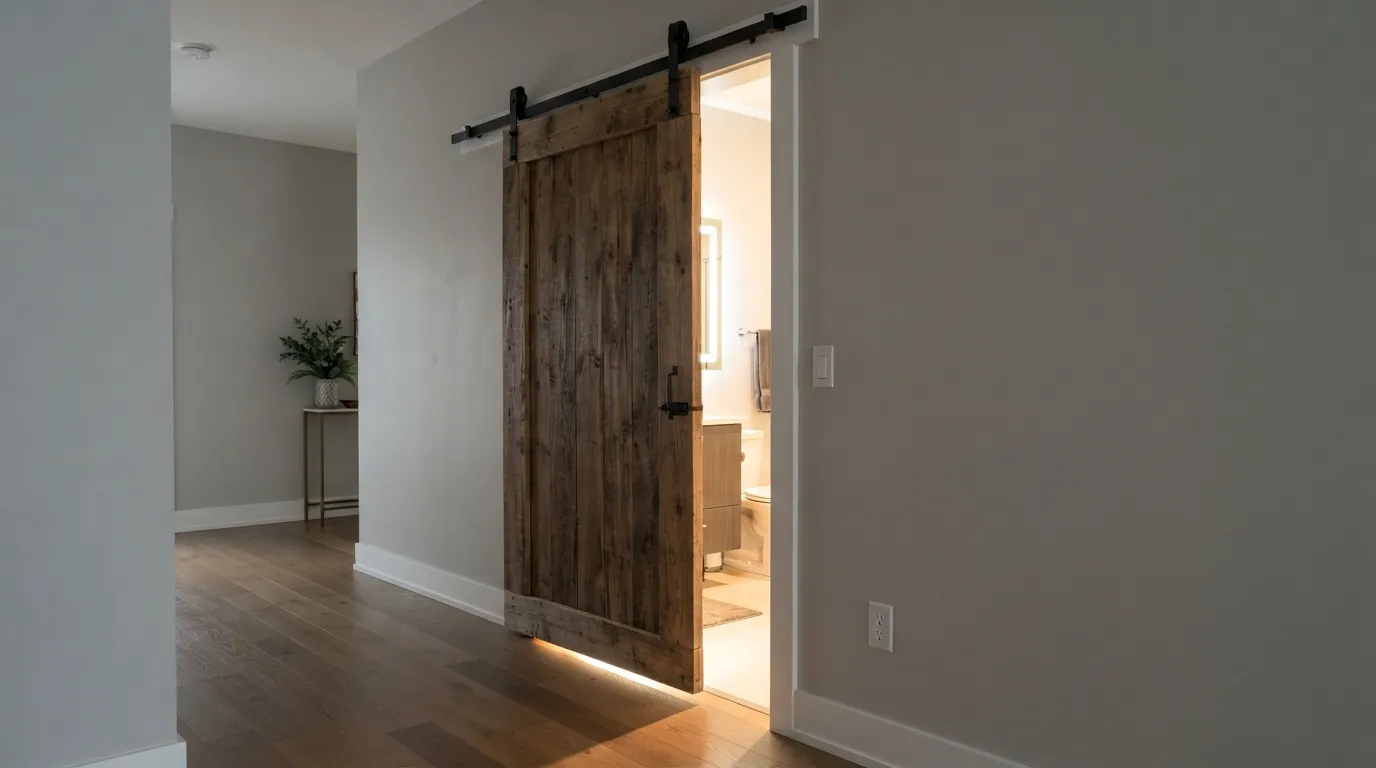
A barn door doesn’t close the way a regular door does. It hangs from a rail with gaps at the edges and the floor, so sound, light and cooking smells pass through, and many models have no true latch.
It also needs a clear stretch of wall beside the opening, about as wide as the door itself. That spot can’t hold furniture, and any outlet or switch there ends up behind the slab.
A closet or pantry can take those compromises. For a bathroom or bedroom, insist on a hinged, latching door.
If you’re buying, check whether the opening has a proper frame. A flip that hung a slab in a bare opening can leave you paying a carpenter to build one.
Quick Compare
- Barn door: gaps at the edges and floor, a rail overhead and a dead wall beside the opening.
- Hinged door: seals against the frame, latches shut and needs only room to swing.
- Best fit: barn doors for closets and pantries, hinged doors for bathrooms and bedrooms.
Floor plans cause bigger trouble than doors, especially when the centerpiece of the kitchen was sized for a larger room.
#12 – The Oversized Island in a Small Kitchen
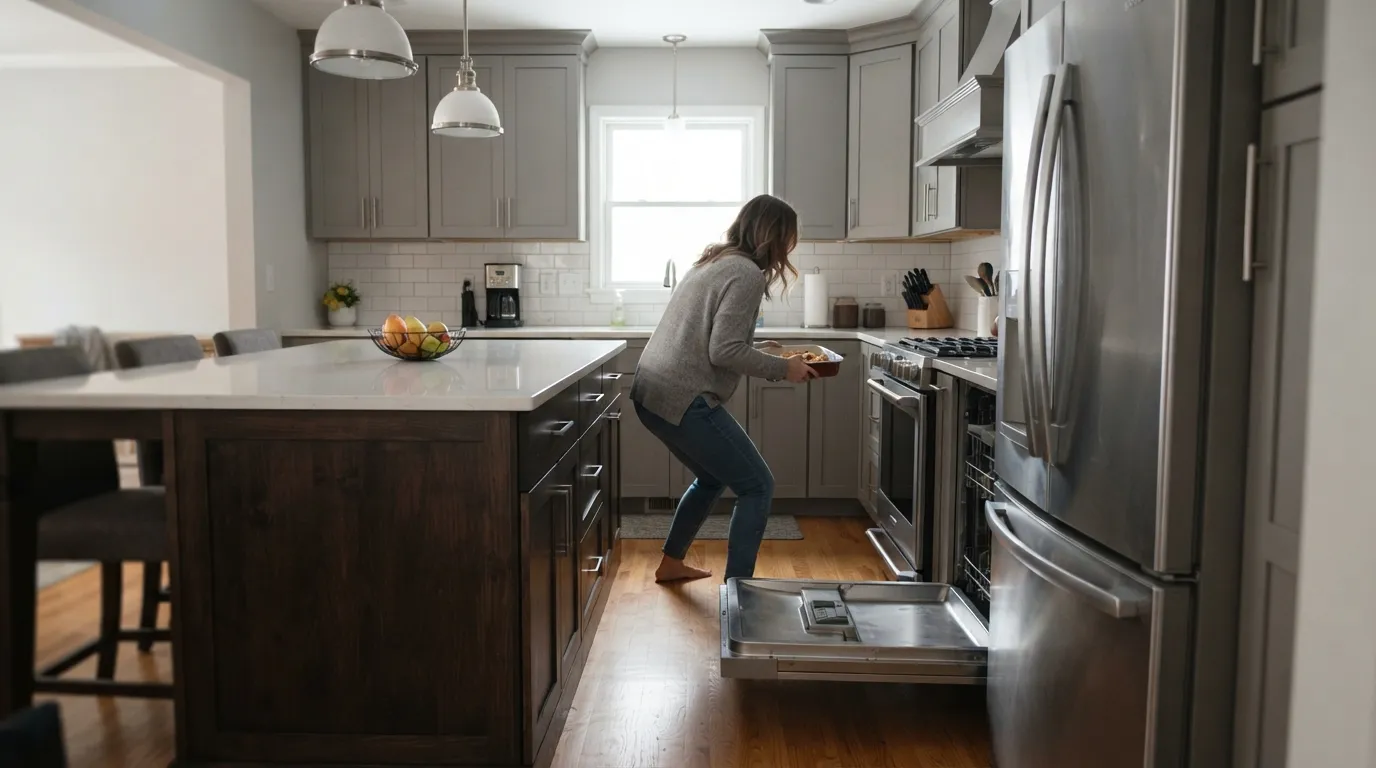
Kitchen designers commonly recommend roughly three and a half to four feet of clearance on every working side of an island. A big island photographs as luxury, so it’s easy to build one that ignores that number.2
When the island crowds the refrigerator and the dishwasher, two doors can’t open at once and two cooks can’t pass. Seating overhangs need knee room as well, so a bar-height counter pressed against a wall seats no one comfortably.
Measure the aisle on every working side, not just the side facing the camera. The photographer never has to cook dinner there.
Insider Tip: Open the dishwasher and the refrigerator at the same time, then stand in the aisle and try to walk past carrying a laundry basket. If you have to turn sideways, the island is too big for the room.
The cabinets around that island carry their own claim to luxury, and the finish is where savings were made.
#11 – Painted Cabinets Over Tired Boxes
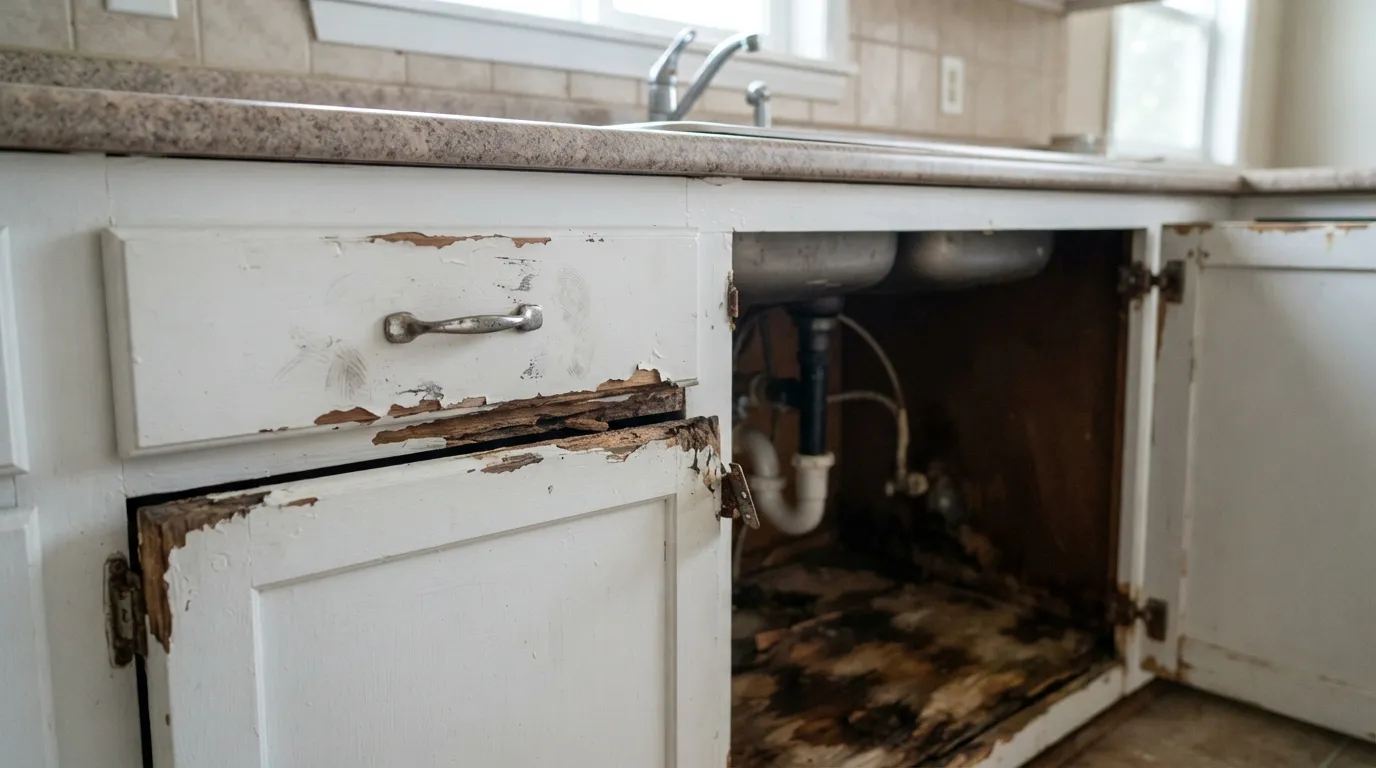
Fresh white paint can change how a cabinet looks, but it can’t change what the cabinet is made of. That matters because paint wears first where hands and water do the most work.
Pulls, door edges and the sink base are the usual failure points. A finish applied without careful cleaning, sanding and priming peels in those spots first, sometimes within the first year.
Painting sound cabinets is a sensible flip move, while painting failing ones simply sells a repair. Open the sink cabinet and look for swollen, crumbling board.
Swing every door while you’re there. Sagging hinges and uneven gaps mean the boxes have shifted, and paint hides that only for as long as the showing lasts.
At a Glance
- Wears first: pulls, door edges and the sink base.
- Red flags: swollen or crumbling board, sagging hinges and uneven gaps between doors.
- Good sign: sturdy boxes with a smooth, well-prepped finish that stays tight along the edges.
Under those cabinets sits another favorite shortcut, a floor that looks like oak and isn’t.
#10 – Wood-Look Vinyl Plank Over an Unknown Subfloor
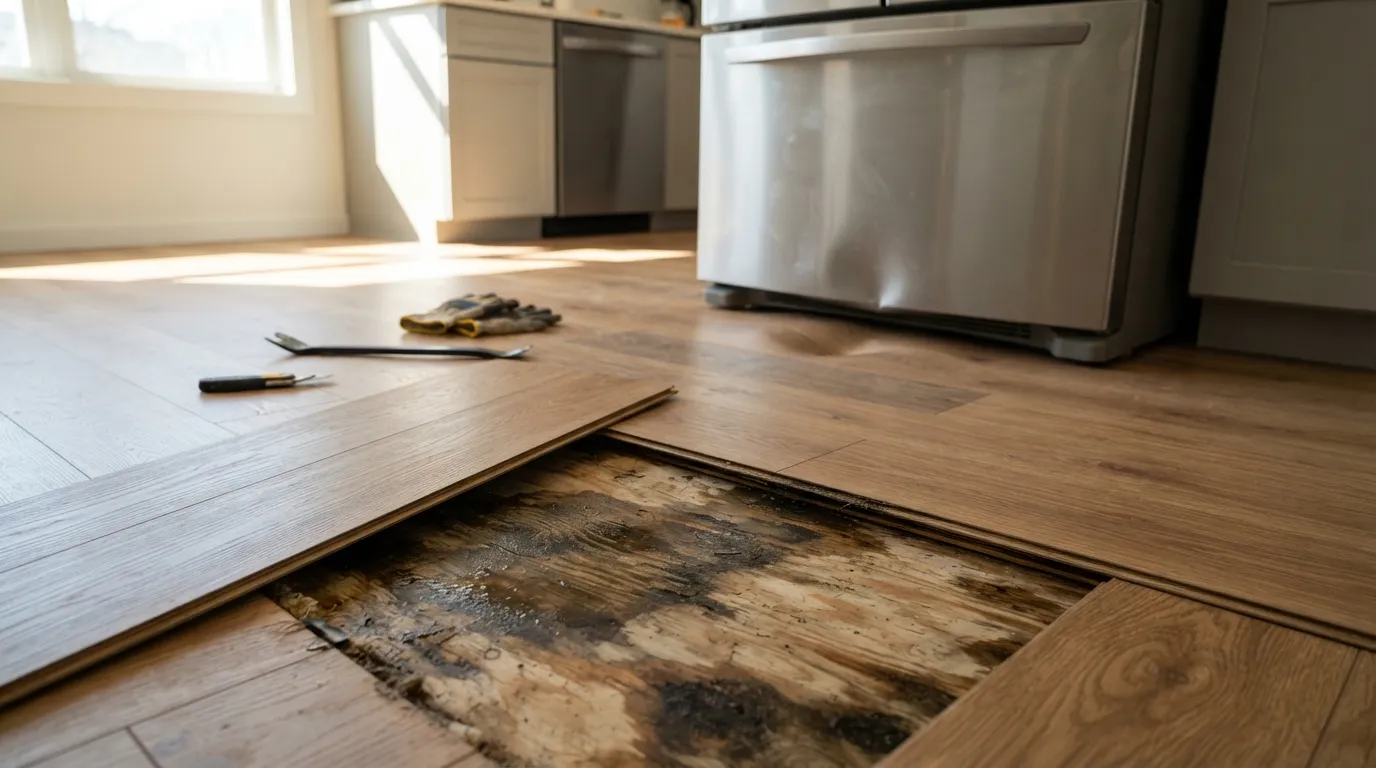
Wood-look vinyl plank is sold as waterproof, and the plank itself mostly is. The trouble starts when moisture gets trapped beneath it, where water can lead to mold or subfloor damage.
Vinyl can’t be refinished, so a damaged plank gets replaced rather than sanded. Fixing one plank may require removing a large section of the floor, which turns a cheap install into a bigger repair.
It also dents under concentrated weight, such as a refrigerator foot or a piano wheel. No vinyl is completely immune to UV damage, so sunny rooms fade it over time.
Cleaning has a catch too, because steam cleaning is generally discouraged since heat can soften the core and damage seams. Ask what sits under the vinyl, and keep steam mops off the planks.3
Did You Know: Once vinyl planks fade, replacing the affected sections is the only correction. Window shades and a UV-rated plank are the cheaper protection in a south-facing room.
The upgrade after this one doesn’t wear out at all. It logs in, and it may still be logged in to someone else.
#9 – Smart Gadgets Still Tied to the Seller

A smart thermostat, a video doorbell and a keypad lock add a few lines to a listing at very little cost. They also add a problem that has nothing to do with hardware.
Each device runs on an account and an app, and in a flip that account may belong to the contractor or the investor. Until the devices are removed and reset, you can’t change settings or door codes from your own phone.
Locks carry the sharper risk, since a keypad that still accepts the old codes isn’t doing a security job. A lock on a dead battery, or tied to a router the seller took along, can strand a device completely.
Ask for model numbers and manuals at the walkthrough, and get every device removed from the seller’s account and reset before closing.
Worth Knowing
- Every smart device usually ties back to an account, not just to the house.
- A keypad lock should be reset so the old codes stop working.
- Thermostats and doorbells that depend on the seller’s Wi-Fi may go offline after move-out.
- Manuals and model numbers make a reset far easier on move-in day.
The next item is the bathroom’s hero shot, and it looks calmer in a photo than it feels at 7 a.m.
#8 – A Freestanding Tub in a Small Bathroom
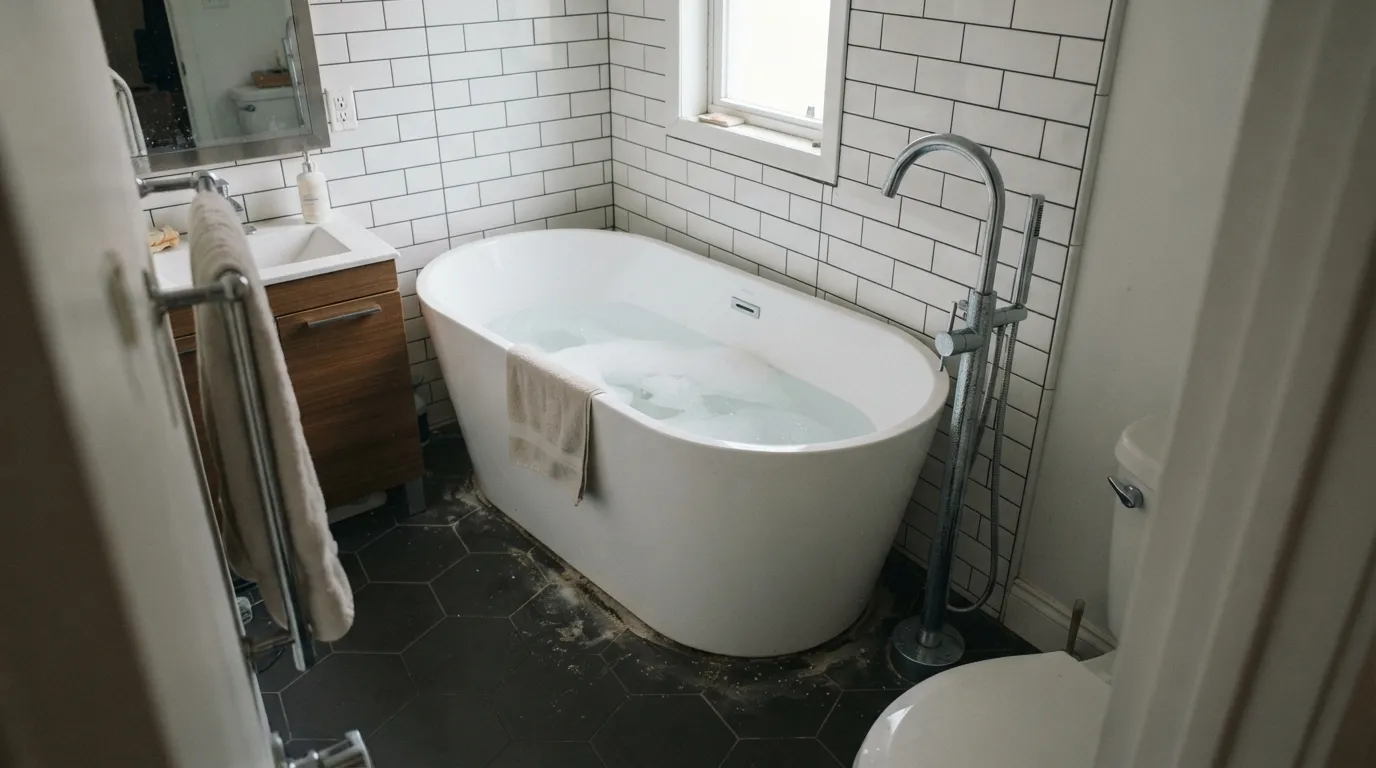
A freestanding soaking tub is the centerpiece of the flipped bathroom. The photo skips what it takes to live with one.
A deep tub takes a long time to fill, and a standard water heater may run short of hot water before it’s full. A floor-mounted filler also needs supply lines routed through the floor, which makes a slow leak harder to spot.
Cleaning is the other part the picture leaves out, since the gap around the base collects dust and soap residue. Ask what supports the floor under the tub and where the supply lines run.
The Science Behind This: Water weighs a little over eight pounds a gallon, so a tub holding fifty gallons carries more than 400 pounds of water before anyone steps in. A floor that wasn’t reinforced for that load is worth a direct question.
Spending on a showpiece bath is small money next to the biggest line item in most flips, and the payback numbers on that one are published.
#7 – A Gut-Renovated Kitchen That Won’t Pay Back
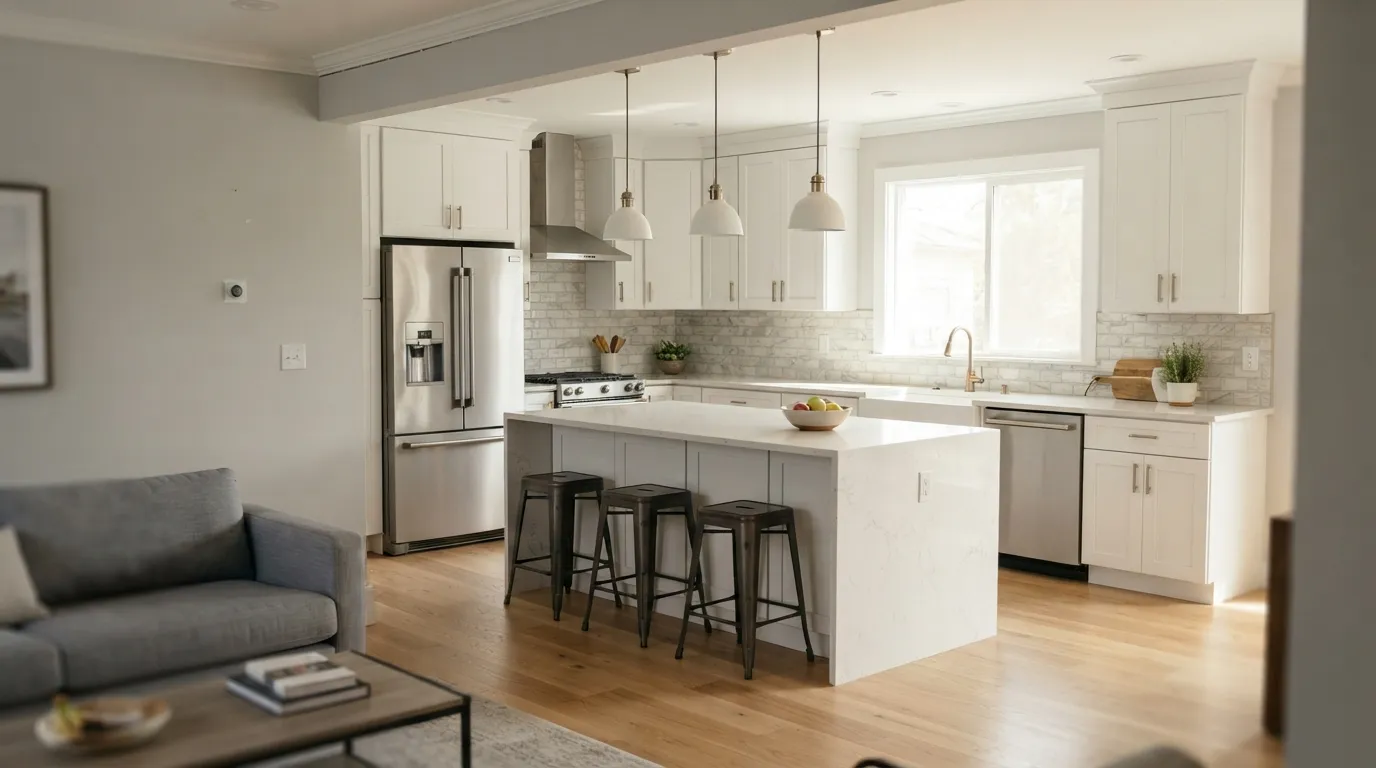
Nothing sells a flip in photographs like a custom kitchen, and nothing is harder to earn back. The published numbers explain why.
Major remodels recoup roughly 40 to 60 percent of their cost at resale, by one 2026 cost analysis, while garage door replacement and minor kitchen refreshes still recoup 80 percent or more.4 Small targeted projects recoup well and big projects rarely do, which is the pattern Remodeling magazine’s annual Cost vs. Value Report is built to track.
That’s why the painted cabinets at #11 can be the smarter spend, since refreshing sound boxes costs a fraction of replacing them. ATTOM’s flip profits are gross figures that leave out rehab, financing and carrying costs, so a bigger kitchen budget comes straight out of what’s left.5
Verdict: a custom-kitchen headline in a flip tells you where the budget went, not that the house is worth more.
By The Numbers: Flipping veterans put rehab and other costs at 20 to 33 percent of a property’s after-repair value. On a $500,000 resale, that range works out to $100,000 to $165,000.
A cheaper trick sits at the opposite end of the budget, and it involves a gallon of paint in the wrong place.
#6 – Fresh Paint in All the Wrong Places
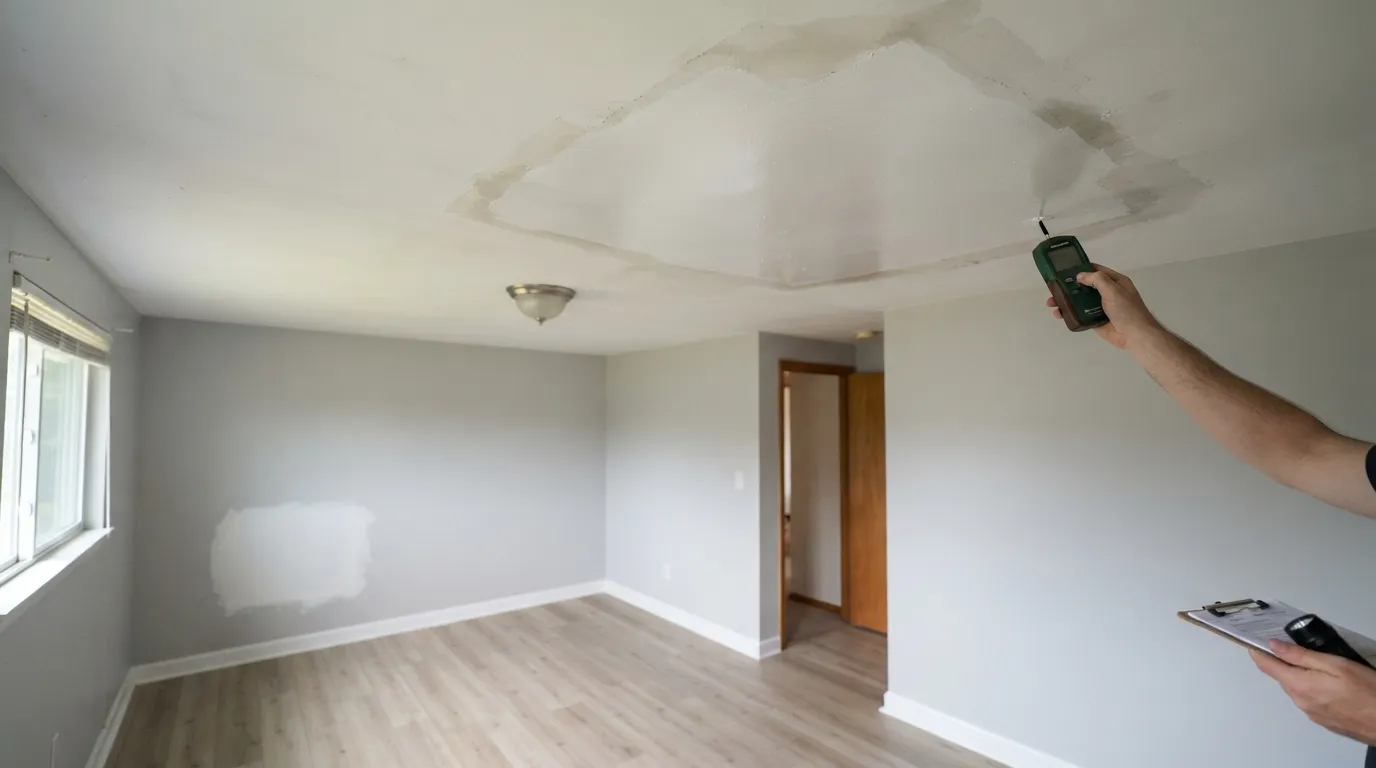
Inspectors notice an abundance of fresh paint and new flooring because those are the cheapest ways to make a house look finished. Paint isn’t a flaw, and a freshly painted house can be well built.
What matters is placement. Fresh paint can cover old water stains, and a patch in a suspicious spot can point to a prior leak.
Verdict: a whole house painted one color is less worrying than a single freshly painted ceiling in an otherwise untouched room. Look at ceilings under bathrooms and walls under windows for isolated fresh patches.
If the floors are new as well, remember the vinyl at #10. New flooring can sit over a damaged subfloor, and new paint can sit over the same kind of damage on a wall.
Insider Tip: Bring a flashlight and hold it flat against the wall or ceiling so the beam skims the surface. That raking light shows patches, texture changes and ripples that overhead lighting smooths away.
The same trick works outdoors, where new plantings and siding can bury a problem that the next rain will find.
#5 – Fresh Landscaping and New Siding Over Water Problems

Fresh mulch costs little and covers a lot. Updated landscaping can hide drainage problems, and soil that slopes toward the foundation sends water to the one place that can’t handle it.
New siding carries a similar risk. A fresh exterior can sit over missing house wrap or wood rot, so the visible wall looks perfect while the layer behind it has failed.6
Repairs of that kind can run large enough to reopen a price negotiation. They’re far cheaper to discover before closing than after.
Visit after a heavy rain and watch where the water goes. Check whether downspouts empty near the foundation and whether the ground falls away from the walls.
Why It Works: Rain tells you what a stager can’t, because water always follows the slope of the ground. Puddles against the foundation, or a downspout that dumps beside the wall, show a drainage problem within minutes.
Water gets in from above as well, and the next flip favorite is the one you can see from the driveway.
#4 – A New Roof That Is Really Two Roofs
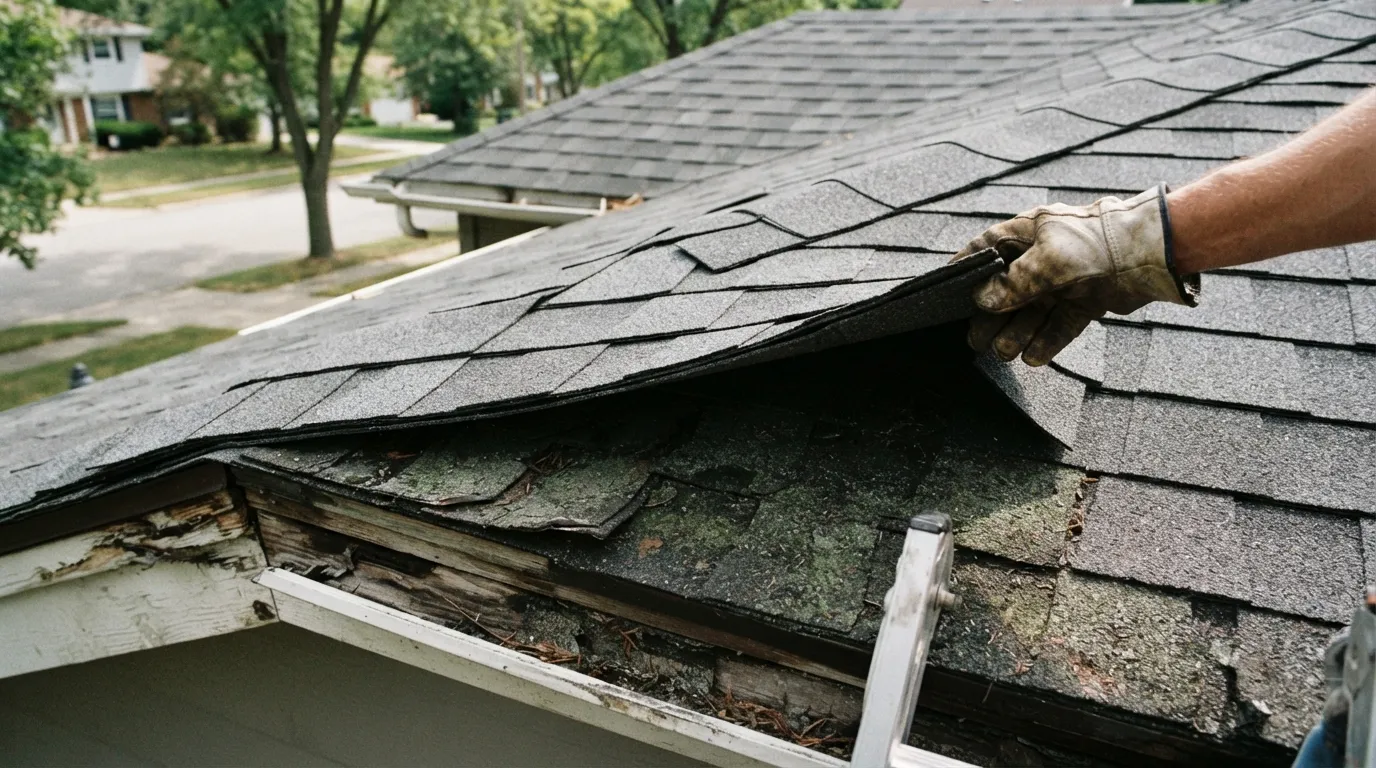
Layering new shingles over old ones saves a flipper the cost of tearing off the first layer. From the driveway, the result looks like a brand-new roof.
The trouble is what stays underneath. Layered shingles can hide rotted decking, and nobody can see decking from the street.7
Many building codes also limit how many layers a roof may carry, and every extra layer adds weight.7 Ask for the roofing invoice and the permit, and ask whether the old roof was torn off.
Go into the attic and look at the underside of the roof deck. Dark stains, damp insulation or daylight along the edges say more than the shingles do.
Fast Facts
- Extra roof layers add weight, and many codes cap how many are allowed.
- Decking problems hide under shingles and can’t be judged from the street.
- Paperwork to request: the roofing invoice, the permit and confirmation of a tear-off.
- Attic clues: dark stains, damp insulation and daylight along the edges.
A roof tells on itself in the first hard rain. The structure below it can stay silent for years while a door slowly stops latching.
#3 – Foundation Cracks Patched for the Photos
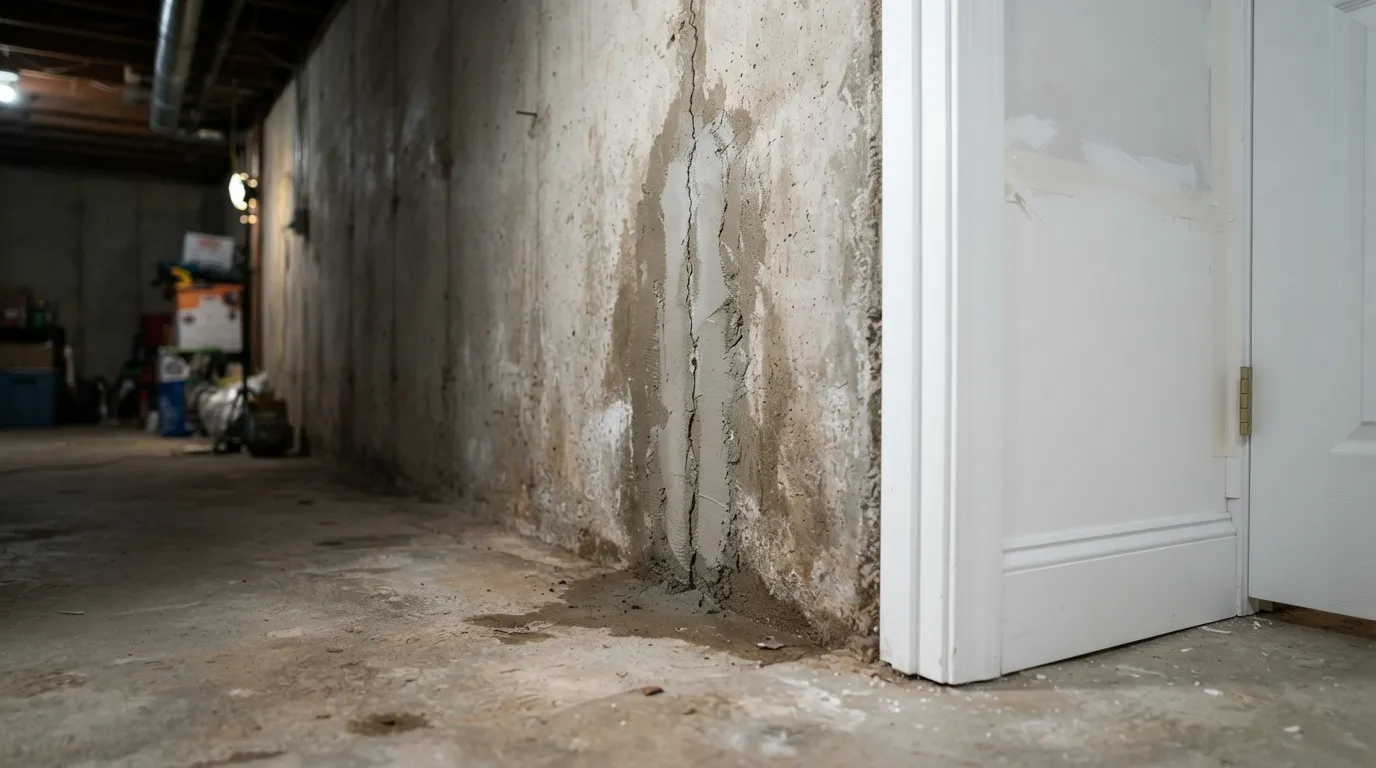
A patched crack is harder to read than one left alone. Inspectors describe hydraulic cement smeared over active cracks, freshly painted foundation walls and new drywall patches near door frames.8
Patches like these can hide settlement, and settlement doesn’t stop because the surface looks tidy. A hairline crack in an old basement isn’t always an emergency, but a fresh patch removes your only way to tell whether it’s growing.
The house itself may give a clue. Doors that won’t latch and windows that stick in an otherwise fully renovated house point in the same direction.
Get a structural opinion before you sign over any fresh patch. A licensed inspector or engineer can tell you what a coat of paint can’t.
Repairs this size should leave a paper trail, and the speed of the flip is often the first clue that they didn’t.
#2 – A Flip Finished Faster Than Its Permits

Flips took a median of 165 days to complete in the first quarter of 2026, according to ATTOM. That’s a national figure, but it gives you a yardstick for any house you’re touring.
One Florida agent’s checklist treats permits pulled and closed within 60 to 90 days on a full gut renovation as a warning sign. A rushed schedule leaves less time for inspections, and inspections are where hidden work gets caught.
The useful part is that permits are verifiable. Call the city or county permit office before you close.
Ask the seller for a written list of the work performed and the name of the contractor as well. A flip with no work list, no contractor named and no permits pulled sits among the five biggest red flags.6
Try This: Ask for permit numbers on the electrical and plumbing work in particular, since new fixtures installed without permits are a recognized flip red flag. A seller who can’t provide permit records has answered a question before you asked it.
Permits matter most for work behind the walls, where the costliest flip shortcut is built to look like an upgrade.
#1 – New Fixtures Wired to Old Systems
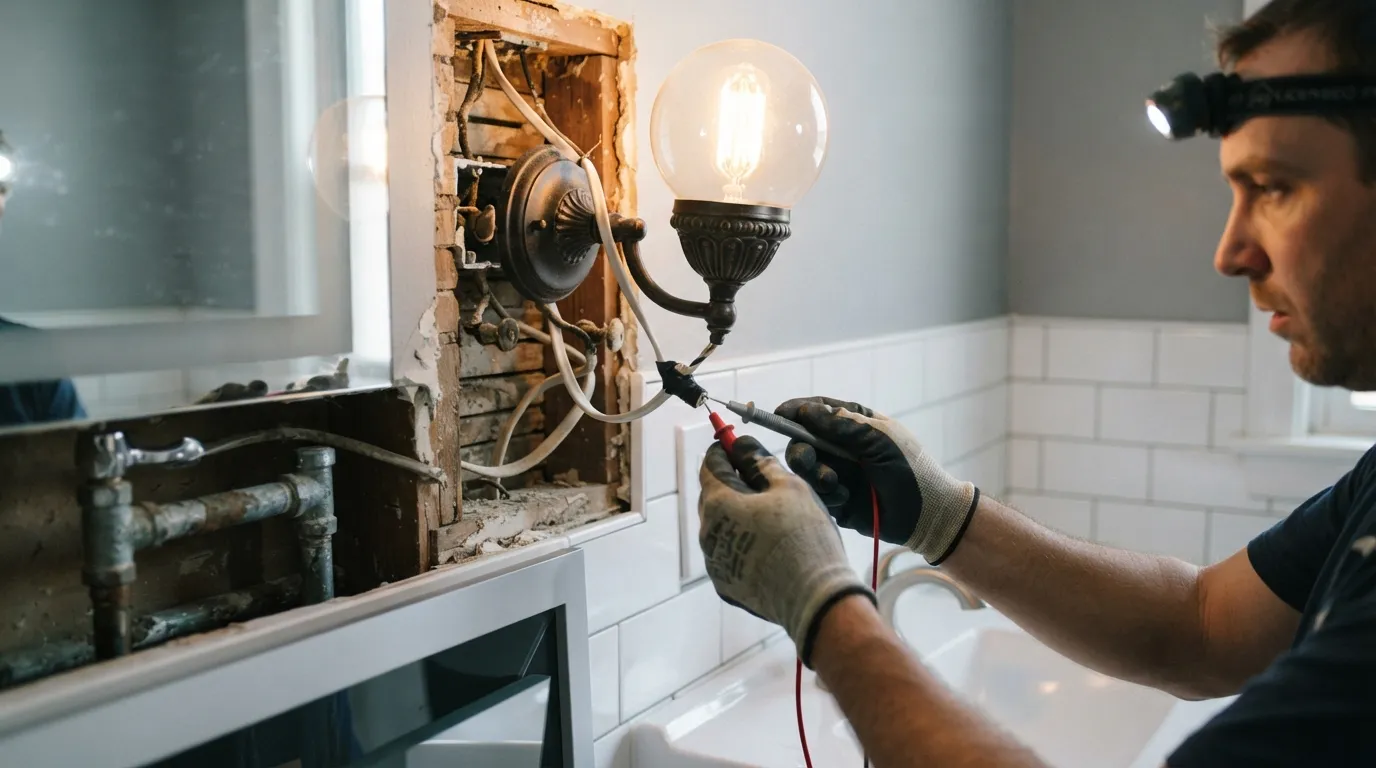
A flip can have new light fixtures, a new vanity and a decades-old system behind every one of them. It photographs perfectly, because nothing in the photo is the part that fails.
Inspection checklists for flips list new fixtures connected to outdated plumbing and cosmetic updates completed while major systems remain old. On the electrical side, unpermitted splices into old knob-and-tube wiring and missing GFCI protection are signs that licensed work was skipped.
Then there’s the sewer line, buried where no listing photo will ever go. Inspectors run a camera from the cleanout to the street, checking for corrosion, root intrusion and sags in the pipe.
A sewer scope, termite inspection and radon test cover the hidden problems that a cosmetic renovation is least likely to fix.8 Cosmetic improvements can shift expenses forward rather than eliminate them.
In a flip the seller never lived with the home’s problems, so the bill for old systems moves to you. Before closing, order a sewer scope and a licensed inspection of the wiring, plumbing and panel.
Editor’s Note: Some flipped houses are updated with quality materials and professional workmanship. A well-done flip will welcome these questions, and one that resists them has told you what you needed to know.
Buy the House Behind the Photos

Treat a listing photo as an invitation to ask questions, not as evidence of work done. Finishes are the easiest part of a house to buy and the least informative.
Spend your own money where the camera can’t reach: an inspection, a sewer scope, a call to the permit office. Each costs far less than the repairs it’s meant to prevent.
Which finish in a house you’ve owned or toured looked best at the showing and turned out to be the first thing to fail?
- ATTOM Q2 2026 Flipping Coverage: https://www.thetitlereport.com/articles/attom-report-showing-continuous-drop-in-home-flipp-98263.aspx
- NKBA Island Clearance Guidelines: https://www.homary.com/tips-and-ideas/article/how-far-should-a-kitchen-island-be-from-cabinets-604.html
- Steam Mops and Vinyl Plank: https://www.angi.com/articles/can-you-steam-clean-vinyl-floors.htm
- Home Renovation ROI Summary: https://homestery.com/reports/2026-home-improvement-cost-report
- ATTOM Gross Profit Methodology: https://wrenews.com/home-flipping-returns-q2-2026-attom-profit-margin/
- Flipped House Red Flags: https://allypropertyinspections.com/buying-a-flipped-house-red-flags/
- Roofing Over Existing Shingles: https://www.discountedroofingllc.com/blog/new-shingles-over-old-shingles/
- Flip Inspection Red Flags: https://nashvillehomeinspection.com/blog/home-inspection/flip-home-inspection/