

Here is the odd math of a remodel. The National Association of Home Builders’ study of home components expects a dishwasher to last 9 years, a gas range 15 and kitchen cabinets up to 50, yet plain wood built-ins are sometimes the first thing a remodel sends to the dumpster.
A built-in bookcase in a 1940s house has no motor and no heating element to wear out, so the demolition money is often aimed at the wrong part of the house. The countdown starts beside the fireplace, and one entry near the end comes with a warning about the paint on these walls.
#12 – Bookcases Standing Beside the Living Room Fireplace
The Minimal Traditional style stayed dominant until the ranch house arrived in the early 1950s, and it kept simplified versions of the built-in cabinets popular in the Craftsman era.1 Bookcases, china cabinets and breakfast nooks were all common features of houses from that period.
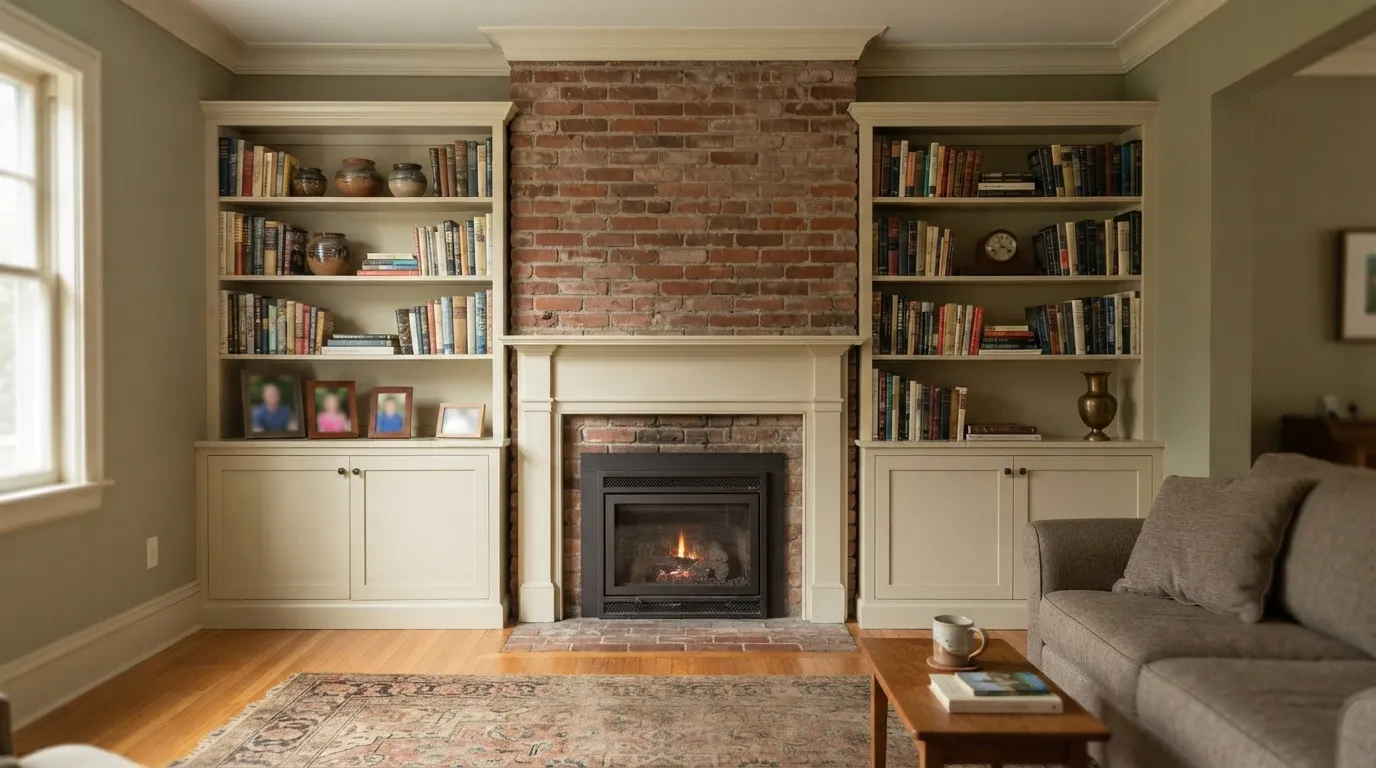
If your living room has a fireplace, the shelving beside it sits against masonry. That same study puts chimneys, fireplaces and brick walls at over 100 years.
Shelves fastened into the framing next to a chimney cannot wobble or tip the way a freestanding unit can. The house shares the load, and that is a real advantage in a room where the books have been added to for decades.
Did You Know: The style went by other names, including FHA house and Victory cottage, because the Federal Housing Administration used it as a prototype for a minimum house wage earners could afford.
In at least one large postwar development, the bookcase came with the sale price.
#11 – The Bookcase Included in a Levittown Price
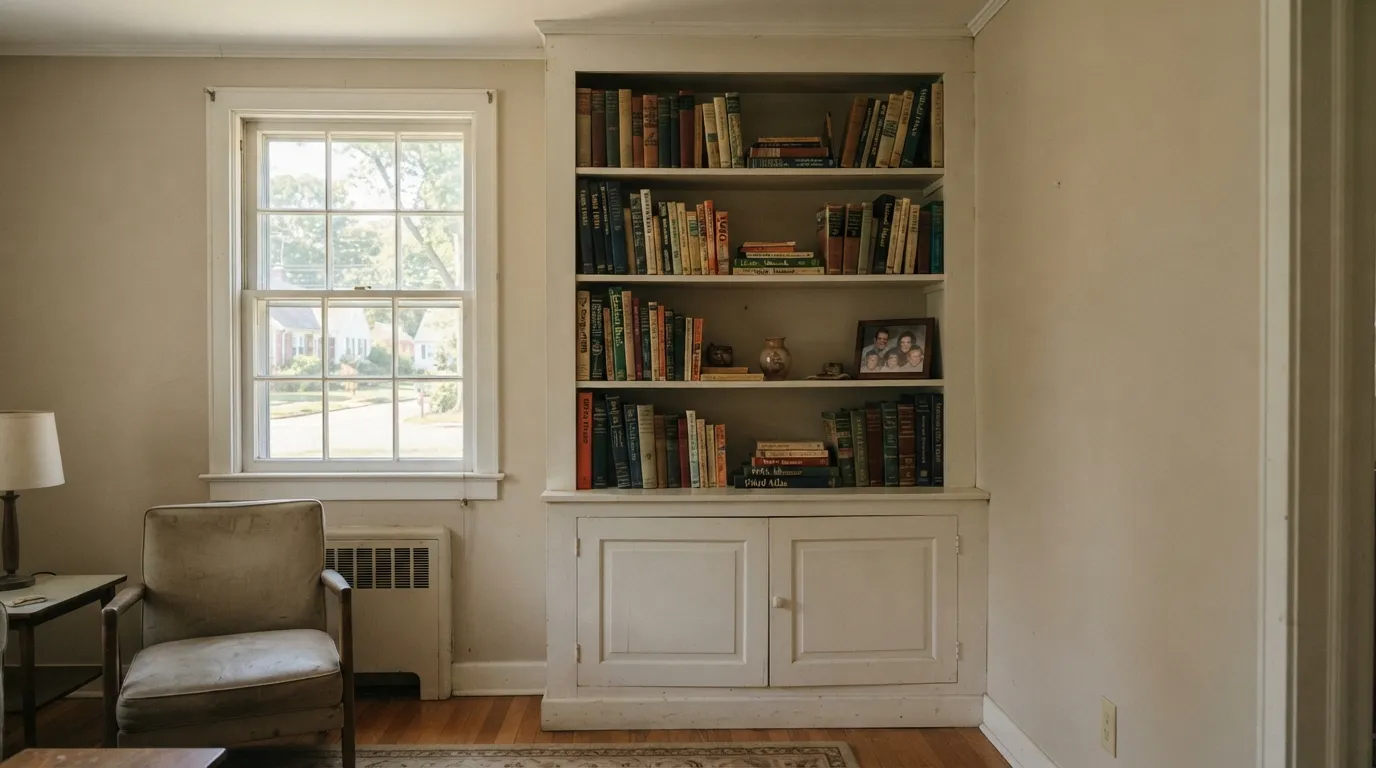
Beginning in the mid-1940s, Levitt & Sons popularized simplified, mass-produced Cape Cod designs as an affordable answer to the housing demand of returning veterans.2
One description of the Levittown house lists a built-in bookcase among the things included in the price, alongside a washing machine, a range and a refrigerator.3 So a veteran’s family bought a package whose parts had very different futures.
The washer, range and refrigerator were appliances, and the builders’ study puts appliances at 9 to 15 years. The bookcase was wood fastened to the walls of the house, with nothing in it to replace.
Quick Compare
- Washer, range, refrigerator: 9 to 15 years in the builders’ study
- Kitchen cabinets: up to 50 years
- Built-in bookcase: wood fastened to the wall, with no motor or element to replace
Space mattered as much as money in these houses. The plan catalogs of the 1940s promoted small homes of 700 to 1,200 square feet, often with two or three bedrooms and one bath, and shelving built into a wall takes no floor area that a freestanding bookcase would.
#10 – A Breakfast Nook That Outlasts the Kitchen Around It
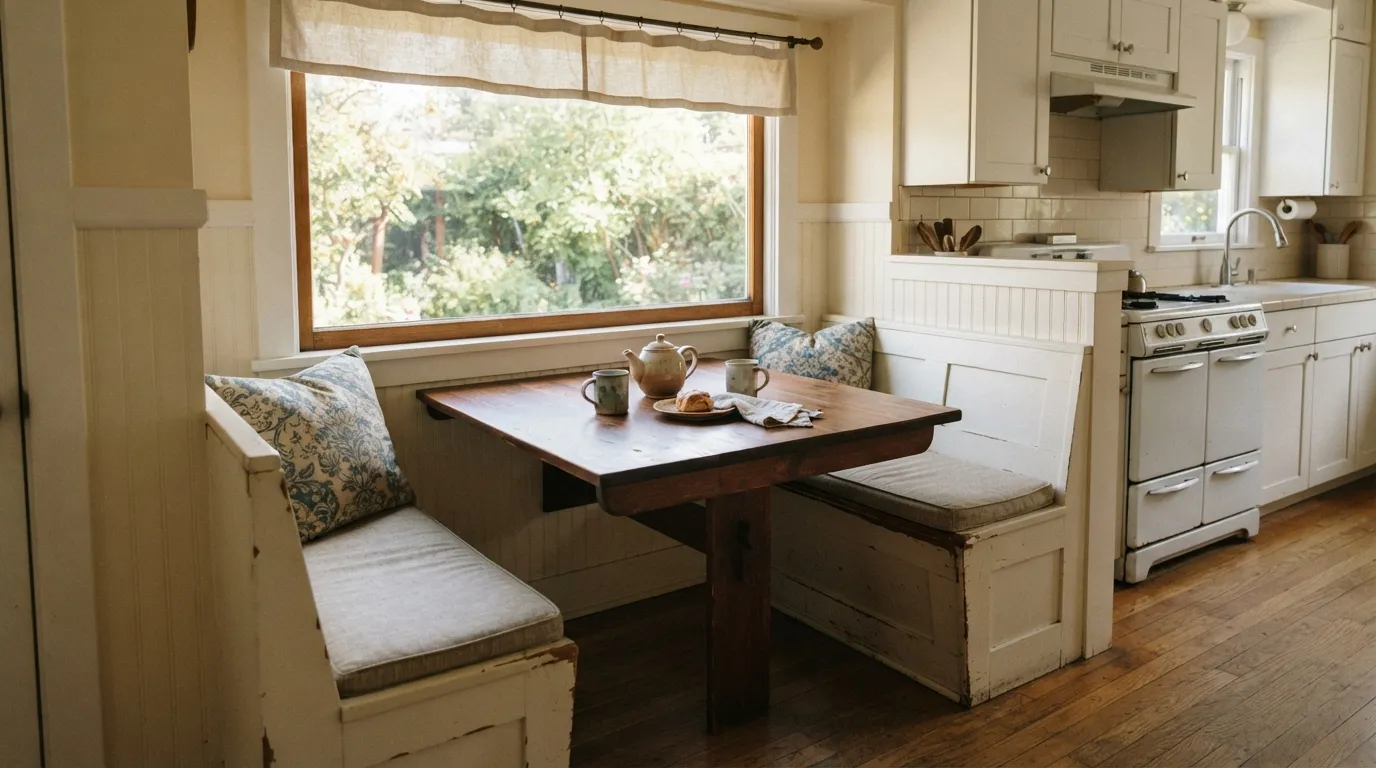
Breakfast nooks are listed with bookcases and china cabinets among the built-ins that houses of the 1940s commonly had. A nook sits against the kitchen, so it ends up compared with everything in that room.
The comparison is not close. The builders’ tables give dishwashers 9 years and gas cooktops 15, and kitchen faucets about 15.4
My view is that a nook bench in sound condition is the wrong thing to remove for an island or a wider walkway. A plain wood bench and table will outlast the appliances you would buy with the money from that remodel, so the better spend is the appliances.
By The Numbers: The 50-year figure for kitchen cabinets is based on first-owner use. The same study notes that products are often replaced because of changing preferences long before their practical life ends.
A bench by the kitchen is one place where wood meets moisture, and a seat built below a window is another.
#9 – A Window Seat Tucked Under the Dormer
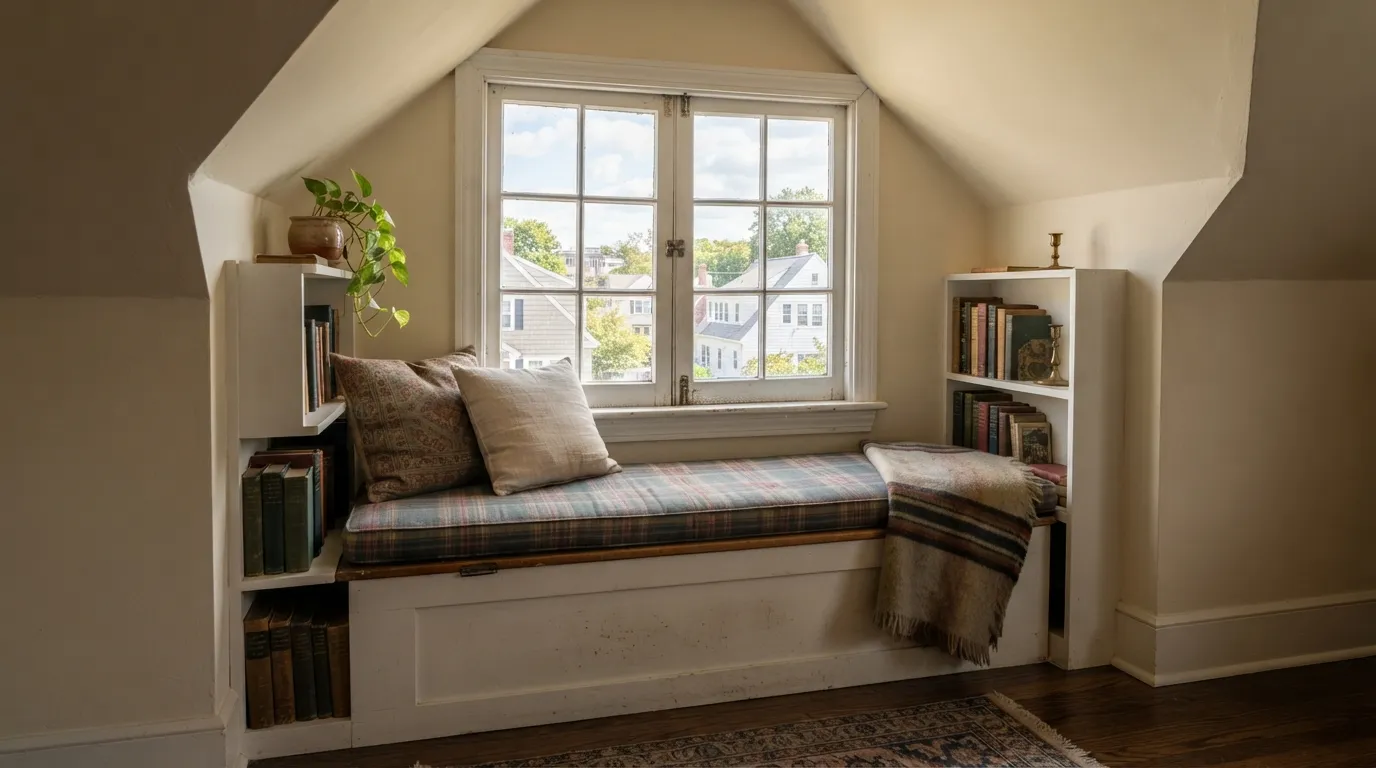
Descriptions of bungalow interiors group window seats with built-in cabinetry and bookcases, and Minimal Traditional houses descend in part from bungalows and cottages.1 2 That is the line a 1940s window seat follows.
Cape Cods of the period had small dormers, and the attic under the roof was often finished for expansion. A seat beneath a low window can fit there without taking floor space from a small room.
The weak point is the glass above it. In winter, warm indoor air meets a cold window and leaves moisture on the sill, which over many years can soak the trim and the seat top.
If the seat has a hinged lid, lift it and look at the underside of the top and the back panel for dark stains or soft spots. Dry, hard wood there tells you the seat has stayed out of the weather.
The Science Behind This: Condensation forms when moist indoor air touches a surface colder than the air can stay moist against. Single-pane glass is usually the coldest surface in a room, so the sill and the seat below it get wet first.
A seat in the front room gets daily use, while the built-in buffet in the dining room mostly stands closed.
#8 – The Built-In Buffet in the Dining Room
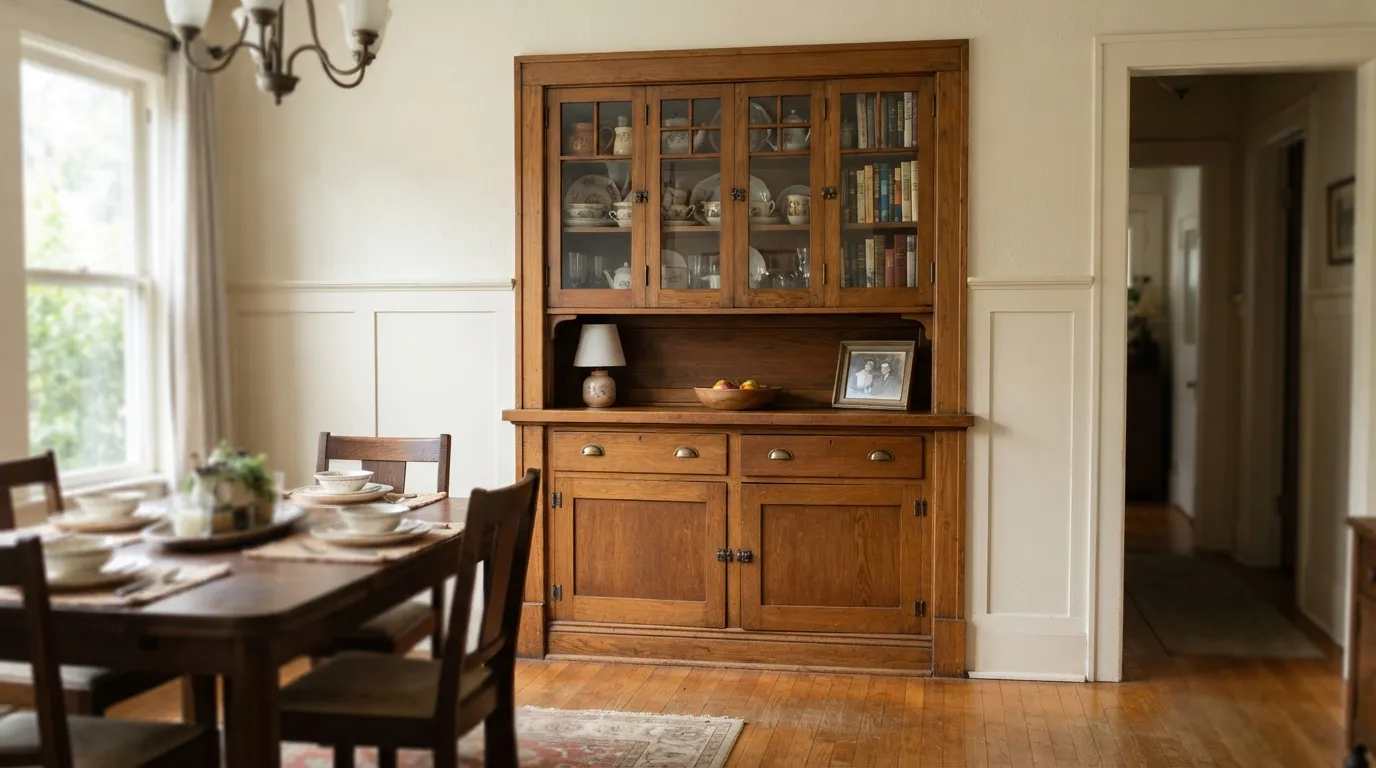
Built-in buffets were among the touches that had to be crafted on site in houses of this era. A piece made in place is fitted to the room, with its trim meeting the wall and floor where it stands.
That fit is also why you cannot lift one out and take it with you. If you are staying, it is furniture you will never have to buy again.
The wear on a buffet is light. Its doors open a few times a week, where a kitchen cabinet door opens many times a day, so the hinges and latches have an easier life than the ones you would pay for in a remodel.
When you look one over, check these:
- Doors hang square and close flush
- Drawers slide without scraping
- The back panel is dry and tight
#7 – Closet Shelves and the Hall Linen Cabinet
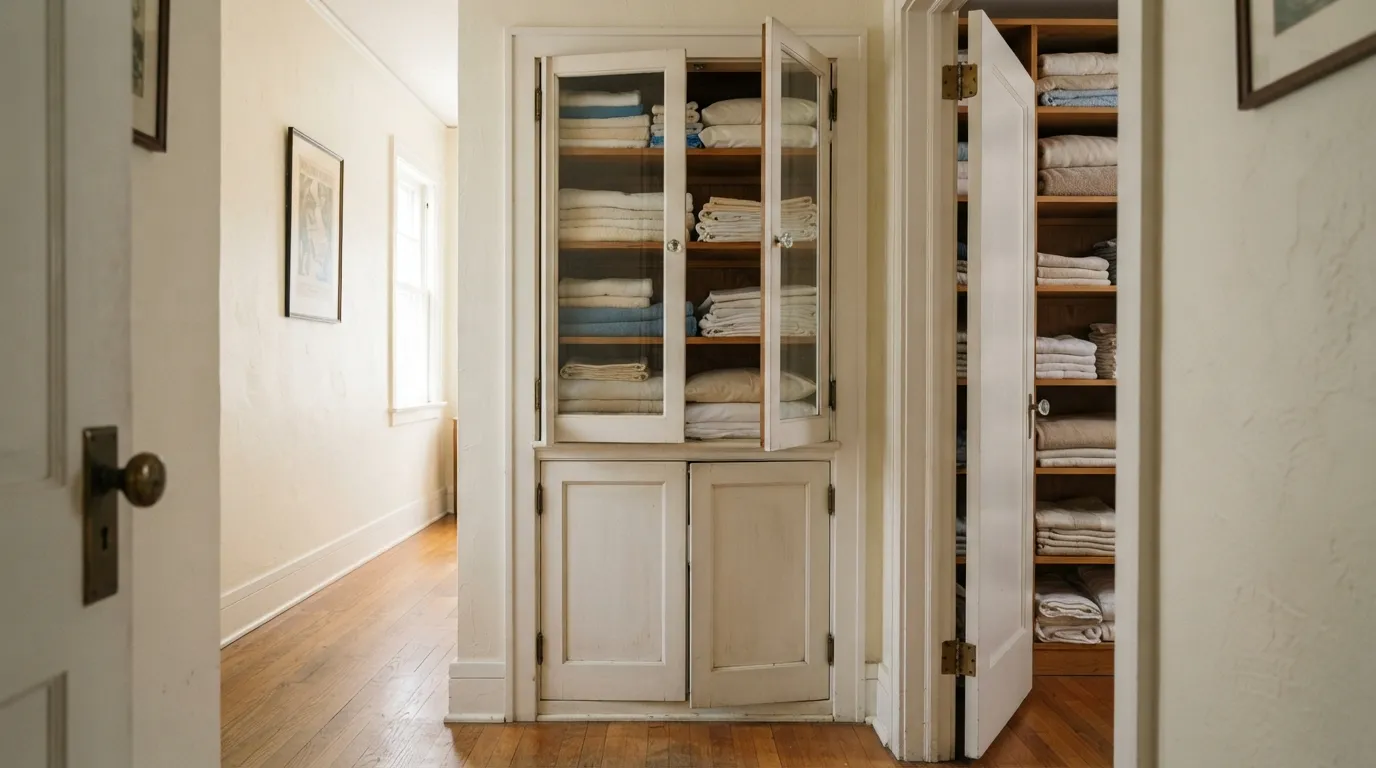
Not every built-in is on display. The study says closet shelves should last a lifetime, and it gives bath cabinets a lifetime rating as well.4 5
Garage and laundry cabinets are rated at 100 years or more, while medicine cabinets get 20 or more.5 The kitchen’s 50 years is the shortest of the long ratings, which fits a room full of heat, grease and steam.
Fast Facts
- Closet shelves: a lifetime
- Bath cabinets: a lifetime
- Garage and laundry cabinets: 100 years or more
- Kitchen cabinets: up to 50 years
- Medicine cabinets: 20 years or more
A shelf is a board on cleats, and a kitchen cabinet has hinges, slides and a finish that meet steam every day. That makes the linen cabinet in your hall a poor candidate for replacement.
If a door sticks or a shelf droops, the repair is a screwdriver and some wood glue. A new unit would cost more and would not fit the old opening.
Why It Works: Many of the people interviewed for the study stressed that maintenance greatly affects how long a component lasts. The ratings describe cared-for pieces, so a tightened hinge counts.
Shelving stays sound as long as its job stays light, and the places that took heavier or newer equipment show a different rating.
#6 – The Built-In Desk and the Ten-Year Media Unit
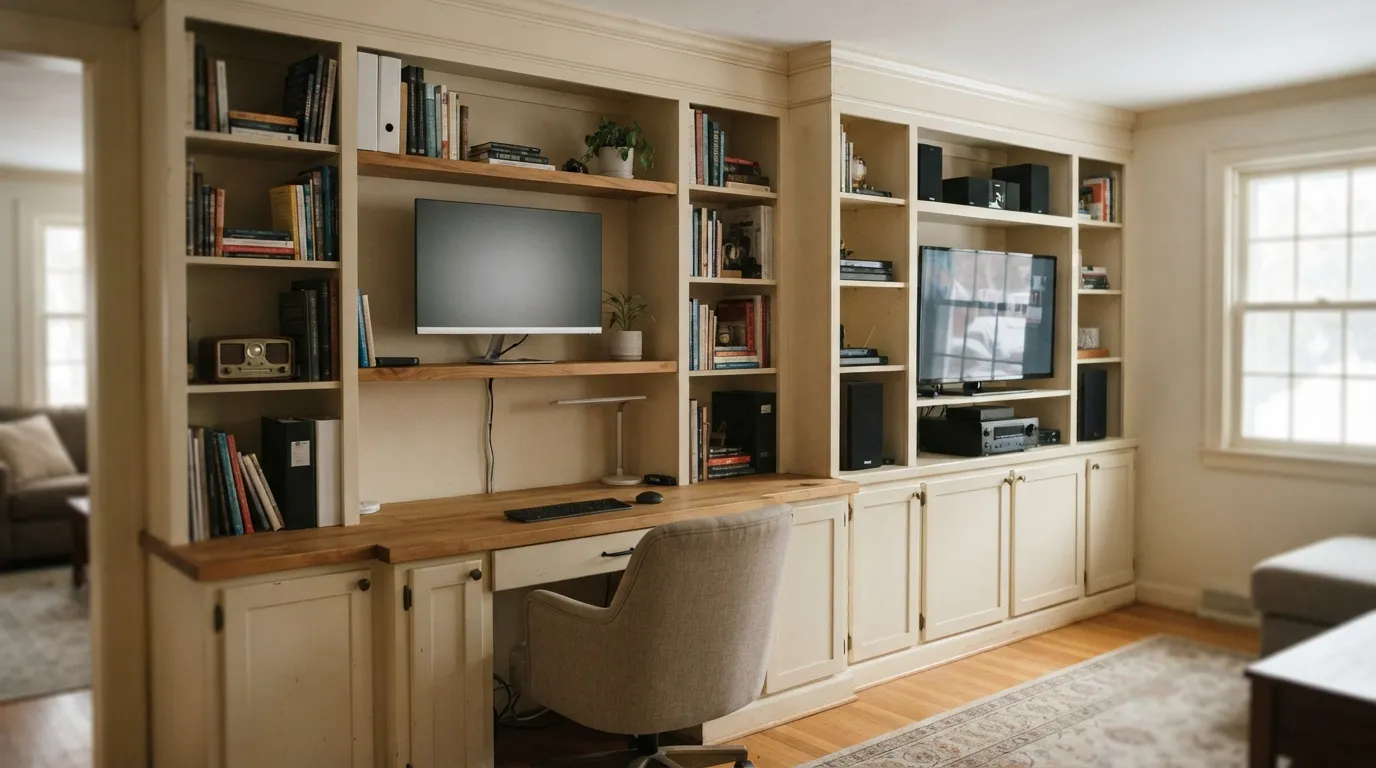
The builders’ tables give entertainment centers and home office desk units 10 years each, a fifth of the figure for kitchen cabinets. These are the categories where technology changes fastest.
Some components stay functional but become obsolete as styles change and newer products arrive. A television or computer from twenty years ago does not fit the space made for it today.
A built-in wall of shelves or a desk with a flat top has no fixed shape to outgrow. I would not buy a new media unit for a house that already has decent built-ins; I would adjust what is there and run the cords behind it.
- Move shelf supports to new heights
- Use the gap behind a shelf for cords
- Put a flat screen on a shelf or a wall bracket
Try This: Before you buy anything, measure each opening for height, width and depth, and write the numbers on a card. Most of what you want to put in a built-in will either fit or clearly not.
Anything built to carry weight shows it in time, and the first sign is usually a shelf with a curve in it.
#5 – Shelves That Bow Under Heavy Books
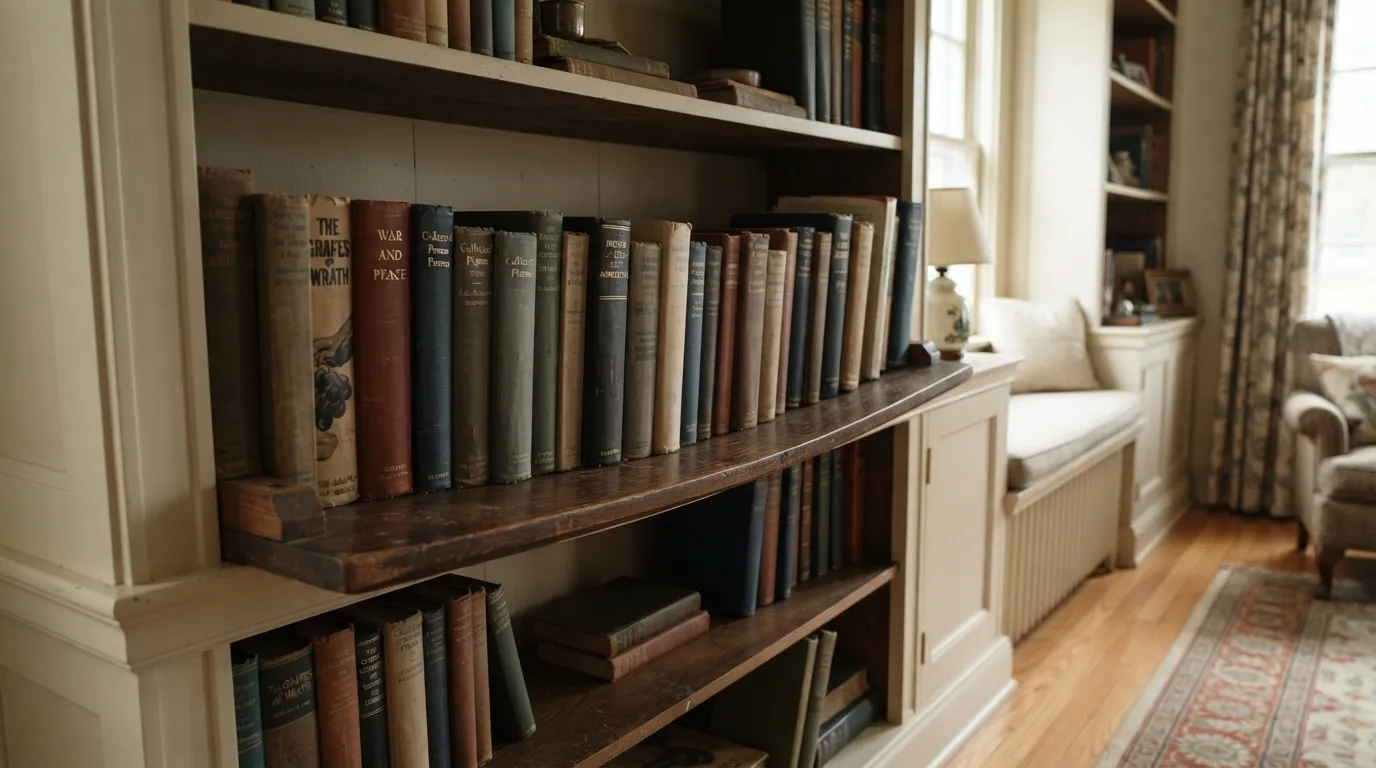
A long shelf full of books bends slowly, and by the time you notice the curve it has often been there for years. That is a case for support, not for replacement.
Preservation standards for historic buildings call for stabilizing deteriorated wood before further work and for repairing historic wood features rather than replacing them. For a bowed shelf, that translates into a plan you can follow at home.
- Add a thin cleat under the middle of the span
- Turn the board over so the curve faces up
- Move the heaviest books to the ends
A cleat leaves the shelf and the finish alone and takes minutes. A replacement board will always look new beside old wood, and matching the color is a project of its own.
Fixing a bowed shelf rarely calls for paint, though many owners reach for a can anyway, and original natural wood is where that choice does the most harm.
#4 – Natural Wood Bookcases Painted Over in White
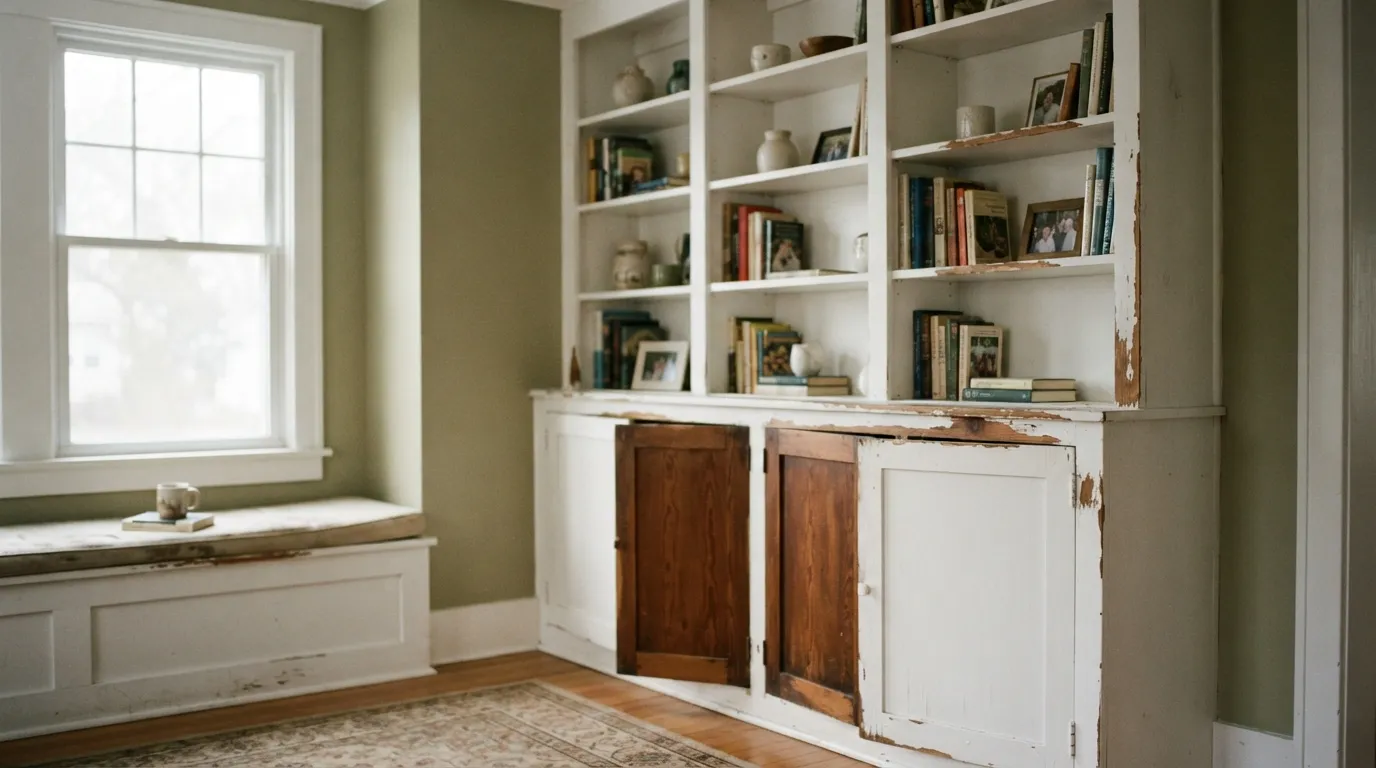
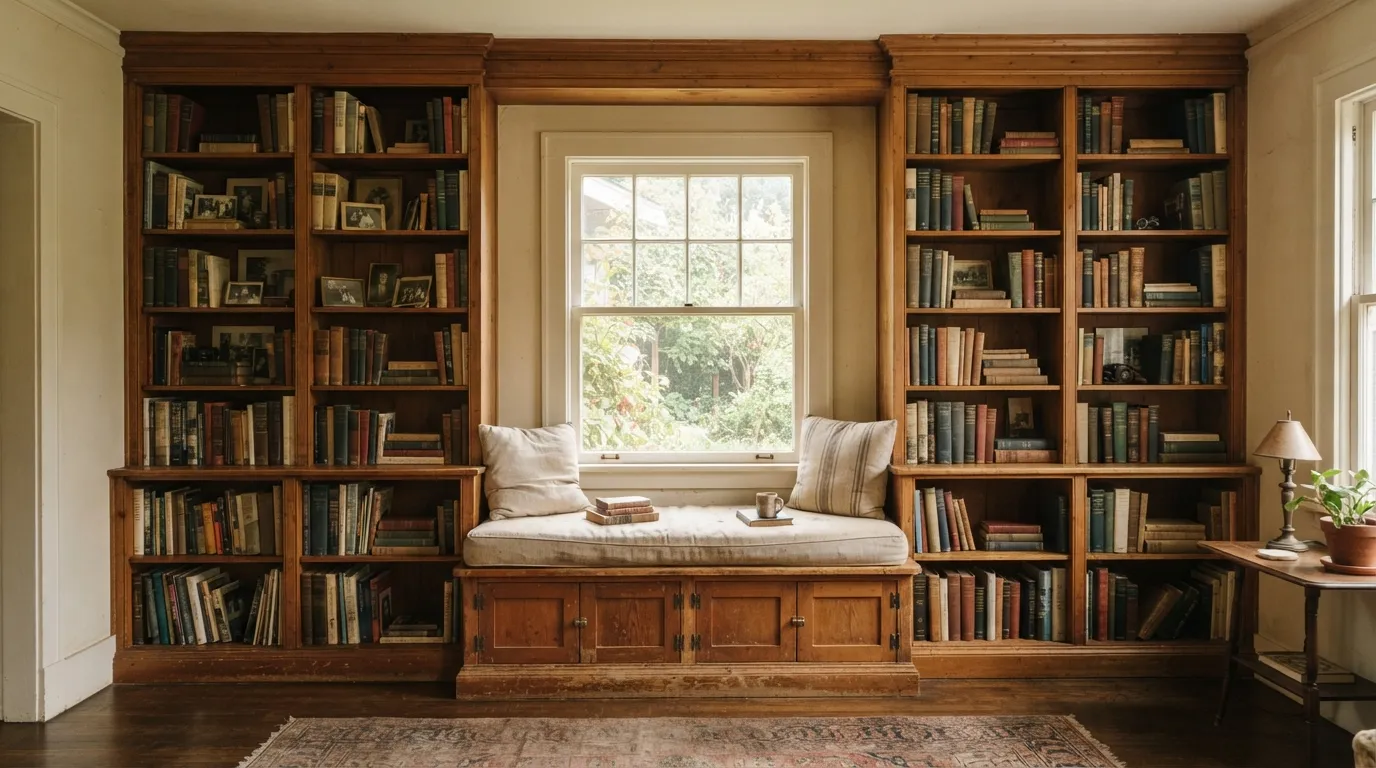
The National Park Service cautions against painting interior woodwork that was originally unpainted, and it cites built-in bookcases as an example.6
Paint covers the grain, and new layers hide damage without fixing any of it. Getting it off again means stripping, which adds time at the front of the job.
Painting a natural-wood bookcase white is overrated as a quick update. The room looks lighter for a season, and the grain is hidden for good unless you pay for stripping; if the wood is sound, clean it and refresh the finish first.
If your bookcase was painted by the builder, the picture changes, since the paint is original. A hidden spot, such as the inside of a lower door, will show what was there first.
Insider Tip: Clean one hidden spot before you decide anything. Dirt and old wax can make a good finish look worse than it is, and the test costs a damp cloth.
#3 – A Stain That Will Not Go Lighter
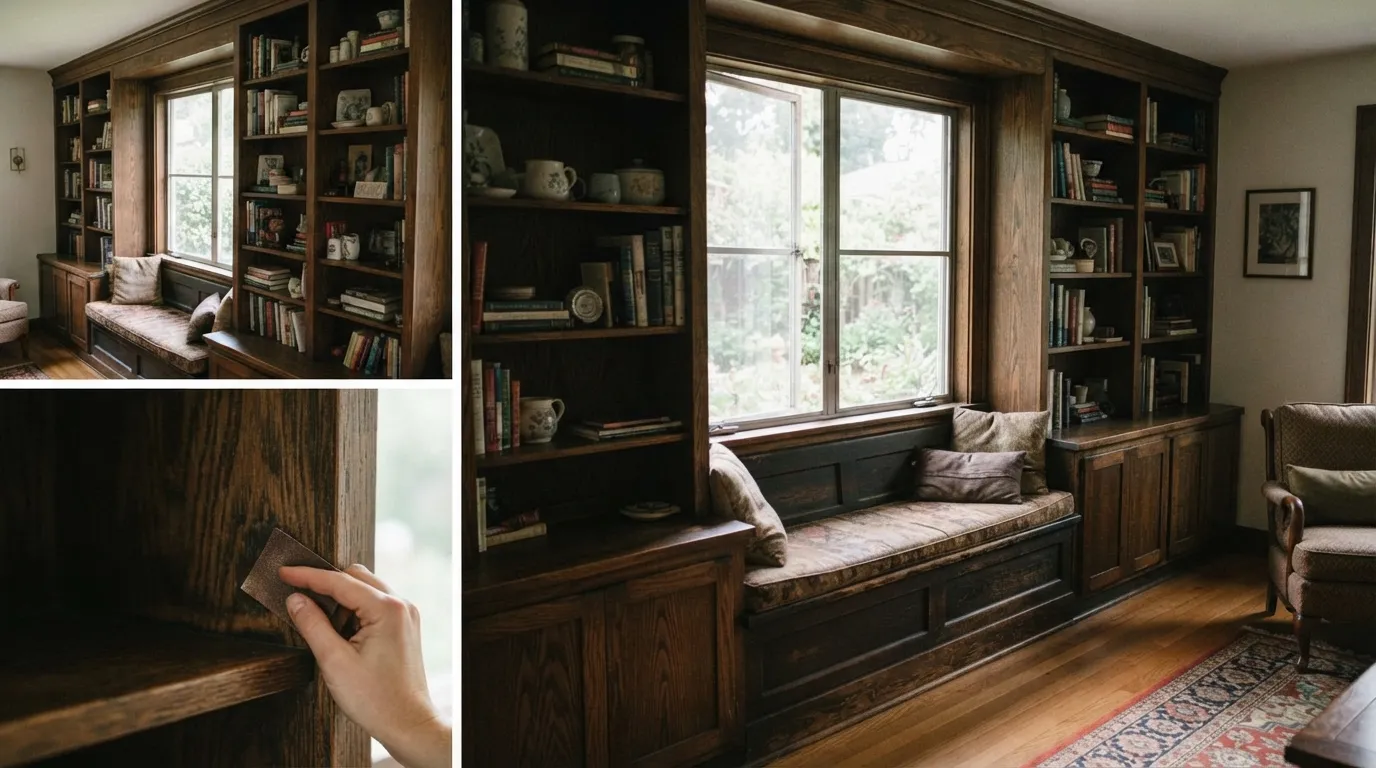
If the wood is sound and you want to keep it, painting creates a solid color, while refinishing with stain keeps the grain visible. That is the best reason to refinish.
Going darker or to a similar tone is realistic, while going dramatically lighter is hard, because old stain stays lodged in the grain and corners even after heavy sanding.
That limits what a refinish can do for a bookcase in a dated shade. It also limits how far you should push a sander, which thins a surface you cannot replace.
When a repair puts new wood beside old, the goal is a match, not a full strip. A sound finish next to a patch can stay as it is.
Ask these before you commit:
- Are the boxes square and the face frames sound?
- Is the finish failing, or only dull?
- Can you live with a darker tone?
All of this assumes you are free to sand, and in a house built in the 1940s that depends on what is in the paint.
#2 – Lead in the Paint on 1940s Woodwork
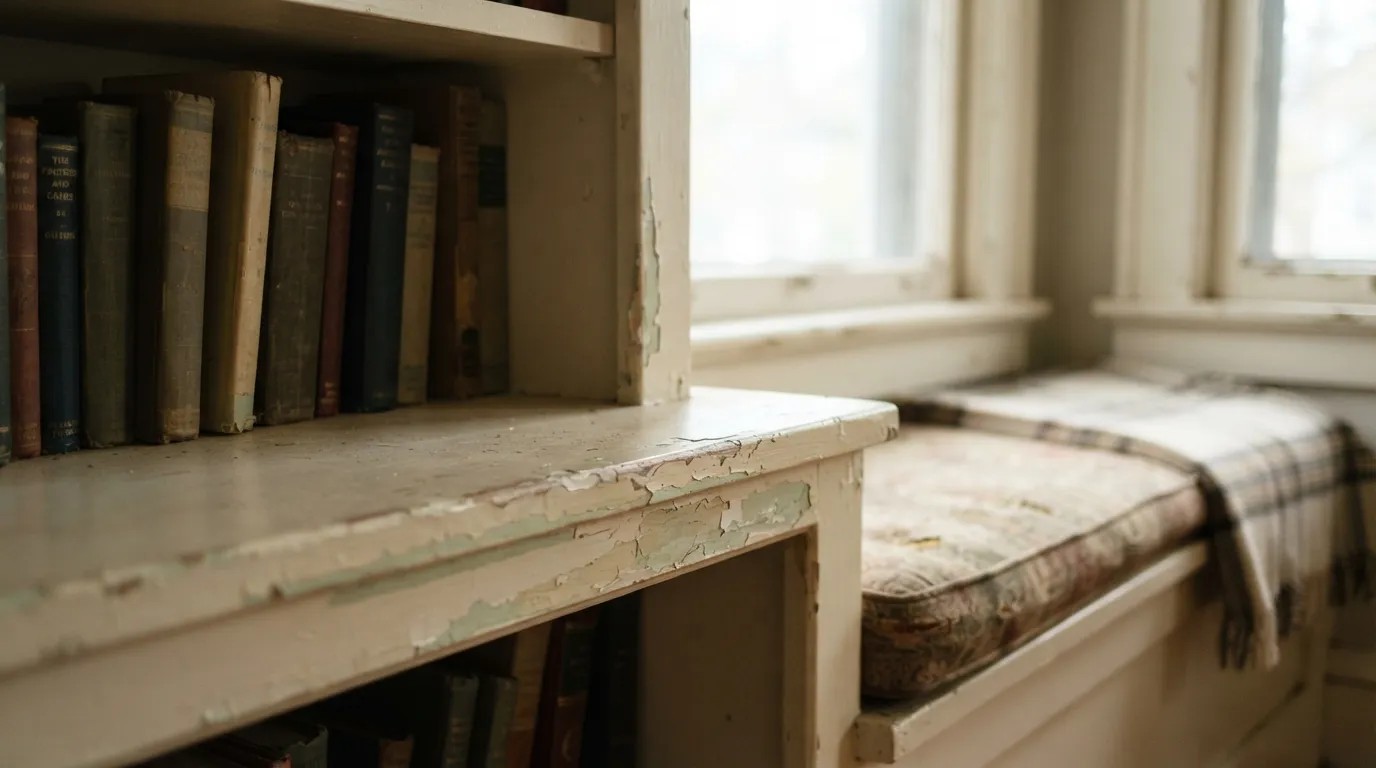
The EPA says about half of homes built before 1978 have lead-based paint, and the share is two out of three for homes built between 1940 and 1960.7 That is the age group this article is about.
Sanding, scraping and stripping are the jobs that stir it up. Disturbing surfaces with lead-based paint, or removing it improperly, can increase the danger to your family, and lead exposure can harm young children and babies even before they are born.
Worth Knowing
- The federal renovation rule applies to anyone paid to disturb paint in pre-1978 housing
- It covers carpentry and painting preparation, not only demolition
- The EPA’s family pamphlet tells owners not to try to remove lead-based paint themselves
- Texas health officials advise assuming lead is present if you have not tested
My advice is to test before you touch anything and to hire a certified lead-safe firm if the paint has to be disturbed. The Texas health department advises testing painted surfaces in houses of this age, and assuming lead is present if you do not.
By The Numbers: The EPA’s brochure puts the share at nine in ten for homes built before 1940. A 1940s house sits between that oldest stock and the half-and-half average for all pre-1978 homes.
A negative test removes the lead question without answering the older one, which is whether the finish needs any work at all.
#1 – The Original Finish You Decide Not to Touch
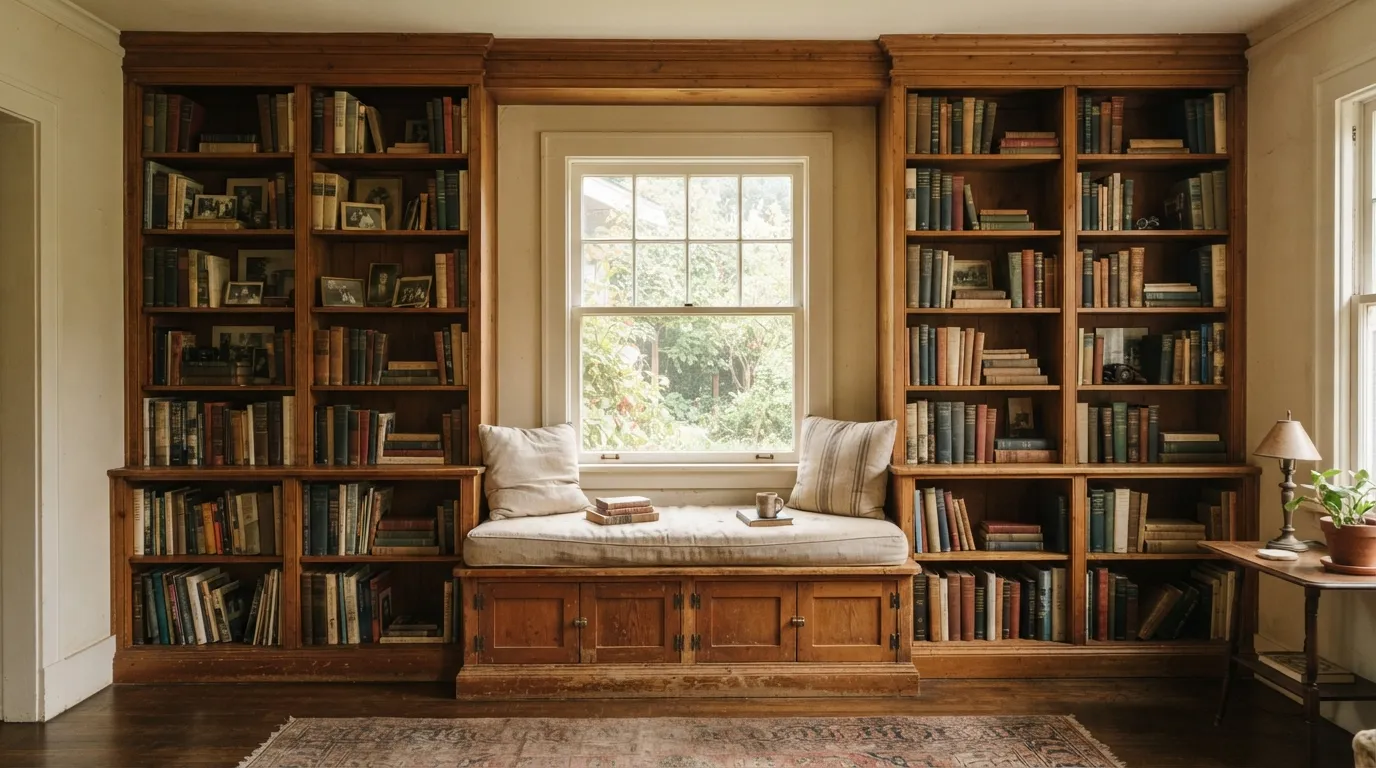
Leaving a sound finish alone costs nothing. It skips the expense of refinishing and the lead question that comes with sanding.
The builders’ study says products are often replaced because of changing consumer preferences long before their practical life ends. A kitchen redone for style at 20 years has used less than half of the 50 years its cabinets were rated for.
Taste can retire a component long before wear does, and that applies to a bookcase as much as to a kitchen. The difference is that a built-in only goes if someone decides to remove it, strip it or paint it.
What these pieces ask in return is small. Dust, a mild cleaner, tightened hinges, a cleat under a bowed shelf and a look under the window seat each winter are enough for most of them.
Editor’s Note: A worn finish that is still sound keeps the tool marks, old repairs and original color of the piece. Once it is sanded away, none of that can be put back.
Before You Sign for the Remodel
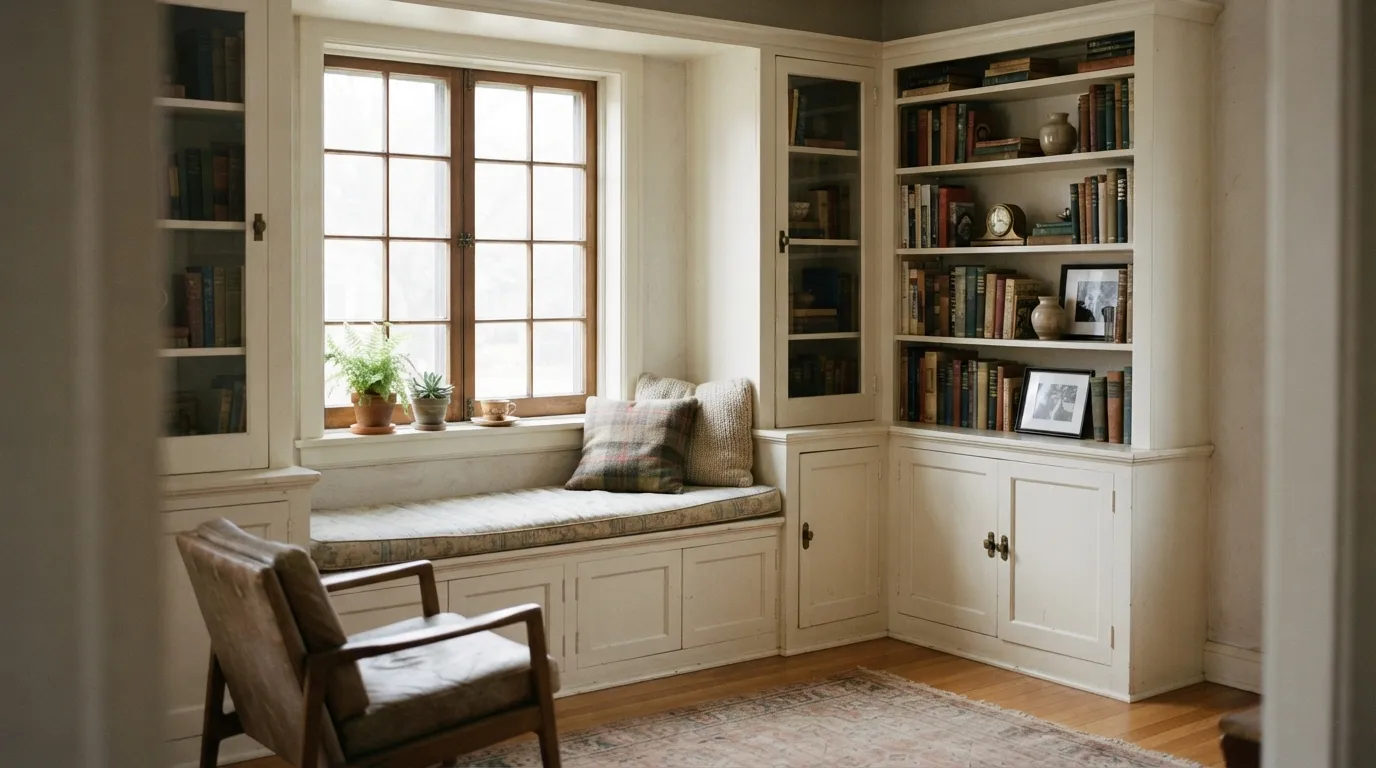
The useful shift is to price a built-in by what it would cost to rebuild, not by what it costs to keep. Rebuilt on site from wood, a buffet or a window seat would be a carpenter’s job, and the keeping is a duster and a screwdriver.
That makes the first question in any remodel what is worth sparing, not what to buy. Appliances will be replaced on schedule, and the wood in the walls is usually still there afterwards.
Which built-in in your house has gone the longest without being replaced, and what has it asked of you in all that time?
- Minimal Traditional Overview: https://en.wikipedia.org/wiki/Minimal_Traditional
- Corcoran Architecture Field Guide: https://inhabit.corcoran.com/home-architecture-a-field-guide/
- Postwar Housing Styles: http://starcraftcustombuilders.com/Architectural.Styles.Postwar.htm
- NAHB Life Expectancy Study: https://hcmuddox.com/wp-content/uploads/2022/10/nahb20study20of20life20expectancy20of20home20components.pdf
- NAHB Component Life Expectancy: https://www.pennsylvaniaappraisers.com/study-life-expectancy-home-components/
- NPS ITS 7 Unpainted Woodwork: https://www.nps.gov/orgs/1739/upload/its-07-painting-unpainted-woodwork.pdf
- EPA Lead Safe Renovation: https://19january2025snapshot.epa.gov/system/files/documents/2024-09/lead_safe_rrp_2023_508.pdf