

ATTOM counted 77,991 single-family homes and condominiums flipped in the second quarter of 2026, which was 6.2 percent of all U.S. home sales. If you buy one that was rushed, the leaks, the bad wiring and the missing permits become your repair bill the day you close.
Fresh paint and new floors are not the enemy, since a careful flipper installs both. The first clue below is small and sits at eye level, while the costliest one waits at #1.
#15 – Paint on the Outlet Covers and Switch Plates
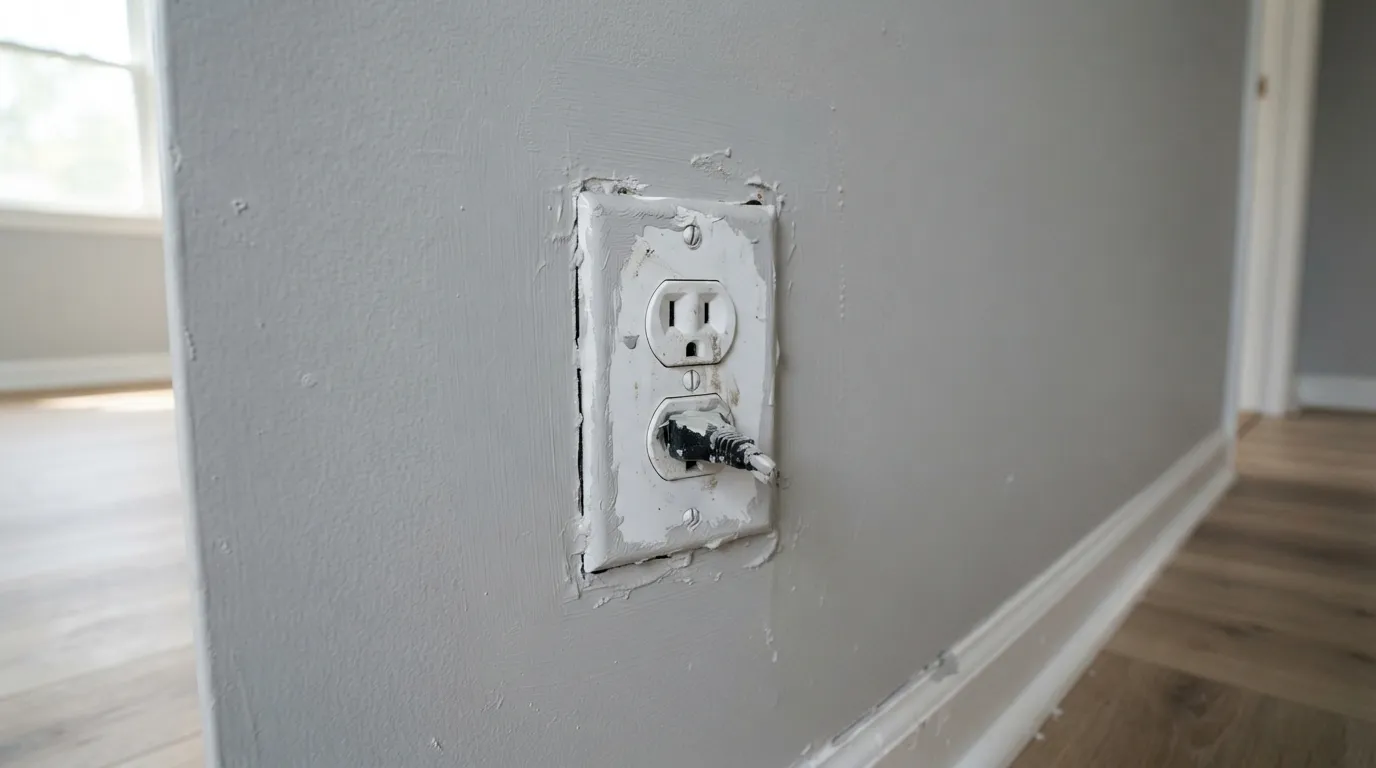
Careful painters take cover plates off before they roll a wall, because it costs a minute and leaves a clean edge. Paint on outlet covers and switch plates is a classic sign of a hurried job, since it means the painter worked around them.
Walk each room and look for a few small things:
- Outlet covers that do not sit flush with the wall
- Uneven grout lines and poorly mitered trim
- Inconsistent caulk beads and visible brush strokes
A single smeared plate proves little, because any painter has a bad afternoon. The same flaw in room after room tells you how the whole job was supervised.
Try This: Hold your phone flashlight flat against a wall and sweep it along the surface. Light at a low angle shows patches, roller marks and uneven texture that ordinary room lighting hides.
A hurried detail in one room may only be one painter’s bad day, so the better question is whether the quality holds from room to room.
#14 – One Room High-End, the Next Rushed
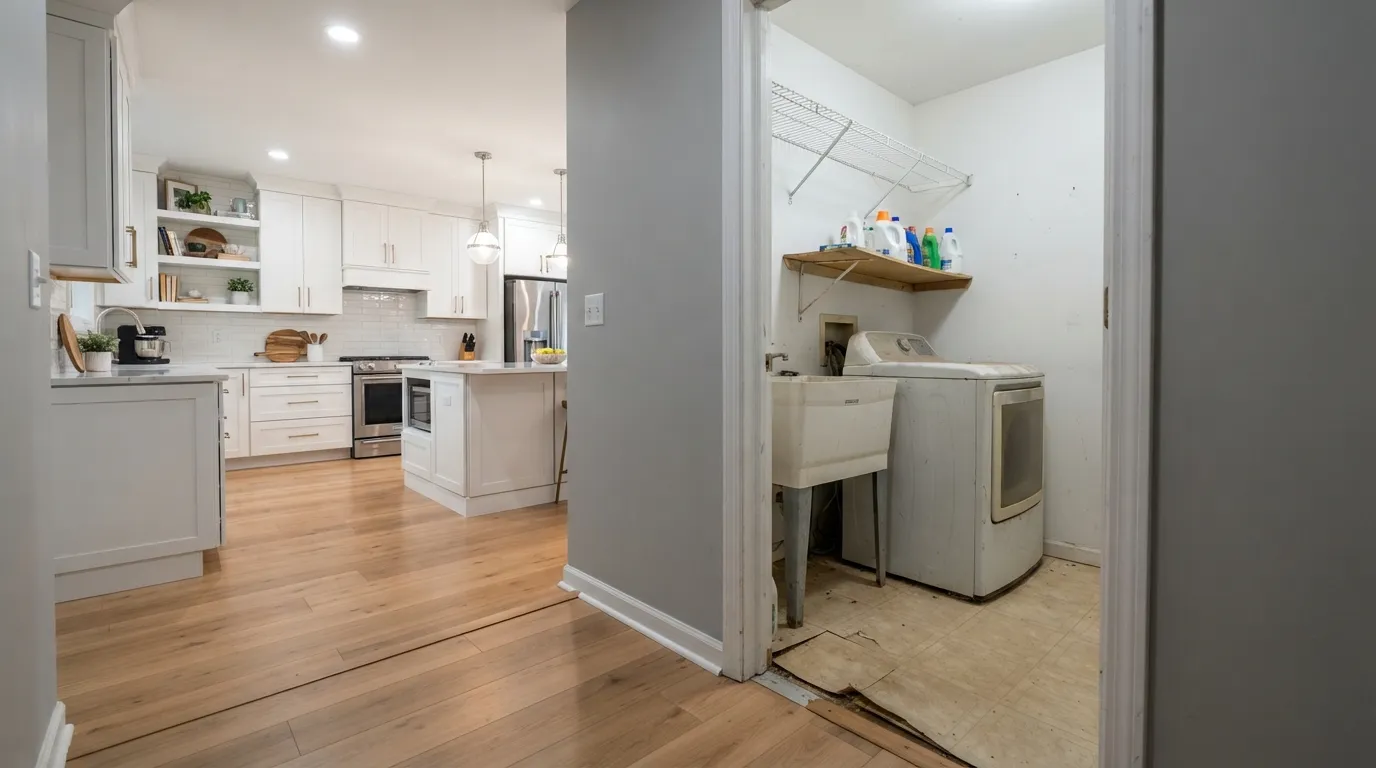
Opendoor’s guide to buying a flipped home says quality flippers maintain consistency throughout a home. The rushed version shows up as one room that feels high-end beside another that feels rushed, trim that does not quite line up, and flooring transitions that feel improvised.
Those flaws are not defects on their own, but they signal that speed mattered more than longevity. A crew that hurried through what you can see may have hurried through what you cannot.
Spend your time in the rooms nobody stages, such as the hall closet, the laundry room and the back bedroom. The kitchen gets the photographs and the attention, so it tells you the least about how the rest was handled.
Insider Tip: Listing photos favor kitchens and living rooms, so the leftover rooms are where finish quality is easiest to compare. Open the closet doors and run a hand along trim where no one expects a buyer to look.
Uneven trim can come from a careless carpenter or from a frame that has shifted, and the doors will help you tell the two apart.
#13 – Doors and Windows That Stick
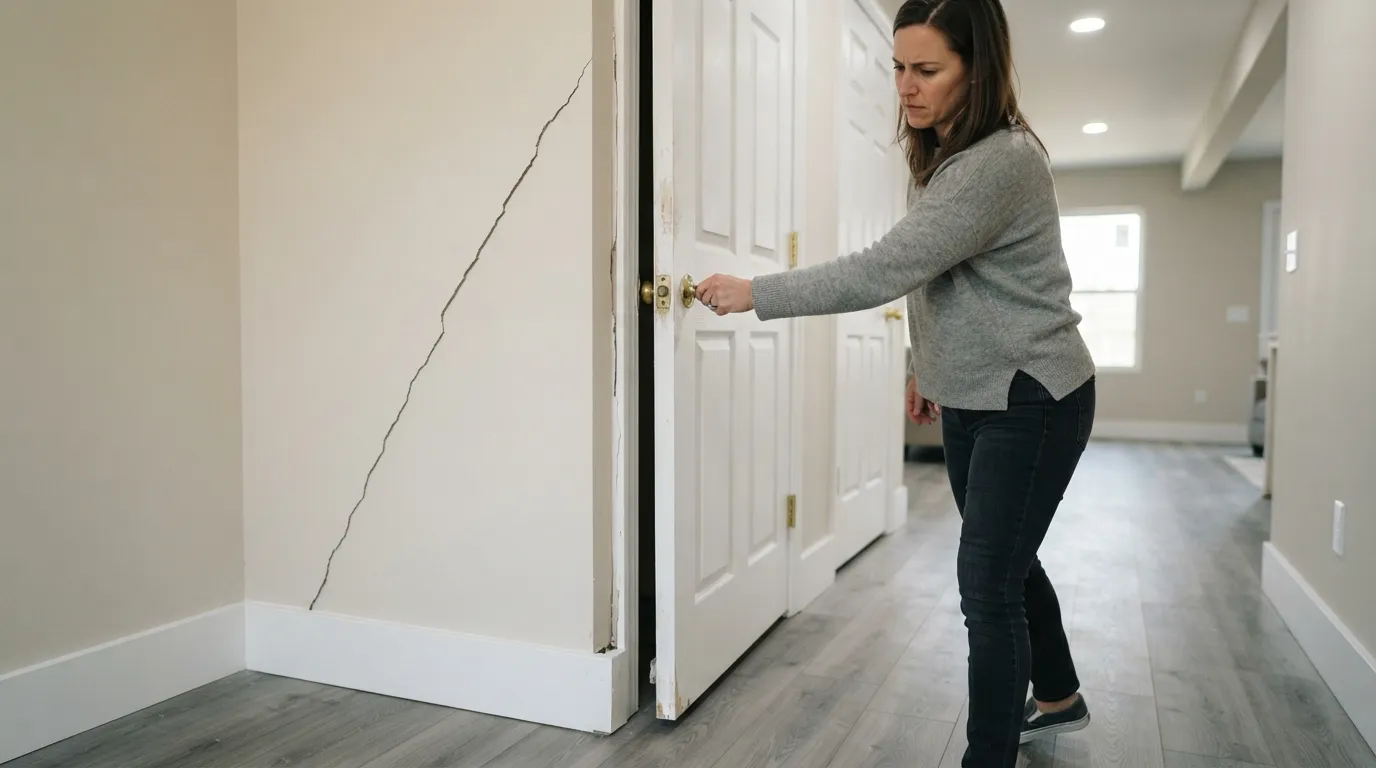
Doors and windows that stick or will not close properly appear on a flip-inspection checklist for good reason. When the frame around an opening goes out of square, the door no longer fits it, so a sticking door can be a clue about the structure and not only the hardware.
Cracks in drywall and uneven floors in the same room make that reading stronger. Structural problems such as foundation cracks or sagging floors can hide behind cosmetic fixes, and those signs often point to foundation or framing trouble.
Damp summer air can swell a wooden door in its frame, so one sticking door in July proves very little. Several in a row, or a stuck door beside a fresh patch of paint, deserves a question to the seller and a closer look from your inspector.
Quick Compare
- Probably weather: one door that sticks in damp summer air
- Ask the seller: several sticking doors in a row
- Call the inspector: a sticking door next to drywall cracks or uneven floors
- Dig deeper: a stuck door beside a fresh patch of paint
Open and close every door and window before you start taking notes. It takes a few minutes and costs nothing.
A door that fights you tells you about the frame, but the next clue is about the seller, and you can find it before you ever tour the house.
#12 – A Showroom Look and a Quick Resale
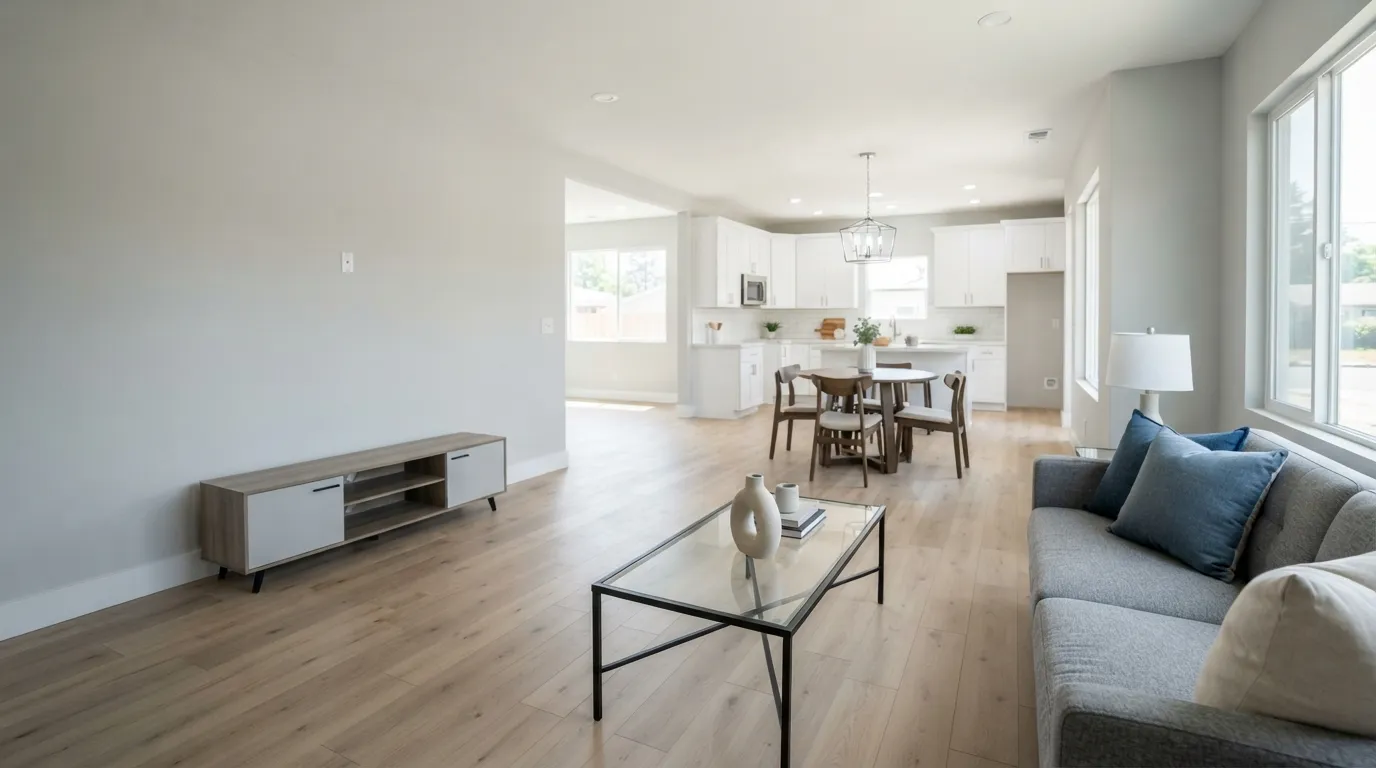
Public records show when a home last sold, so a purchase followed by a listing within months, plus a coordinated model-home look with few personal touches, fits the flip pattern. Opendoor lists that staged feel among the visual cues.
Buying from a flipper differs from buying from a long-term owner, because the seller never lived with the home’s problems. A longtime owner knows which basement corner gets damp, while a flipper may never have spent a rainy week there.
The money side adds pressure, since ATTOM put the typical gross return at 21.5 percent in the second quarter of 2026, down from 27.6 percent a year earlier, with typical gross profit at $60,526. Gross profit is the gap between purchase price and sale price, before renovation costs, so a narrower return leaves less room for surprises.
A flip is not a reason to walk away. Bankrate notes that spotting red flags does not necessarily mean you have to walk away, and I would add that staging alone is no sin, only a signal to look harder.
By The Numbers: ATTOM found the typical home flipped in the first quarter of 2026 took 165 days to flip. That is about five and a half months from the flipper’s purchase to the sale to you.
Knowing a house was flipped starts the questions without answering the main one, which is what the flipper actually did to it.
#11 – No Written List of the Work Done
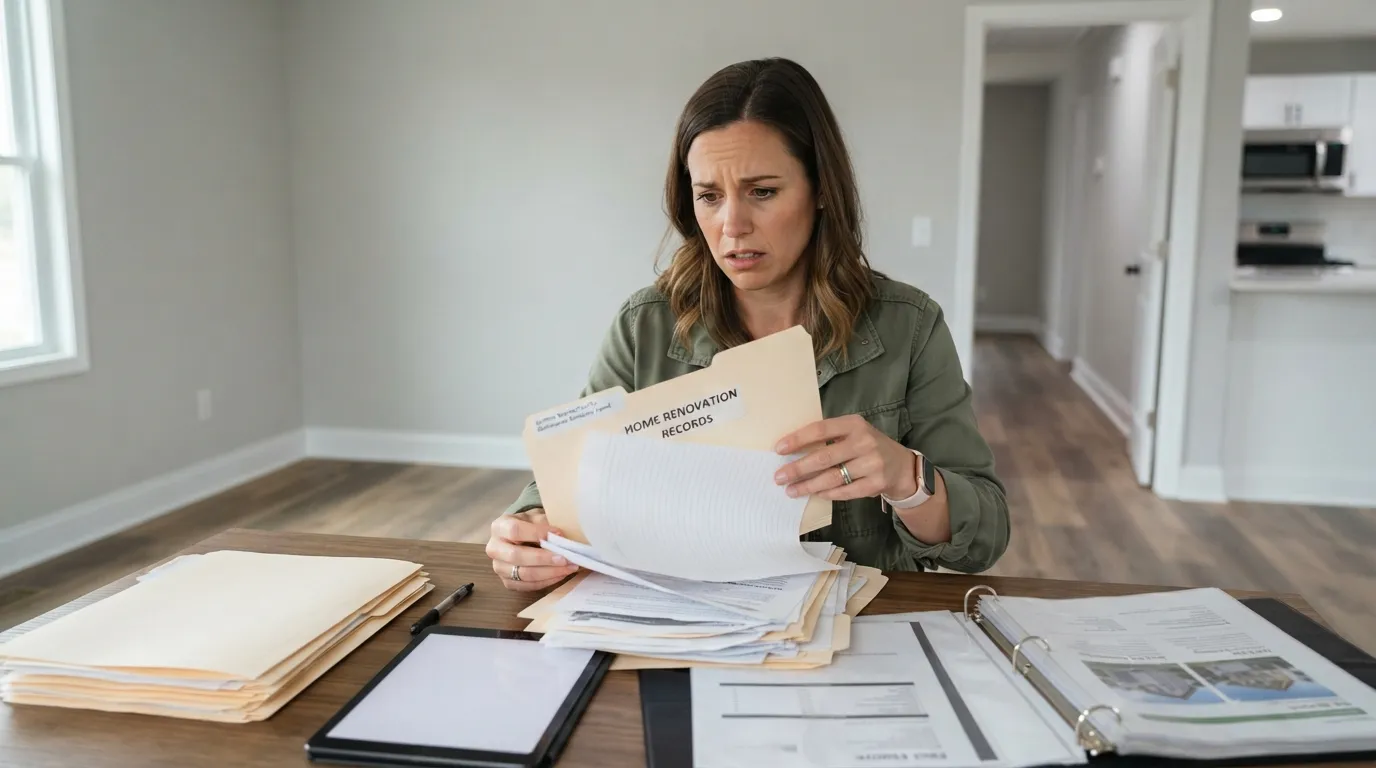
A flipper who did the job properly can say what was replaced, who did it and when. Three of the standard red flags are about missing paperwork: no list of work performed, no contractor disclosed, and no permits pulled.
Ask the listing agent for the list in writing. Contractor invoices and material specifications let you check cosmetic updates against what was really installed.
A written list also exposes mismatches. A modern kitchen beside a decades-old breaker panel is a warning sign, and the list shows what was left out of the renovation.
Ask for these in writing:
- Everything that was replaced or repaired
- The names of the contractors who did the work
- Invoices or material specifications where they exist
- Copies of permits and final inspection sign-offs
If the seller can produce none of it, treat the silence as information and weigh it in your offer.
The list will usually say new flooring and rarely says what lies underneath it.
#10 – New Flooring Over Soft Spots
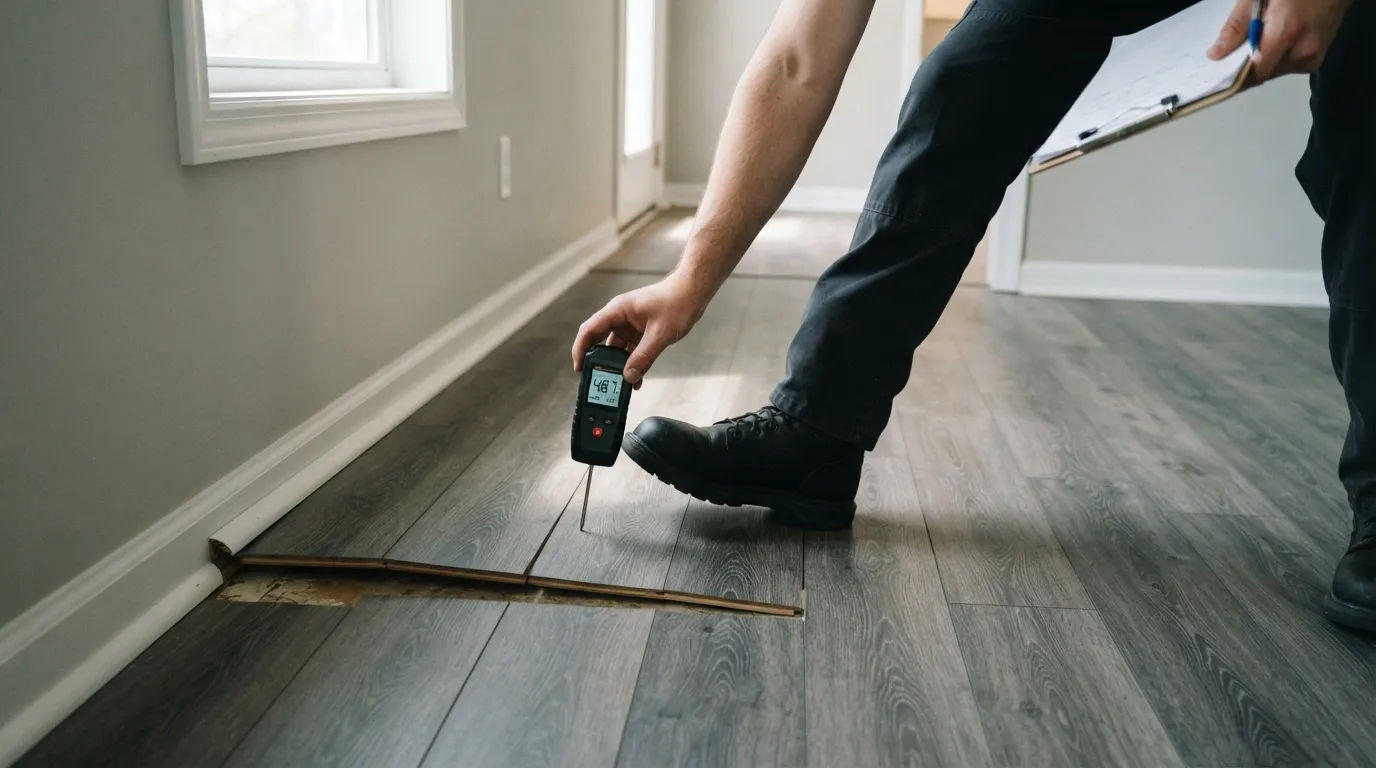
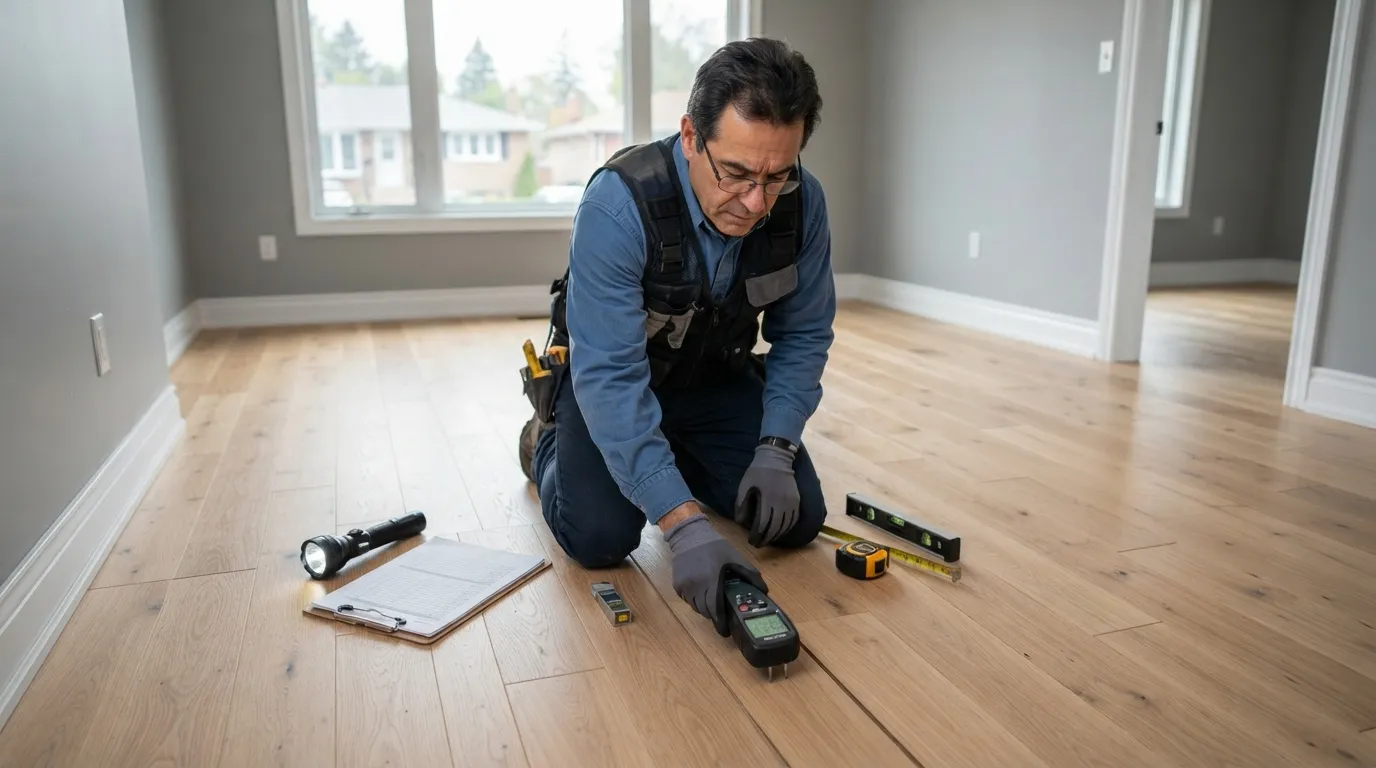
The real estate site Homes.com suggests that buyers step on floor corners for soft spots and watch for musty smells. A soft corner under new planks can mean the wood below has been wet.
New laminate can be installed over damaged subflooring that was never repaired, and a home inspector usually will not pull up newly installed flooring. That leaves the seller’s word as the only record of what is underneath.
One inspection firm describes a flip where a moisture meter found high moisture under the floor, and the cause was a leaking pipe that had rotted the subfloor. No amount of looking at the surface would have shown it.
Walking the floor costs nothing, but a moisture reading answers what your feet cannot. If any spot feels even slightly spongy, ask your inspector to bring a meter.
The Science Behind This: A moisture meter reads the water content of wood or drywall without cutting into it. That is why inspectors reach for one when they cannot lift a floor.
A soft spot is only one way a floor gives itself away, and the seams between the planks are another.
#9 – Floating Planks Lifting at the Seams
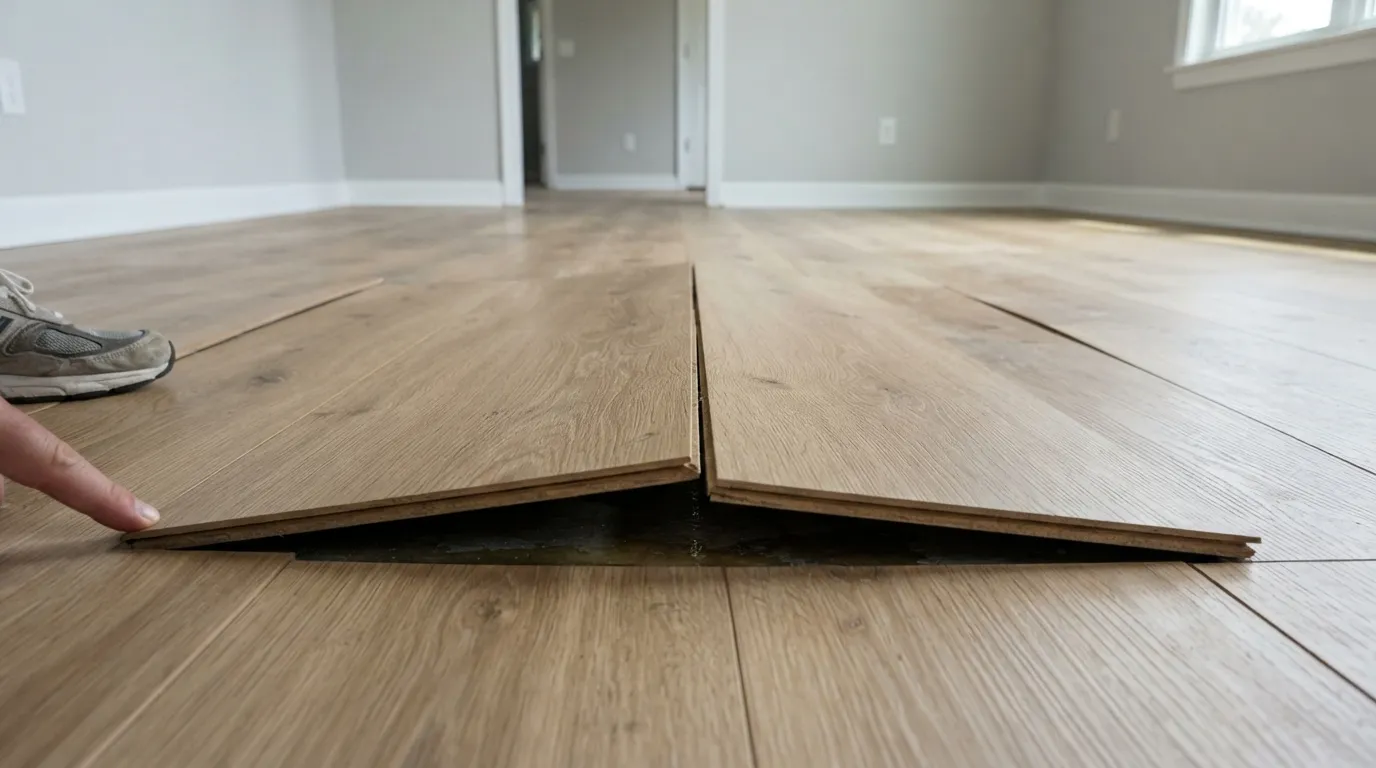
Floating floors are not glued to the subfloor, so planks that lift or separate at the seams are worth a close look. Uneven or damp surfaces underneath are the usual suspects, and a floor that feels uneven in a home that otherwise looks brand new is rarely accidental.
Luxury vinyl plank has transformed renovations, and much of it is sold as water-resistant. Installing water-resistant flooring to hide moisture issues is a known flip shortcut, since the surface can survive water that the subfloor cannot.
That is why I would not let a waterproof label settle anything. It describes the planks, not the wood beneath them.
Worth Knowing
- Floating floors rest on the subfloor instead of being glued to it
- Lifting or separating seams can point to an uneven or damp surface below
- A water-resistant label covers the planks, not the subfloor
- Low light from across the room shows flaws that a top-down look misses
Stand at the far end of each room with a window or lamp behind you and look along the floor. Waves, ridges and gaps show up from a low angle far better than they do from standing over them.
The cause of a bad floor often sits below it, in a crawl space where a flipper may have touched up only one spot.
#8 – Fresh Paint or Wood in One Small Area
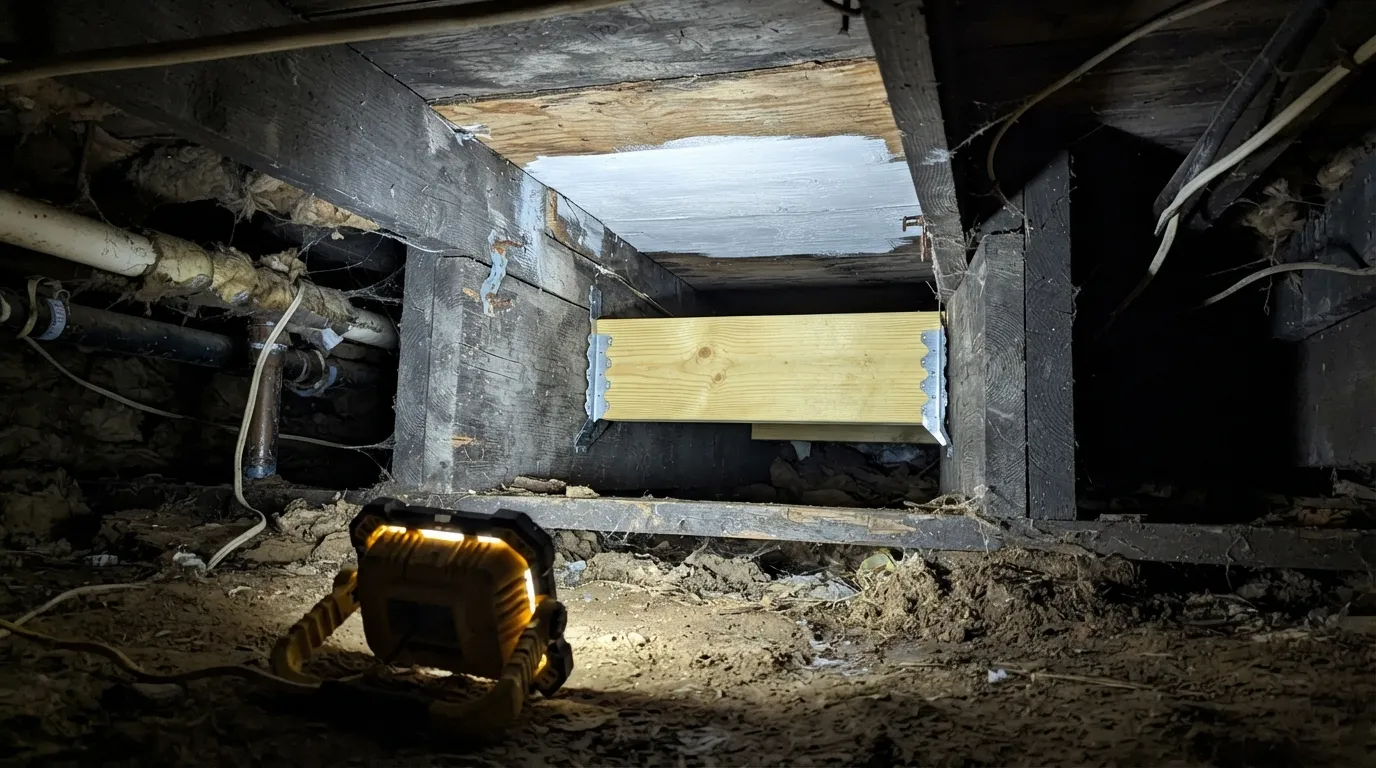
Under the house or in the attic, look for new paint or fresh wood in one small area, or fresh paint on beams, joists or ceilings in one area only. That pattern suggests partial remediation, meaning someone fixed what they found and stopped.
A single new joist is not a problem on its own. What matters is why that spot needed work and whether the framing around it is sound.
If the house has a crawl space, ask to see the inspector’s photos of it, or crouch at the hatch with a flashlight yourself. Buyers rarely go there, but that is also why a quick job can go unnoticed.
Ask the seller what was repaired and why, then compare the answer with the written list of work you asked for earlier.
Did You Know: A Charlotte-area inspection firm wrote up 12 flipped homes. All 12 had structural, electrical, plumbing and exterior problems, and most of the serious ones were hidden in the crawl space, the attic and the electrical panel.
#7 – Ground Sloping Toward the House
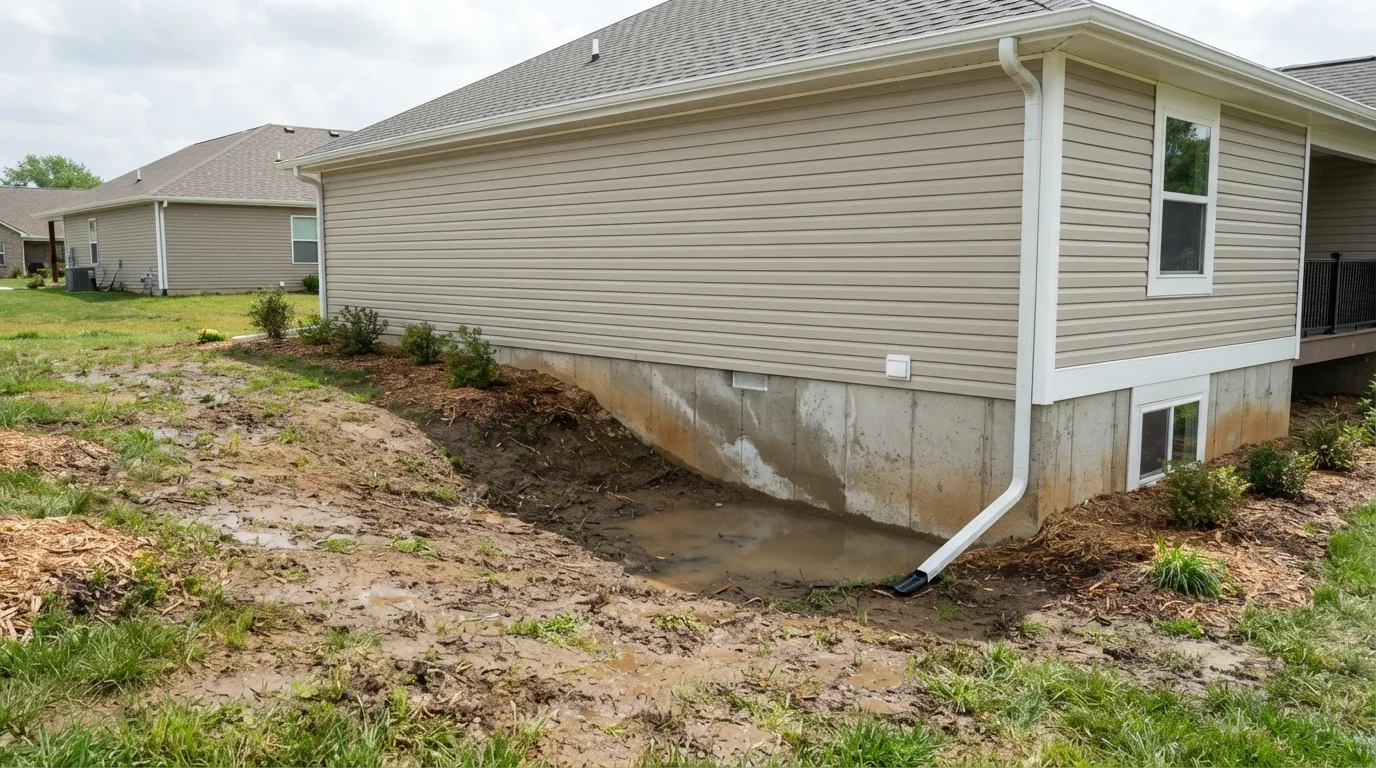
The outside of a flip can tell on the inside. Homes.com lists downspouts that do not direct water away from the foundation among the exterior signs of corner-cutting.
Poor drainage is one of the easiest ways to hide future damage, because cosmetic repairs inside make a property seem fixed, but if water still moves toward the foundation, the hidden cost has simply been delayed.
Walk the whole perimeter and check:
- Where each downspout empties
- Whether the soil slopes toward or away from the walls
- Low spots beside the foundation where water could collect
A downspout that ends against the wall needs an extension, which is an inexpensive fix. Ground that slopes the wrong way is a larger job, so if you can, visit after a hard rain and watch where the water goes.
Why It Works: Water follows gravity, so ground that falls toward a foundation sends every rainfall toward the walls. No interior repair changes that slope, which is why a finished room can get wet again.
Whatever water does at the foundation, the roofline and the siding are the next places it can get in.
#6 – Gaps Where the Roof Meets the Siding
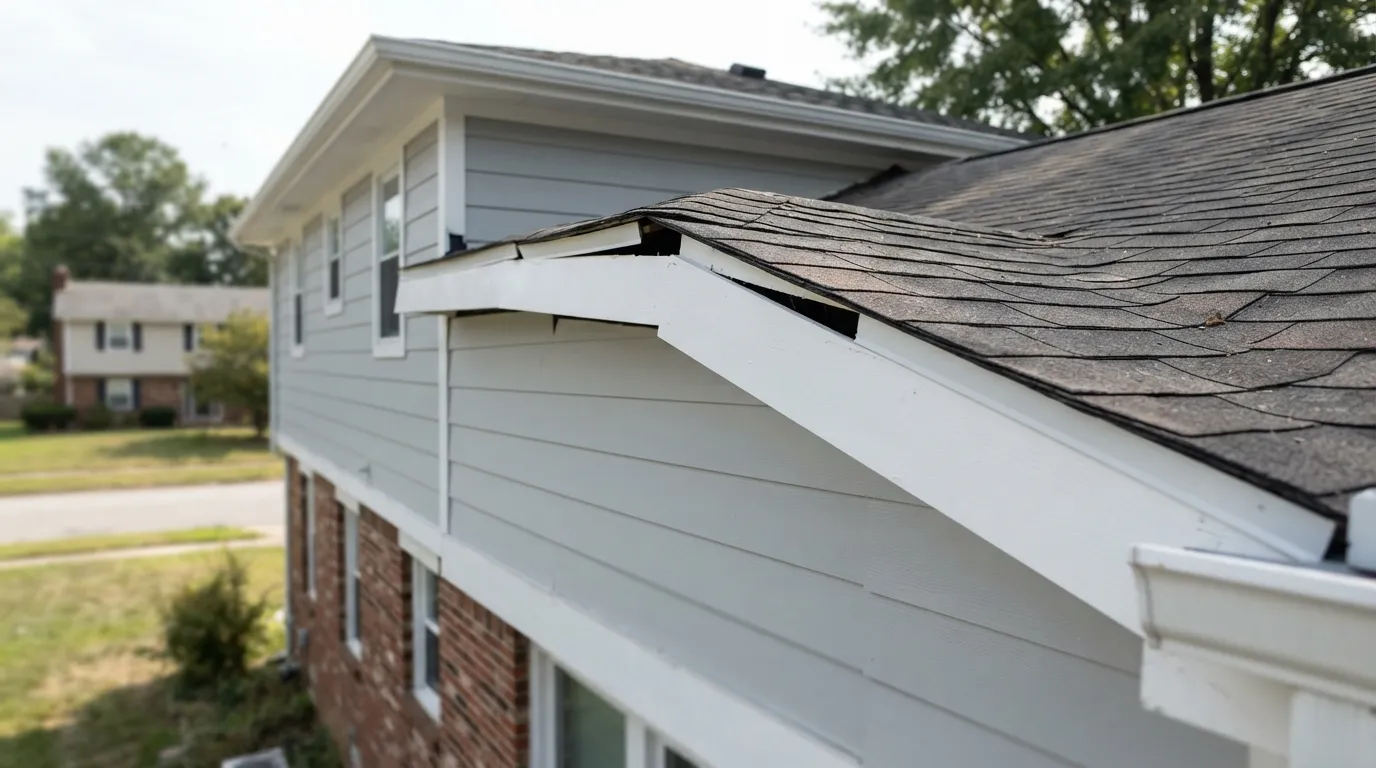
Homes.com advises buyers to pay attention to where the roof meets the siding and where the siding meets the foundation. Seams are where rushed work leaves gaps, because they take the most care to finish.
Here is what to look for from the yard:
- Gaps where the roof meets siding
- Wavy boards and mismatched shingles
- Fresh paint on only certain areas of the exterior
A mismatched patch of shingles can be an honest repair, so ask when the roof was done and by whom. New siding is another matter, since missing house wrap behind it can lead to wood rot behind a wall that looks perfect.
Stand across the street and look at the roofline with your phone camera zoomed in. Sagging lines and uneven patches are easier to see from a distance than up close.
Water that gets behind siding and trim tends to announce itself indoors as a smell.
#5 – Musty Smells and Bubbling Paint
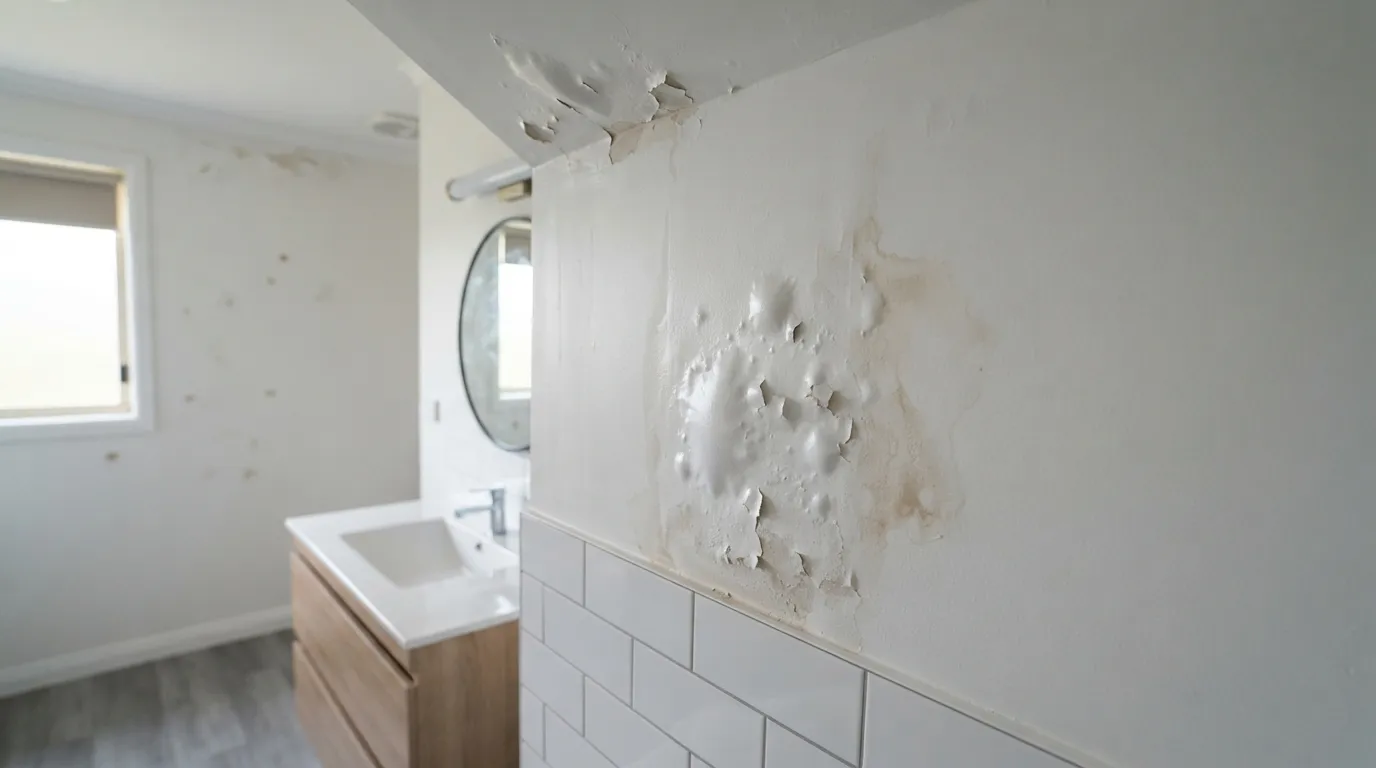
Homes.com says musty smells, uneven flooring or new caulking around cracks may suggest water damage or foundation issues. Peeling or bubbling paint often indicates moisture trapped beneath the surface.
Paint also covers stains, and water stains painted over with stain blocker are a classic flip sign. A ceiling with one oddly bright patch is worth a second look.
Run your hand along the walls and feel for bubbling. Look at the ceilings under every bathroom, and look inside cabinets and under sinks.
One damp-smelling closet is not a deal-breaker if the seller has an answer for it. The answer should come with a repair record, not a shrug.
The Psychology Behind This: A bright, spotless room makes you feel the work was done right. That feeling is a good reason to hold your decision until you have checked the corners, the ceiling below a bathroom and the smell of the closet.
#4 – Foundation Cracks Filled and Painted Over
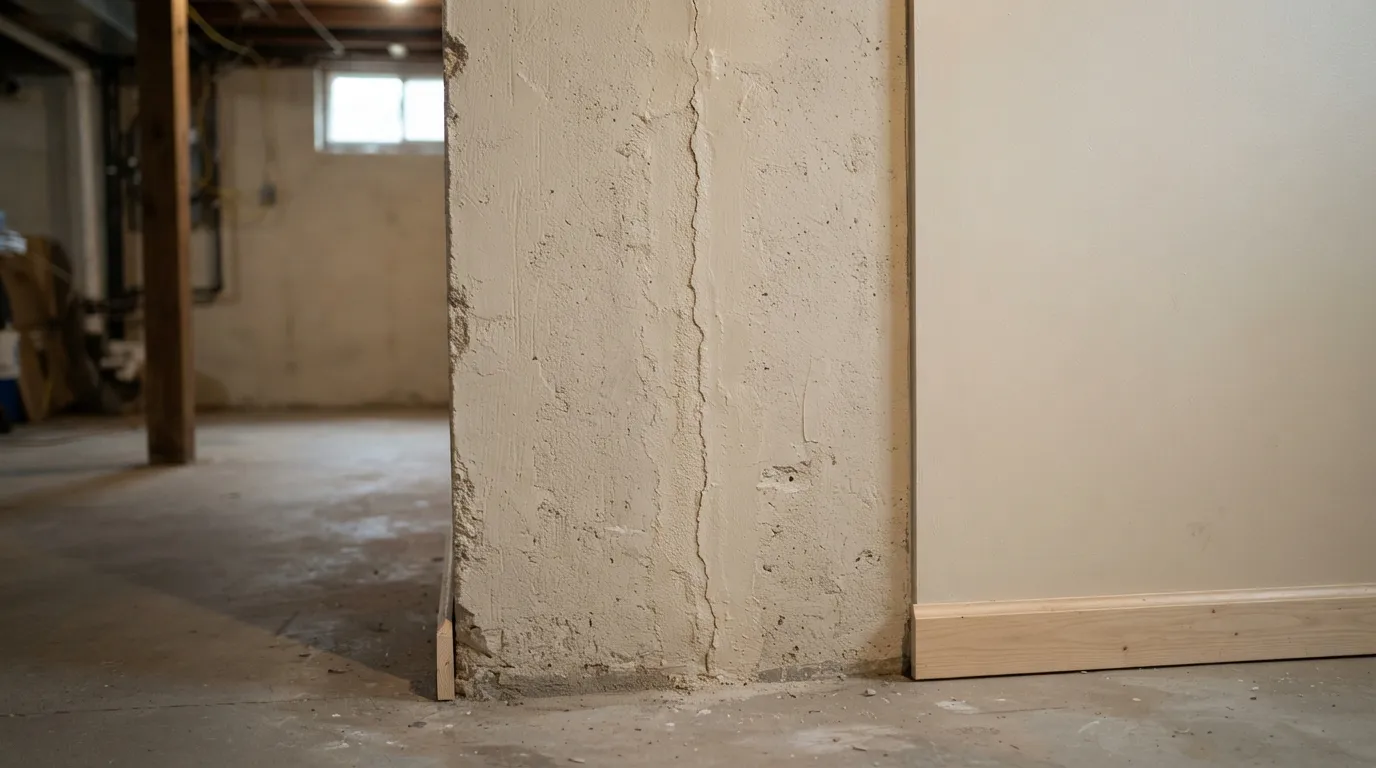
A common shortcut is to fill foundation cracks with hydraulic cement and paint over them, rather than installing proper piers to stabilize the home. The wall looks clean, and the movement that caused the crack goes unaddressed.
Other versions include drywall patches that ignore the structural cause and quick-setting concrete used as a temporary crack filler. Homes.com also flags new caulking around cracks as something to question.
Not every patched crack is a problem, since a hairline crack that has been patched but not evaluated may be harmless. The trouble is that fresh paint makes it impossible to know without an expert opinion.
I would take a documented repair over a spotless wall, because a repair record answers questions and a spotless wall only raises them.
Editor’s Note: A patched crack is not a verdict. Some cracks are cosmetic and some are not, and only an experienced inspector or structural engineer can say which, so ask for that opinion in writing when you see one.
A cracked wall is a slow problem for the house, and a wiring shortcut is a faster one for the people living in it.
#3 – New Fixtures Wired to an Old Panel
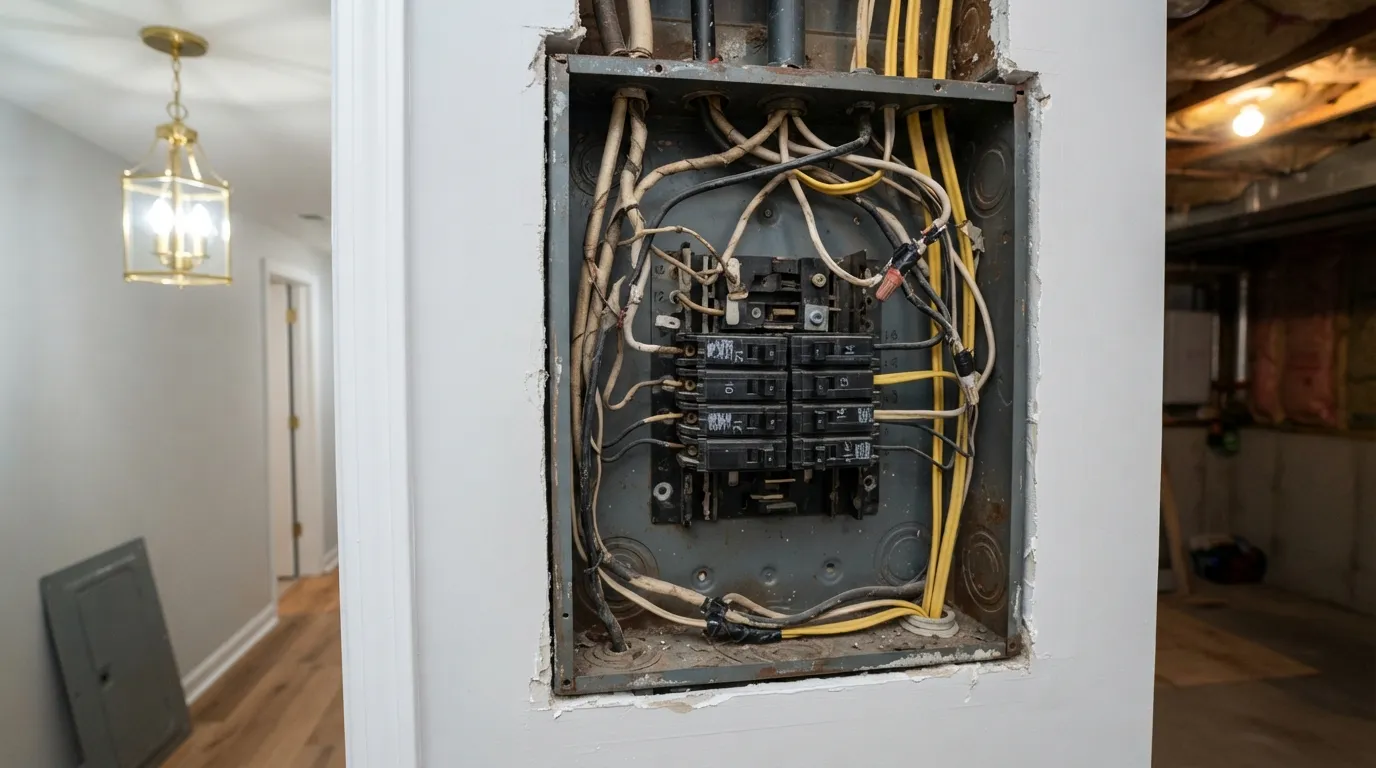
A house can have shiny new light fixtures and still carry an outdated, improperly wired electrical panel. Buyers tend to notice the fixtures and never ask about the panel.
Inspectors in Nashville describe unpermitted wiring spliced into old knob-and-tube systems and missing GFCI protection as common signs that a flipper skipped licensed work. Others look for outlets and switches that do not match the age of the wiring.
Electrical faults can start fires, which is why I would not guess about them. If the inspector flags wiring, bring in a licensed electrician for a written quote before you negotiate.
Try This: Plug a lamp into each GFCI outlet in the kitchen and bathrooms, then press TEST. The lamp should go dark, and RESET should bring it back. An outlet that never trips is worth reporting to your inspector.
Wiring problems are at least above ground, and the pipe that carries waste away from the house is not.
#2 – Drain and Sewer Lines Underground
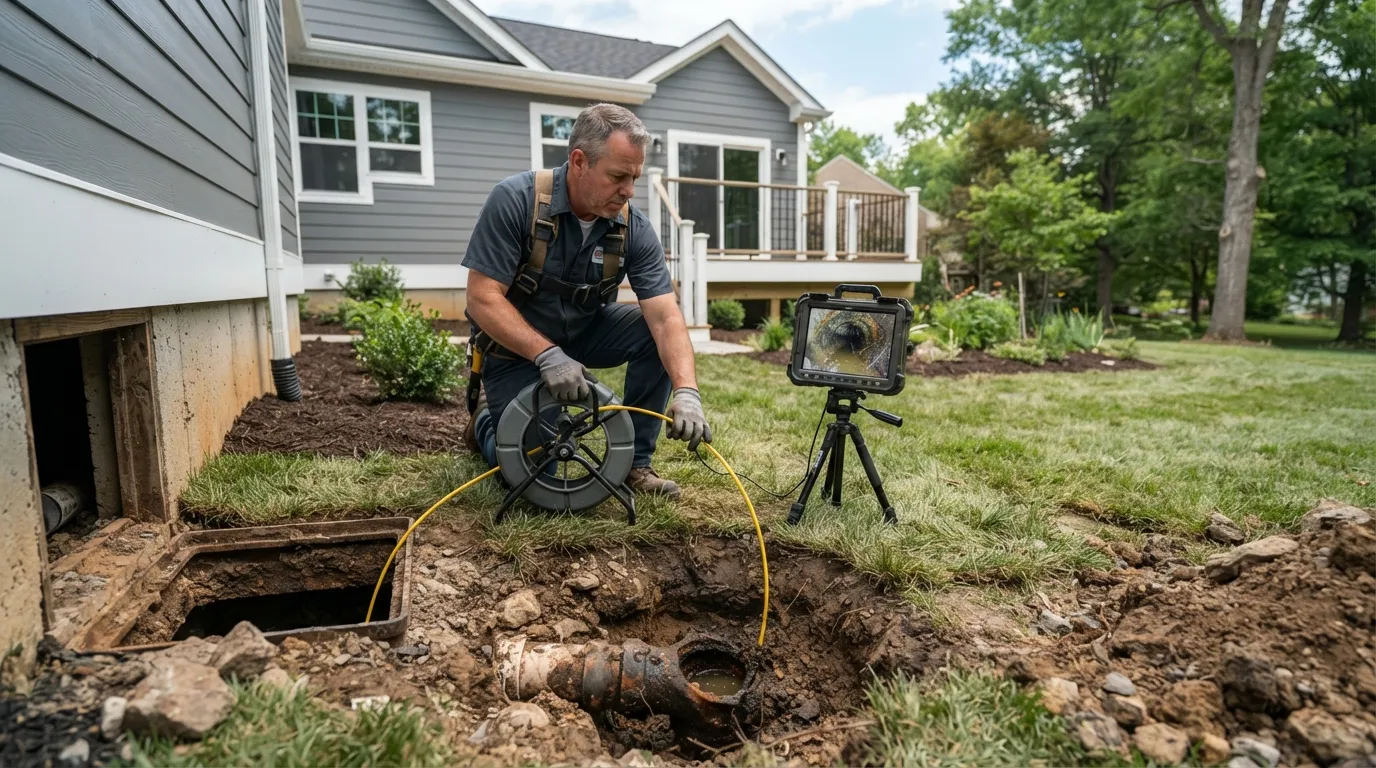
Sewers are one of the most overlooked parts of a home because they are out of sight and out of mind. A flipper can renovate every room and never touch the line under the yard.
A standard inspection looks at what is visible, so the buried line needs its own check. Ask your inspector about a camera sewer scope and a wood-destroying insect check.
Inside the house, plumbing deserves its own testing:
- Water pressure checked and every fixture run
- Ceilings below bathrooms checked for stains
- A moisture reading behind fresh tile and new cabinets, where hidden leaks are common
If the written work list does not mention the main drain, pay for the scope. It is a modest cost next to a dug-up yard.
A scope shows what the pipe looks like today and cannot tell you whether the work around it was ever approved by the local building department.
#1 – Major Work With No Permits Pulled
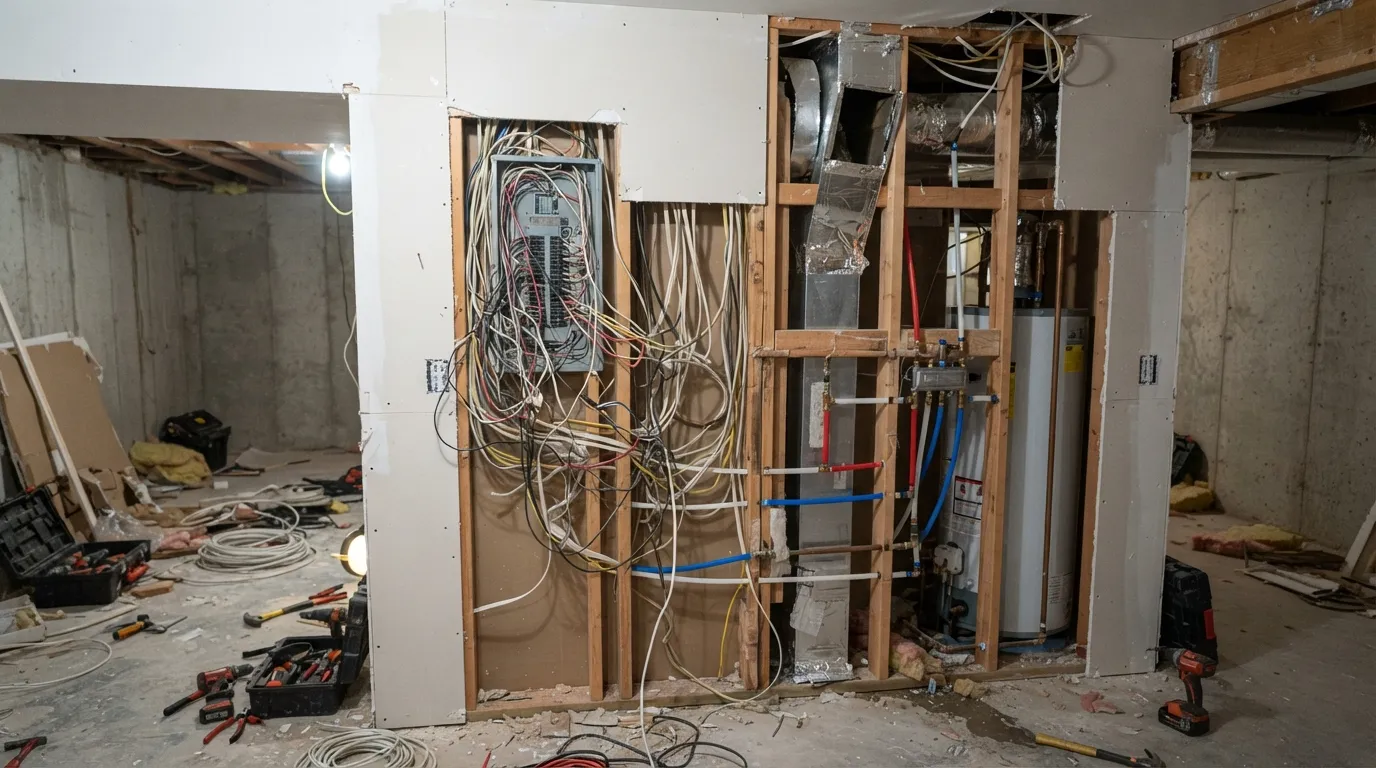
Major renovations such as electrical work, plumbing changes, structural modifications and HVAC installation typically require permits. Approved permits indicate the work met code requirements at the time of inspection.
Without them, unpermitted work can create liability issues and affect your insurance. You may also inherit the problem, because unpermitted work can require penalty fees or corrections later.
This is the easiest red flag to verify, because permits are public records. Your agent or the local office that keeps permit records can pull the history, and a gutted house with no electrical or plumbing permits is a major red flag.
By The Numbers: Opendoor puts the cost of rebuilding unpermitted work at $21,927 to $83,339. The figure is a range, so your own bill would depend on what was built.
A permit alone does not make a house sound, since it does not prove the work was done right. A missing permit is a different matter, and I would not close on a gutted house without the records, or a price that reflects the risk.
Ask your title company about an extended-coverage title policy that covers unpermitted work, and take the whole file to your inspector and attorney before you sign.
Look Under the Finish Before You Fall for It
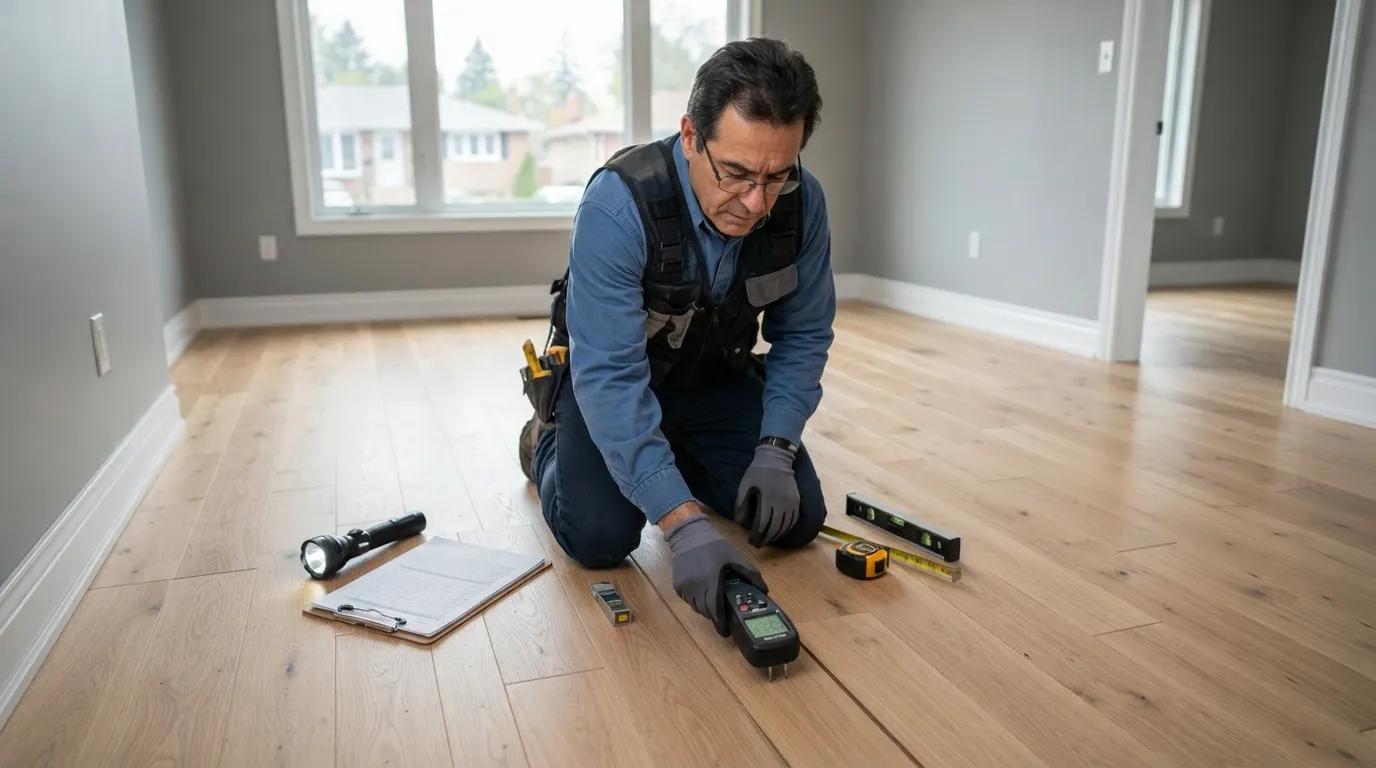
Every item above comes back to one habit: ask what sits beneath a finish before deciding whether you like it. Paint and planks belong to the seller’s story, while the records, the water and the wiring belong to the house.
That shift also changes when you do the work. Asking for the permit history and the list of repairs before you fall for the floors keeps the questions cheap and your options open.
At a Glance
- Get the list of work and the contractors’ names in writing
- Pull the permit history, since permits are public records
- Ask your inspector to bring a moisture meter for new floors
- Pay for a camera sewer scope if the main drain was never mentioned
- Take the full file to your inspector and attorney before you sign
If you have toured a flipped house, which room looked best, and which one did you check last?