

A Charlotte-area inspection firm that wrote up 12 flipped houses found structural, electrical, plumbing and exterior problems in all 12. Most of the serious ones sat in the crawl space, the attic and the electrical panel, the places fresh paint never reaches.1
That is why this countdown ends at the closet door, where the staging stops and the real house begins. The last shortcut is one a standard inspection can miss entirely, and a single records search can expose it before you sign.
We’ll start with the smallest tell, the one most buyers walk right past.
#14 – Paint on Outlet Covers and Switch Plates
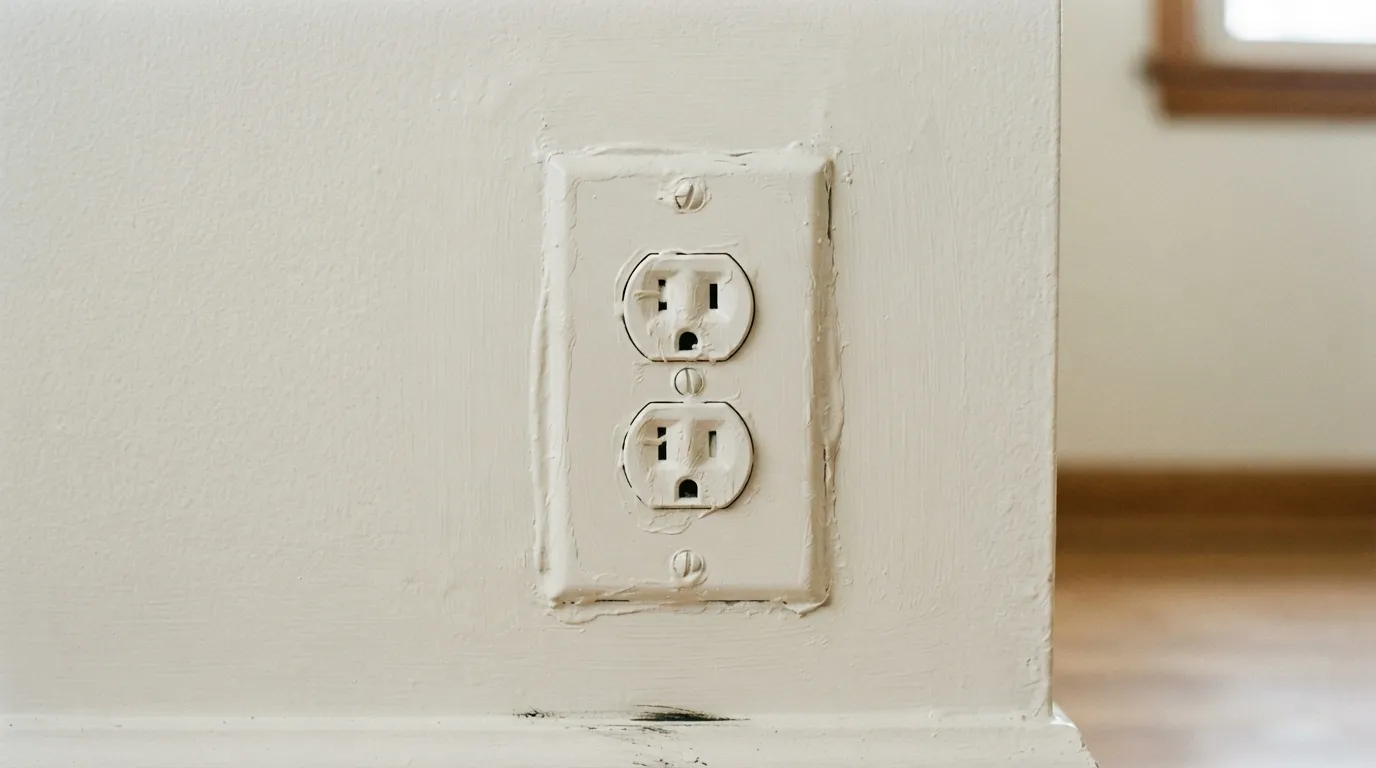
Before you admire the kitchen, look at the outlet covers. Paint bridging the plate and the wall, or crusted over the receptacle itself, means the crew rolled around the hardware instead of removing it.
That is a small shortcut with a big implication. A crew that never took the covers off probably never looked inside those boxes either.
One smeared plate means little, since any painter has an off afternoon. The same sloppy detail in room after room says nobody checked the work behind the crew.
Finish work is the cheapest part of a flip to get right, so it tells you the least about the pipes and wiring. What matters is whether the same flaw repeats room after room.
Try This: Hold a flashlight flat against the wall and sweep it along the surface. Viewing walls at an angle reveals texture and imperfections that straight-on light misses.
A smudge on a plate is a nuisance. Caulk that is already turning dark, in the room a flipper is most likely to rush, points to something wetter.
#13 – Bathroom Caulk That’s Already Turning Dark
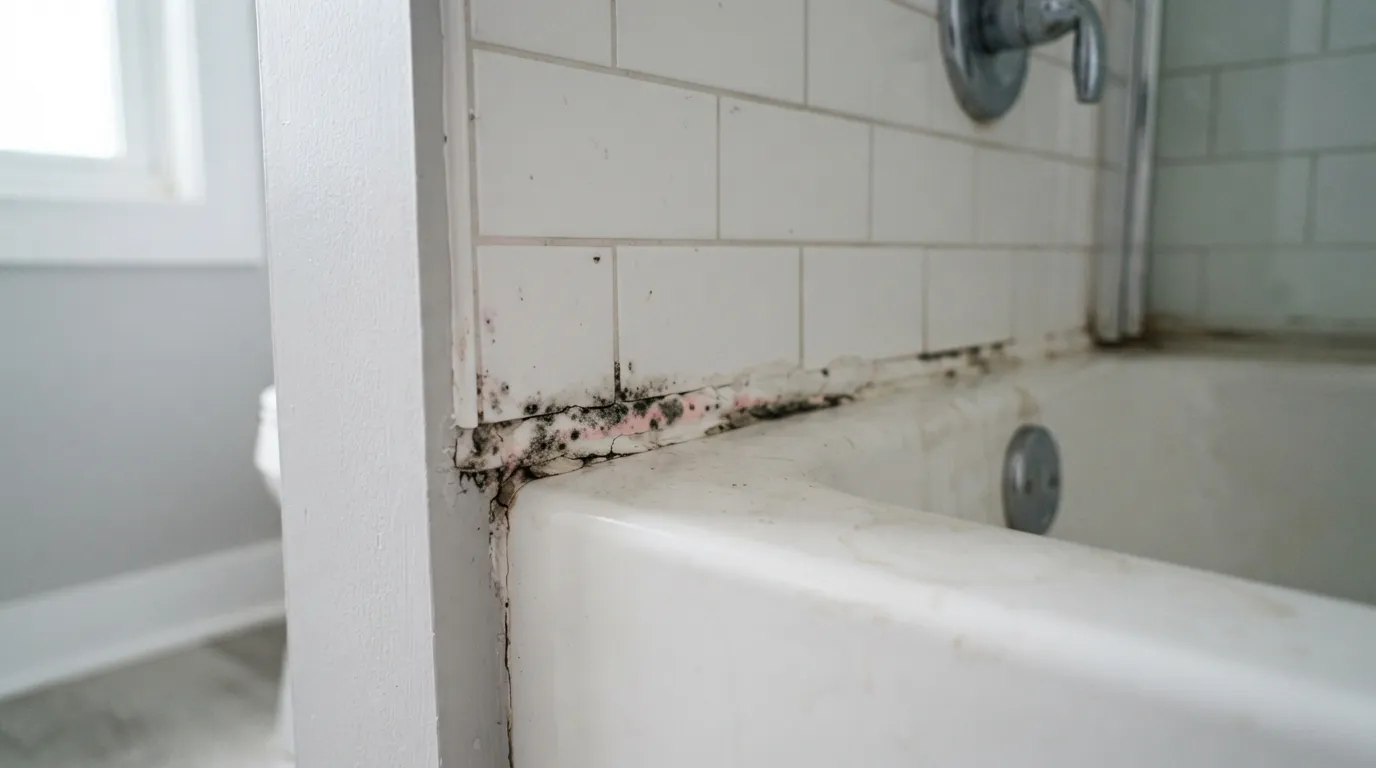
Fresh caulk should look clean and bright. Black or pink spots soon after a flip are a verdict on the prep work.
They point to improper application or cheap material, and rushed crews skip the cleaning and drying that keep mold from taking hold. Bathrooms are also where a flipper’s budget tends to run out.
Bruce Barker, then president of the American Society of Home Inspectors, told the Associated Press about a house with new paint, carpet and countertops where the bathrooms had been left untouched. The shine was in the rooms buyers photograph, not the ones that leak.
Start with the corners where the tub meets the wall, since those spots reveal whether proper waterproofing was done. Then go to the room below, because a moisture reading behind fresh tile and new cabinets can catch leaks that paint is hiding.
Check the ceiling directly below any upstairs bathroom for stains. It takes ten seconds and needs no tools.
The Science Behind This: Caulk bonds best to clean, dry surfaces. Laid over soap film or damp grout, it can trap moisture against the joint, which gives mold the still, damp spot it needs.
Caulk fails where you can see it. The next shortcut looks perfect on move-in day and shows its seams only when the boards begin to shift.
#12 – Floating Planks Lifting at the Seams
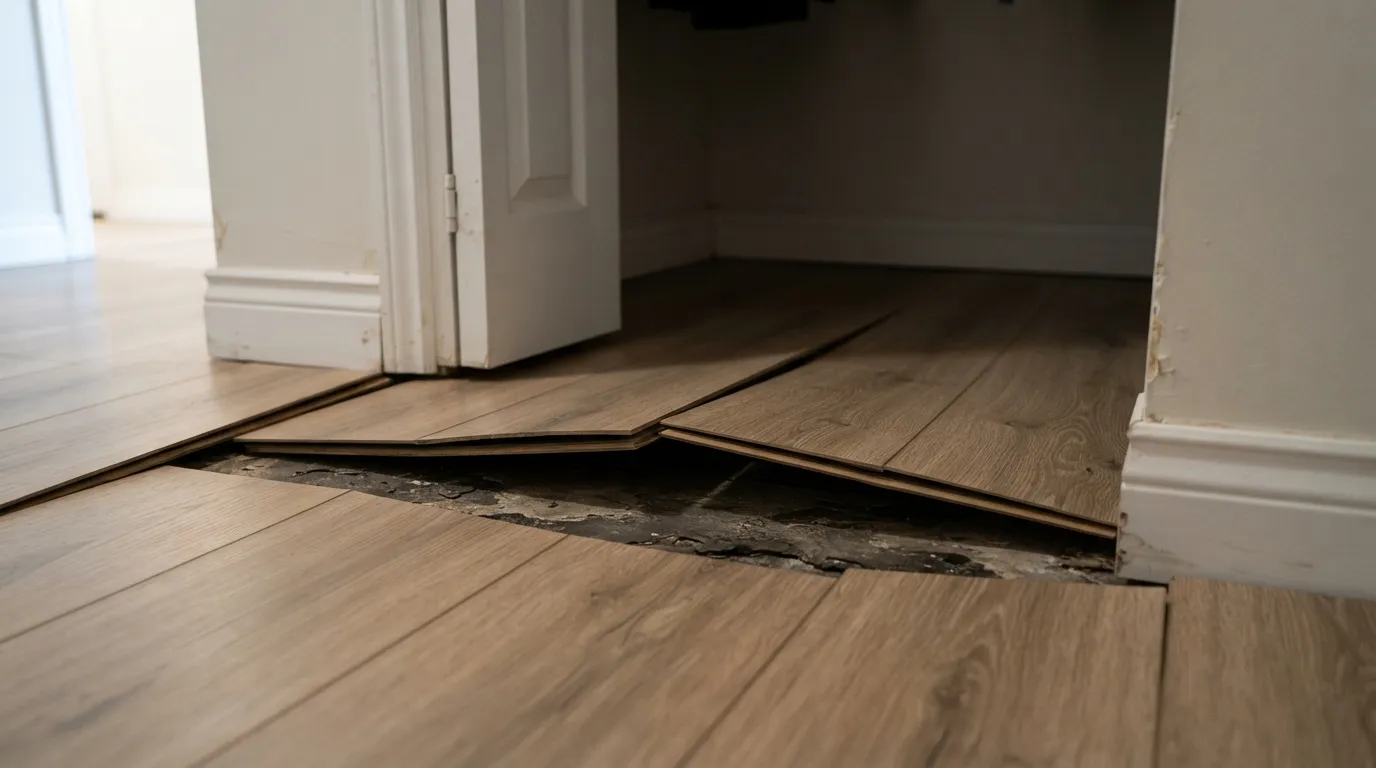
A floor can look flawless and still be sitting on a problem. Floating planks rest on the subfloor instead of being glued to it, so lifting or separating seams can point to an uneven or damp surface below.
The same logic applies to refinished hardwood. A fresh finish can conceal a warped subfloor.
New flooring laid over a moisture problem seals the problem in, and in humid climates that invites mold. The floor looks brand new right up until the boards start to cup.
Walk the house slowly and listen for hollow, spongy or crunchy spots, especially near bathroom doors and exterior walls. Then slide open a closet door and look at where the flooring meets the baseboard, because crews often stop caring once they reach a space no one photographs.
Floors tell you about moisture from below. The next shortcut hides moisture from above.
#11 – A Suspiciously White Patch on the Ceiling
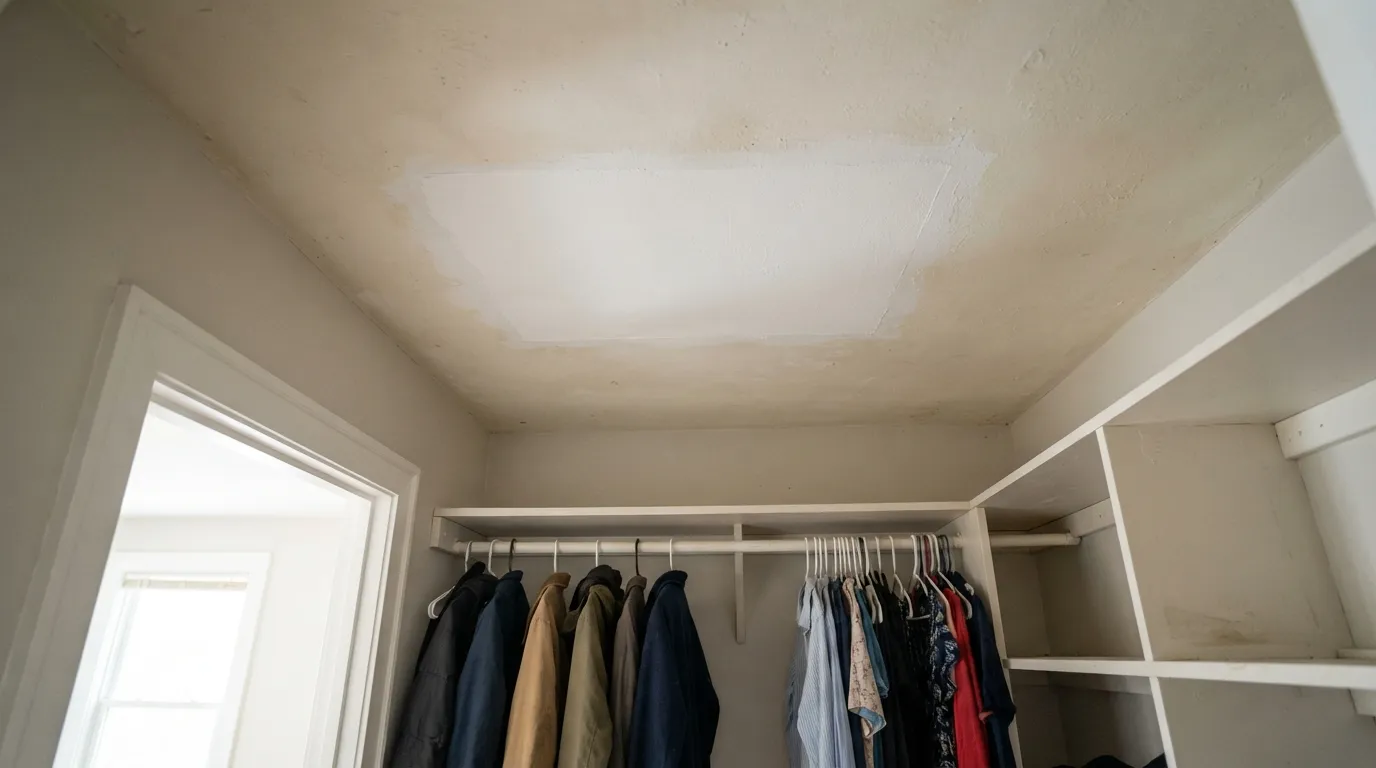
Look up in every room, and keep looking. A ceiling patch that is brighter than the rest, or a neat rectangle of new paint in an otherwise aged ceiling, is one of the oldest flipper tricks.
Stain-blocking primer covers the brown ring and nothing else. It hides the evidence of a leak without proving the leak was ever fixed.
A moisture meter or an infrared camera can tell a dry, old stain from one that is still feeding on a pinhole leak. Inspectors carry both for a reason.
Ask the seller one plain question: what caused that repair, and who fixed it? A flipper who did the work right usually has a receipt, and one who didn’t will suddenly have no idea.
A fresh ceiling can hide a leak from above. The next shortcut hides one you can nearly smell, behind a closet door.
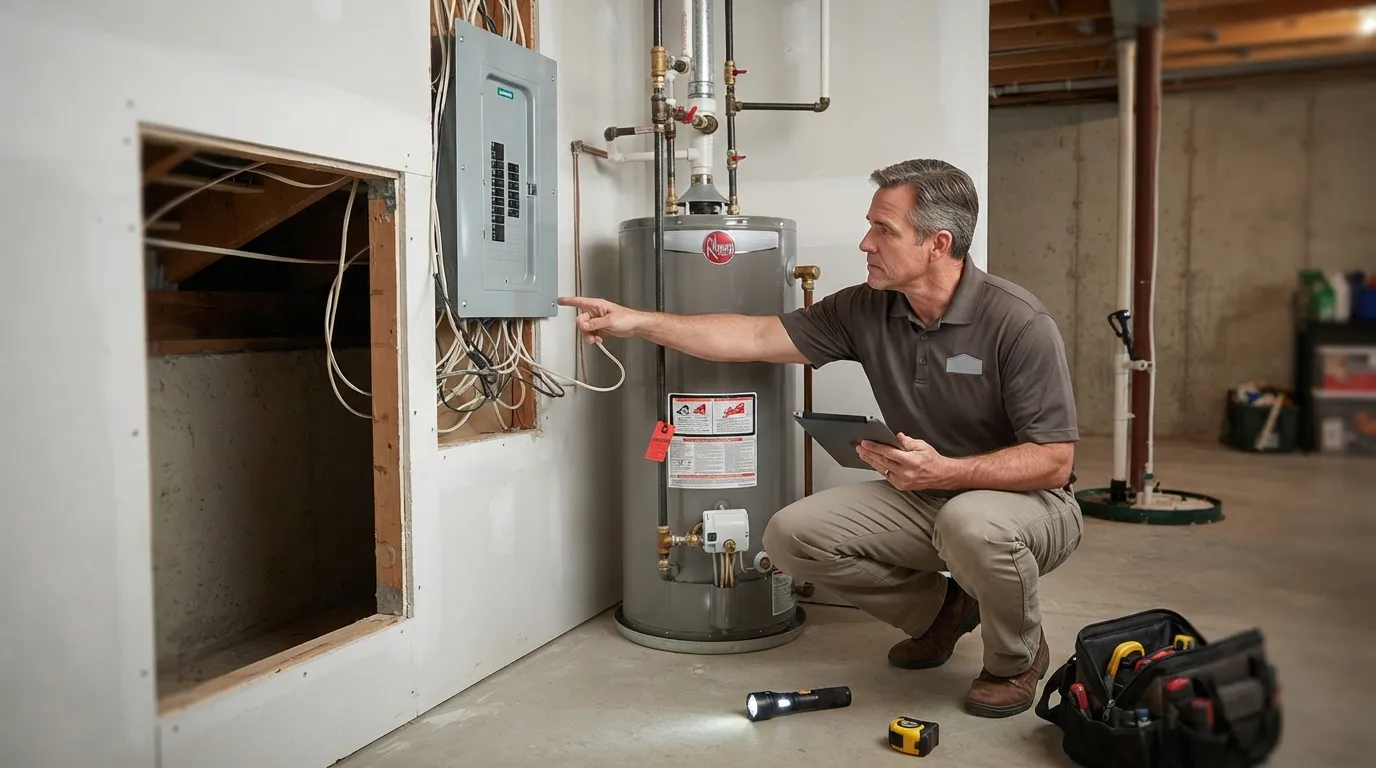
#10 – A Water Heater Closet Nobody Bothered to Fix
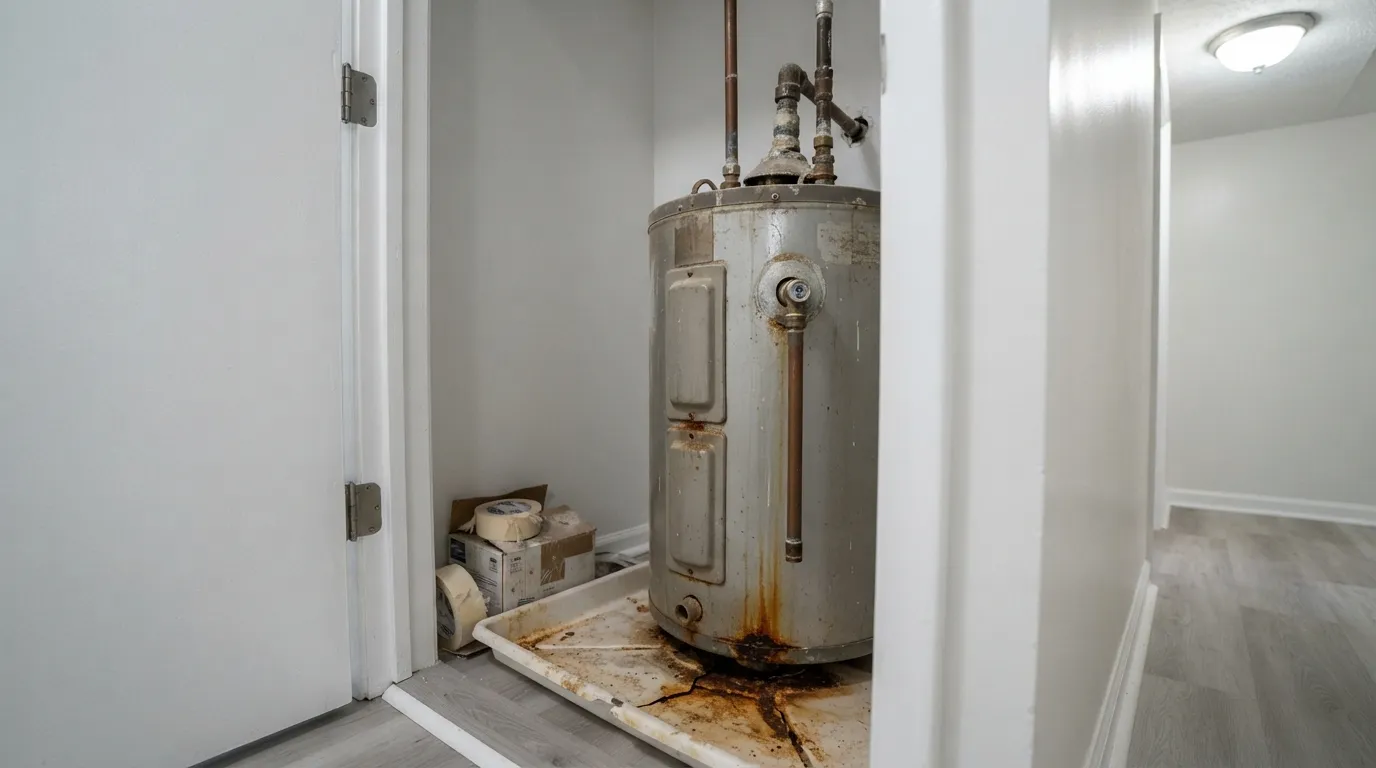
Open the water heater closet first, because this is where a rushed flip leaves its fingerprints. The walls may be freshly painted while the tank beside them is older than the renovation.
Check the data plate for the manufacture date, since tanks are commonly cited as lasting roughly 8 to 12 years. Then look for rust streaks at the base, a corroded drain pan and crusty mineral buildup on the pipe fittings.
Find the temperature and pressure relief valve and follow its discharge pipe. That pipe should run downward toward the floor, and it should never be capped, plugged or missing.2
This is a safety device meant to vent dangerous pressure, so a capped or short pipe is not a cosmetic quibble. It is the kind of detail inspectors write in capital letters.
Fast Facts
- The data plate carries the manufacture date, so you don’t have to trust the seller’s memory.
- Tanks are commonly cited as lasting roughly 8 to 12 years.
- The relief valve’s discharge pipe generally ends within about 6 inches of the floor or a drain.3
- A cap, plug or missing pipe on that valve is a safety defect, not a style issue.
One closet over, there is often a machine that can do more than flood a floor.
#9 – A Furnace Closet That Looks Clean and Isn’t Safe
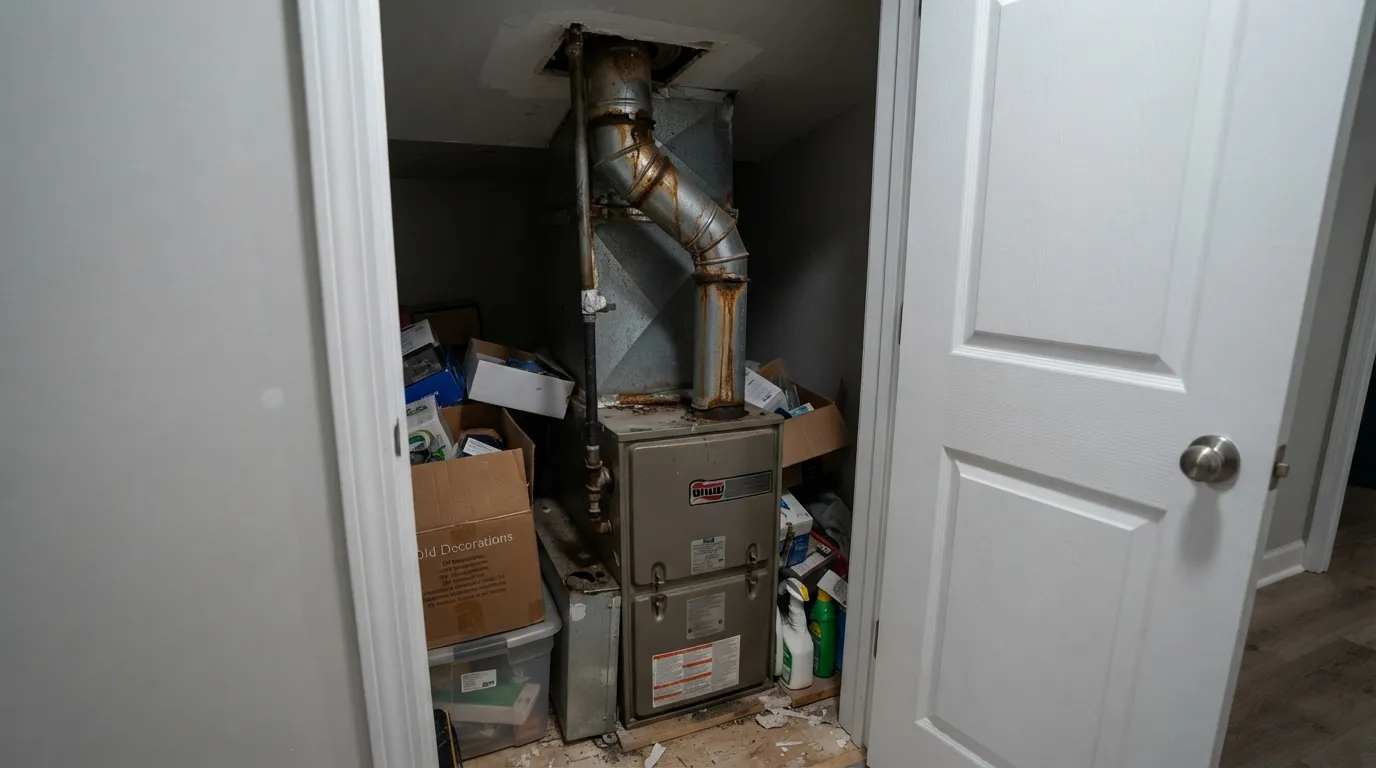
A new filter and a wiped-down cabinet say very little about a furnace. What matters is what the flipper did around it.
Look for rust streaks or soot marks near the flue connection, a vent pipe that droops or has gaps, and boxes or shelving crammed against the unit. Fuel-burning equipment needs air to burn and a clear path to vent exhaust.
Flippers sometimes turn a furnace nook into a tidy closet by adding walls and a solid door. If that blocks the air the furnace needs, the cosmetic upgrade becomes a combustion problem.
Carbon monoxide is the reason inspectors take venting seriously, since you cannot see or smell it. A cracked heat exchanger is something only a qualified HVAC technician can confirm, so ask for a separate furnace evaluation if anything looks off.
The furnace tells you about air. The outlets on the wall tell you about something sneakier.
#8 – Three-Prong Outlets With No Ground Behind Them
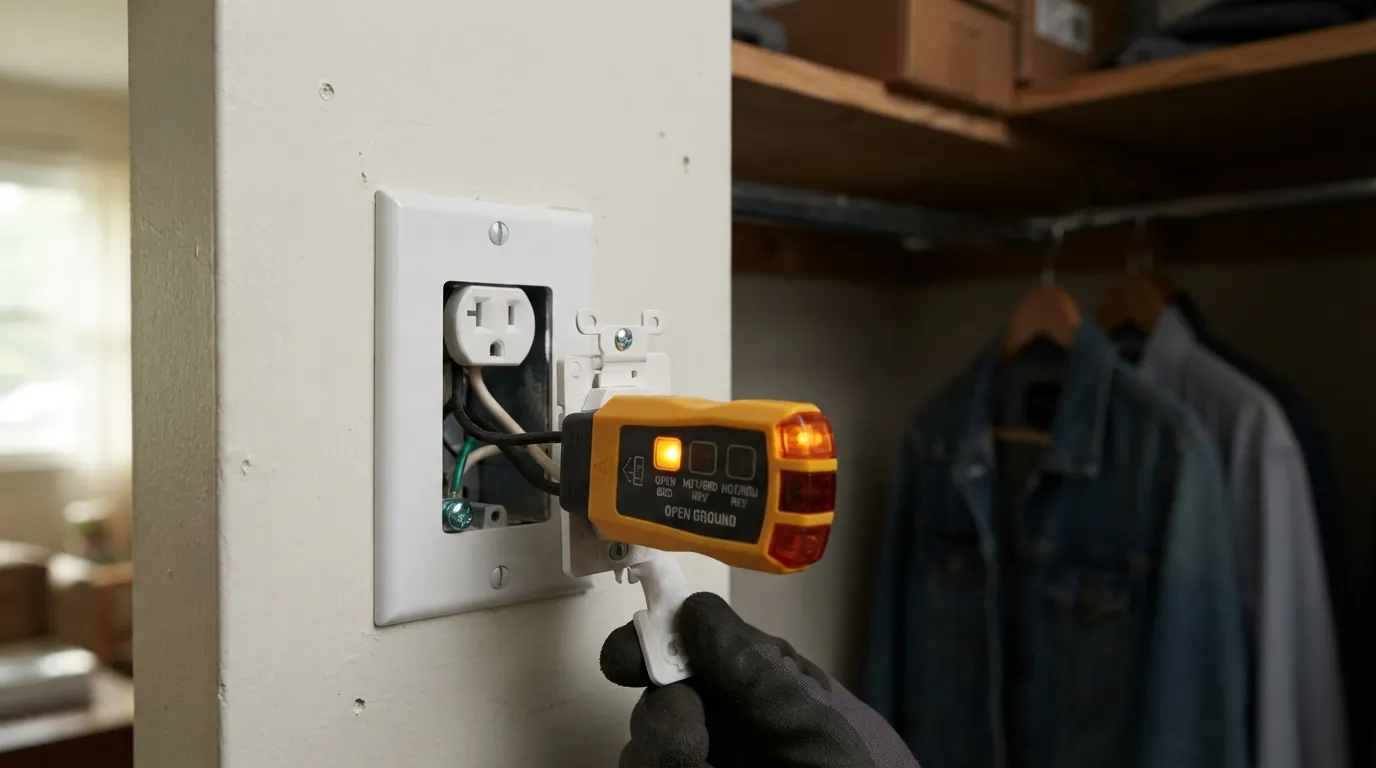
Older homes often have two-prong outlets, and a flipper knows buyers want three. The fast fix is to swap the receptacles and leave the wiring alone.
The result looks modern and acts like the old setup, because there is no ground wire behind it. A plug-in outlet tester that shows an open ground exposes the trick in about two seconds.
A legitimate fix does exist. Electrical codes allow an ungrounded outlet to be replaced with a GFCI receptacle labeled to show there is no equipment ground.
So the question is not whether the outlet has three holes. It is whether anyone told you why, and whether the label is there.
Quick Compare
- Red flag: a three-prong outlet that shows an open ground on a tester and carries no label.
- Acceptable: a GFCI receptacle marked as having no equipment ground.
- Best: a new grounded circuit run back to the panel, ideally with a permit on file.
If outlets can fake a safe system, the panel is where the real wiring story is told.
#7 – A Panel Cover Newer Than the Wiring Behind It
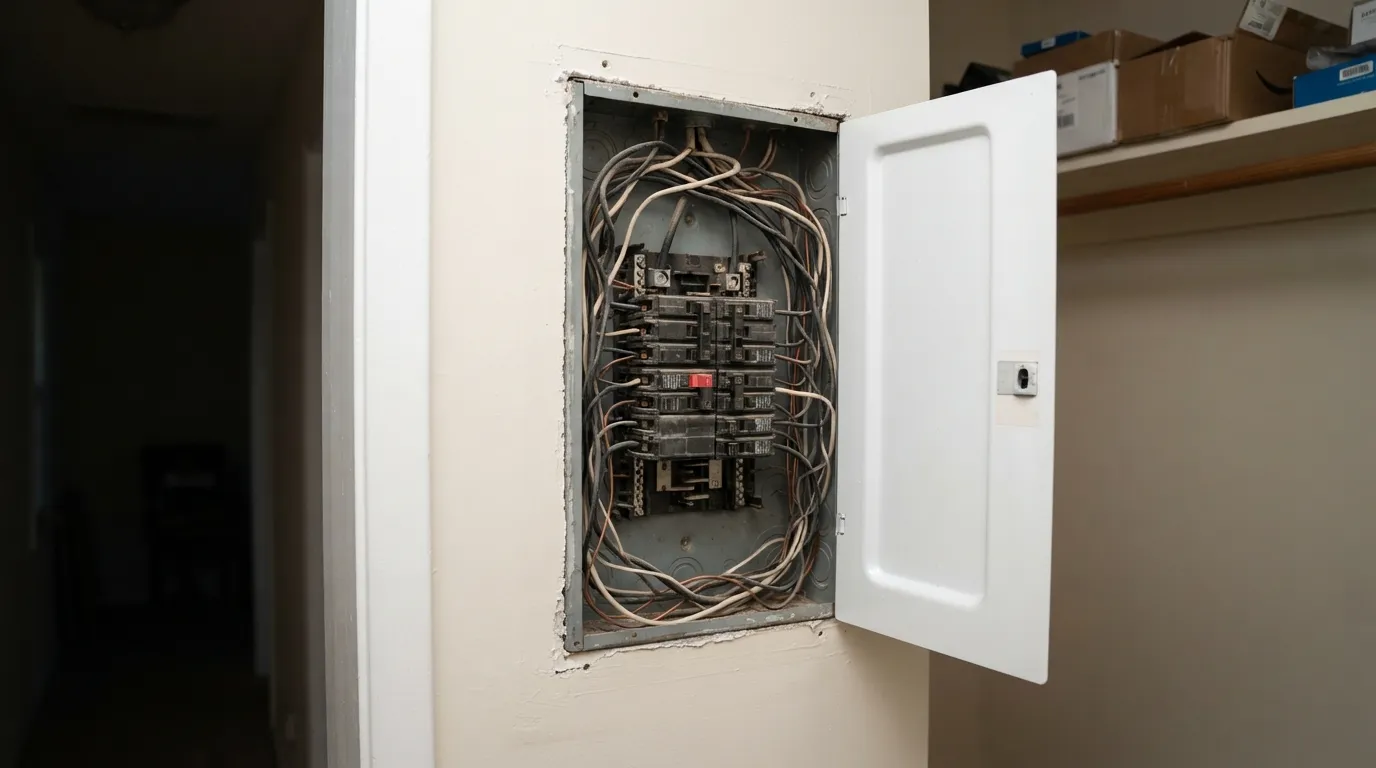
Few things look more reassuring than a freshly painted electrical panel door with a typed directory. Then the inspector takes the cover off.
Common findings include two wires clamped under a single breaker, wire too thin for the breaker feeding it, missing knockout covers and scorched insulation. A blank or guessed directory is a red flag by itself.
The brand matters too. Federal Pacific Stab-Lok panels have a long record of breakers that may fail to trip, and many inspectors flag them on sight.4
A panel is not an item you check once and forget. It decides whether an overloaded circuit trips or heats the wall.
And the panel’s location can be a problem all by itself, as the next shortcut shows.
#6 – An Electrical Panel Boxed In Behind a Closet Door
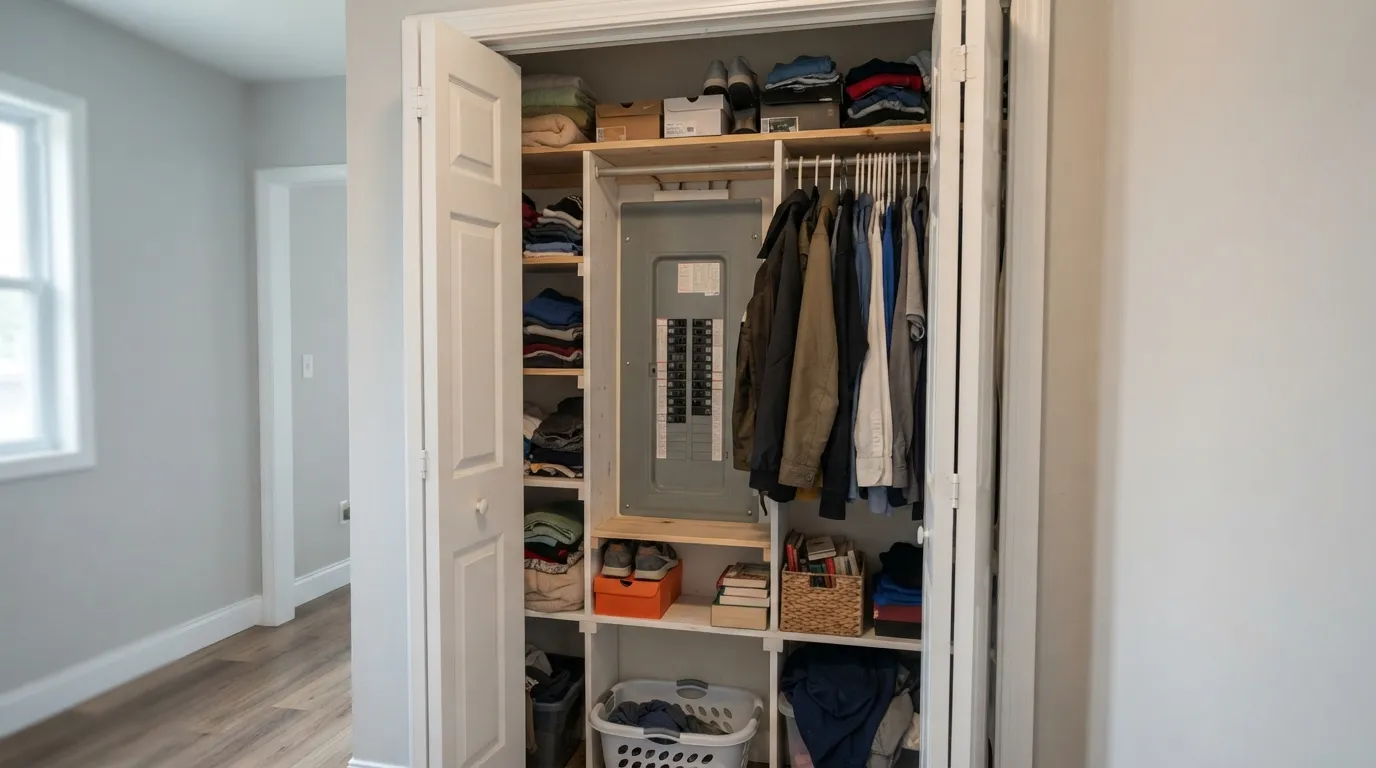
Here is a shortcut that looks like clever space planning. The flipper builds shelves, hanging rods or a whole closet around the panel.
The National Electrical Code keeps overcurrent devices out of clothes closets, because clothing is easily ignitable and a failing breaker can spark. It also calls for clear working space in front of a panel, generally 30 inches wide and 36 inches deep.5
A panel behind a washer, a stack of boxes or a bifold door fails on access alone. In an emergency, nobody wants to move a laundry basket to reach the main breaker.
Fixing it can mean relocating the panel, which is rarely cheap. That is a repair a buyer inherits after the flipper’s profit has been counted.
At a Glance
- Panels don’t belong inside clothes closets under the National Electrical Code.5
- Clear space in front: generally 30 inches wide and 36 inches deep.
- Headroom of about 6.5 feet is also expected in the working area.
- Shelves, rods and appliances in that zone are an instant fail on access.
One closet in the house has a different job, and it hides a problem you can only find by looking up.
#5 – A Bathroom Fan That Vents Into the Attic
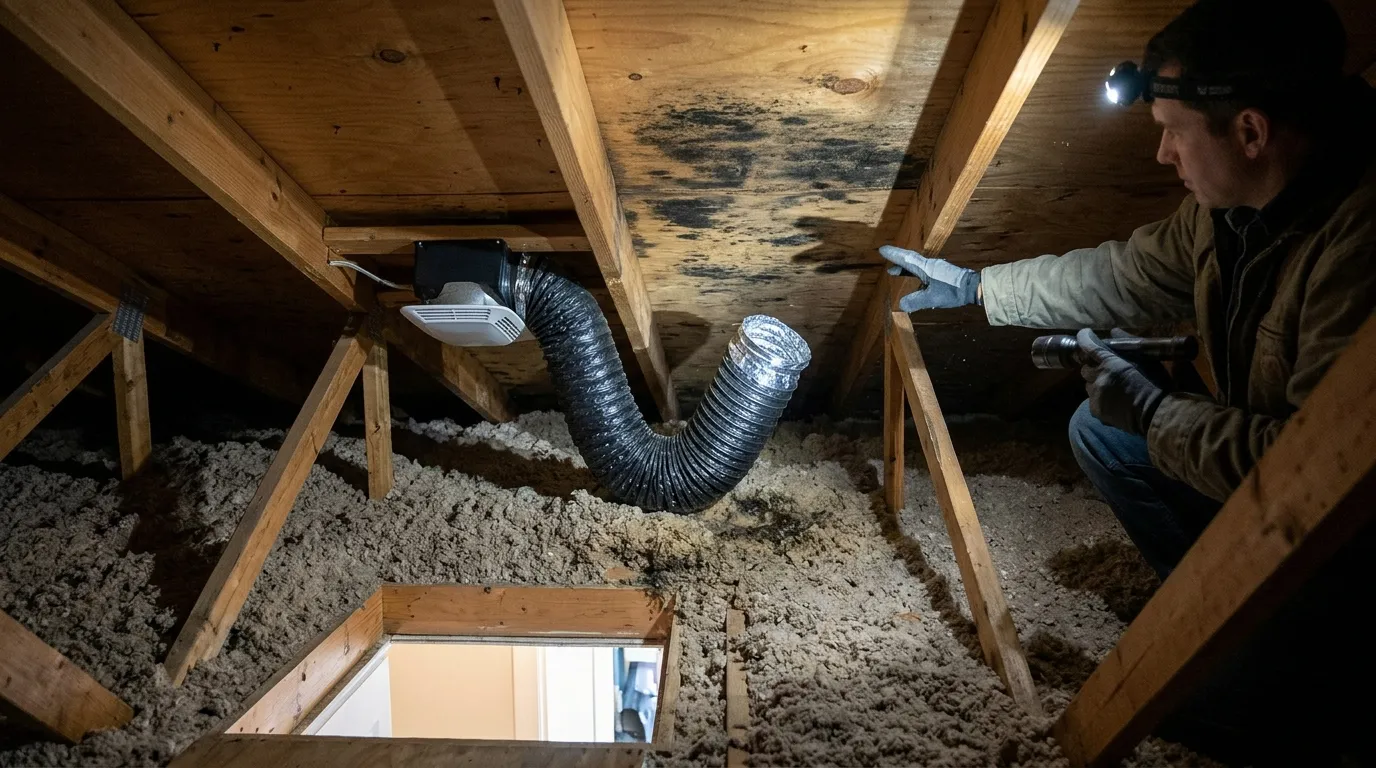
Attic access often sits in a closet ceiling, and flippers know few buyers will climb up. That hatch is where a lot of cut corners end up.
A very common one is the bathroom exhaust fan that vents into the attic instead of outside. Every hot shower then pumps moisture into the space above your ceiling.
Look for a flexible duct that simply ends in the insulation, damp or darkened roof sheathing, and compressed or missing insulation near the fan. Mold on the underside of the roof deck is an expensive thing to learn about after closing.
The fix is simple, a proper duct to the exterior, but only if someone knows it is needed. A buyer who never opens the hatch will not.
Moisture is one hidden problem. Water supply lines are another, and they are hiding in plain sight.
#4 – Shiny New Faucets on Tired Old Pipes
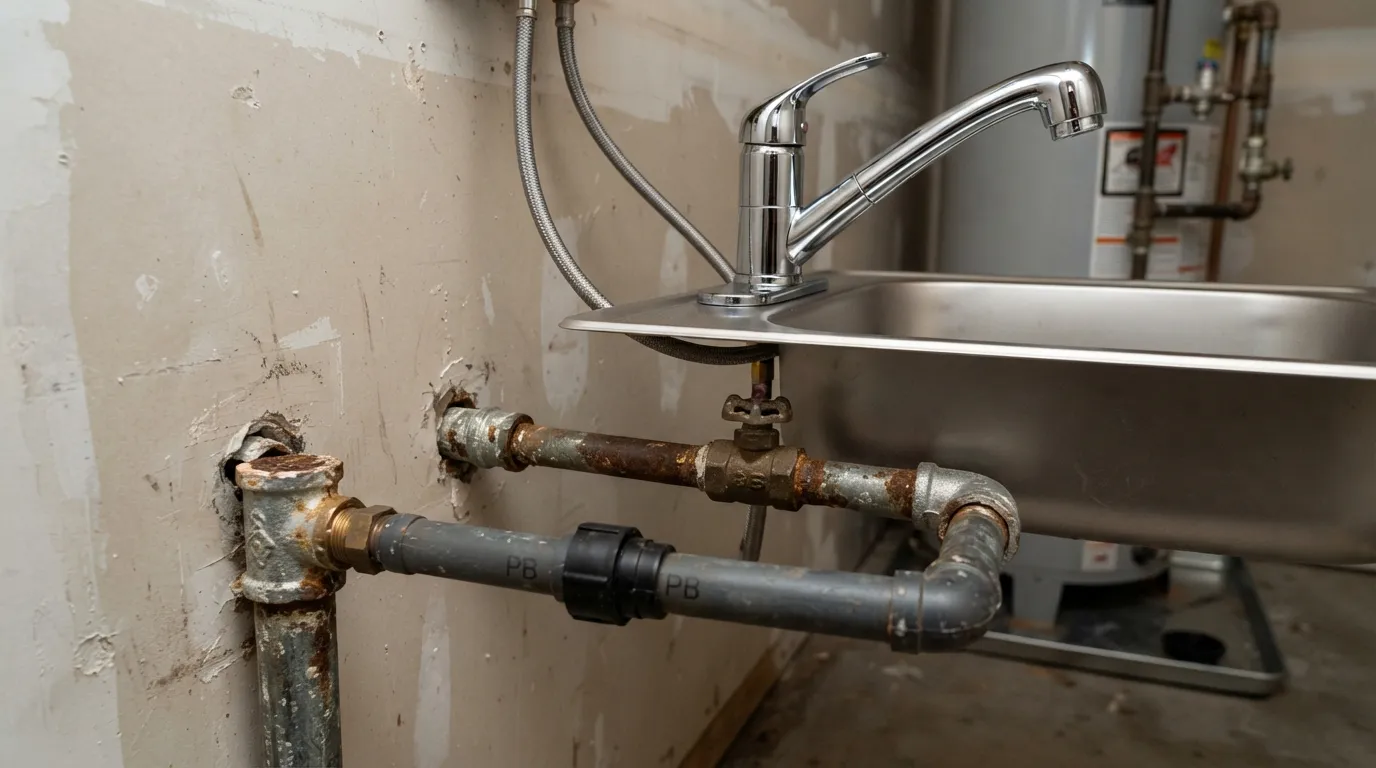
A new faucet is the cheapest way to make a plumbing system look younger. The pipes feeding it can be decades old.
Look at the supply lines near the water heater and the main shutoff. Gray plastic polybutylene piping, installed in many homes from the late 1970s into the mid-1990s, has a well-known history of failures and lawsuits.6
Old galvanized steel pipe is another suspect, with rust-colored water and weak pressure as its warning signs. Flippers often run one faucet for ten seconds and call it fine.
Turn on a shower and a sink at the same time instead. Pressure that collapses tells you more than any new fixture can.
Plumbing leaks at least announce themselves eventually. The next shortcut hides inside the ceiling above the shelf you were about to fill.
#3 – Wire Splices With No Box, Buried or Left Exposed
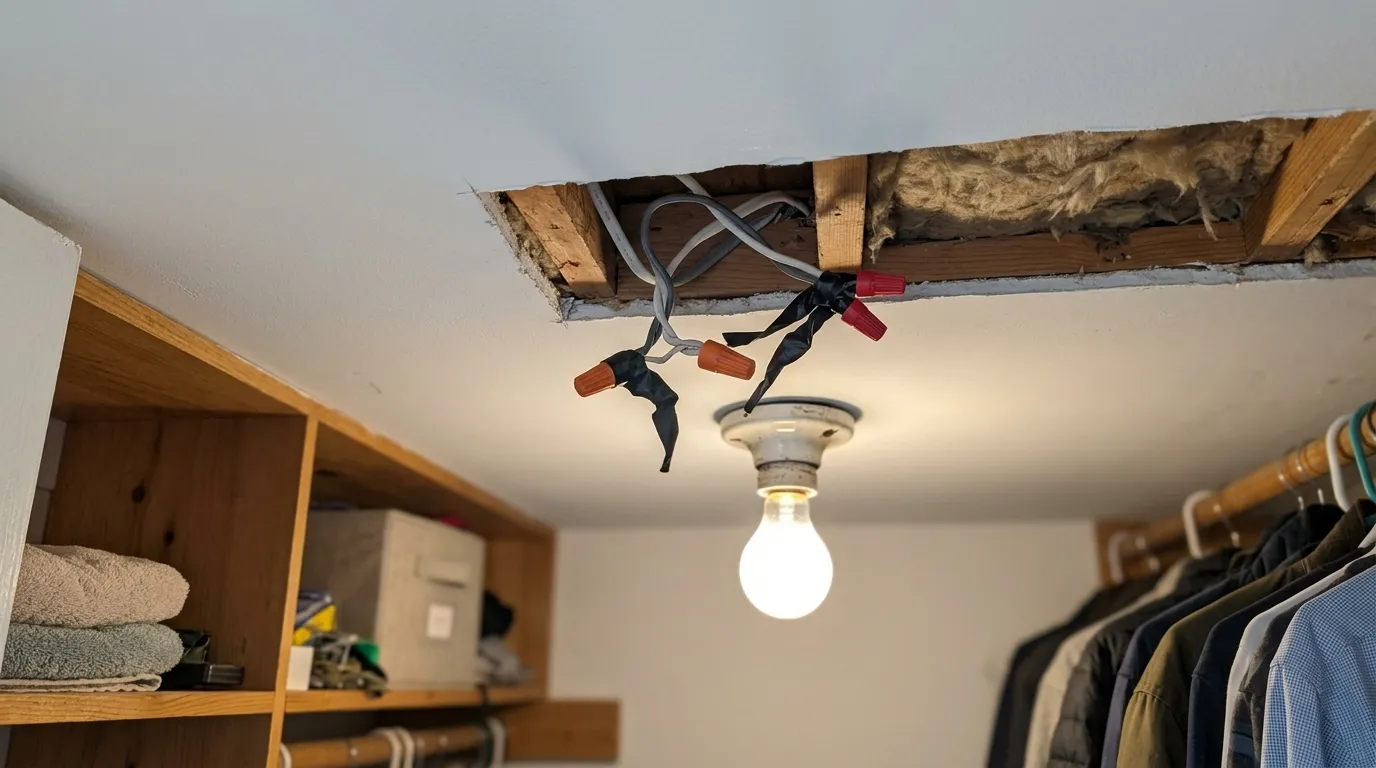
Electrical connections are supposed to live inside covered junction boxes that stay accessible. Flippers sometimes extend a circuit, twist wires together and bury the connection behind new drywall.
A closet ceiling is a favorite spot, with a bare bulb fixture and wire nuts visible in the open. A splice that nobody can reach is a splice nobody can inspect, and a loose connection is a classic source of heat.
Closet lighting has its own rules too, including required clearance between the fixture and stored items. A bare bulb close to shelving is exactly what those rules were written to prevent.
Look up in every closet and in the attic above it. Open boxes, missing cover plates and cable that simply disappears into a wall are all signs of work done fast.
The next shortcut isn’t about wires at all. It is about what you are really buying when the listing says bedroom.
#2 – A “Bedroom” That Is Really a Closet With a Window Problem
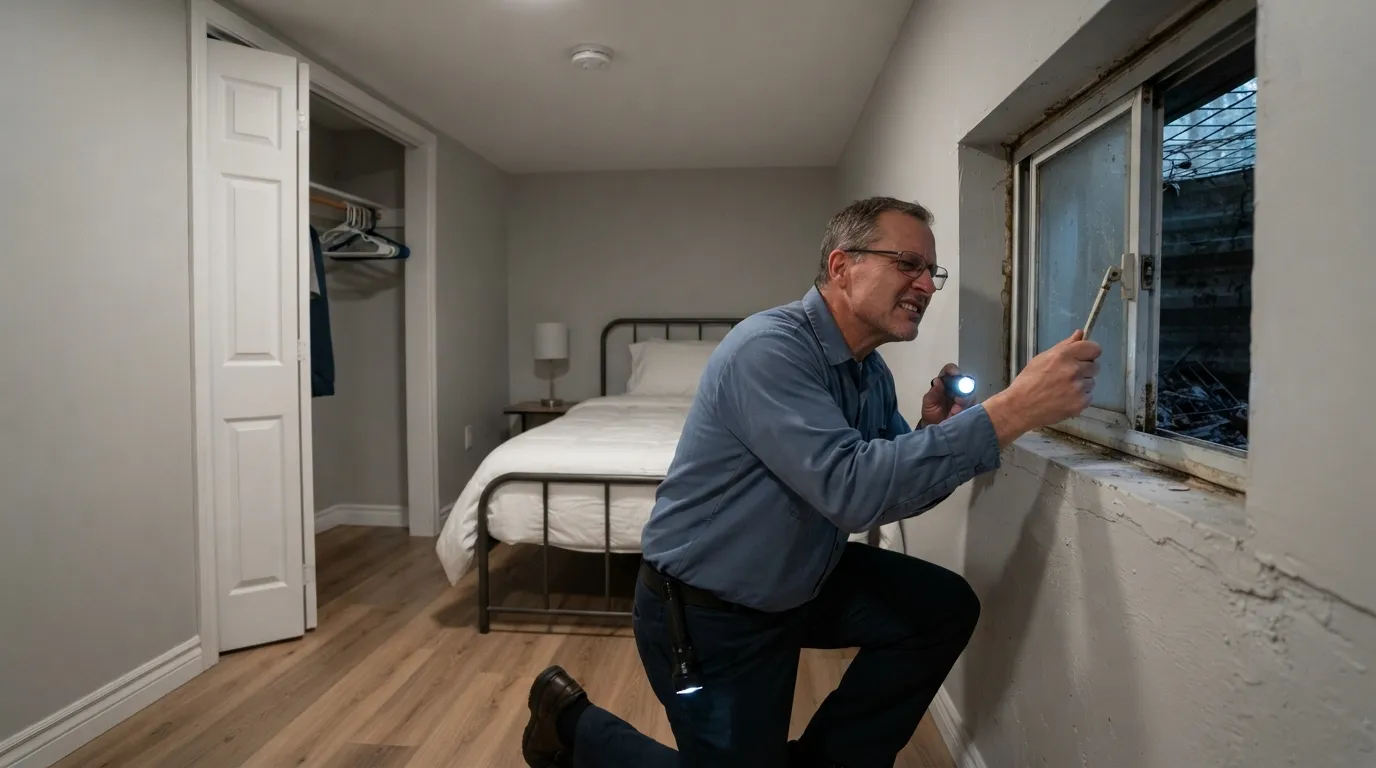
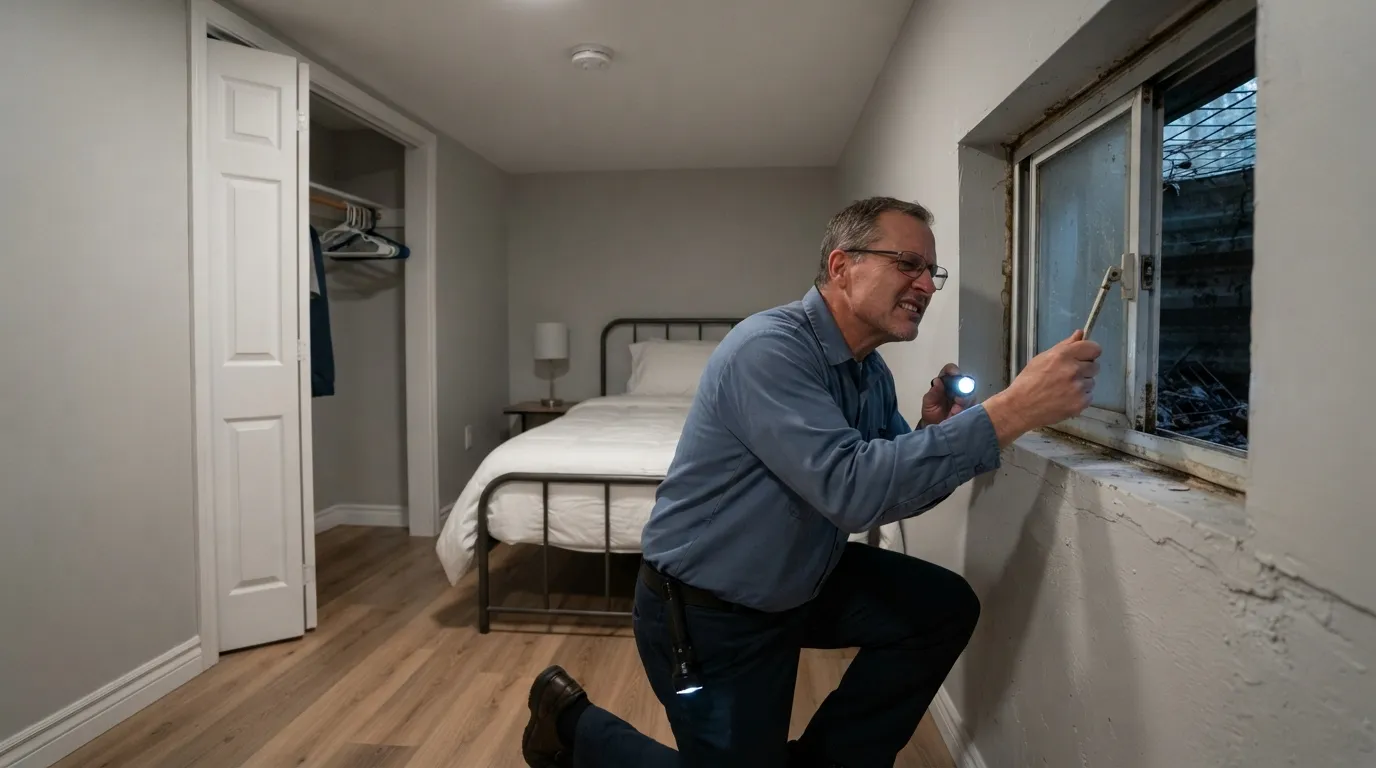
Nothing raises a listing price like one more bedroom. Flippers have been known to stretch the count by calling a den, a converted garage corner or a basement room a bedroom, usually after adding a closet.
But a closet does not make a room legal as a bedroom in most places. Egress, minimum size, ceiling height and heating usually matter more, and the model residential code calls for an emergency escape opening in sleeping rooms.
That is a safety issue before it is a paperwork one. A basement bedroom with a window that is too small or painted shut is a room a family might not escape from in a fire.
Worth Knowing
- The model residential code generally wants an escape window with at least 5.7 square feet of net clear opening.7
- That opening should be at least 24 inches high and 20 inches wide.7
- The sill is generally capped at 44 inches above the floor.7
- Local rules differ, so confirm the bedroom definition with your building department.
The money consequences follow. In many areas, bedroom count is tied to septic capacity, and a bedroom that isn’t legal can raise appraisal, insurance and resale questions.
If a legal bedroom count can be faked with a closet, imagine what else may have been done without anyone’s approval.
#1 – Renovation Work With No Permit Behind It
This is the shortcut that can sink a deal, because it often looks perfect. A new water heater, a rebuilt panel, a moved wall and a finished basement can all pass a walk-through and still be missing the paperwork that says someone qualified checked them.
A home inspector typically reports what is visible and accessible, and verifying permit history is generally not part of that job. A flipper can hand you a clean report and still be hiding a gap that no closet opening reveals.
Here is the fix, and it is one phone call or one website visit. Search your city or county building department’s permit records for the address, and compare what you find with what the house shows.
Major electrical, plumbing, structural and mechanical work usually requires permits, though the exact rules vary by jurisdiction. If a seller claims a full renovation but the file shows a single permit or none, you have your answer before you sign.
Unpermitted work can complicate insurance claims and resale, and some buyers end up paying to open walls, bring work up to code or legalize it. Ask the seller for permit numbers in writing, and ask the building department what is on file.
Every shortcut on this list is a different way of saying the same thing: the house was dressed for the photograph, not for the person who lives in it. Open the closet, look up, pull the panel cover, and then check the paperwork that stands behind all of it.
A fresh coat of paint is easy to love, and a permit file is easy to ignore. The house that survives both checks is the one worth buying.
- Charlotte Flipped Home Case Study: https://charlotte-inspector.com/blog/flipped-home-inspection-case-study/
- Home Inspector’s T&P Valve Notes: https://thehomeinspectorsnotebook.com/water-heater-temperature-pressure-relief-valves/
- ICC Water Heater Safety: https://www.iccsafe.org/building-safety-journal/bsj-technical/water-heater-safety-in-the-international-codes/
- FPE Stab-Lok Hazard Summary: https://inspectapedia.com/fpe/FPE_Stab_Lok_Hazard_Summary.php
- IRC Electrical Equipment Clearances: https://up.codes/s/equipment-location-and-clearances
- Polybutylene Pipe Failure Overview: https://www.repipesolutionsinc.com/why-does-polybutylene-pipe-fail/
- Egress Window Requirements Guide: https://datumspot.com/code-corner/egress-window-size/