

Walk through a $10 million home and it’s easy to assume everything you’re seeing required a bottomless budget.
But many of the details that make these homes feel expensive aren’t about scale or square footage — they’re about selective upgrades, placed where they matter most.
High-end homes rarely try to upgrade everything at once. Instead, they concentrate money and attention on a few visible, high-impact areas that quietly elevate the entire space. When those same ideas are applied strategically, they can often be replicated for far less than expected.
Here are 15 upgrades commonly seen in eight- and nine-figure homes and how they can be recreated for under $5,000 (when done thoughtfully). Please note that this article contains affiliate links.
A defined entry path with intentional materials
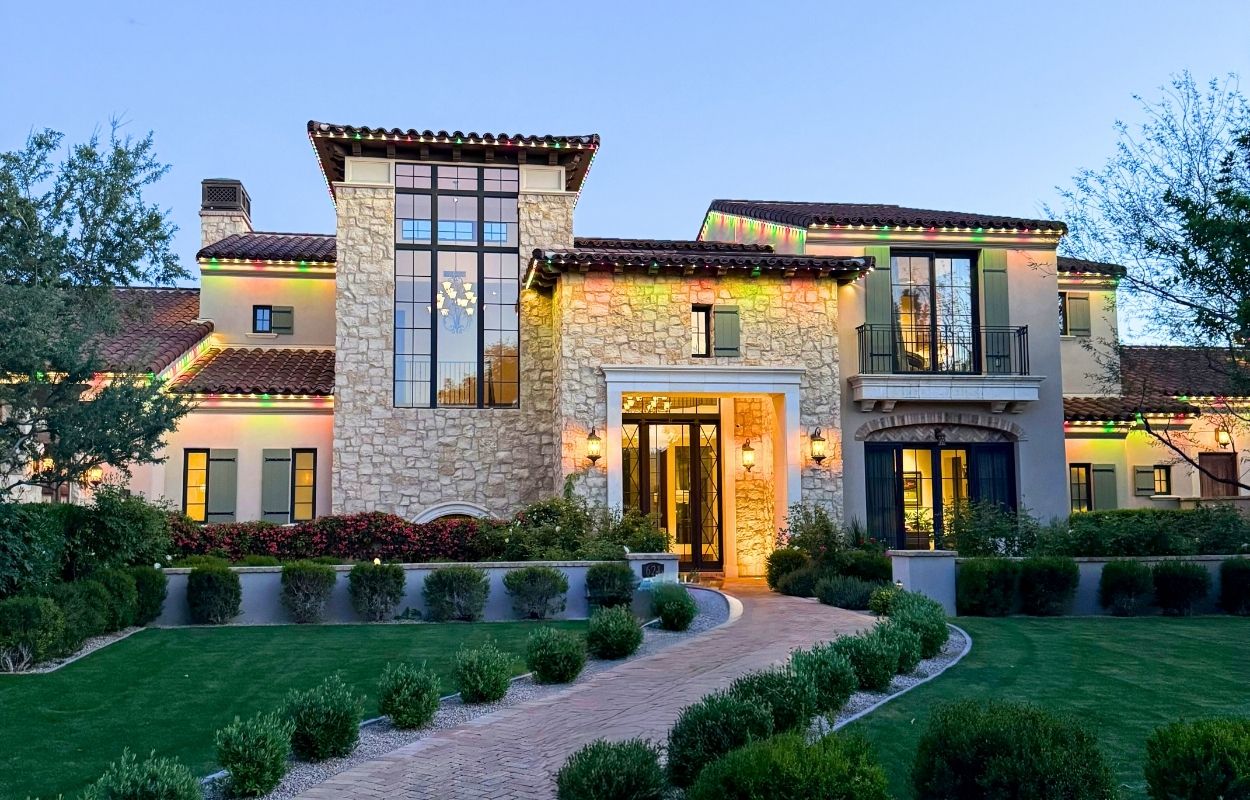
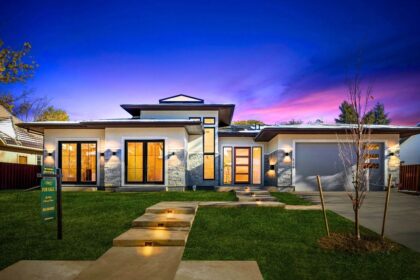
High-end homes rarely have a basic straight concrete walkway leading to the door.
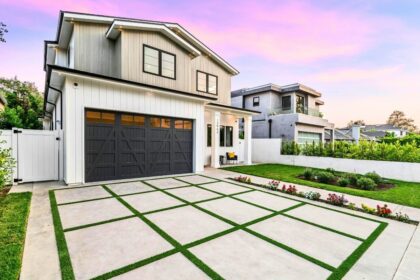
Instead, the path is designed and often includes stepping stones, staggered pavers, gravel with stone borders, or concrete pads with grass joints.
Reworking just the immediate approach to the front door can dramatically elevate the feel of the entire exterior. Even replacing a narrow builder-grade walkway with wider-format pavers creates a more estate-like presence. It’s less about size and more about proportion and intention.
Exterior lighting that turns the home into a nighttime statement
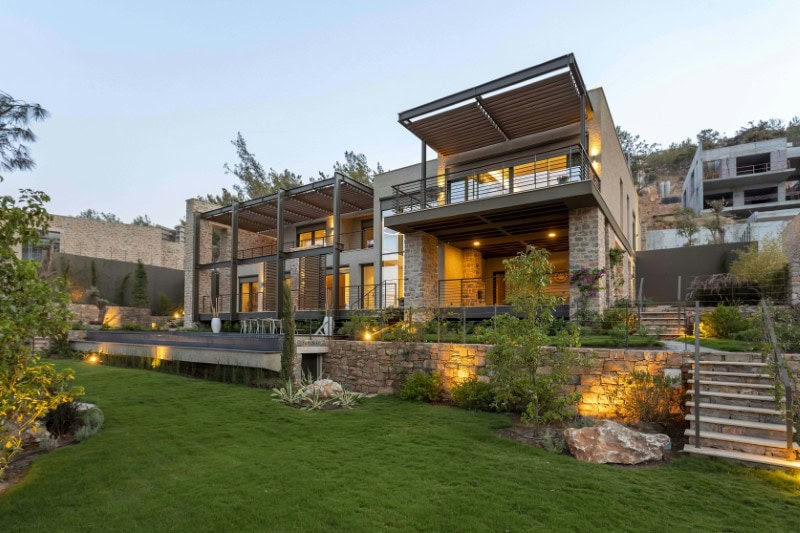
In ultra-luxury homes, exterior lighting isn’t just functional, it’s downright architectural. Soft uplights highlight trees, wash textured walls, and graze stone or wood siding to emphasize depth and form after dark.
You don’t need a full landscape lighting plan to achieve this effect. A handful of well-placed low-voltage uplights aimed at key architectural features — the entry, a feature wall, a mature tree — can dramatically elevate how a home looks at night.
The impact is disproportionate to the cost. Suddenly the house feels composed and intentional, even after sunset.
Architectural wall lighting that adds depth, not just brightness
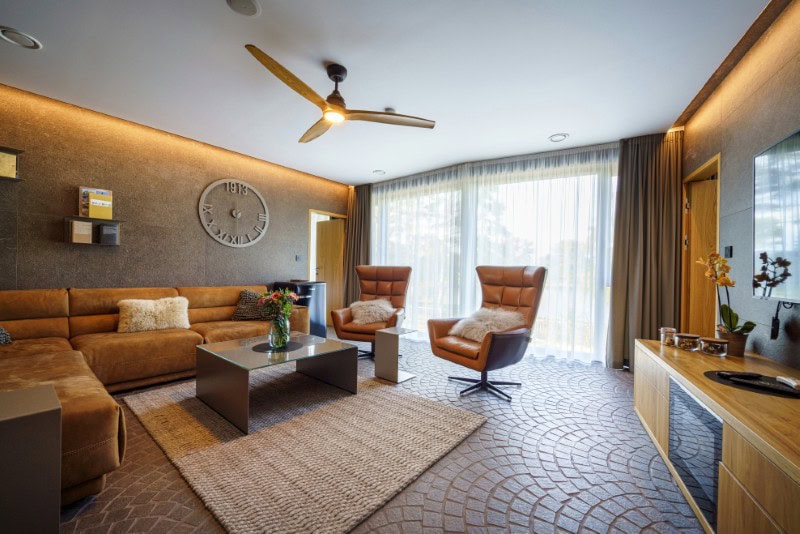
In luxury homes, lighting is treated as part of the architecture.
Slim wall sconces, vertical uplighting, and concealed LED strips are used to add dimension to hallways, living rooms, kitchens and staircases, not just to illuminate them.
This effect can be replicated affordably by installing a small number of hardwired sconces or plug-in fixtures with clean profiles, or by adding LED strip lighting in coves, behind millwork, or along architectural features.
The key is placement, not quantity. Even one thoughtfully lit wall can change how an entire room feels.
Fluted or reeded panel accents for texture and rhythm
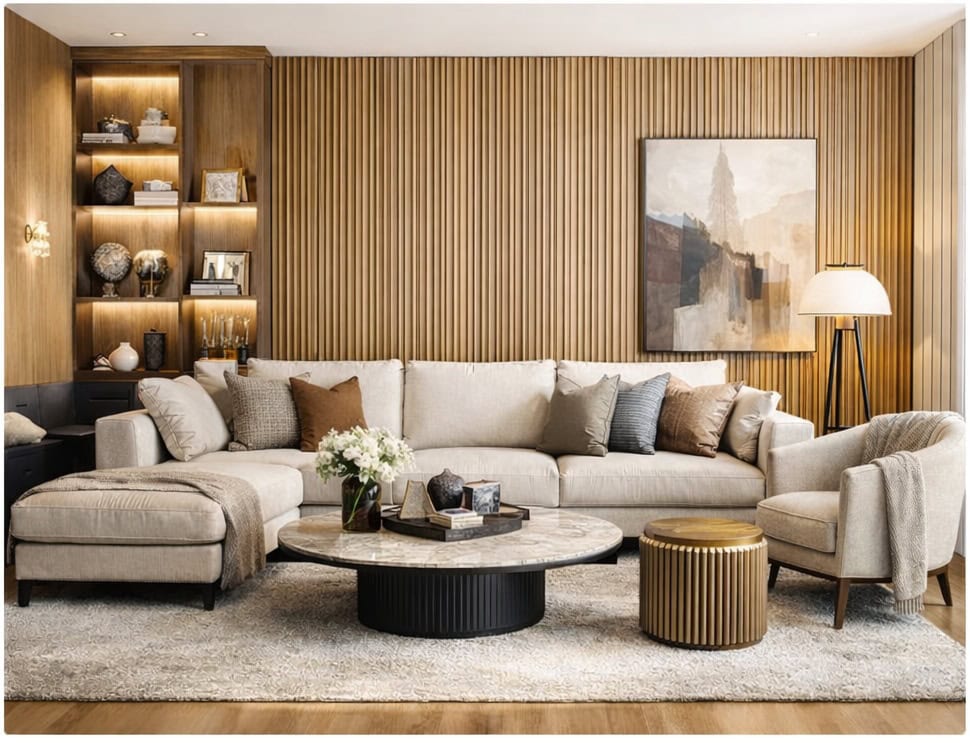
Fluted detailing shows up everywhere in high-end homes — on walls, islands, bars, and even furniture — because it adds visual interest without relying on color or ornament.
Instead of custom millwork, homeowners can achieve a similar look using MDF or wood fluted panels, applied selectively to a single wall, niche, or built-in. Painted in the same color as the surrounding walls, fluting creates depth that feels architectural rather than decorative.
Built-in shelving that feels intentional, not ornamental
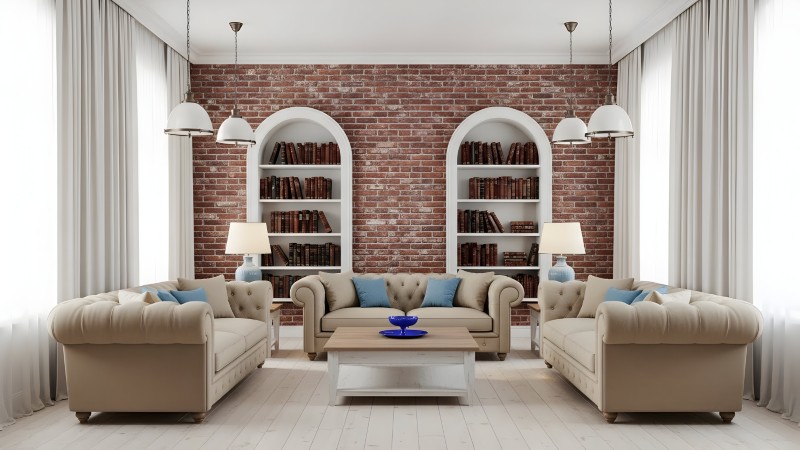
In $10M homes, shelves are rarely standalone furniture pieces. They’re integrated into walls, aligned with openings, and designed to feel permanent.
This look can be recreated using plywood or MDF boxes installed wall-to-wall and floor-to-ceiling, finished with paint rather than expensive wood. The key is committing to the full span of the wall and keeping proportions clean.
When shelves look like they were planned alongside the room (and not added later), they read as a much more expensive feature.
Custom-look range hoods that anchor the kitchen
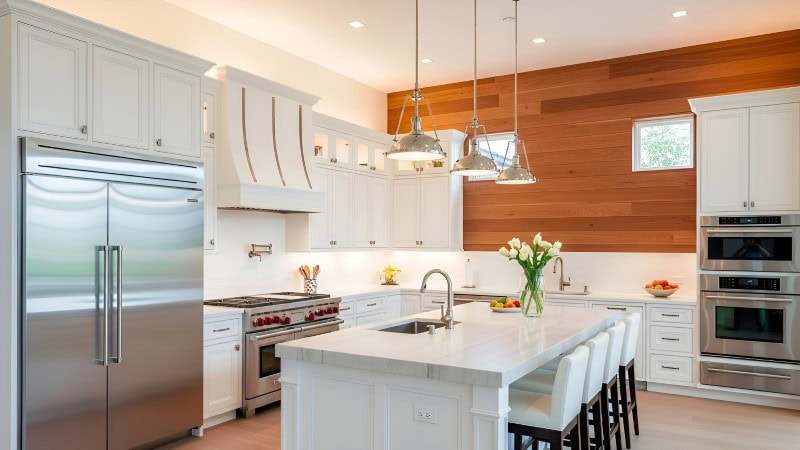
Luxury kitchens almost always feature a sculptural range hood, often plastered, paneled, or wrapped in stone. It becomes a focal point without shouting for attention.
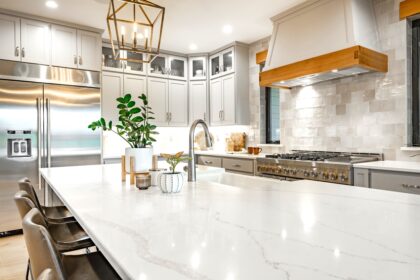
A similar effect can be achieved by framing a basic hood insert with drywall, wood, or plaster, and finishing it to match or subtly contrast the surrounding cabinetry. This upgrade visually grounds the kitchen and makes even modest appliances feel intentional and high-end.
One panel-ready appliance that changes the entire room
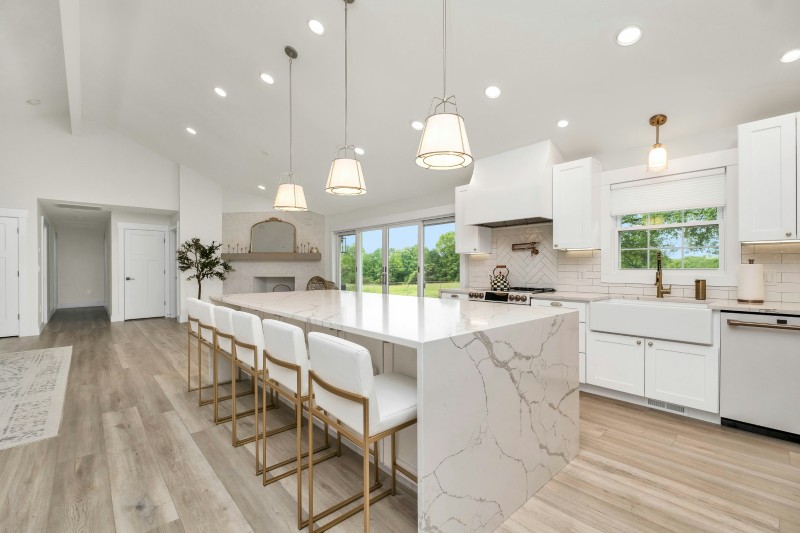
In high-end homes, appliances are often hidden behind cabinetry to maintain visual calm.
While outfitting an entire kitchen with panel-ready appliances can be costly, incorporating just one — usually the dishwasher — delivers a significant impact.
Hiding a dishwasher behind a cabinet panel removes visual clutter and makes the kitchen read as more custom. It’s a single move that instantly shifts the room away from “standard kitchen” and toward “designed space.”
Statement stair runners that soften and elevate circulation spaces
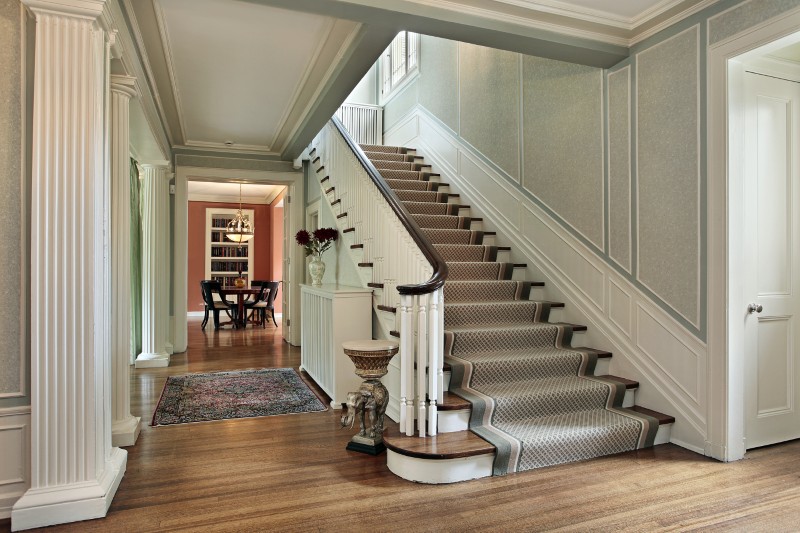
Stairs in luxury homes are rarely left bare. They’re treated as design moments, often softened with custom runners that introduce texture and pattern.
Installing a tailored or luxurious-looking stair runner — especially one with a subtle pattern or natural fiber — adds warmth and visual interest without the cost of replacing the staircase itself. It also makes a transitional space feel finished and considered rather than purely functional.
Ceiling detail in one strategically chosen room
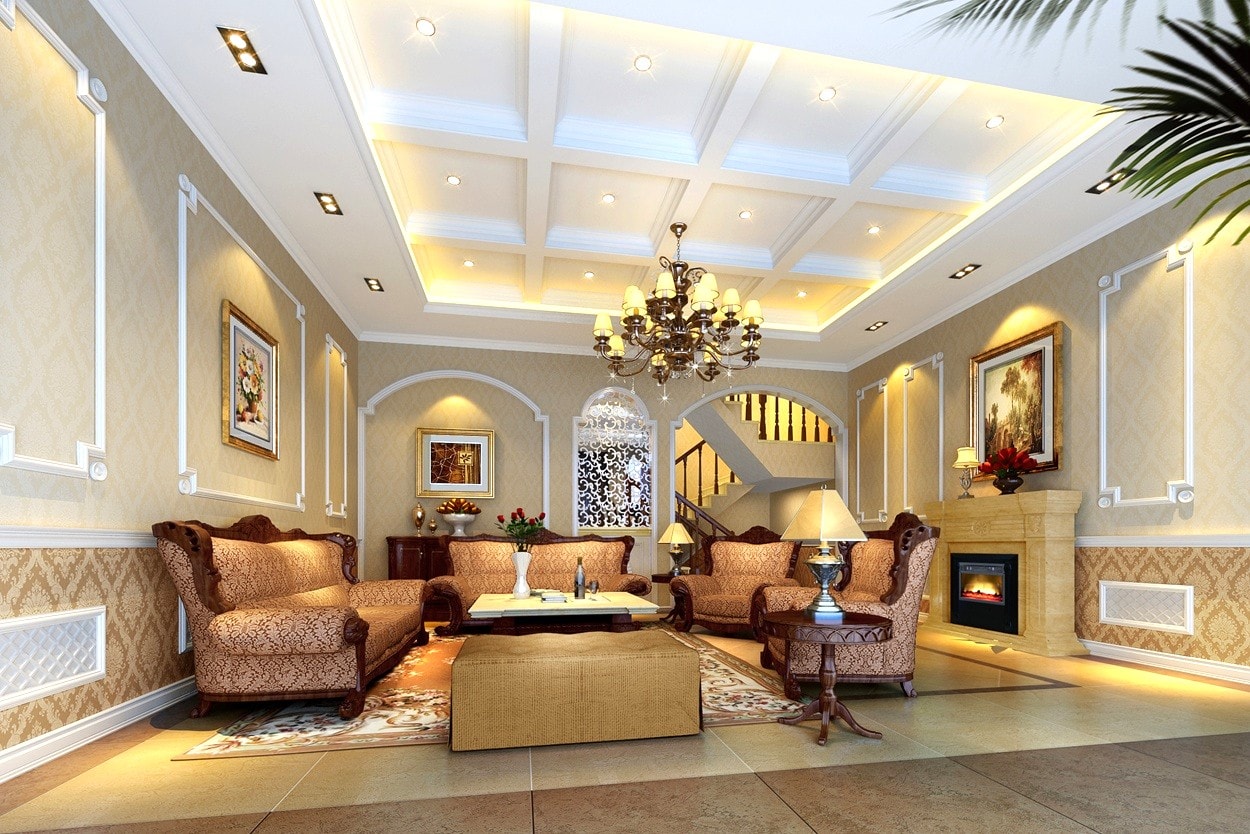
High-end homes often feature dramatic ceilings — coffered, beamed, or subtly detailed — but rarely everywhere. The impact comes from restraint.
Replicating this effect means choosing one room where ceiling detail will matter most, such as a living room, dining room, or primary bedroom.
Simple beams, shallow coffers, or applied molding can dramatically change how a space feels, even when executed with straightforward materials.
Stone-look fireplace surrounds using large-format porcelain
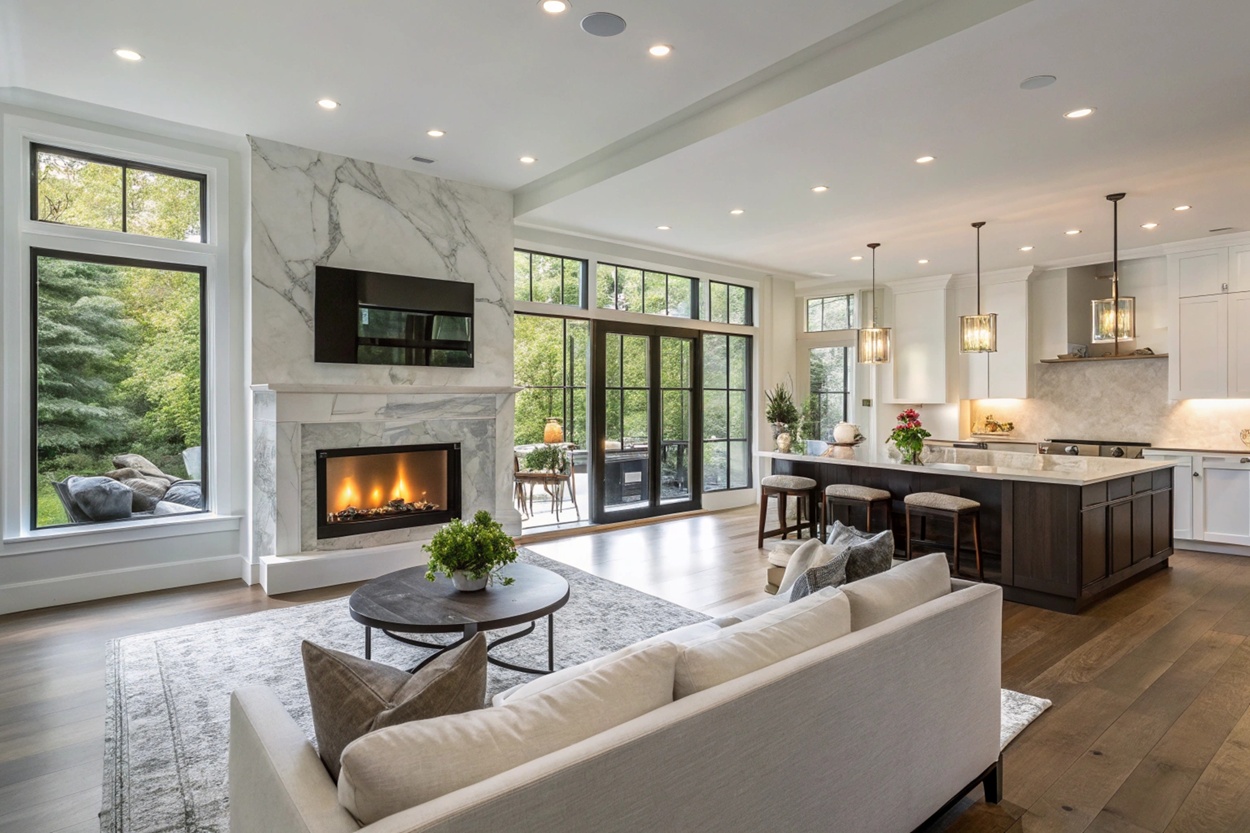
In luxury homes, fireplaces are often wrapped in full slabs of stone, creating a seamless focal point. While natural stone slabs can be expensive, large-format porcelain tiles now replicate this look convincingly.
Using fewer grout lines and extending the surround from floor to ceiling gives the fireplace a monolithic presence that feels custom and architectural — at a fraction of the cost of real stone.
Closet lighting that mimics boutique retail
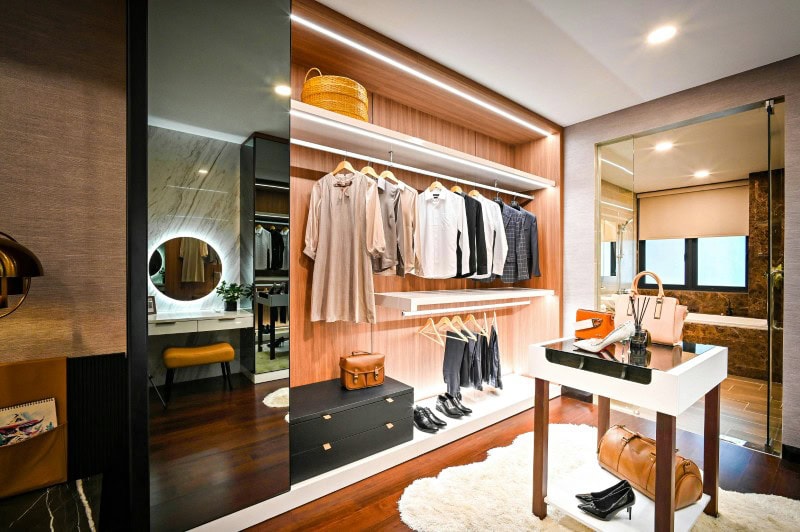
Closets in $10M homes are lit like high-end stores: soft, even, and integrated directly into shelving and hanging areas.
This can be recreated by adding LED strip lighting inside closet cabinets, under shelves, or along hanging rods. Motion sensors and warm color temperatures make the space feel elevated and functional — transforming even a modest closet into something that feels intentionally designed.
Outdoor curtains or retractable shade panels
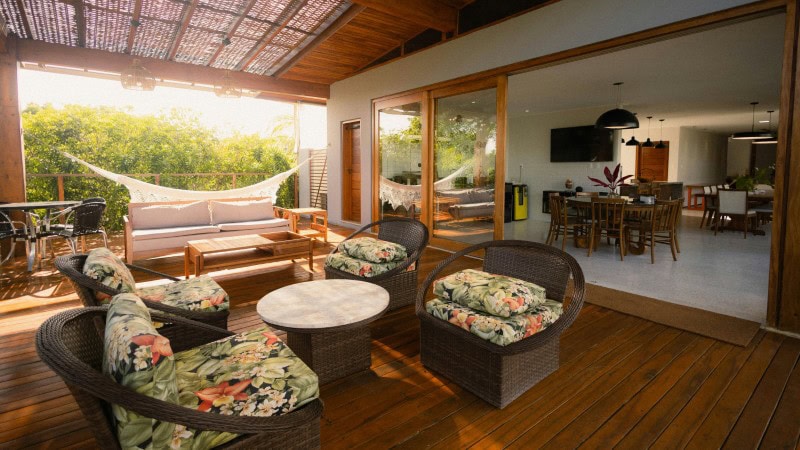
Like we’ve already established, luxury homes treat outdoor spaces like living rooms. That means softness, privacy, and comfort — often achieved through flowing curtains, retractable shade panels, or fabric screens.
Adding weather-resistant curtains to a covered patio or pergola instantly makes the space feel resort-level. It introduces movement, texture, and a sense of enclosure without construction.
The transformation can feel dramatic, even though the cost is relatively affordable.
Slatted wood or metal screening for outdoor privacy
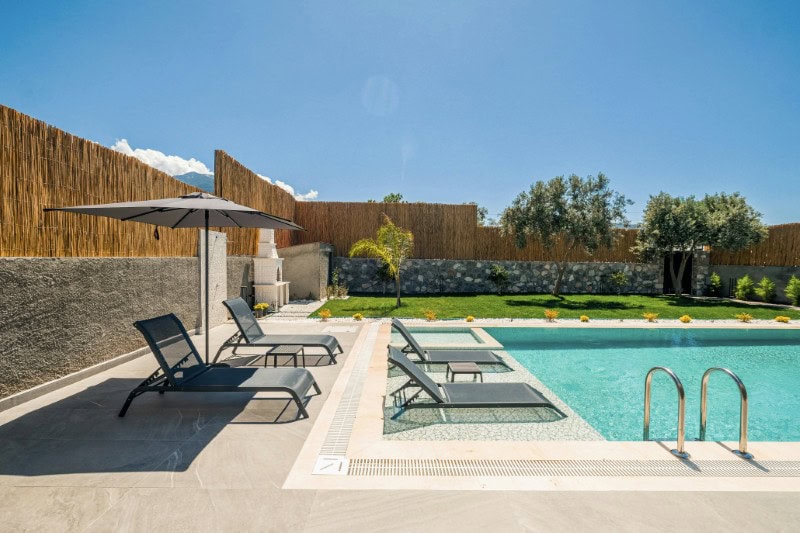
Privacy is one of the biggest priorities in luxury homes, but it’s often achieved subtly — through slatted wood panels, modern fencing, or decorative screens rather than bulky barriers.
Installing a simple horizontal wood screen or metal privacy panel along a patio edge can instantly make an outdoor area feel more intentional and secluded. It also adds architectural interest without a full fence replacement.
A clean-lined pergola that defines the backyard
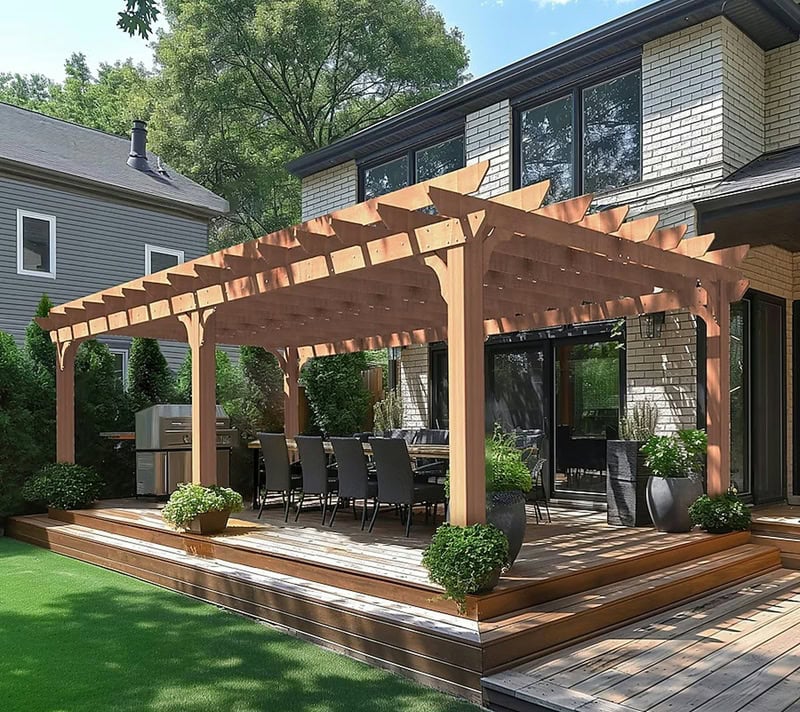
In eight-figure homes, outdoor areas are rarely left undefined.
A pergola (even a simple wood or metal one) establishes structure and gives scale to patios and seating areas. It also acts as a canvas of sorts, to start building more high-end additions (like letting ivy or wisteria start growing on it for a striking visual effect).
A modest pergola kit or custom-built simple frame can make a backyard feel designed rather than accidental. It introduces rhythm, shade, and a sense of room-like boundaries.
The power of stylish and practical upgrades, done well
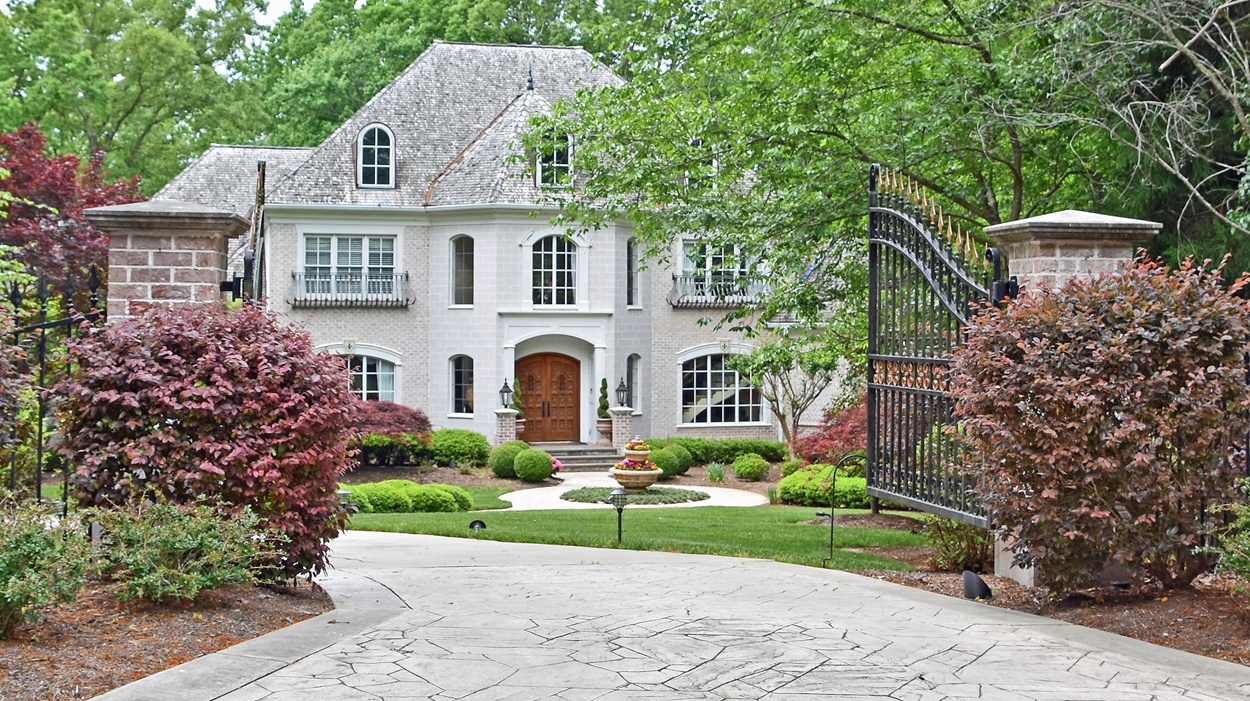
What all of these upgrades have in common is focus. They don’t attempt to transform an entire house at once. Instead, they concentrate effort where the eye naturally goes — and where thoughtful design has the greatest impact.
That’s the real luxury lesson: not spending more everywhere, but spending better in a few key places.
More stories
20 high-end design tricks that cost almost nothing
How to host like a Bridgerton (without needing a ballroom)
18 Things designers would change first in a builder-grade house