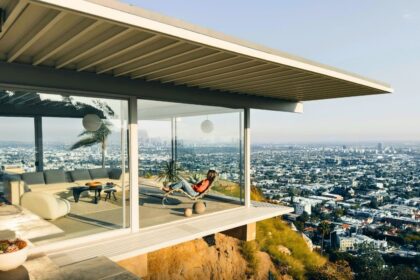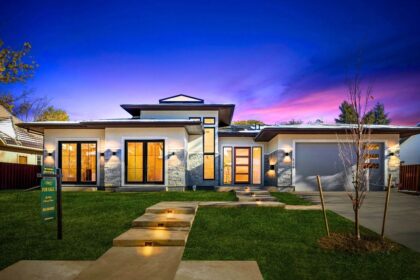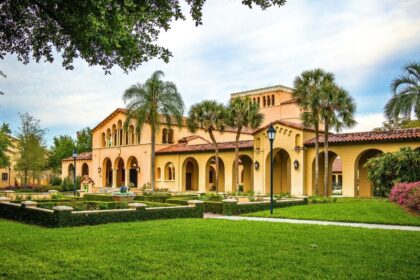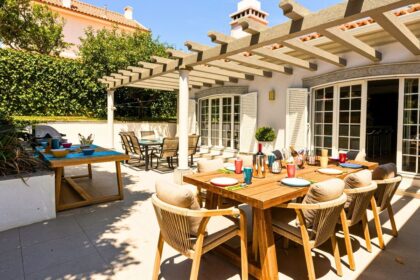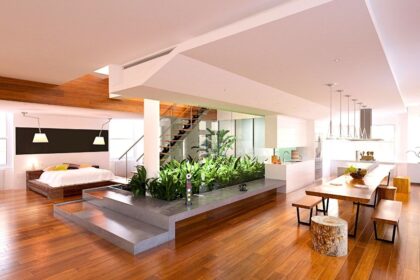


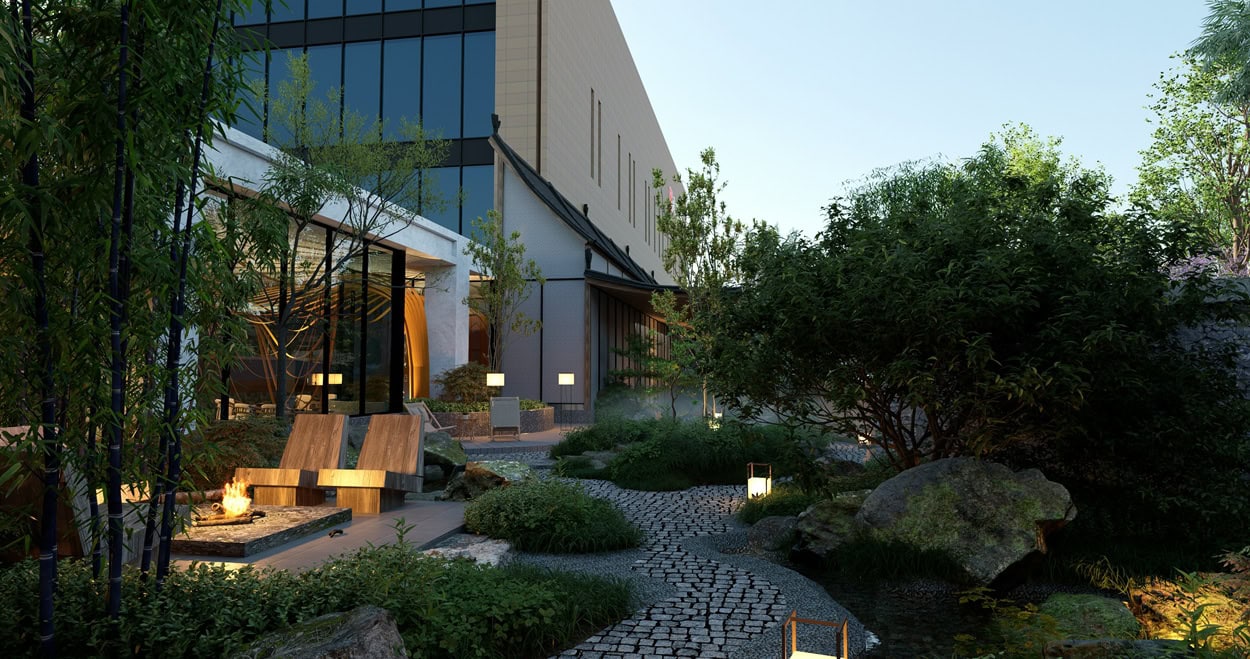
Look closely at the last twenty houses that made you stop scrolling. The Malibu box with the cantilevered second floor. That black-clad thing in the Hollywood Hills. The Miami Beach tropical modern with the wood-look siding that somehow never seems to gray out.
Odds are good the exterior on at least half of them started life as a product spec’d for office parks and warehouses.
Nobody announces this. Listings talk about “custom cladding” and “architectural detailing” and leave it there. But walk a job site with an architect and you’ll hear brand names that belong in a construction supply catalog, not a design magazine.
The line between what goes on a corporate campus and what goes on an eight-figure house got blurry about a decade ago, and it hasn’t come back.
Where this shift actually started
Loft conversions cracked the door open first.
Old industrial buildings turned into apartments people paid a fortune for, and those buildings already wore commercial skins — metal, masonry, panel systems.
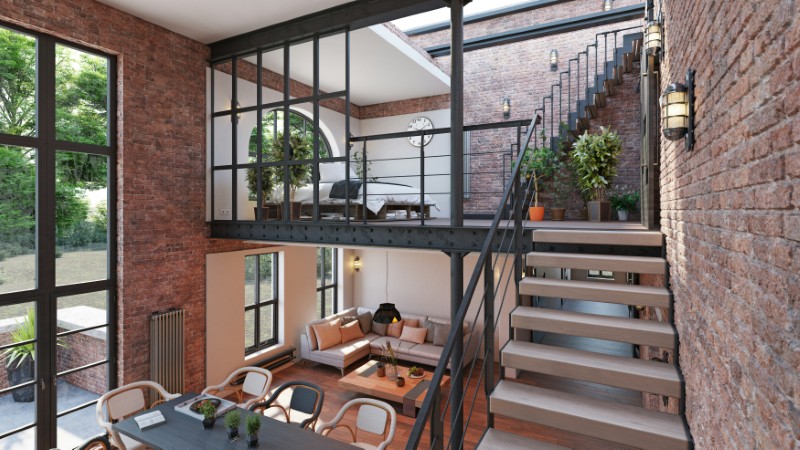
Buyers decided they liked it. The rawness read as authentic instead of cheap.
Then modernist new-builds picked it up. Flat roofs, long horizontal lines, minimal trim — that vocabulary needs materials that come in big, flat, consistent formats. Traditional lap siding fights you on that. Panel systems don’t.
Luxury multi-family sealed it.
Developers building high-end condo towers had commercial code requirements to satisfy anyway, so they were already speccing non-combustible cladding. When those buildings turned out gorgeous, single-family clients started asking for the same look.
There’s a practical wrinkle here that gets skipped. These systems install differently than residential siding. Different fasteners, different moisture-barrier detailing, different tolerances for expansion.
A crew that’s excellent at cedar shake can genuinely botch a large-format panel job — not through laziness, just unfamiliarity.
Which is why a lot of high-end residential projects now bring in commercial siding installers rather than a standard home exterior crew, especially when the design calls for concealed fastening or long uninterrupted runs. The material is only half the outcome. The other half is whether the person hanging it has done it fifty times before.
Fiber cement — The workhorse that went upscale
Fiber cement was never glamorous. It was the sensible option — the thing you picked because it wouldn’t rot, wouldn’t burn, and wouldn’t feed termites. James Hardie built an empire on exactly that promise.
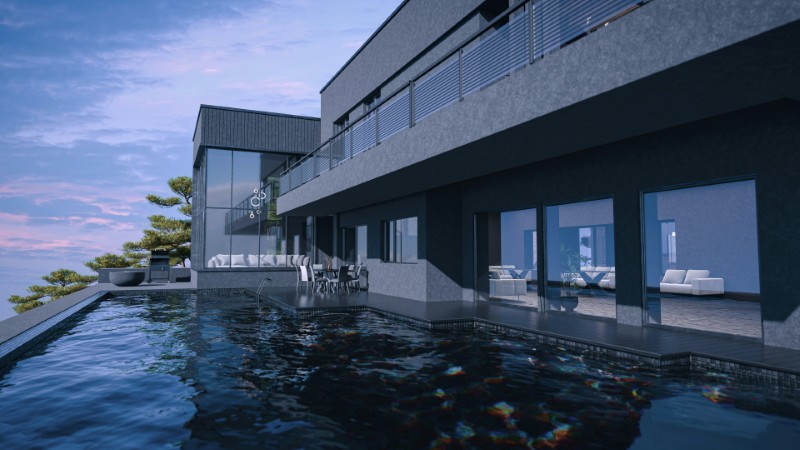
Somewhere along the way the product got better looking.
Deeper wood grain on the textured lines, cleaner edges on the smooth ones, color finishes that hold for fifteen-plus years without a repaint. And architects noticed it does something wood physically can’t: stay dimensionally stable through wet summers and freezing winters. Boards don’t cup. Joints don’t open up.
Coastal projects are where it really won.
Salt air destroys a lot of materials on a schedule that would shock you. Fiber cement shrugs. Pair it with corrosion-resistant fasteners and marine-grade sealant and you’ve got a beach house exterior that still looks composed after a decade of storms.
It also happens to be non-combustible, which stopped being a footnote in the last few years. More on that below.
Metal panel systems and the modernist look
Standing seam started on barns and warehouses. Now it’s the exterior of choice for anyone chasing that clean, machined, slightly severe aesthetic that photographs so well.
The appeal is geometric. Vertical panels with raised seams give you rhythm without ornament. The fasteners hide underneath, so nothing interrupts the plane. On a big wall, that reads as intentional in a way lap siding never will.
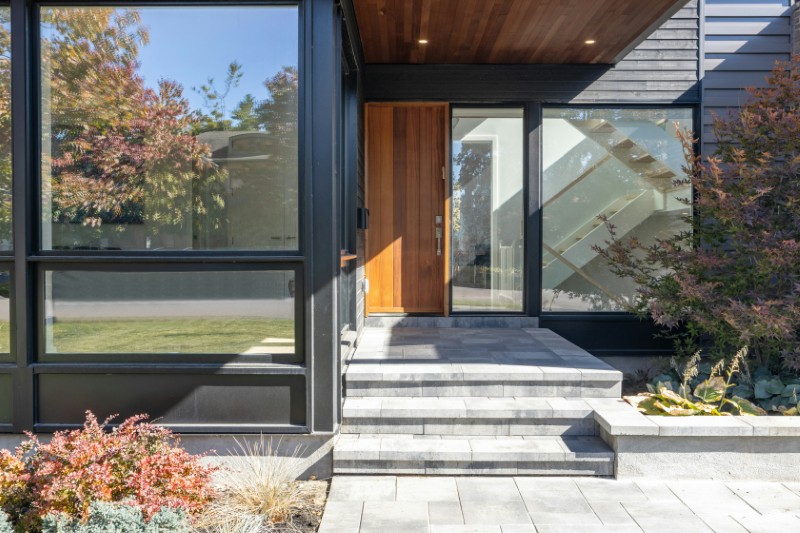
Flat and ribbed aluminum panels do something similar with even less texture. Powder-coated finishes come in essentially any color, including the moody charcoals and matte blacks that dominate contemporary residential design right now.
Some of the best examples mix metal with wood or stone on different elevations — metal on the exposed faces, warmth where people actually stand.
Practically speaking, metal is light, it doesn’t burn, and it lasts several decades with almost no attention. The trade-off is that it shows sloppy work mercilessly. A wavy panel or an inconsistent seam is visible from the street forever.
Architectural panels — Nichiha, ACM, and the Premium Tier
This is where residential borrows most directly from commercial, and where the money goes.
Architectural wall panels — Nichiha being one of the names you’ll hear, aluminum composite systems being another — were developed for buildings that needed to look like something.
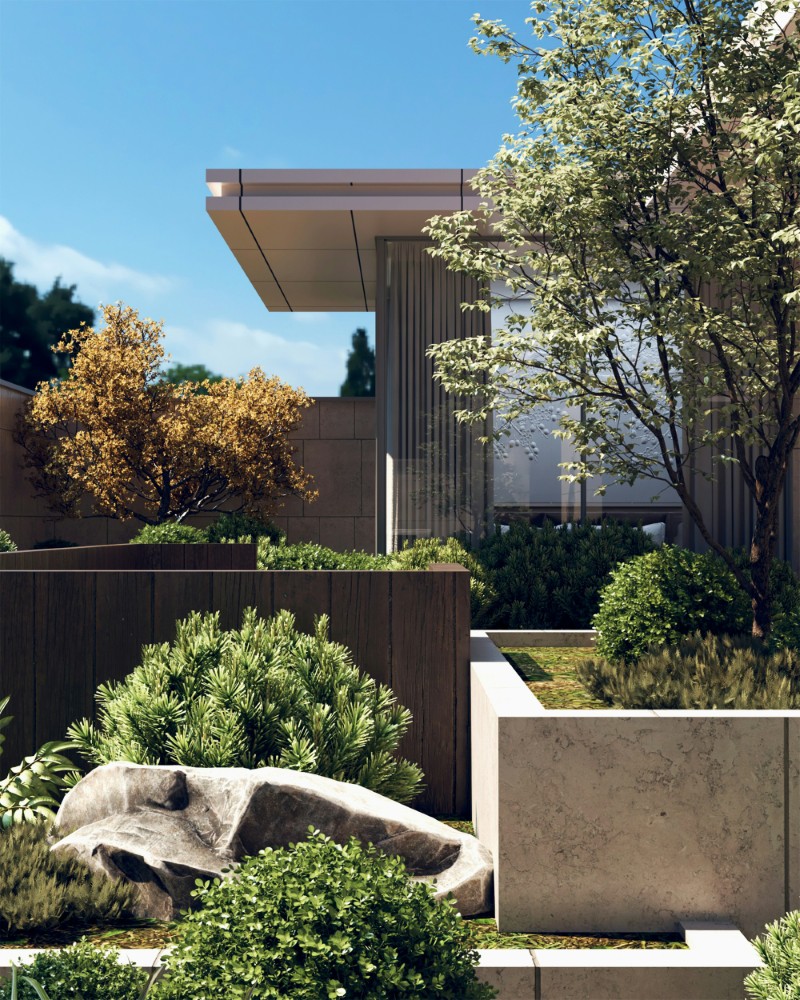
Museums. Flagship retail. Corporate headquarters trying to signal seriousness. The panels come in large formats with custom profiles, mounted on clip system that leave the surface completely unbroken.
Fifty-year durability figures are common on these products. So are reveal joints, shadow lines, and mixed-texture combinations that let a designer treat a wall the way a graphic designer treats a page.
On a house, the effect is unmistakable.
It doesn’t read as siding at all. It reads as architecture, which is exactly the point for clients who don’t want their home to resemble any of their neighbors’.
What commercial materials actually buy you
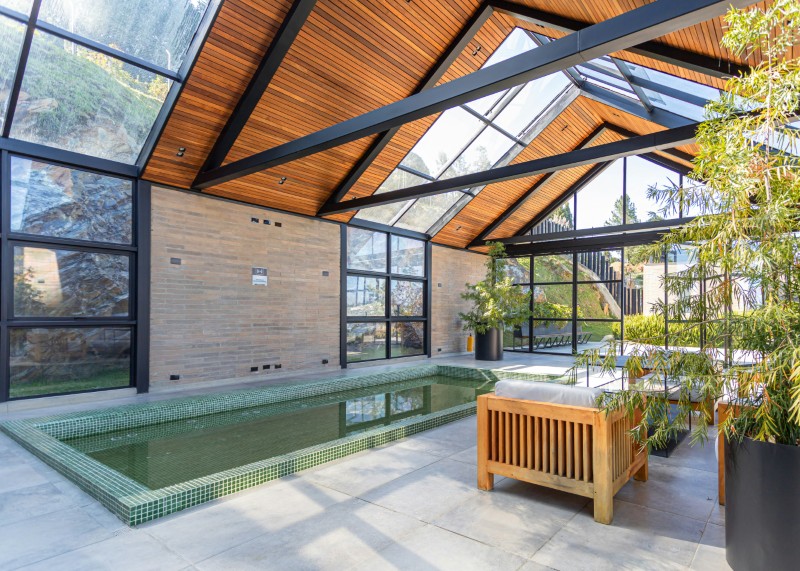
Lifespan measured in decades
Wood siding on a coastal property might need serious attention inside ten years. Fiber cement, metal, and architectural panels operate on a different clock — thirty, fifty, sometimes longer. For someone building a house they intend to keep, that math matters more than the invoice.
Fire performance
This one got urgent. After several high-profile facade fires internationally, cladding fire ratings went from technical detail to headline issue, and building departments tightened up fast.
Commercial-grade non-combustible systems already met stricter thresholds. Homeowners in wildfire-exposed regions started asking for them by name.
Maintenance you never think about
Wealthy homeowners are not, as a group, eager to repaint. The pitch for these materials is partly emotional: install it, forget it, hose it down occasionally. No annual scraping. No caulk that fails every third summer.
Design range
Big panels, tiny reveals, twenty color options, three textures on one elevation.
The palette is simply wider than traditional residential cladding offers, which is why architects keep reaching for it.
The catch nobody puts in the brochure
Upfront cost is real. These systems run well above vinyl or standard wood, sometimes several times over once you count the substructure some of them require.
Lead times can be brutal. Custom-color panels get fabricated to order, and “twelve weeks out” is a normal answer. If your schedule assumed material would show up in three, that’s a problem you find out about late.
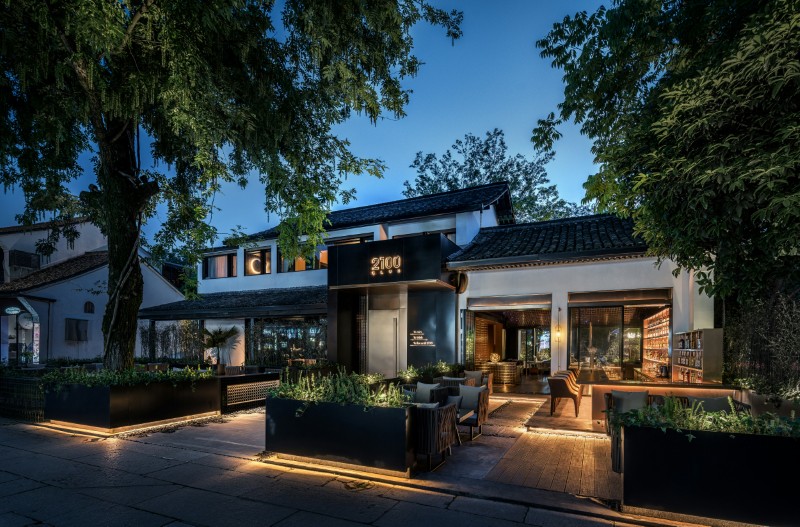
Installation is unforgiving. Large-format panels need a properly detailed weather barrier behind them, correct clip spacing, and room to move when temperatures swing.
Skip the expansion allowance and panels buckle. Miss the flashing detail at a window head and water finds its way in — quietly, for years, until somebody opens a wall and finds rot.
And warranty coverage on many of these products depends on certified installation. The manufacturer’s guarantee lives or dies on whether the crew followed protocol. Homeowners rarely ask about this until something fails.
How to tell a facade that will age well
Stand close and look at the seams. Are the joints consistent, or do they wander? Do the reveals line up across the wall? Sloppy joint work is the first tell.
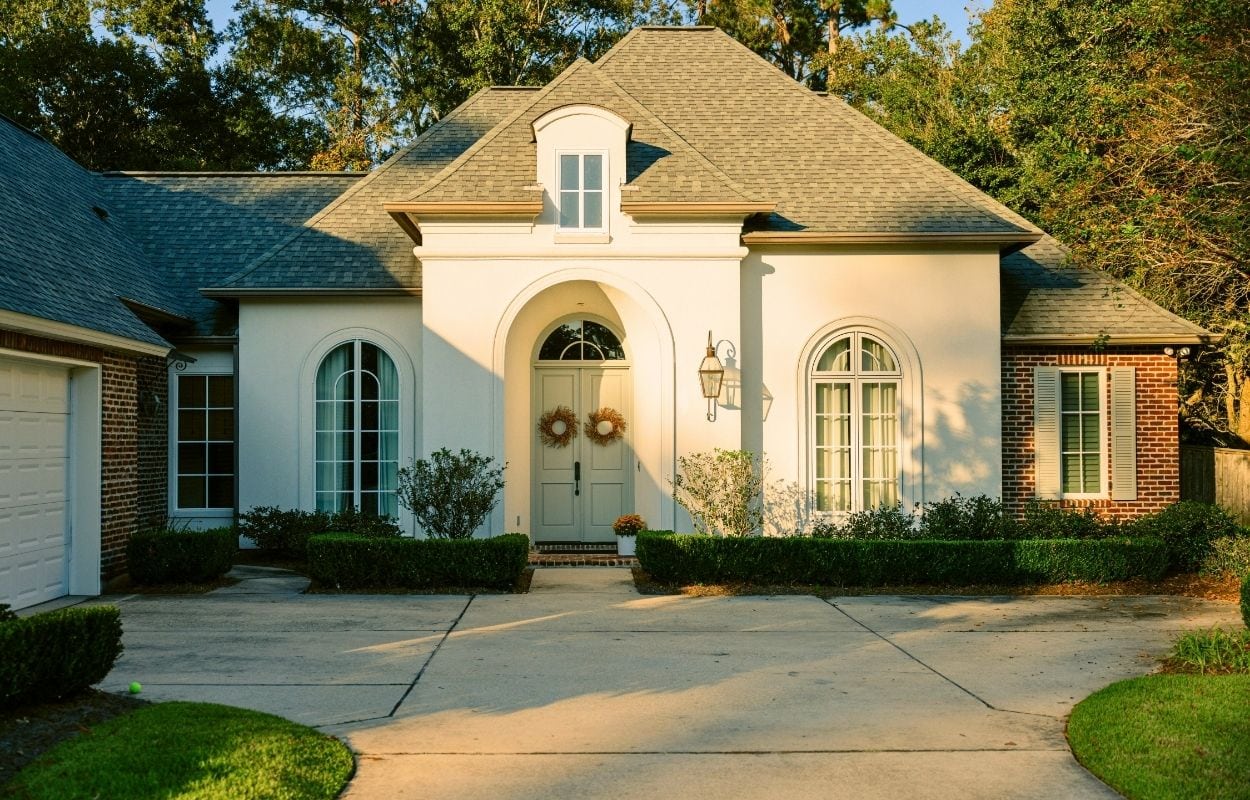
Check the corners and the trim returns. Corners are where cheap work goes to die — you’ll see gaps, mismatched color, or filler doing a job it shouldn’t have to do.
Look at what happens around the windows and doors. Good detailing there means flashing that sheds water outward, clean caulk lines, no reliance on sealant to solve a geometry problem.
Step back and look across the plane at a low angle, ideally in morning or evening light. Waves, bulges, and unevenness show up in raking light that you’d never catch head-on.
Then ask what’s behind it. Panels are the visible part of an assembly that includes a weather barrier, sometimes continuous insulation, and a fastening system engineered for the wind exposure at that address.
The facade you’re admiring is a system. What’s underneath decides whether it still looks like that in twenty years.
More stories
15 architectural styles that used to signal wealth — and what replaced them
17 quiet design choices that signal real quality
The architectural styles wealthy homeowners almost always choose (and why)