

Midcentury modern never really left — it just keeps evolving.
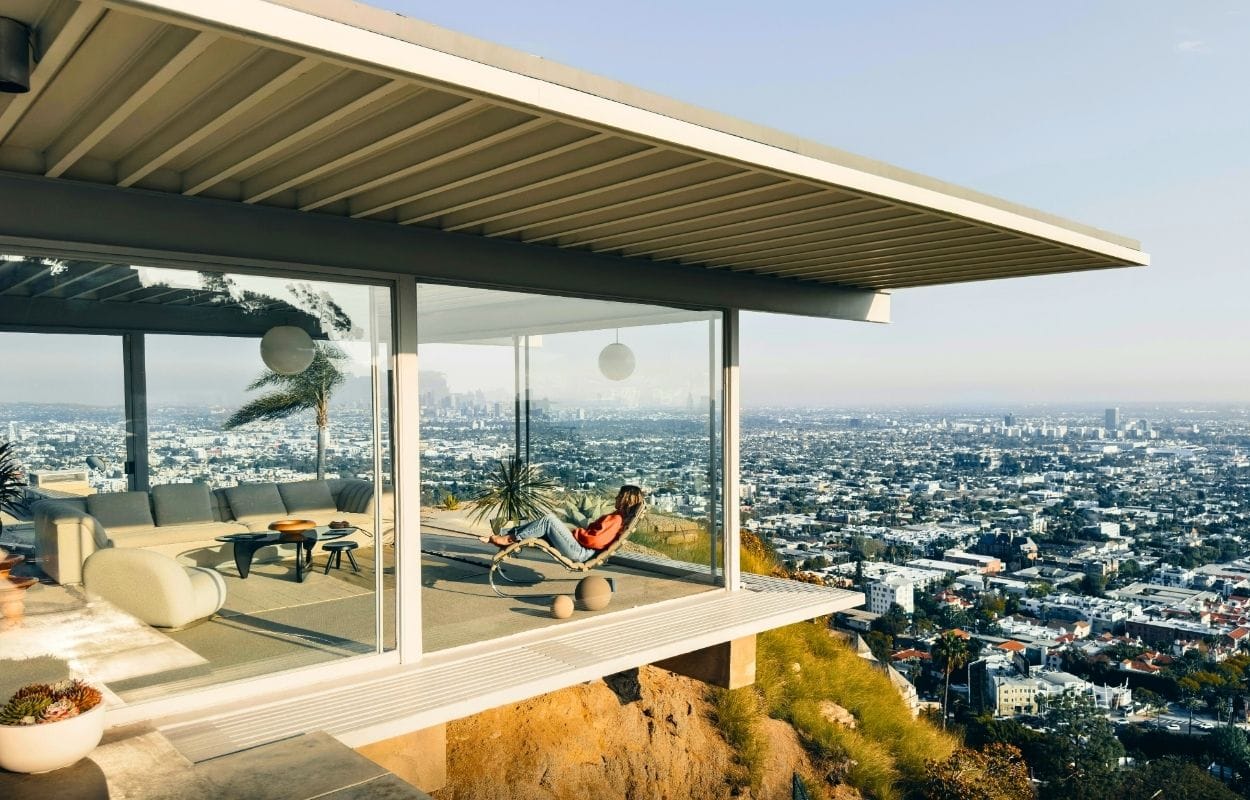
From post-and-beam homes in Palm Springs to glass-wrapped masterpieces by Richard Neutra still commanding millions, the look remains one of the most recognizable design movements of the 20th century.
Pop culture helped, too. When Mad Men brought low-slung sofas and walnut-paneled offices back into living rooms everywhere, the aesthetic moved from architectural niche to mainstream obsession.
But getting it right takes restraint.
Midcentury modern isn’t about filling a room with “retro” pieces. It’s about proportion, material, and clean lines. Here’s what actually defines the look.
Low-slung seating with exposed wood frames
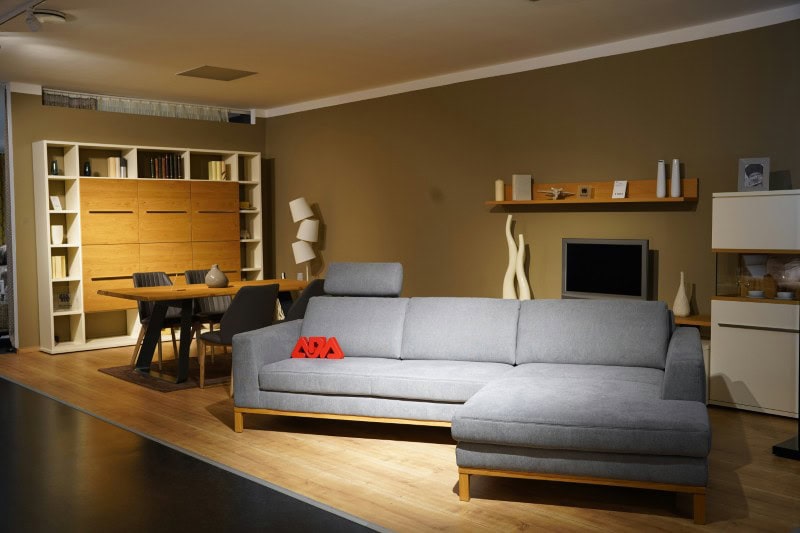
Midcentury seating sits closer to the ground.
Sofas and lounge chairs often feature visible wood arms or a walnut base rather than fully upholstered sides.
The emphasis is horizontal — long lines, slim profiles, and cushions that feel structured rather than overstuffed.
Tapered legs (on almost everything)
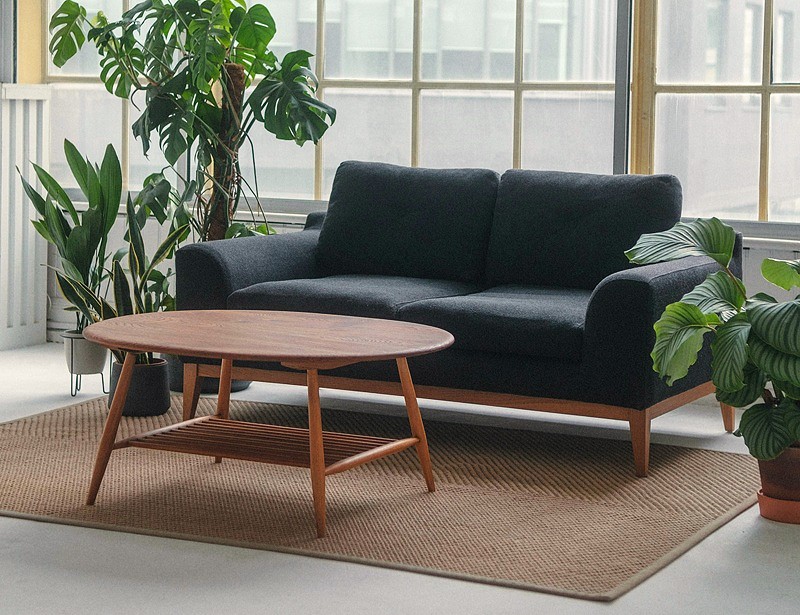
One of the quickest visual cues: legs that narrow toward the floor. Dressers, sideboards, coffee tables, and even sofas typically sit on angled, tapered legs.
Heavy bases and skirted furniture interrupt the clean silhouette the style depends on.
Walnut, teak, and other warm woods
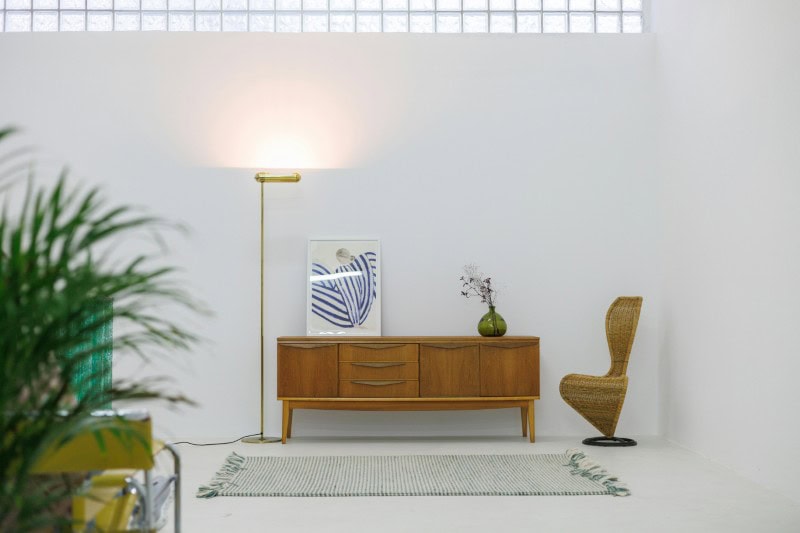
The era favored richly toned woods, especially walnut and teak. Finishes leaned warm rather than gray or washed-out.
Cabinetry, credenzas, dining tables, and even wall paneling often showcase uninterrupted wood grain. Painted finishes play a supporting role.
A sculptural lounge chair
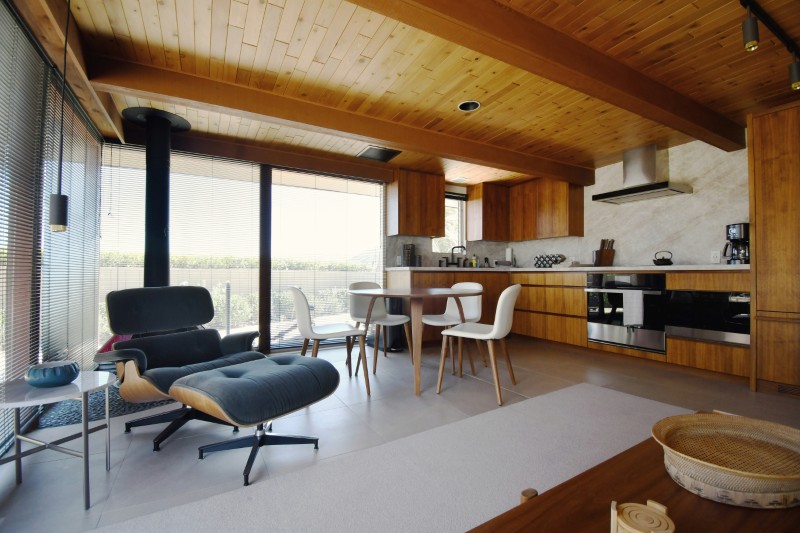
Few pieces define the movement like the lounge chair popularized by Charles and Ray Eames.
Molded plywood shells, leather upholstery, and a distinct silhouette turn seating into sculpture. Even one statement chair can anchor an entire room.
Abstract art with graphic shapes
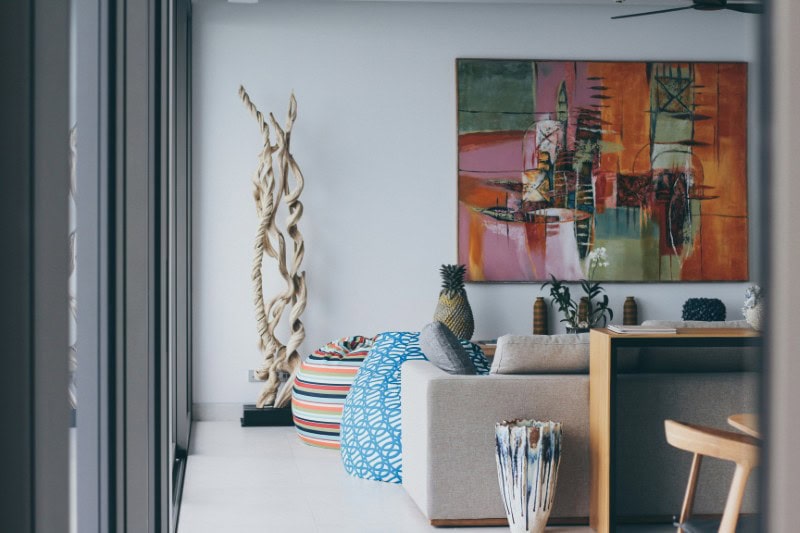
Artwork leans graphic rather than pastoral. Think bold shapes, color blocking, line drawings, and abstract compositions.
Large-scale art pieces work especially well in rooms with clean architectural lines.
Sputnik or globe lighting
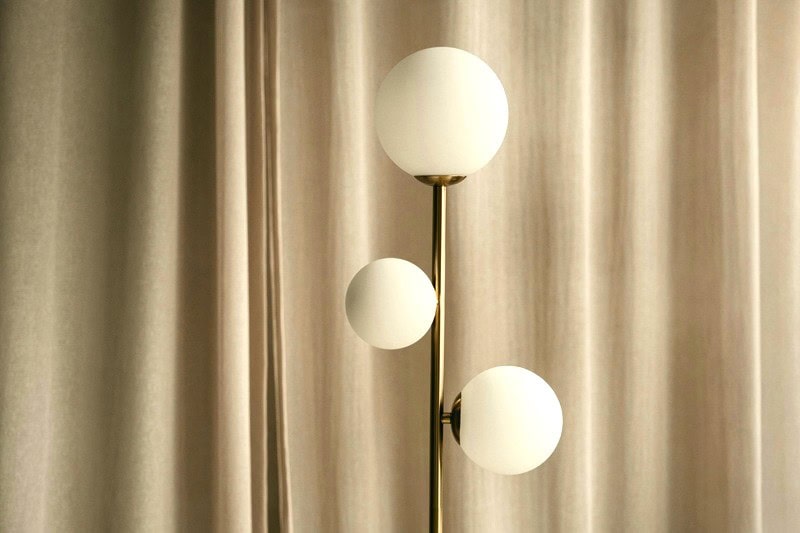
Lighting during the atomic age turned futuristic. Starburst chandeliers and globe pendants became focal points.
Fixtures often feature brass, black metal, or exposed bulbs arranged in radial patterns.
A long, low credenza (preferably wood)
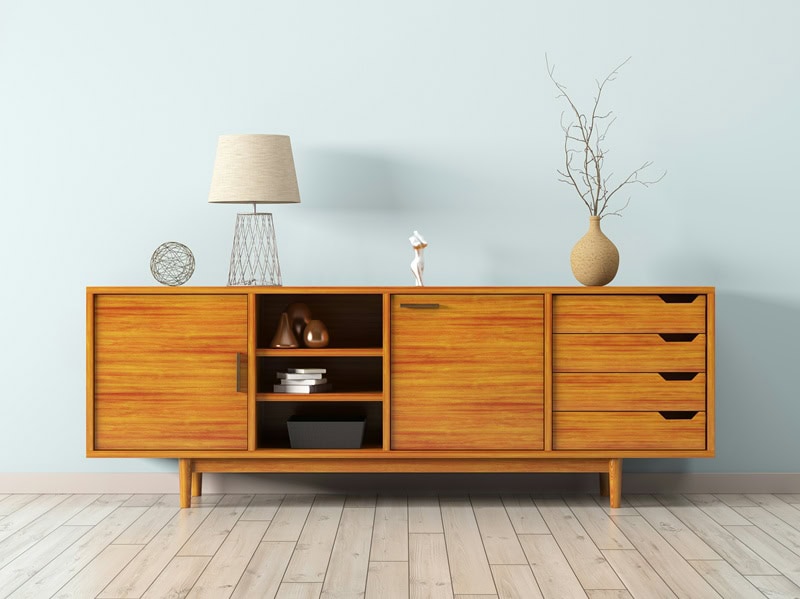
The credenza is a workhorse.
Long, horizontal, and lifted on slim legs, it reinforces the movement’s emphasis on proportion.
Sliding doors, minimal hardware, and uninterrupted wood grain keep the profile clean.
Geometric or flatweave rugs
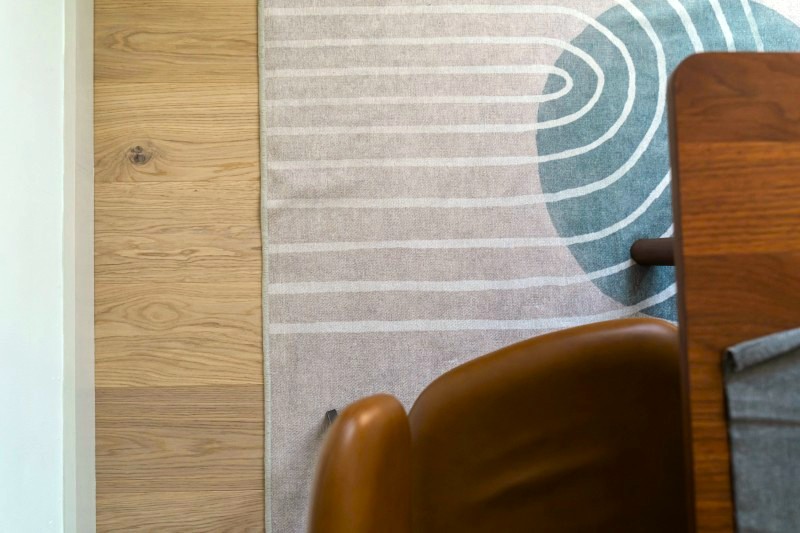
Rugs introduce pattern without overwhelming the space. Flatweaves and low piles suit the streamlined furniture.
Graphic motifs — diamonds, lines, abstract forms — echo the era’s art and textiles.
Plants with real presence
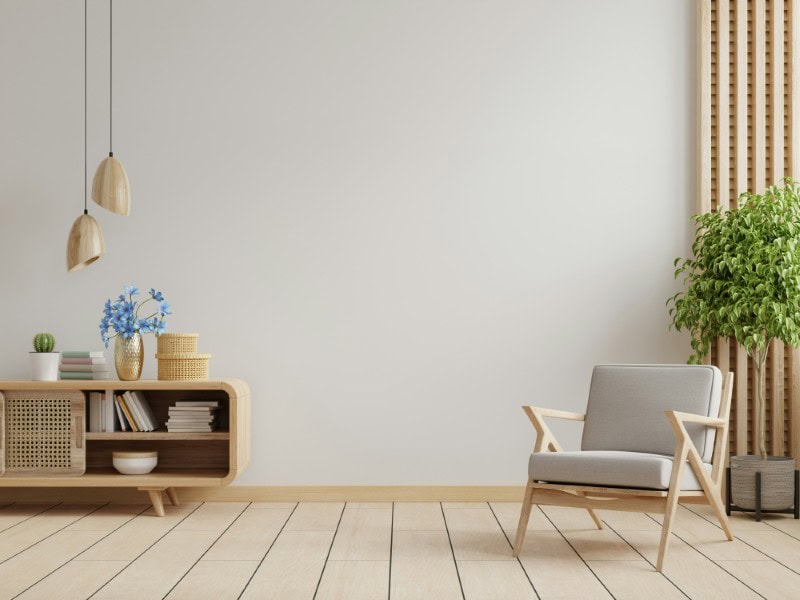
Midcentury interiors favor plants with strong silhouettes: fiddle-leaf figs, snake plants, rubber trees.
Arranged in simple ceramic or fiberglass planters, they reinforce the connection between indoors and out — a key principle of midcentury architecture.
Minimal window treatments, maximized natural light
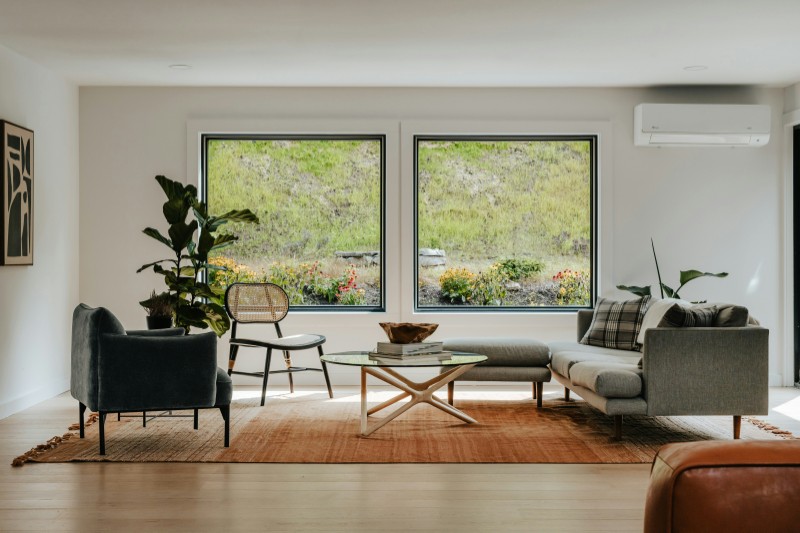
The architecture does the heavy lifting. Floor-to-ceiling glass and clerestory windows are meant to stay visible.
When coverings are used, they’re simple: sheers, roller shades, or slim panels that don’t interrupt the lines of the room.
Keep the layout open and edited
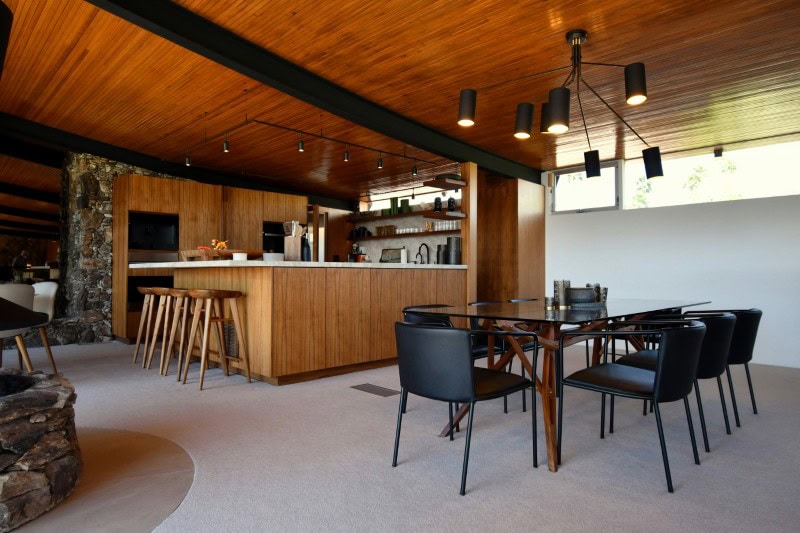
Midcentury modern interiors rely on breathing room. Furniture floats rather than hugs every wall. Surfaces stay mostly clear.
The look works best when materials and form carry the visual weight, and not the surrounding accessories and accent pieces.
More stories
Here are 13 of our all-time favorite Midcentury Modern houses (and some of their famous past owners)
Diane Keaton’s charming Lloyd Wright-designed midcentury home in Pacific Palisades asks $12.8M