

Victorian homes were never built to fade into the background.
Constructed between roughly 1837 and 1901, they were designed to impress, featuring steep gables, ornate trim, towers, stained glass, wraparound porches, and dramatic staircases. Every inch was layered with detail.
That visual richness is exactly why film and television keep returning to them.
On screen, a Victorian can signal wealth, instability, romance, decay, eccentricity, generational legacy — sometimes all at once. Their vertical lines create shadow. Their carved millwork adds texture. Their deep porches and looming facades set a mood before a single line of dialogue is spoken.
From Gothic mansions perched on hills to narrow San Francisco row houses, here are 17 Victorian homes that became pop-culture landmarks.
The Bates house in ‘Psycho’ (1960)
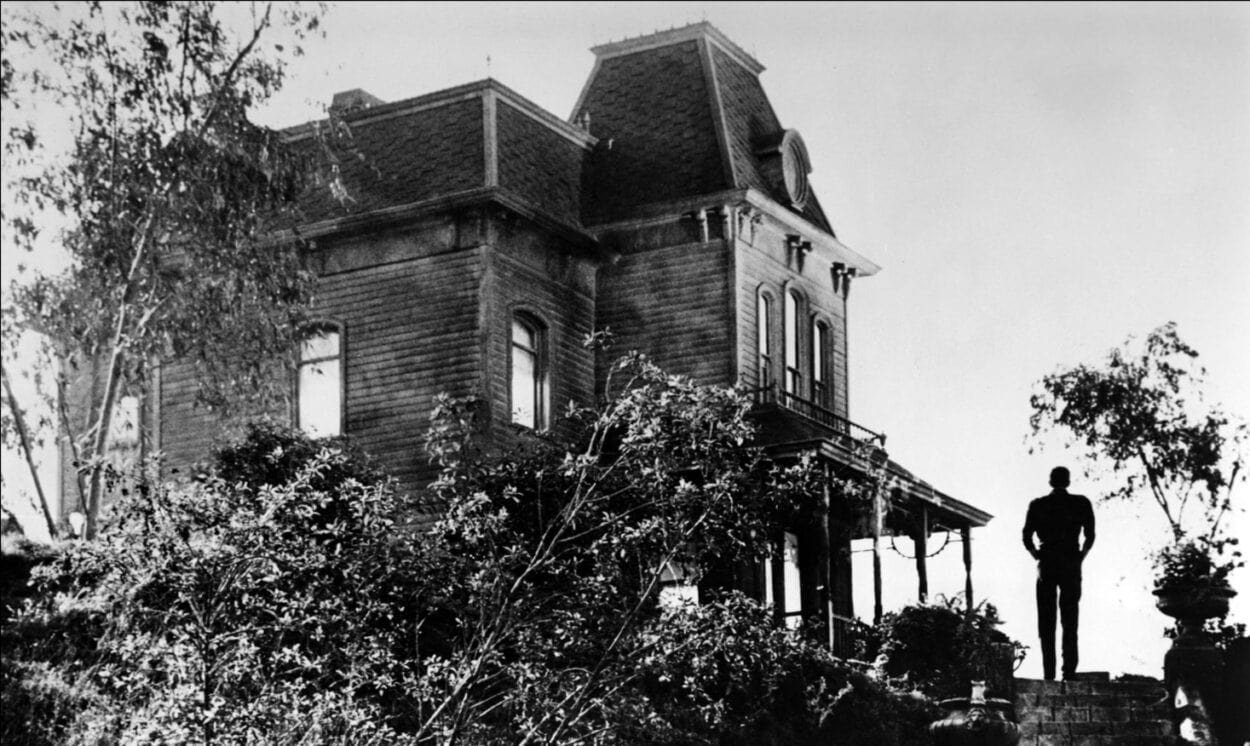
The looming hilltop house in Psycho remains the gold standard of cinematic Victorians.
Director Alfred Hitchcock chose a Second Empire design with a mansard roof and narrow vertical silhouette. Its height exaggerates isolation, especially compared to the low motel below.
It still stands on the Universal lot, as proof that architecture can permanently shape suspense.
The Tanner house in ‘Full House’
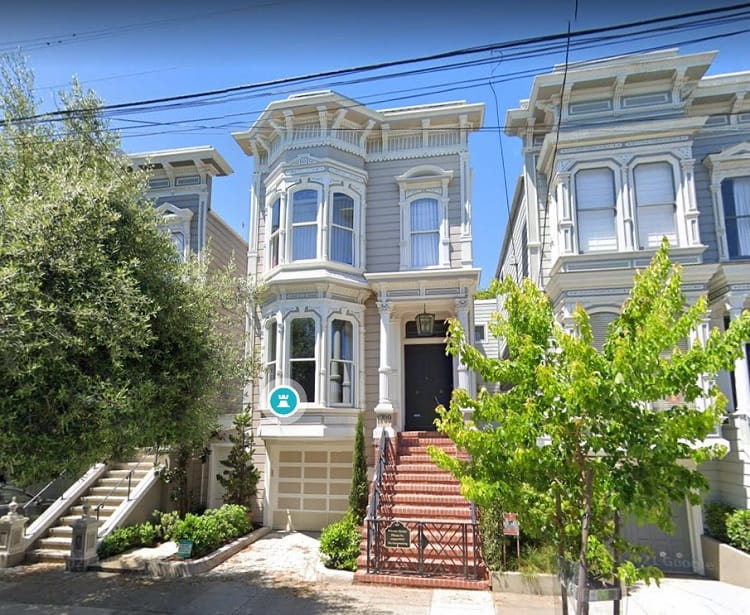
The exterior of the Tanner family home in Full House sits at 1709 Broderick Street in San Francisco.
Built in 1883, the narrow gabled Victorian features bay windows and decorative trim typical of the era. Though interiors were shot on a soundstage, the facade became shorthand for warm sitcom family life. Nowadays, the interiors are as modern as they get, but the iconic San Francisco house has retained its unmistakable facade.
The Hillard house in ‘Mrs. Doubtfire’ (1993)
The childhood fantasy home that is the Hillard residence is as real as it gets. And in real life, you’ll find it at the exact same address it was located in the 1993 movie.
The home in Mrs. Doubtfire is a historic 1893-built Victorian at 2640 Steiner Street.
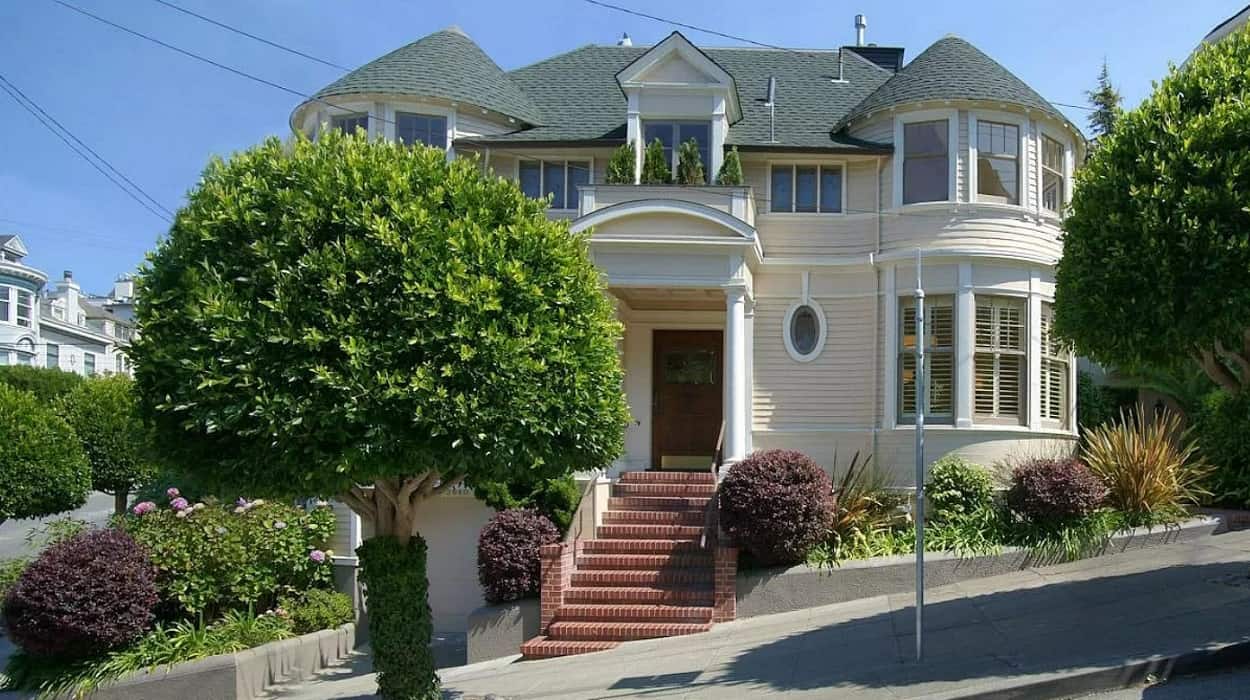
With its bay windows and intricate trim, it reflects the architectural boom that defined late-19th-century San Francisco. On screen, it feels lived-in and grounded — not theatrical, just domestic.
The Addams family mansion in ‘The Addams Family’ (1991)
In The Addams Family, the Addams family live in a towering Gothic Victorian mansion that looks like it belongs in a storm cloud.
On screen, it’s the family’s home base, where Gomez Addams and Morticia Addams raise their children, host unsettling guests, and generally make the case that “gloomy” can be a lifestyle.
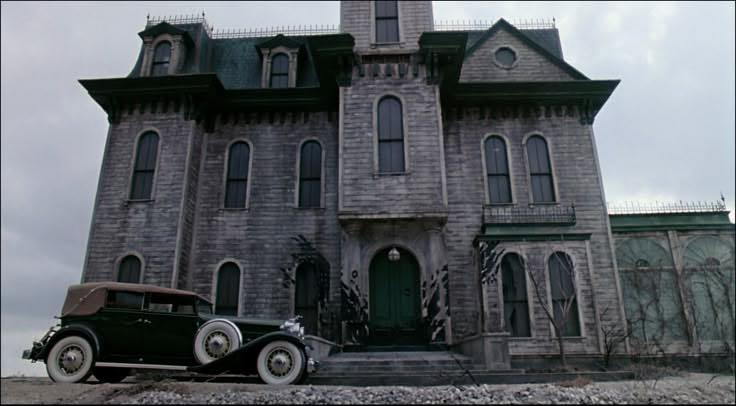
The key detail: the mansion exterior wasn’t a real, visitable house. Location research indicates the production built a temporary facade (essentially the front portion) on a hillside in the Burbank/Toluca Lake area for the film, and it was dismantled afterward.
Architecturally, the design leans into Victorian Gothic cues (turrets, iron cresting, steep rooflines, and a tall, narrow silhouette) to create instant visual storytelling. The house is basically a character: it signals “this family is different” before anyone even speaks.
Halliwell Manor in ‘Charmed’
The Halliwell sisters’ home in Charmed — commonly called Halliwell Manor — is one of TV’s most famous “witch houses.” In the story, it’s the longtime family home of Prue Halliwell, Piper Halliwell, and Phoebe Halliwell (and later Paige), complete with attic spell-casting, family secrets, and constant demonic interruptions.
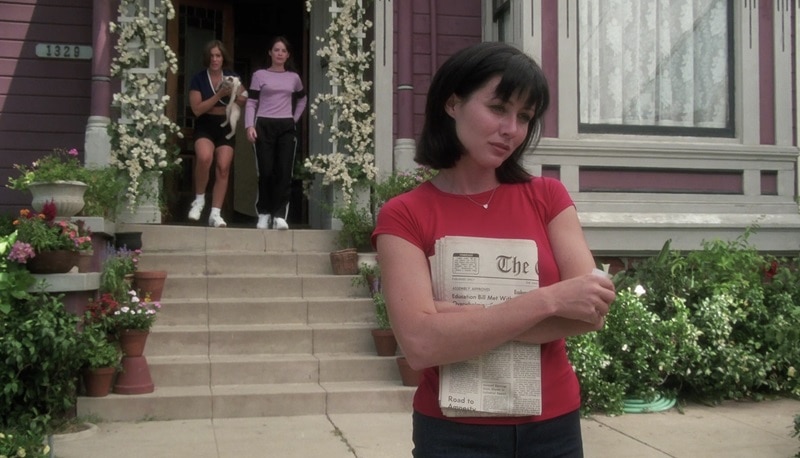
Unlike some entries on this list, this is a real house: the exterior used for the show is the Innes House at 1329 Carroll Avenue in Los Angeles’ Angelino Heights neighborhood. The L.A. Conservancy notes it was one of the original homes built on Carroll Avenue in the late 1880s.
Design-wise, it reads as classic Victorian: ornate trim, a prominent porch, strong vertical proportions, and layered detailing that looks great in wide exterior shots.
The fact that Angelino Heights is packed with preserved Victorians also helps the show sell the idea that this house has “history” baked into it.
The Mayfair house in ‘Mayfair Witches’
In Mayfair Witches (AMC’s adaptation of Anne Rice’s work), the Mayfair home is the visual symbol of the family’s legacy — power, money, secrecy, and something darker tied to the lineage. It’s the kind of house that doesn’t just “sit” on a street; it dominates the street.
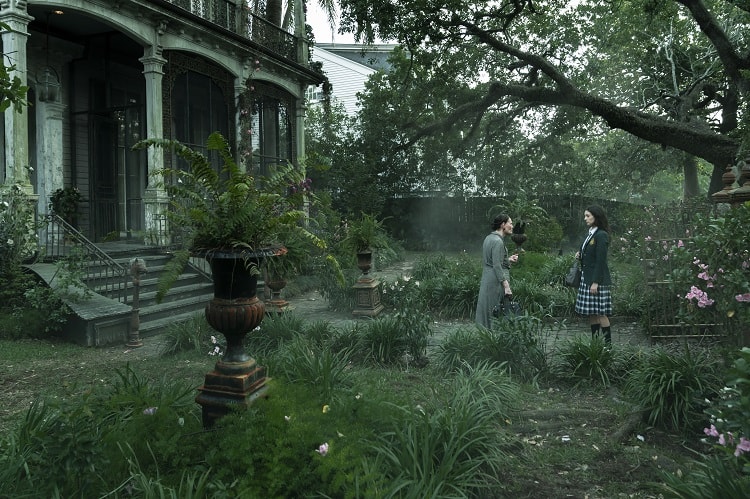
For the series, the production used the Soria-Creel House at 3102 Prytania Street in New Orleans, a late-19th-century-era mansion often described locally as a standout historic home.
That same source notes a key nuance: the show’s house choice is a filming stand-in, while Anne Rice’s Mayfair home inspiration is associated with a different New Orleans address.
Multiple fan/location discussions also note that the “book” Mayfair house is associated with 1239 First Street, while filming relied on the Prytania Street mansion.
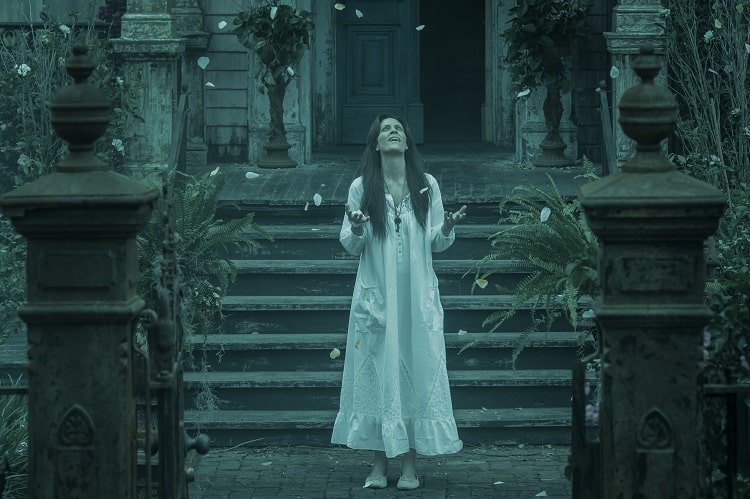
In other words: real house used for filming, real New Orleans architecture, but the adaptation’s “Mayfair house” concept has more than one address floating around depending on whether you mean book inspiration vs on-screen stand-in.
Architecturally, it reads as Queen Anne/Victorian: asymmetry, layered rooflines, decorative woodwork, and wraparound gallery/porch presence — exactly the kind of ornate profile that makes a “dynasty house” instantly believable.
The Winchester house in ‘Winchester’ (2018)
Winchester is built around one of America’s most mythologized Victorian-era homes: the Winchester Mystery House in San Jose, California, associated with Sarah Winchester.
This one is absolutely real — and the scale is the story.
The house’s official site lists “facts” that underline why it’s so irresistible on screen: 160 rooms, 10,000 windows, 2,000 doors, 47 stairways and fireplaces, 17 chimneys, 52 skylights, 13 bathrooms, and 6 kitchens, with construction spanning 1886 to 1922 as the mansion expanded from an original farmhouse into something labyrinthine.
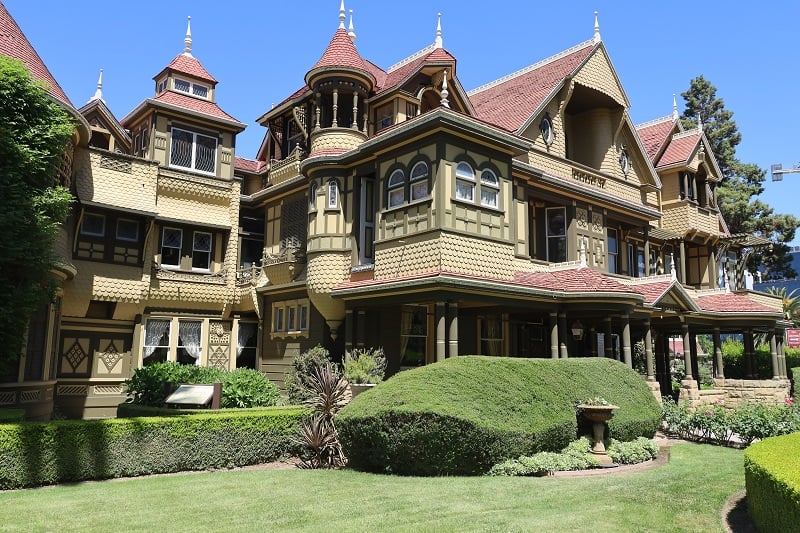
That maze-like quality is what the movie leans into: corridors, odd turns, and the feeling that the house is never fully “finished.” Even without the ghost stories, the architecture alone can make the place feel uncanny, which is why it remains one of the most famous “Victorian houses with a reputation.”
(Architectural Digest also summarizes the house as a 24,000-square-foot Victorian mansion shaped over decades, widely associated with the lore that Winchester kept building. )
The Owens house in ‘Practical Magic’ (1998)
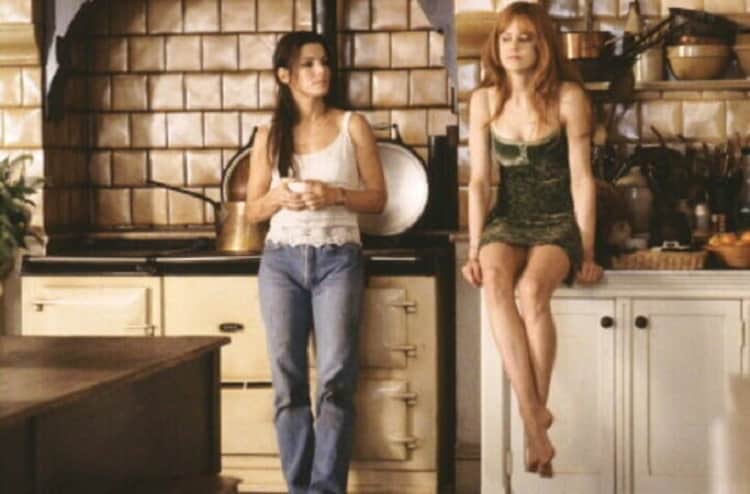
In Practical Magic, sisters Sally Owens and Gillian Owens live in a dreamy Victorian home that feels like “coastal New England witch legend”… even though the production reality is more complicated.
According to Elle Decor, the filmmakers constructed the exterior house in 1997 on San Juan Island, Washington, while interior scenes were filmed on Los Angeles soundstages, and the set was dismantled after filming.
Other location write-ups similarly place the production’s Washington filming footprint in the Whidbey/San Juan area (including Coupeville as a key town used).
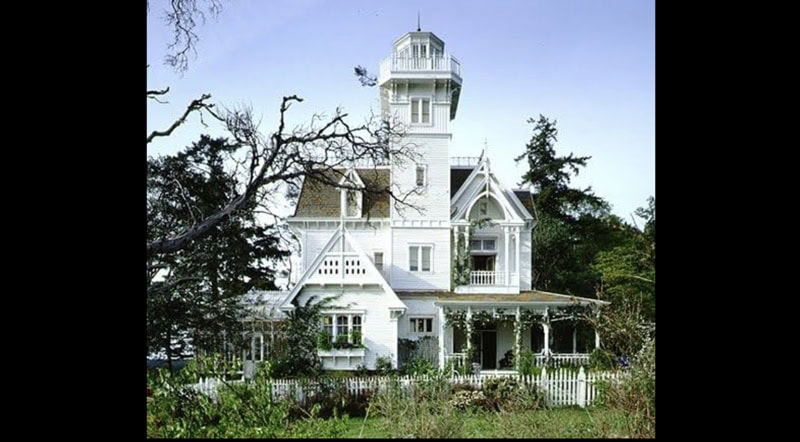
Design-wise, the house pulls from Victorian/Queen Anne drama: a wraparound porch for “porch scenes,” a vertical silhouette, and a storybook, gingerbread-ish profile that feels instantly iconic.
It’s also a great example of a “movie house” built to support memorable set pieces — especially the kitchen and porch moments fans never forget.
The house in ‘American Horror Story’
Season one of American Horror Story turned an already-striking Los Angeles mansion into a pop-culture haunted-house landmark. In-story, it’s the infamous residence tied to the Harmon family and a string of tragedies — the kind of house everyone warns people about, and nobody listens.
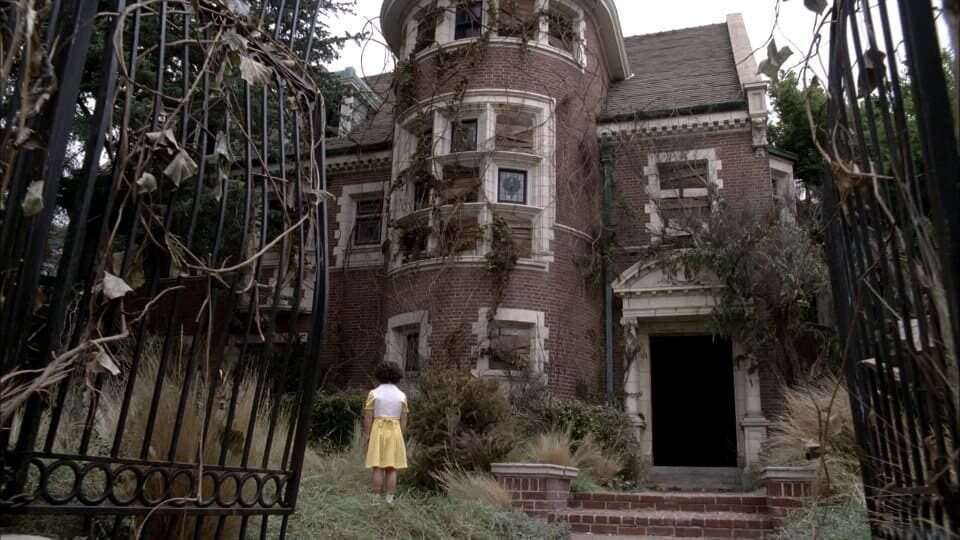
The exterior is real: the “Murder House” is widely identified as the Rosenheim Mansion at 1120 Westchester Place in Los Angeles, built in 1908 and known for its frequent use as a filming location.
Part of why it works so well on camera is its heavy, old-world presence: masonry, steep massing, and richly detailed interiors (woodwork, stained glass vibes, etc.) that immediately separate it from a typical modern L.A. house.
The setting does a ton of storytelling work: it looks like it has seen things, which is exactly what the show needs.
Hill House in ‘The Haunting of Hill House’
In The Haunting of Hill House, Hill House is the gravitational center, the place where trauma, memory, and mystery all stick to the walls.
The Crain family’s connection to the property drives both timelines, with the house looming over everything even when it isn’t on screen.
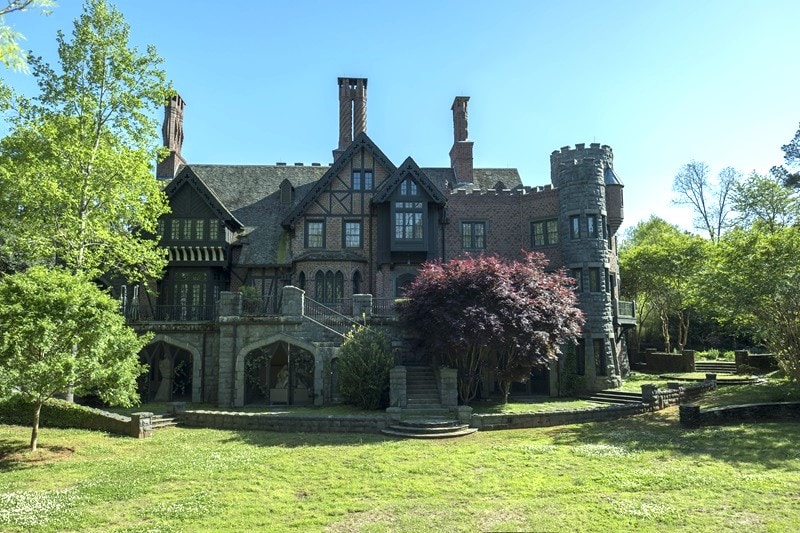
One important clarification: the exterior used is not an actual Victorian — it’s described as a Tudor-style/English Tudor–style mansion used for exterior shots in LaGrange, Georgia, often referenced by the name Bisham Manor in location write-ups.
Even so, it functions like an on-screen Victorian: tall, moody, detailed, and imposing, with a silhouette that instantly reads “old house with secrets.”
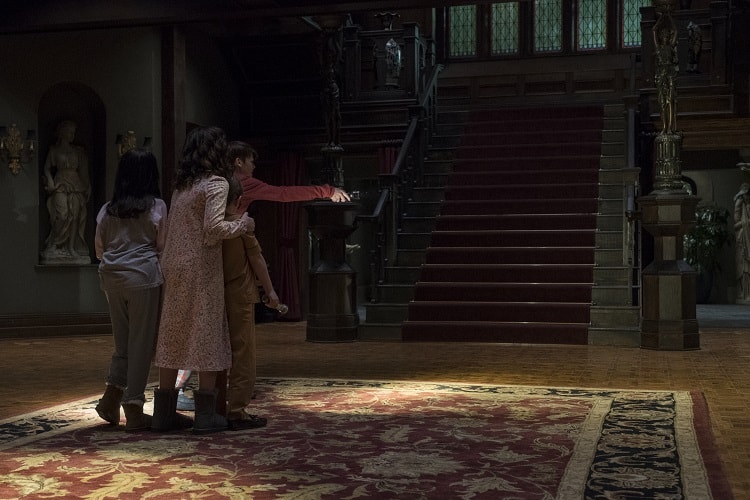
The production leans hard into that effect, pairing the exterior with richly dressed interiors (often built/controlled for filming) that emphasize shadow, depth, and a sense of history.
The Myers house in Halloween (1978)
John Carpenter’s Halloween doesn’t need a giant mansion to be scary, so it uses an older, ordinary-looking house to make the horror feel like it could happen on any street.
In-story, this is Michael Myers’ childhood home, the place that becomes a symbol of what happened (and what might happen again).
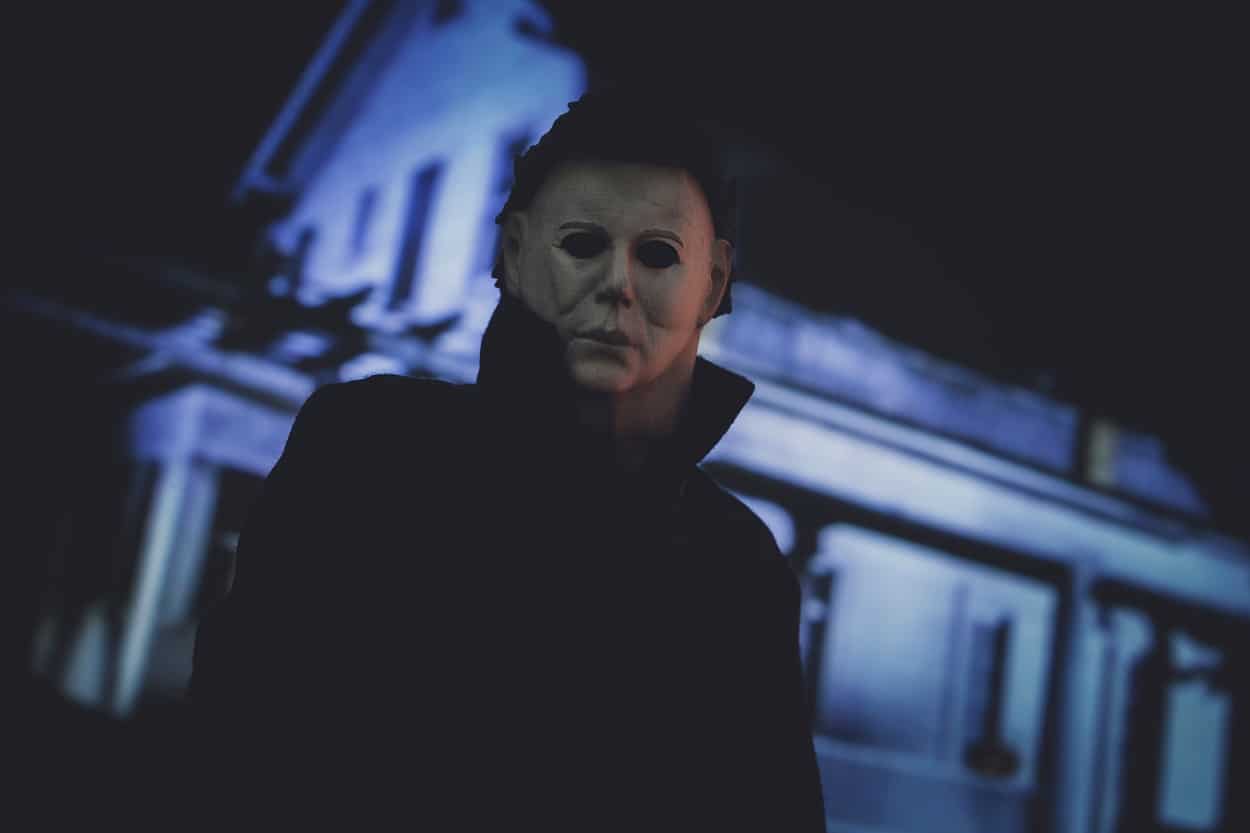
The dilapidated Myers house is real and still exists: location sources identify it as the “Century House” at 1000 Mission Street in South Pasadena, California.
The movie-locations write-up notes the building was even moved from a previous position nearby, which explains why the angle looks slightly “off” in some shots.
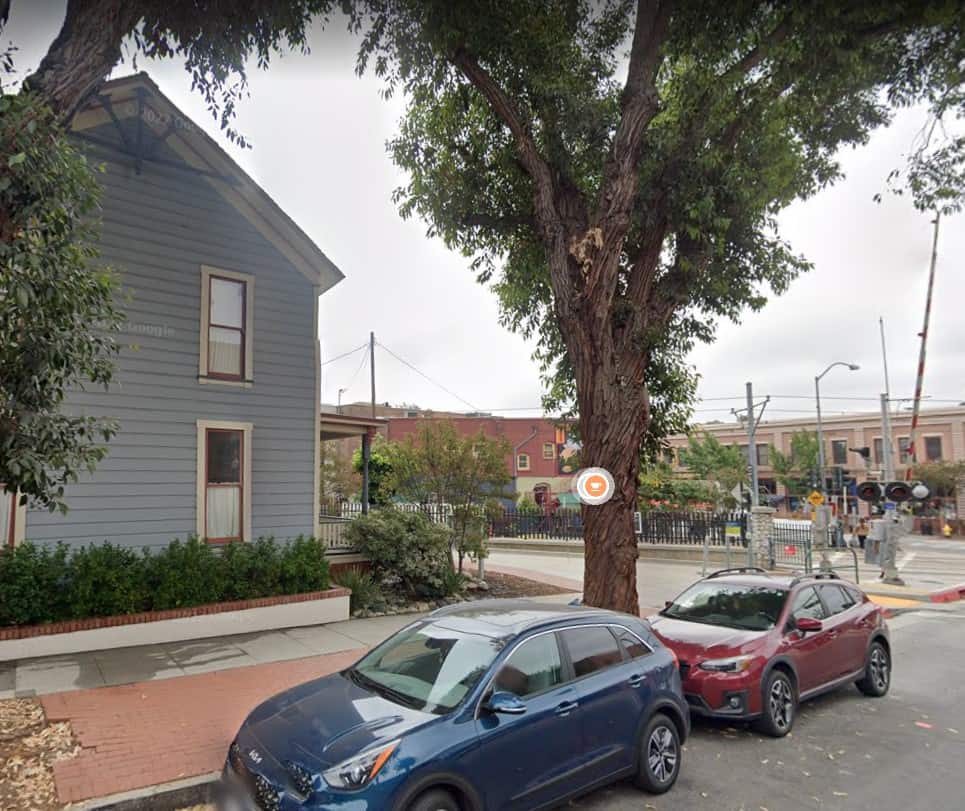
Architecturally, it’s late-19th-century (often described around the 1880s) and reads as a small, older frame house with period detailing — the kind of place that looks innocent until the camera decides it doesn’t.
The Neibolt Street house in IT (2017)
In It, the Neibolt Street house is the classic “don’t go in there” structure: the creepy, decaying place the kids dare each other to enter, tied to some of the film’s most memorable scares.
In-story, it’s associated with 29 Neibolt Street in Derry, and it becomes a physical manifestation of the town’s rot.
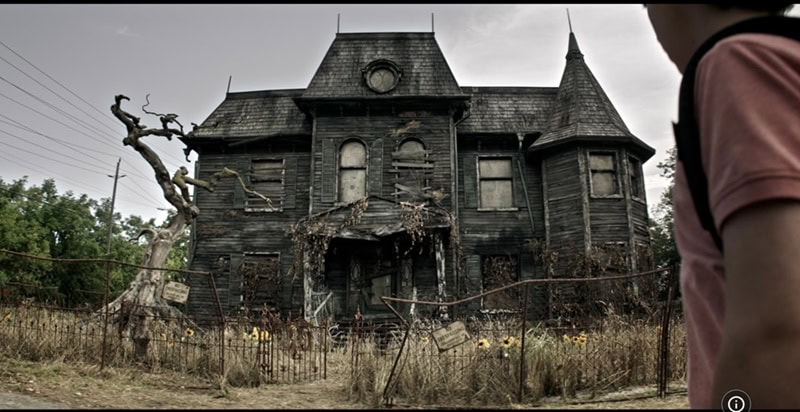
For filming, the production used locations in Port Hope, Ontario, a town that stands in for Derry in multiple scenes.
Movie-locations notes key Port Hope streets (including Walton Street) used for the film’s Derry look and feel. Port Hope’s own tourism materials even highlight the town’s connection to the IT productions and point visitors to recognizable spots.
The house’s on-screen power comes from its Victorian-era visual language: asymmetry, vertical lines, weathered textures, and a silhouette that looks like it has been left behind by time, which makes it the perfect container for the film’s fear sequences.
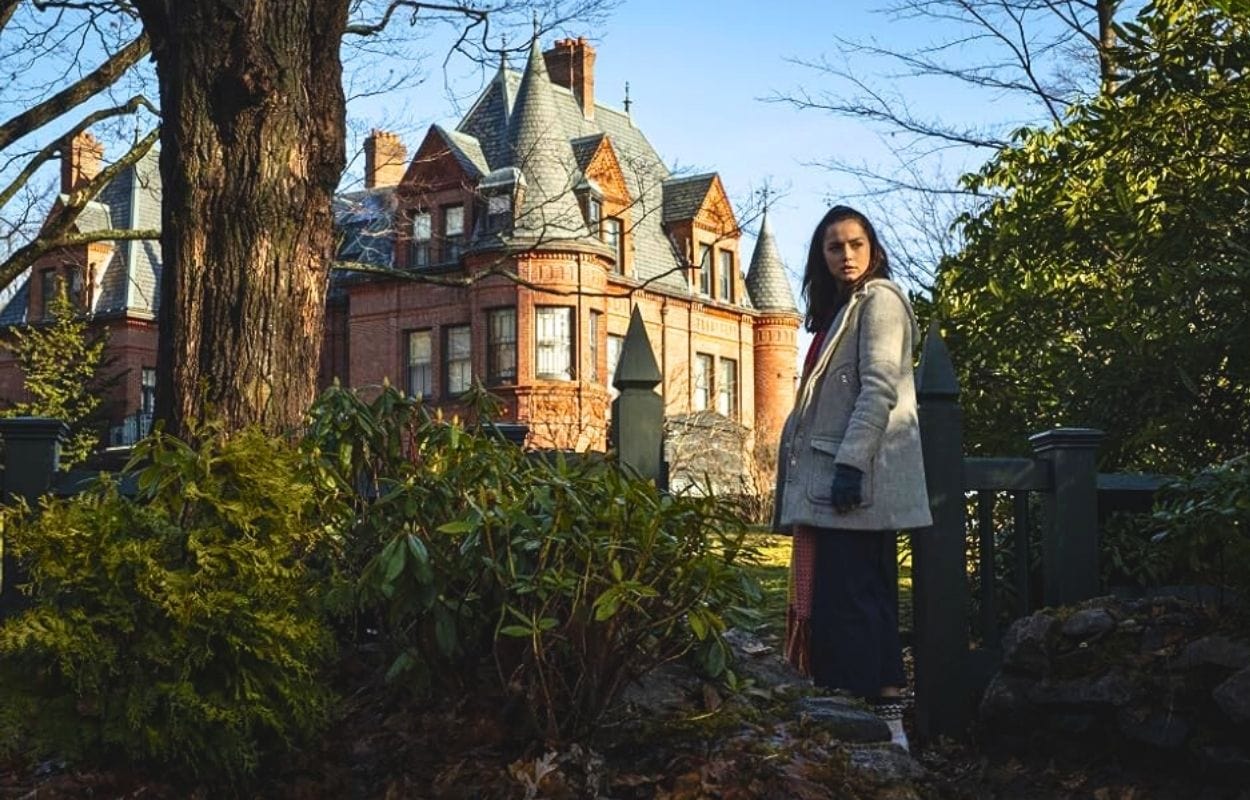
Keyhouse in ‘Locke & Key’
In Locke & Key, Keyhouse is where the Locke family moves after tragedy, and where the supernatural “key” mythology starts to take over their lives.
It’s the home tied to their family history, their inheritance, and the unsettling realization that the house itself contains hidden systems.
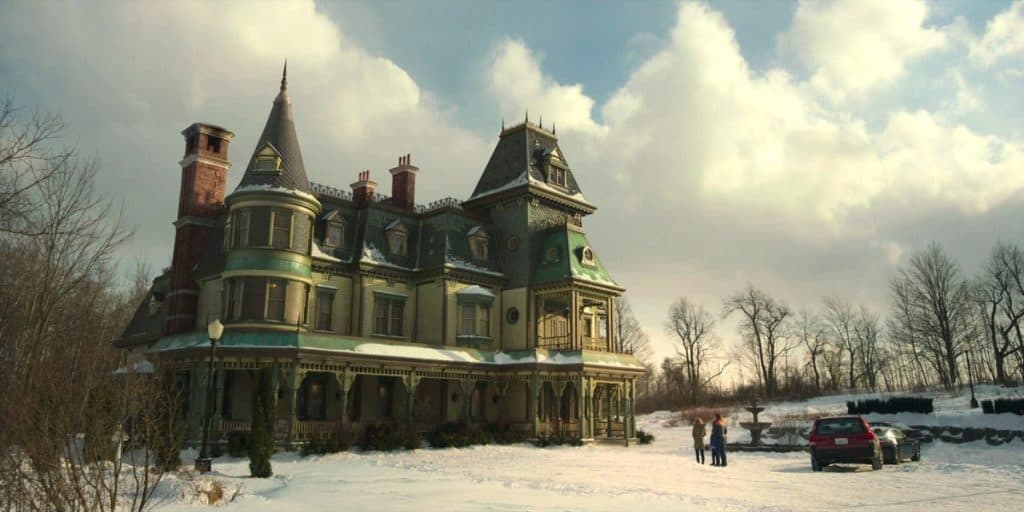
Although the story is set in Massachusetts, Netflix location material and press coverage point to Lunenburg, Nova Scotia as a primary filming hub for the series.
Some write-ups also note that the on-screen Keyhouse presence involves CGI/visual augmentation rather than being a single, fully “real” mansion you can simply walk up to and recognize as-is.
Visually, Keyhouse borrows heavily from big Victorian/Queen Anne cues — turrets, steep rooflines, layered massing, and that slightly “too perfect to be safe” scale. It’s meant to feel like a legacy house with locked doors and hidden spaces — which fits the show’s entire premise.
Collinwood in ‘Dark Shadows’ (2002)
In Dark Shadows, Collinwood is the ancestral estate of the Collins family, a Gothic, looming mansion that signals old money, buried secrets, and a long trail of bad decisions.
It’s also where Barnabas Collins returns after being freed, bringing supernatural chaos back into the family orbit.
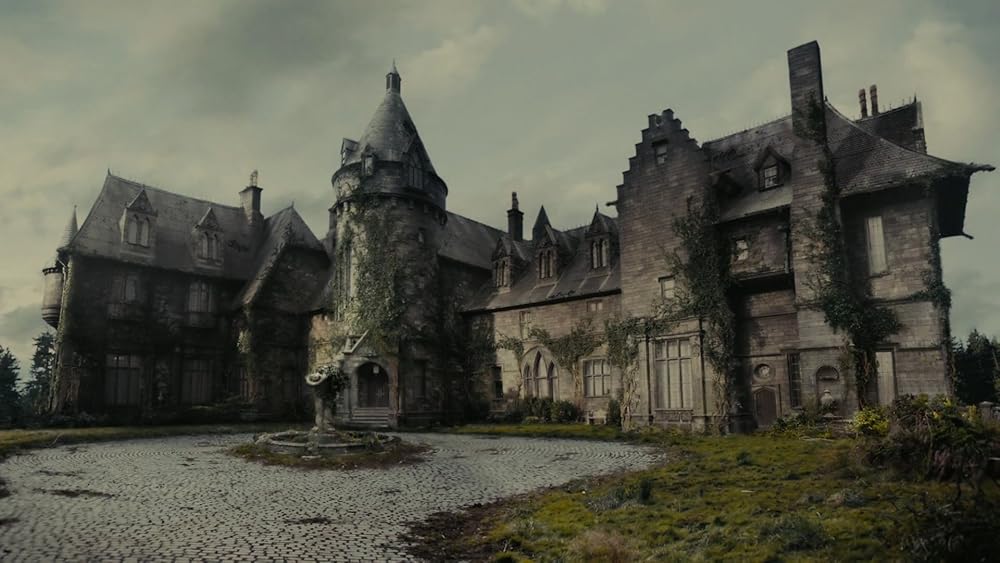
On screen, Collinwood is presented as a Gothic Victorian-style cliffside pile: turrets, tall windows, steep rooflines, and a silhouette designed to read as haunted even when the sun’s out.
In many adaptations of Dark Shadows (including the original soap), the estate is central — it’s the “family seat” where the past can’t stay buried.
Gaby Solis’ house in ‘Desperate Housewives’
On Desperate Housewives, Gabrielle Solis lives in one of Wisteria Lane’s most instantly recognizable homes, presented in-story as 4349 Wisteria Lane, a glossy suburban address that matches her image-conscious lifestyle.
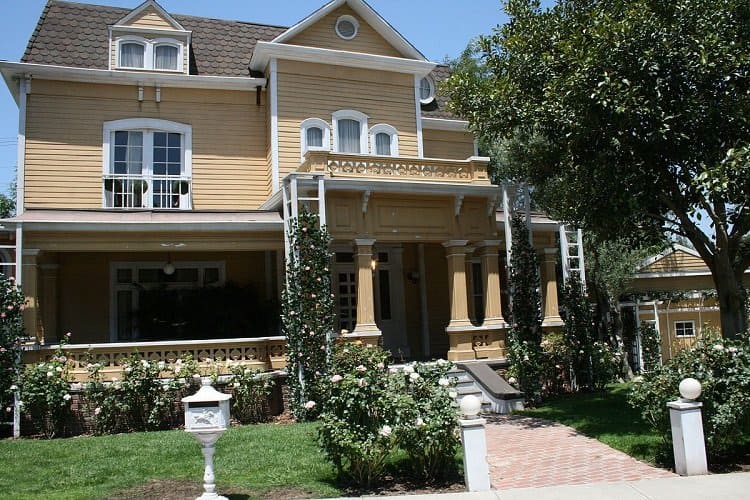
The big thing here is that Wisteria Lane is not a real neighborhood: the street is the Colonial Street backlot at the Universal Studios Lot in Universal City, California, which Wikipedia notes served as Wisteria Lane during the show’s run.
In other words: the Solis house exterior is a backlot facade, designed to read as upper-middle-class perfection from the curb.
That’s why it’s such a good “TV Victorian”: it borrows Victorian-ish charm cues like decorative trim, gables, and a picture-perfect porch profile, without the complications of a real historic home.
It’s controlled, manicured, and camera-ready, which mirrors Gaby’s whole vibe.
The Deetz house in ‘Beetlejuice’ (1988)
In Beetlejuice, the Deetz house is the stage for the film’s central clash: an old home and its original owners vs an outsider’s dramatic makeover and aesthetic takeover.
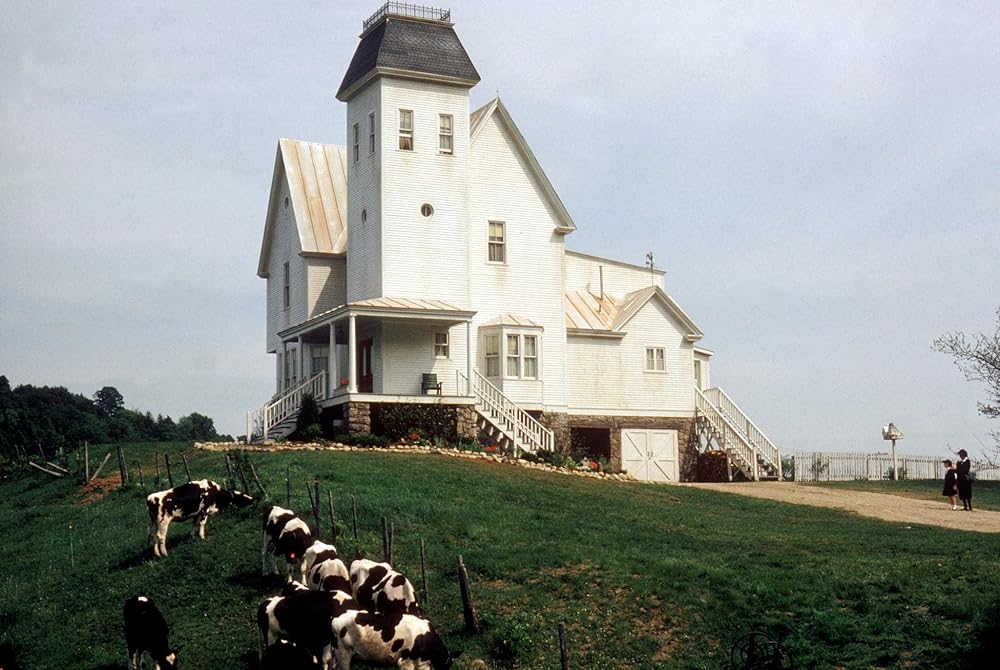
The Vermont “house on the hill” seen in the film wasn’t a permanent historic home you can tour.
Location documentation notes that the exterior house was erected for the movie in East Corinth, Vermont, and taken down after filming. That temporary, “built for the camera” approach helps explain why the silhouette feels so perfectly isolated and storybook.
It’s also one of the better examples of a movie using a “Victorian-style” exterior as a visual baseline — so the later interior choices (and the film’s surreal escalation) feel even more unhinged by contrast.
The Ames Mansion in ‘Knives Out’ (2019)
In Knives Out, the Thrombey family’s estate is the ultimate modern-mystery mansion: a house packed with dark wood, curios, staircases, and the kind of layered rooms that make eavesdropping and suspicion feel inevitable. It’s where famed mystery writer Harlan Thrombey lived — and where the investigation unfolds.
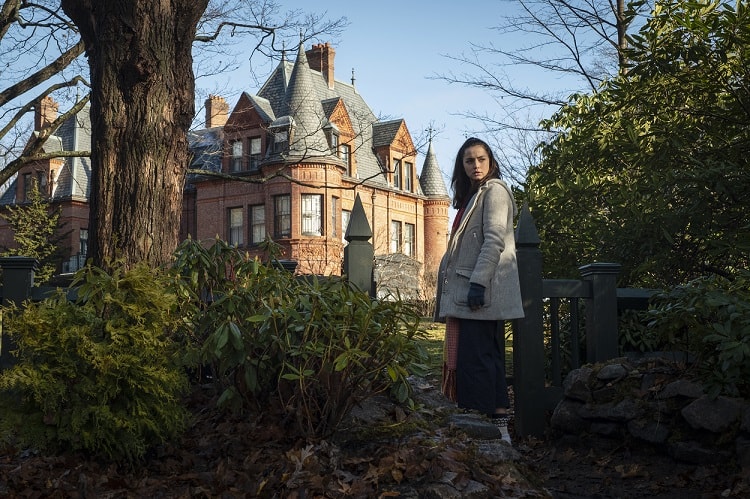
Many key scenes were filmed at the Ames Mansion in Easton, Massachusetts, which Boston.com reported was selected by the production’s location team and had even been used previously for another major film.
Other location write-ups describe it as the main “mansion” location for the film, used for significant interior areas like halls and rooms that anchor the story’s staging.
Visually, it delivers what the movie needs: old-world grandeur, shadowy corners, and enough architectural “layers” for the camera to keep discovering new angles — which is exactly how a whodunit mansion should behave.
More stories
15 Real-life houses haunted by their dark past
How to host like a Bridgerton (without needing a ballroom)
10 ‘Succession’-inspired ways to decorate like you have a penthouse and an NDA